
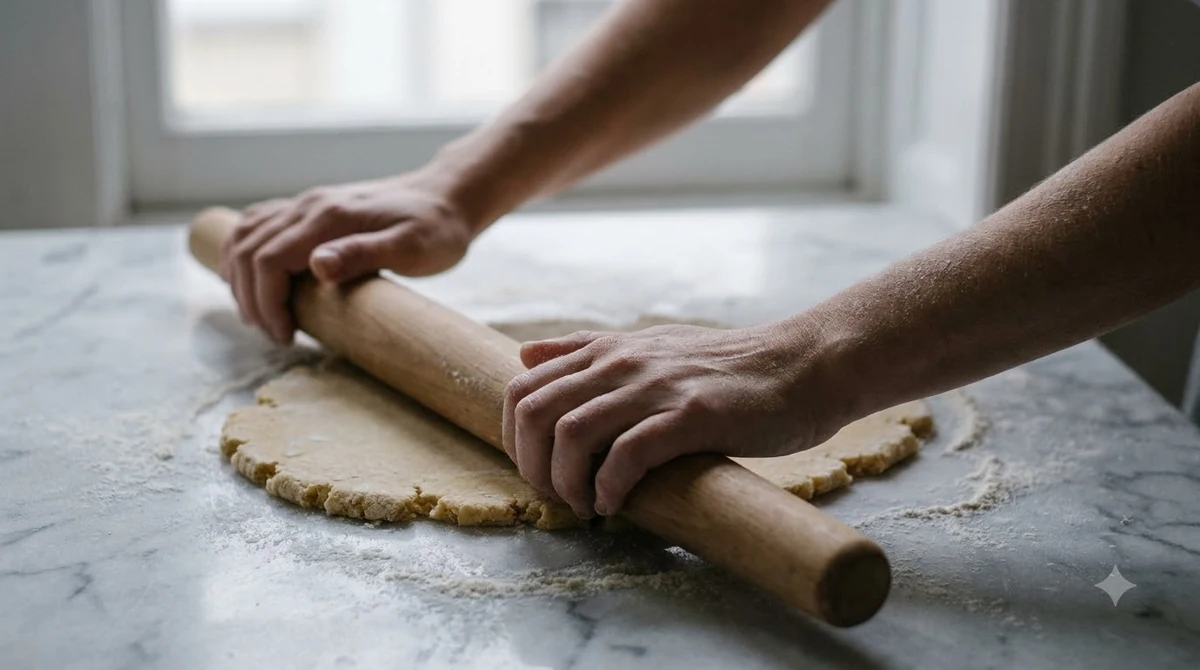

If you want to know how to make pasta with KitchenAid mixer dough only, mix flour, eggs, a little oil and salt on the lowest speed, knead for about two minutes, then finish the dough by hand and rest it before you roll it. The mixer does the rough work, and your hands decide when the texture is right. You do not need the pasta roller attachment for this method, so you can roll the dough with a pin or cut it by hand.
Many home cooks use the mixer for the whole process, but the dough hook alone rarely gives a smooth, elastic result. Using the mixer for the first stage and a short hand knead at the end is the method that KitchenAid’s own guidance describes, and it keeps the motor from working too hard on a stiff dough.
How to Make Pasta With KitchenAid Mixer Dough Only: Ingredients
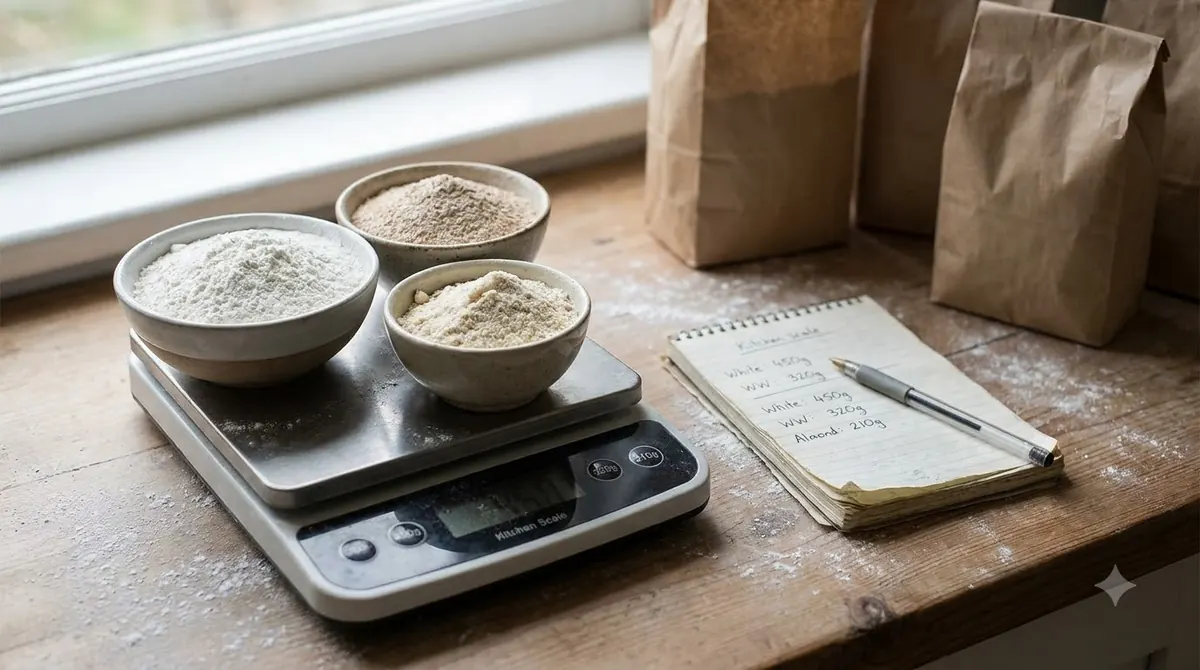
A basic dough uses about 360 g of 00 or all-purpose flour, roughly 208 g of large eggs (around four eggs), 2 teaspoons of olive oil and a pinch of salt, as set out in a widely used homemade pasta recipe for the KitchenAid.
Weigh the flour and eggs rather than measuring by cup, because egg size and flour brand change how much liquid the dough needs. Keep a small bowl of extra flour or water nearby so you can adjust the dough as it mixes.
How Do You Mix the Dough in the KitchenAid?
Start with the paddle attachment on speed 2 for about 30 seconds, then switch to the dough hook on speed 2 for two minutes. The mixer should bring the dough into one ball without making it sticky or crumbly.
- Put the flour, salt and eggs in the bowl with the paddle, then add the oil. Mix on speed 2 until the flour is absorbed and the dough looks shaggy.
- Swap to the dough hook and knead on speed 2 for two minutes. Do not go higher than speed 2, because a faster mixer can overwork the dough and strain the motor.
- Stop the mixer and check the dough. It should hold together when you press it, and it should not stick to your fingers.
- If the dough is dry and crumbly, add water one tablespoon at a time while the mixer runs. If it is sticky, add a small spoon of flour.
The dough should look rough at this stage. Smoothness comes from the hand knead, not from more time in the bowl.
How Long Should You Knead Mixer Dough by Hand?
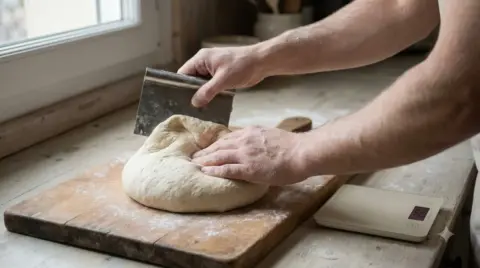
Turn the dough out onto a lightly floured counter and knead for one to two minutes until it feels firm, leathery and pliable. Good dough springs back when you press it with a fingertip.
Only dust the counter with a light coating of flour. Too much flour at this stage makes the dough dry, which leads to cracks and tearing when you roll it out.
| Dough sign | What it means | What to do |
|---|---|---|
| Crumbles and will not hold | Too dry | Add water a teaspoon at a time and knead again |
| Sticks to fingers and the counter | Too wet | Dust lightly with flour and knead |
| Firm, smooth and springs back | Ready to rest | Wrap and rest before rolling |
Why Does Pasta Dough Need to Rest?
Resting lets the flour absorb the liquid and lets the gluten relax, so the dough rolls thin without snapping back. Cover the dough so it does not dry out.
KitchenAid suggests resting the dough for 10 to 15 minutes under an upside-down mixer bowl, plastic wrap or a plastic bag. Some other recipes allow up to two hours for a looser, more elastic dough, so use the longer rest if the dough still resists the pin.
How Do You Roll and Cut Mixer Pasta Without a Roller?
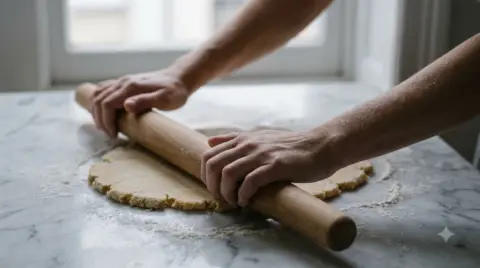
Roll the dough by hand or with a long rolling pin until it is thin enough to see the grain of your counter through it, then cut it into the shape you want.
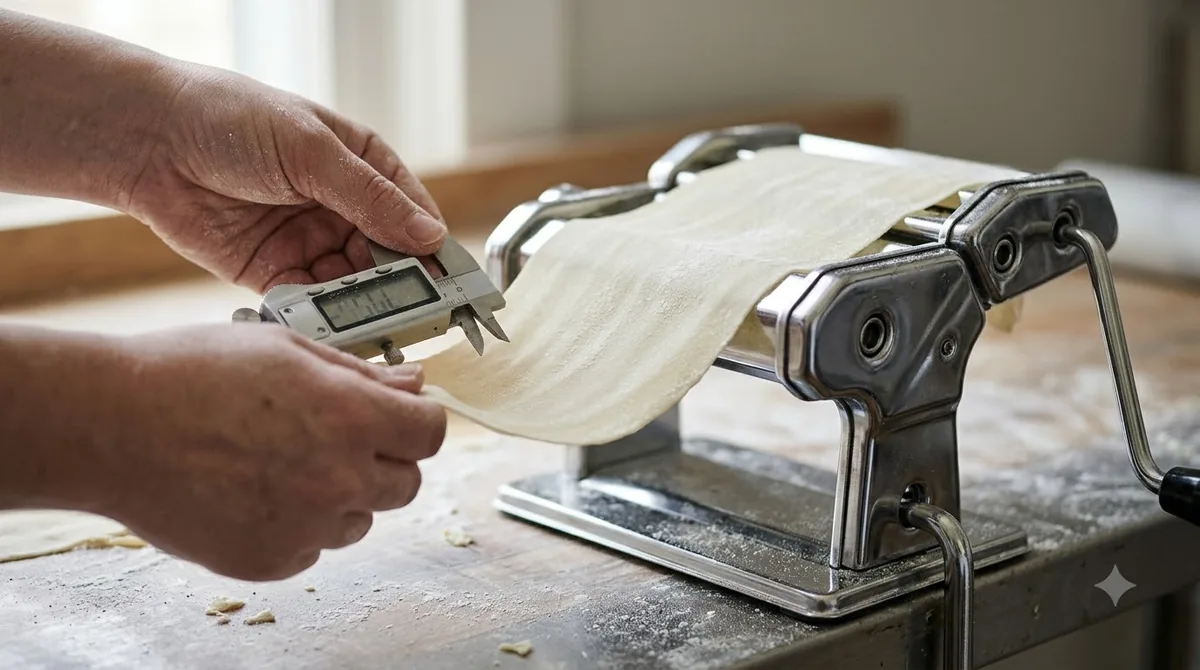
Divide the rested dough into four pieces and keep the ones you are not using wrapped. Roll each piece into a rough oval, then keep rolling outward from the centre, turning it a quarter turn after every pass, until the sheet is thin but still holds together. One guide rolls to about 1/4 inch before cutting thinner strands, so use that as a starting point and check the sheet by eye. Dust the sheet with semolina or flour, roll it loosely, and cut it with a sharp knife into fettuccine or tagliatelle widths.
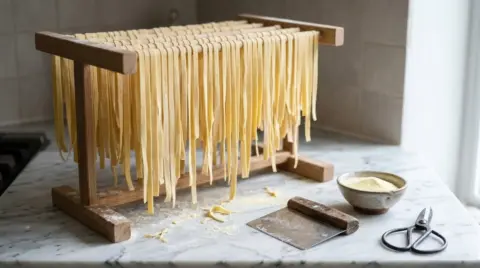
Hang or lay the cut pasta on a floured tray. Cook it within the hour, or dry it fully for storage.
Can You Use a Dough Hook Only Without Kneading by Hand?
Learning how to make pasta with KitchenAid mixer dough only is practical, although the texture is not identical to hand-kneaded dough. You can get a usable dough from the dough hook alone, but the texture is usually less smooth and less elastic than dough that is finished by hand.
If you skip the hand knead, rest the dough for longer and check it again before rolling. Expect the dough to be a little more fragile at the edges and to tear more easily when you stretch it.
Frequently Asked Questions
Can I make pasta dough entirely in a KitchenAid mixer?
You can mix and knead most of the dough in the mixer, but a short hand knead and a rest give a better texture. The mixer is best used for the first two stages only.
What speed should the KitchenAid run for pasta dough?
Use speed 2 for both the paddle and dough hook stages. Higher speeds overwork the dough and can strain the motor on a stiff mixture.
Why is my mixer pasta dough crumbly?
Crumbly dough is usually too dry. Add water one teaspoon at a time while the mixer runs, then knead by hand until the dough holds together.
How long should pasta dough rest before rolling?
Rest the dough for 10 to 15 minutes at minimum, wrapped so it does not dry out. Longer rests of up to two hours make the dough easier to roll thin.
Mixing most of the dough in the KitchenAid saves time and effort, but the final hand knead and rest make the difference between a dough that tears and one that rolls smoothly. Start on speed 2, adjust with small amounts of water or flour, and trust the feel of the dough over the clock.
 7 min readLearnHow to Make Pizza Dough in a Stand MixerUpdated Nov 10, 2026
 9 min readLearnIs KitchenAid Pasta Attachment Worth It? A Buyer’s Decision GuideUpdated Nov 11, 2026
 8 min readLearnHow Long to Knead Pizza Dough (By Hand and in a Mixer)Updated Nov 10, 2026
 5 min readLearnHow to Make Semolina Pasta Dough: Simple StepsUpdated Nov 13, 2026
 5 min readLearnFresh Pasta for 4 People: How Much Dough to MakeUpdated Nov 13, 2026
 9 min readLearnHow to Make Spinach Pasta Dough: Ratios, Kneading and RestingUpdated Nov 10, 2026