
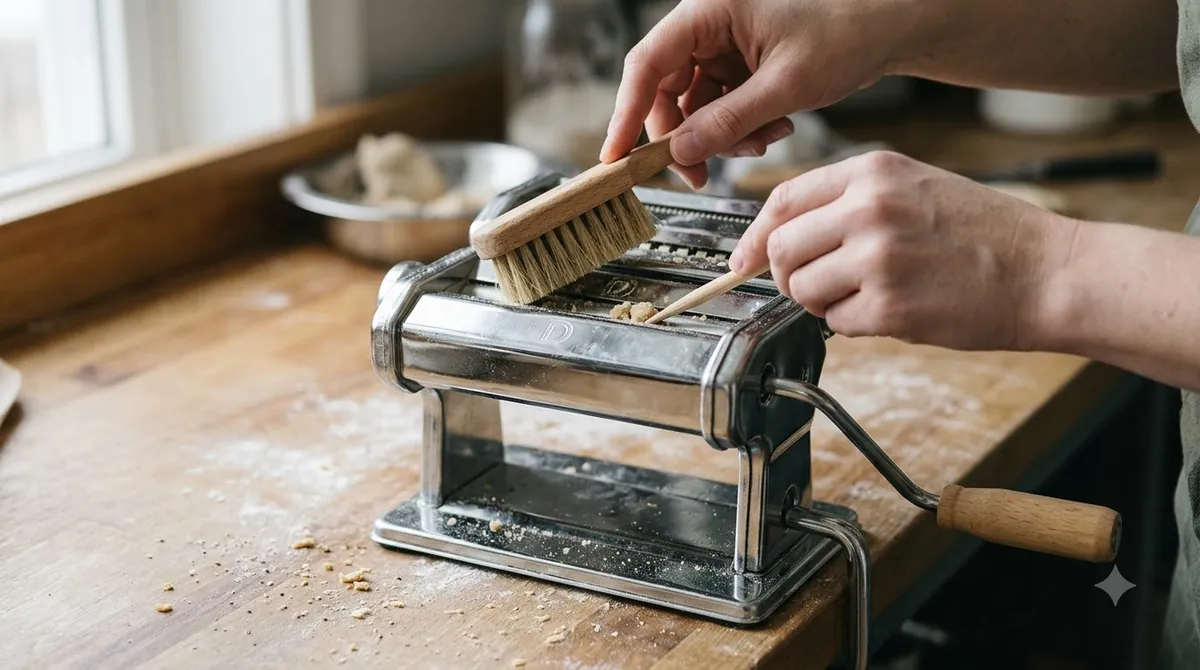

The short answer to is KitchenAid pasta attachment worth it is yes for cooks who already own a KitchenAid stand mixer and make fresh pasta several times a year. The attachment uses the mixer’s power shaft to drive a pasta roller and cutters, so the dough moves through without a hand crank.
Occasional cooks, or anyone without a compatible mixer, usually get more value from a hand-crank machine. The sections below show how to decide, using the manufacturer’s settings and warranty terms.
| Option | Best for | Key trade-off |
|---|---|---|
| KitchenAid pasta attachment | Stand mixer owners who cook pasta often | Needs a compatible mixer, and owner reports on durability are mixed |
| Hand-crank pasta machine | Occasional cooks with no mixer | More arm work for every batch |
| Dried store-bought pasta | Cooks who make pasta once or twice a year | No fresh pasta texture at home |
The sets below are the standard KitchenAid roller and cutter set, KitchenAid’s larger deluxe set and a third-party alternative. Each one needs a compatible stand mixer, so confirm the fit with your mixer before you order.

KitchenAid KSMPRA 3-pc Pasta Roller/Cutter Set
Pros & ConsViewHide
Reasons to buy
- Roller and cutter attachments for KitchenAid stand mixers
- Rolls even sheets without hand cranking
- 88% of 9K Amazon ratings are 5-star
Reasons to avoid
- Needs a compatible KitchenAid stand mixer
- Rolls and cuts the dough, but does not fill or fold tortellini
- One of the costlier tools in this guide

KitchenAid KSMPDX 5-piece Pasta Deluxe Set
Pros & ConsViewHide
Reasons to buy
- Five-piece roller and cutter set for KitchenAid stand mixers
- Stainless steel rollers and cutters
- Eight thickness settings and 6-inch sheets
Reasons to avoid
- Needs a KitchenAid stand mixer, sold separately
- Costs more than the 3-piece KSMPRA set
- Not covered by the sources used in this guide

Antree 3-1 Pasta Roller & Cutter Attachment Set
Pros & ConsViewHide
Reasons to buy
- Roller plus spaghetti and fettuccine cutters in one set
- Lower price than the KitchenAid-branded set
- 4.5-star Amazon rating
Reasons to avoid
- Third-party brand, not made by KitchenAid
- Confirm the fit for your mixer before buying
What the KitchenAid pasta attachment includes
The set includes a pasta sheet roller, a fettuccine cutter, a spaghetti cutter and a cleaning brush, and it is approved for all KitchenAid household stand mixers.
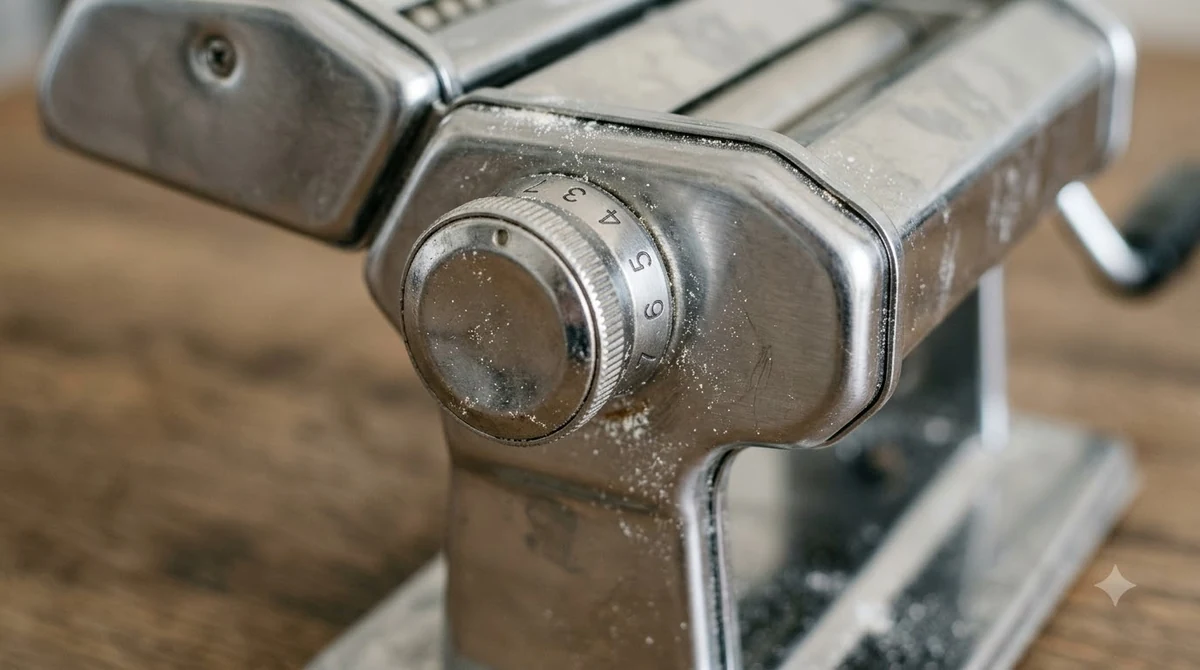
According to KitchenAid’s owner’s manual, the attachments are designed for pasta dough only. The manual warns not to roll or cut any other material or food with the unit, so treat it as a dedicated pasta tool.
- Pasta sheet roller with an adjustment knob
- Fettuccine cutter
- Spaghetti cutter, which also makes thin linguine
- Cleaning brush for removing dried dough
The roller’s knob has 8 settings that change the gap between the rollers. You start at a low number and step up, so the same dough can become thick egg noodles or very thin angel-hair strands.
Is KitchenAid pasta attachment worth it for your kitchen?
Buy it if you already own a compatible stand mixer and cook pasta at least a few times a year. Skip it if you cook pasta once or twice a year and already have another way to roll dough.
Owners who write about the attachment on retailer and review pages tend to say it pays off with frequent use, and our best KitchenAid pasta roller attachments roundup compares the options. The case is weaker for occasional cooks, and the value depends mostly on how often the roller comes out of the cupboard.
- Good fit: mixer owners who make fresh pasta every few weeks
- Good fit: households that cook pasta for several people at once
- Poor fit: cooks with no KitchenAid mixer and no plan to buy one
- Poor fit: cooks who want a dishwasher-safe set
The manual’s warranty covers sets used in the 50 United States and District of Columbia, with a separate warranty for Puerto Rico. Readers elsewhere should check their region’s terms before buying.
How the roller saves time at the counter
The roller works in steps, starting at setting 1 with the mixer on speed 2 or 4, then moving up until the sheet reaches the thickness you need.
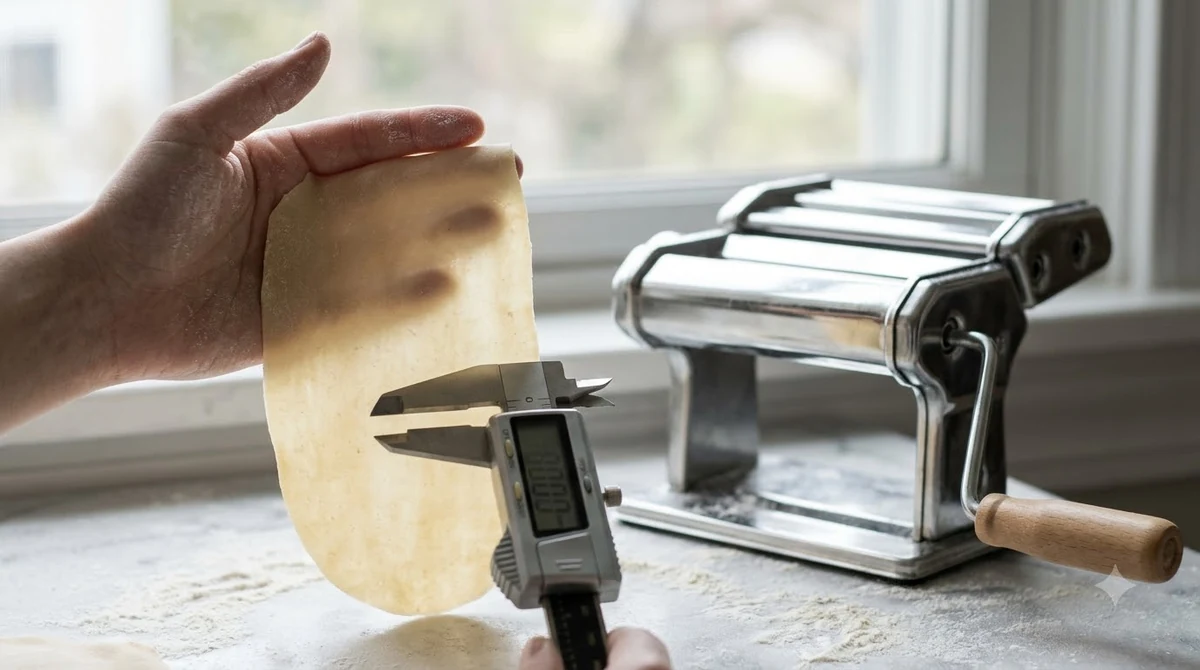
Cut the dough into pieces about 3/8 inch (1 cm) thick and flatten each one slightly before feeding it into the rollers. KitchenAid’s owner’s manual gives these steps and the suggested settings.
- Knead by feeding flattened dough through at setting 1 with the mixer on speed 2 or 4, then fold and repeat until the dough is smooth.
- Move the knob to setting 2, then 3, feeding the dough through again at each step.
- Keep increasing the setting until the sheet reaches the thickness your pasta needs.
- Swap the roller for the fettuccine or spaghetti cutter and feed the sheets through.
The manual’s suggested settings match the pasta shape you plan to make, as the table shows.
| Roller setting | Suggested use |
|---|---|
| 1 or 2 | Kneading and thinning dough |
| 3 | Thick kluski-style egg noodles |
| 4 or 5 | Lasagna noodles, fettuccine, spaghetti and ravioli |
| 6 or 7 | Tortellini, thin fettuccine and linguine fini |
| 7 or 8 | Very thin angel-hair pasta or very fine linguine |
Storing the pasta is part of the workflow too. The manual says to lay dried strands in a single layer on a towel or drying rack until they are completely air dry, then keep them in an airtight container. To freeze, let the pasta air dry for one hour, dust it with flour, form loose nests, and freeze them in an airtight container.
Attachment, hand crank, or a standalone machine
A KitchenAid attachment suits people who already own the mixer, while a hand crank suits people who do not want to depend on a stand mixer at all.
| Criterion | KitchenAid attachment | Hand-crank machine |
|---|---|---|
| Needs a stand mixer | Yes | No |
| Setup for each session | Attach to the hub and tighten the knob | Clamp to the counter and turn the crank |
| Cleaning | Air dry, then brush; never washed in water | Varies by model; check the manual |
| Best for | Frequent cooks who already own the mixer | Occasional cooks who want no mixer dependency |
The trade-off is simple. The attachment cuts the hand effort for each batch but ties you to one mixer, while a hand crank works without any appliance but takes more arm work per sheet.
Warranty and what owners report about durability
The manual lists a one-year full warranty from the date of purchase for sets used in the 50 United States and District of Columbia, with replacement or repair as the remedy.
To make a claim, the manual says to call KitchenAid’s Customer Satisfaction Center at 1-800-541-6390 with your proof of purchase, such as the sales receipt. Keep that receipt with the manual, because it is what assures in-warranty service. Our KitchenAid pasta roller warranty guide goes deeper on the terms.
The warranty does not cover use other than normal single family home use, damage from accident or misuse, or shipping costs to a service center, according to the same manual.
Owner reports on durability are mixed. One Best Buy reviewer said the roller stopped working after fewer than 20 uses and was already past the one-year warranty, while other reviewers praise its sturdiness. Treat these as user reports, not test results, and see KitchenAid pasta roller not working if yours stops turning.
Cleaning and care
Let the parts air dry for one hour after use, then brush off dried dough, because the manual says never to wash or immerse the attachments in water or in a dishwasher.
- Let the roller and cutters air dry for one hour after use.
- Remove dried dough with the cleaning brush, tapping the part by hand if needed.
- Never use a knife or other sharp object to scrape off dough.
- Polish with a soft, dry cloth and store the parts in a dry place at room temperature.
The manual also suggests adding a drop of light mineral oil to four gear spots on the rollers and cutters, once a year or after every 50 uses. Do not run a dish towel through the rollers to clean them. Our how to clean a KitchenAid pasta roller guide covers the routine.
Five questions to answer before you buy
If you answer yes to most of these questions, then for your kitchen the answer to is KitchenAid pasta attachment worth it is yes.
- Do you already own a KitchenAid stand mixer?
- Do you cook fresh pasta at least a few times a year?
- Do you have a clear place to store the roller and cutters?
- Are you comfortable air drying and brushing instead of washing?
- Is a one-year warranty enough for how often you plan to use it?
If you answer no to the first question, the attachment is not worth buying yet. Compare a hand-crank machine first (our how to choose a pasta maker guide helps), then read our Marcato vs KitchenAid comparison.
Frequently Asked Questions
Can the KitchenAid pasta attachment cut other foods?
No. The manual says the attachments are designed for pasta dough only, and you should not roll or cut any other material or food with the unit. Keep the cutters clean between batches so dried dough does not build up.
Is KitchenAid pasta attachment worth it if I cook pasta rarely?
Usually not. Owners report that the value depends on how often the roller comes out of the cupboard, so a cook who makes pasta once or twice a year may do better with dried pasta or a hand-crank machine.
Does the pasta attachment need a stand mixer?
Yes. The manual says the attachments are approved for use with all KitchenAid household stand mixers, and the mixer’s power shaft drives them. Without a compatible mixer, a hand-crank machine is the practical option.
How long is the warranty?
The manual lists a one-year full warranty from the date of purchase for sets used in the 50 United States and District of Columbia. Check your region’s current warranty terms before you buy, and keep the sales receipt.
What mixer speed should I use?
The manual suggests mixer speed 2 or 4 for kneading and rolling. Start at setting 1 on the roller, move up one step at a time, and dust the pasta lightly with flour so the sheets do not stick.
Is the attachment dishwasher safe?
No. The manual says never to wash or immerse the attachments in water or other liquid, and never to wash them in a dishwasher. Let them air dry for one hour, then remove dried dough with the cleaning brush.
If you cook pasta often and already own a KitchenAid stand mixer, the answer to is KitchenAid pasta attachment worth it is a reasonable yes, and the one-year warranty covers the early years of use. If you do not, compare a hand-crank machine first, and keep your receipt either way.
 6 min readLearnHow to Make Pasta With KitchenAid Mixer Dough OnlyUpdated Nov 13, 2026
 6 min readLearnPizza Oven Attachment for Grill: How It Works and How to Use ItUpdated Nov 13, 2026
 7 min readLearnPasta alla Zozzona Recipe: Rome’s Dirty Rigatoni ExplainedUpdated Nov 11, 2026
 7 min readLearnLorighittas Pasta: Sardinia’s Hand-Braided Ring PastaUpdated Nov 6, 2026
 8 min readLearnPesto alla Trapanese Recipe: Sicily’s Almond and Tomato PestoUpdated Nov 11, 2026
 8 min readLearnWhat Is Porchetta? A Simple Guide to Italy’s Boneless Pork RoastUpdated Nov 11, 2026