
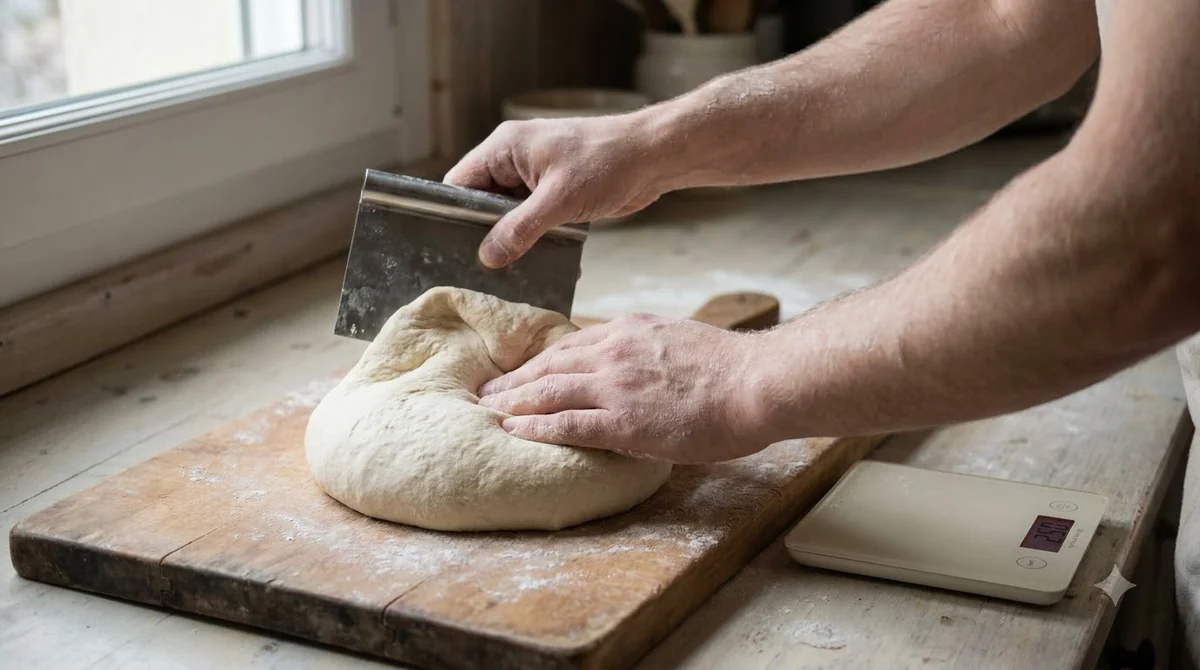

The answer to how long to knead pizza dough is about 6 to 8 minutes by hand, or about 8 minutes in a stand mixer. These are starting points, not fixed rules. Flour, water and room temperature all change how fast the gluten develops, so the dough should pass a texture check before you stop.
Pizza dough needs enough kneading to stretch thin without tearing, and too much makes it tough. Use the timing as a guide for how long to knead pizza dough, then check the dough with the windowpane test explained below.
How Long to Knead Pizza Dough by Hand
By hand, one pizza supply blog gives 6 to 8 minutes of kneading for a typical pizza dough.
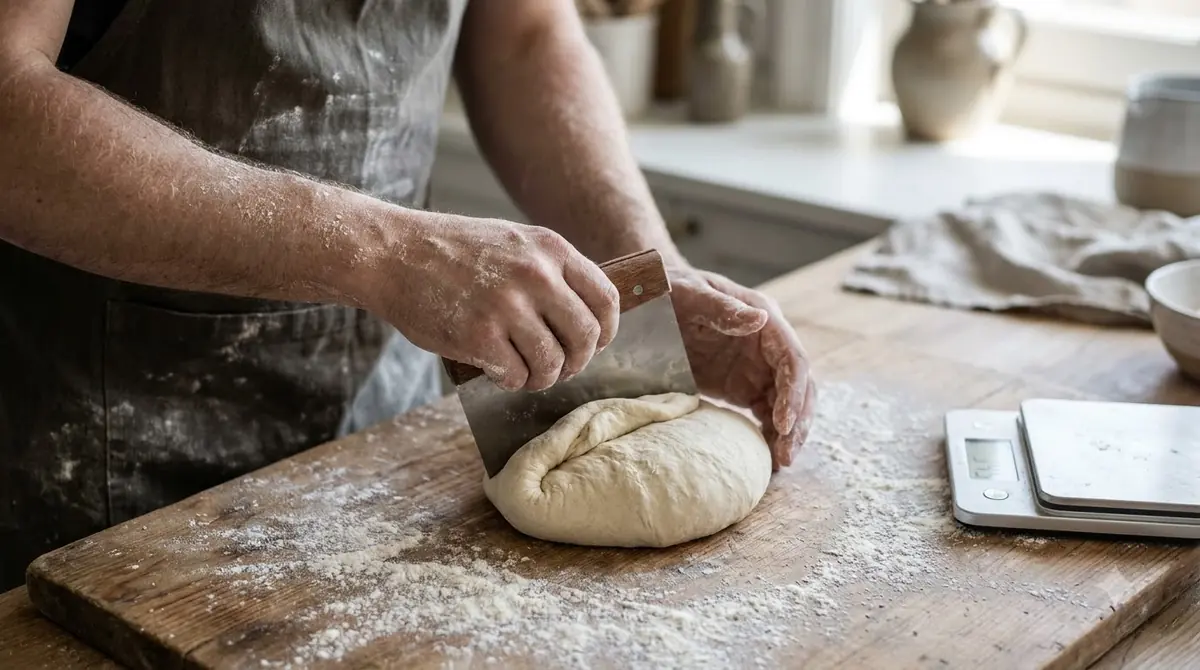
The same blog, Prepa Pizza, gives other ranges in different sections, with 6 to 10 minutes in its introduction and 10 to 12 minutes in its science section. That spread is a reminder that the clock is only a rough guide. Plan on about 6 to 8 minutes, then test the dough rather than stopping on a timer alone.
A common hand method is simple to learn. Keep the work surface lightly floured, and add only small amounts of flour so the dough does not dry out.
- Push the dough away from you with the heel of your hand.
- Fold the far edge back over the dough toward you.
- Give the dough a quarter turn.
- Repeat until the dough feels smooth and springs back when pressed.
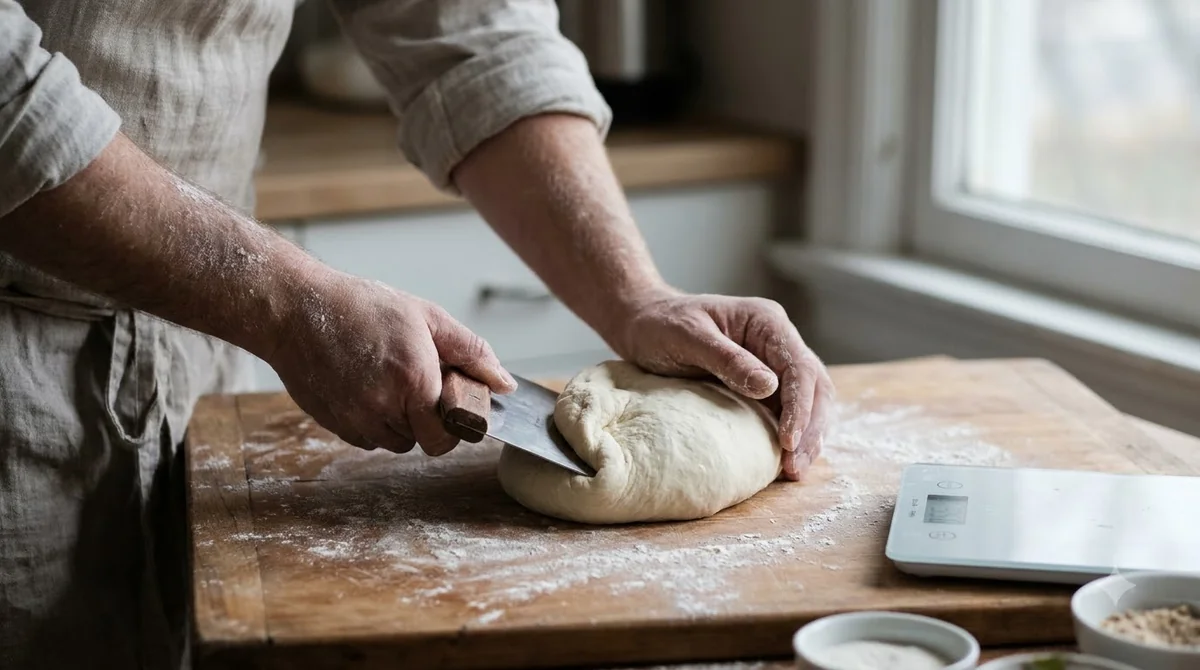
A bench scraper helps you lift and fold dough that sticks to the counter, so you can work it without adding too much extra flour.
The question of how long to knead pizza dough by hand has a practical answer for a new recipe. Start the timer at 6 minutes, run the windowpane test, and keep working in short rounds until the dough passes. Hand kneading is easier to judge by feel than by the clock, so the test is your real checkpoint.
How Long to Knead Pizza Dough in a Stand Mixer
For how long to knead pizza dough in a stand mixer, Breville says kneading takes about 8 minutes for most bread doughs, and your recipe comes first.
Breville’s stand mixer kneading guide says to set the mixer to a low-speed setting, because higher speeds can overheat the dough and strain the motor. The same guide notes that dough should stop sticking to the sides of the bowl during kneading.
| Method | Time reported | Source |
|---|---|---|
| Hand kneading | 6 to 8 minutes | Prepa Pizza, main section |
| Stand mixer, most breads | About 8 minutes | Breville |
| Stand mixer with a dough hook | 8 to 10 minutes | Prepa Pizza, main section |
Knowing how long to knead pizza dough in a mixer also protects the motor. Breville warns that high speeds can overheat the dough, so stay on low and check the texture at regular intervals rather than walking away from the machine.
The dough hook is the attachment to use when you make pizza dough in a stand mixer. Prepa Pizza suggests starting on low speed to combine the ingredients, then moving to medium speed. Breville keeps the mixer on low, so use the speed your mixer manual recommends for dough.
How to Tell When Pizza Dough Is Kneaded Enough
Pizza dough is kneaded enough when it stops sticking to the bowl, feels smooth and elastic, and passes the windowpane test.
Checking these signs tells you more than a fixed answer to how long to knead pizza dough, because flour and temperature shift the timing from one batch to the next.
- It no longer sticks to the sides of the bowl during mixing.
- It feels smooth and elastic in your hands.
- A gentle press yields easily and springs back slowly.
- A small piece stretches thin without tearing.
Use all four signs together. A dough can look smooth and still tear when you stretch it, and that is a sign to keep kneading and test again. Each sign confirms the others, so the answer to how long to knead pizza dough is always the point where all four agree.
How the Windowpane Test Works
The windowpane test stretches a small piece of dough until light shows through it without tearing.
King Arthur Baking’s windowpane explainer describes the steps. Pinch off a piece about the size of a ping pong ball, flatten it between your fingers as though you were making a tiny pizza, rest it for a couple of minutes, then flatten it again.
- Pinch off a piece of dough about the size of a ping pong ball.
- Flatten it between your fingers.
- Rest it for a couple of minutes, then flatten it some more.
- Gently pull on opposite ends to stretch out the middle.
The center thins as you pull. The dough either tears right away or stretches until light shows through, which is the result the test is looking for.
A tear is information, not a verdict. Early in kneading the dough tears almost at once, so it needs more work. How far you need to go, and so how long to knead pizza dough in total, depends on the next step. Before a short rise of about an hour, the gluten should be nearly fully developed. Before a long rise or cold rest, less development is fine, because the gluten keeps strengthening while it rests.
When a recipe gives no time at all, the windowpane test is the most reliable way to decide how long to knead pizza dough. It asks the dough directly whether the gluten is ready, which a timer cannot do.
Whole grain dough is harder to judge. King Arthur notes that bran can interfere with developing gluten, so the windowpane test is less reliable, and a windowpane is more likely after an overnight rest.
What Happens If You Knead Pizza Dough Too Little or Too Much
Under-kneaded dough tears early in the stretch, while over-kneaded dough turns tough and dense.
Under-kneaded dough has not yet built enough gluten structure. It tears as soon as you stretch it, which makes it hard to shape a thin base without holes.
Too much kneading does the opposite. Prepa Pizza warns that over-kneading leads to a tougher texture, and says it can create a crumb-like texture that makes the crust dense rather than light and airy.
How long to knead pizza dough is not only about time. The goal is a dough that holds its shape and stretches evenly, which is why the same number of minutes can produce different results in different kitchens.
If you are unsure how long to knead pizza dough, stop when the dough passes the windowpane test. Kneading past that point adds work without a clear gain for the crust, and it moves the dough toward the tough texture described above.
Factors That Change How Long Pizza Dough Needs
Flour, hydration and temperature change how long to knead pizza dough, because they change how quickly gluten develops. The same timing will not suit every dough.
- Whole grain flour, where bran can get in the way of gluten.
- Hydration, since a wetter dough is stickier and takes longer to come together.
- Room temperature, which changes how fast the dough warms and relaxes.
- The resting time before shaping, which lets gluten strengthen on its own (see how long to proof pizza dough).
Use the timing for how long to knead pizza dough as a first pass, then adjust with the windowpane test. That approach works for a dough made with bread flour, a whole grain blend or a wetter recipe.
Frequently Asked Questions
Can you knead pizza dough for too long?
Yes. Over-kneading makes pizza dough tough and can leave the crust dense, according to Prepa Pizza. If the dough feels tight, springs back hard and stops stretching, you have likely gone too far, so let it rest before you shape it.
Can you knead pizza dough too little?
Yes. Dough that tears right away in the windowpane test needs more kneading, so ask how long to knead pizza dough for your recipe and keep working it. Rest it briefly, then test again. A longer rise can also help gluten strengthen, which is why less development is acceptable before a long rise or cold rest.
Does a long rest reduce how much kneading you need?
It can. King Arthur notes that before a long rise or cold rest, less gluten development is fine, because the gluten keeps strengthening while it rests. Before a short rise of about an hour, the gluten should be nearly fully developed before you shape the dough.
Can you finish kneading pizza dough by hand after using a mixer?
Yes. Hand kneading is a practical way to finish a dough that the mixer left slightly sticky or uneven. Use the same timing as a starting point for how long to knead pizza dough by hand, then confirm with the windowpane test. Use the same signs as before: smooth, elastic, springs back slowly, and a windowpane that holds without tearing.
Does no-knead pizza dough need kneading at all?
No. A no-knead pizza dough relies on a long resting time to develop gluten rather than hand or mixer work. It is a different method, so follow a no-knead recipe with its own timing instead of applying the kneading times in this guide.
For how long to knead pizza dough, start with about 6 to 8 minutes by hand or about 8 minutes in a stand mixer, then stop when the dough is smooth, elastic and passes the windowpane test. If your recipe gives its own time, follow that first, because the dough, not the clock, tells you when it is ready.
 8 min readLearnHow to Knead Pizza Dough by Hand: A Simple Method for Home CooksUpdated Nov 11, 2026
 7 min readLearnHow to Make Pizza Dough in a Stand MixerUpdated Nov 10, 2026
 9 min readLearnNo Knead Pizza Dough: Flour, Water and Time Do the WorkUpdated Nov 10, 2026
 6 min readLearnHow to Make Pasta With KitchenAid Mixer Dough OnlyUpdated Nov 13, 2026
 10 min readLearnHow Long Does Pizza Dough Last in the Fridge?Updated Nov 10, 2026
 8 min readLearnBulk Fermentation Pizza Dough: How Long, How to Cover It and When It Is DoneUpdated Nov 11, 2026