
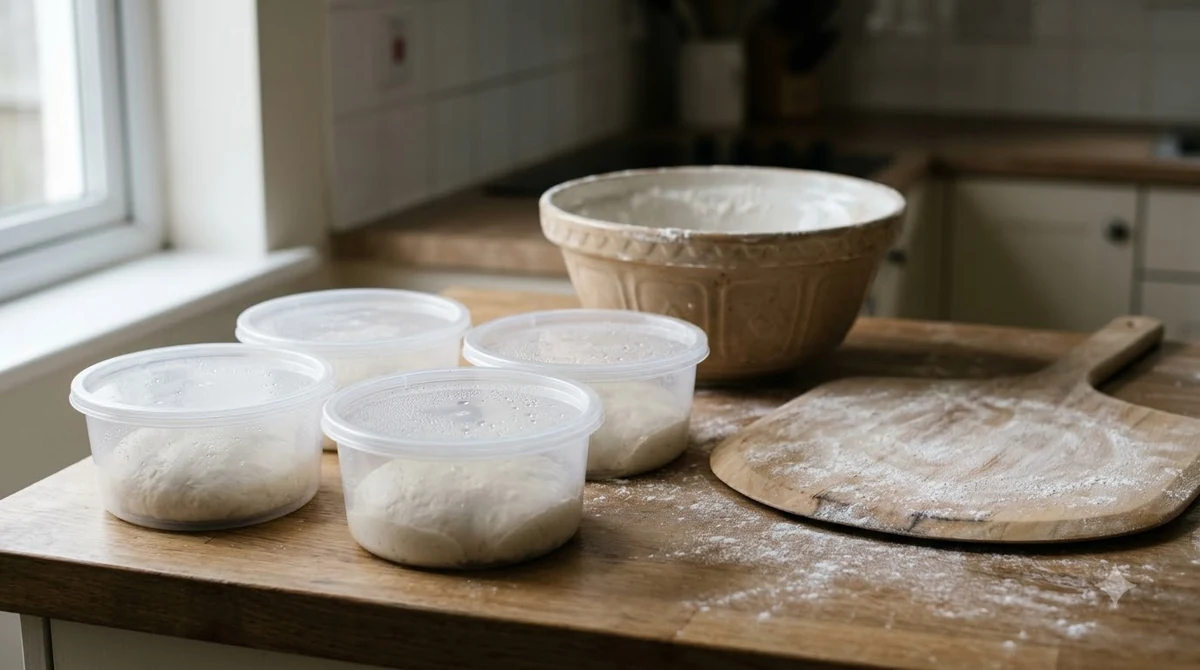

How to thaw frozen pizza dough comes down to one rule: move the dough from the freezer to the refrigerator while it is still wrapped, then let it finish rising at room temperature. The fridge stage is slow, but it is the most predictable answer to how to thaw frozen pizza dough at home. Plan the thaw a day ahead, and skip the shortcuts that tend to hurt the texture.
How to thaw frozen pizza dough in the refrigerator
To thaw frozen pizza dough, put the wrapped dough in the refrigerator and let it thaw slowly for about 24 hours, according to Baking Steel’s guide to freezing pizza dough.
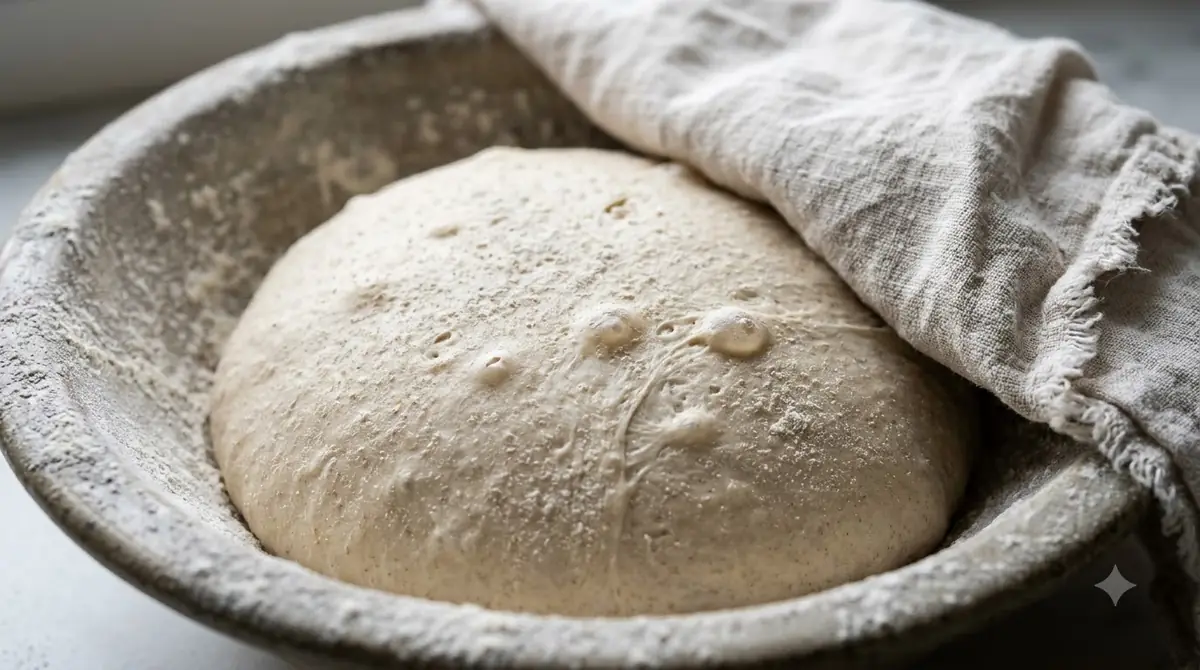
The guide tells home bakers to move the dough ball from the freezer to the fridge while it is still wrapped. The thaw is meant to be slow, so plan to thaw frozen pizza dough the evening before. A same-day shortcut usually means a compromise on texture, so an evening transfer gives the most room in the schedule.
The same idea appears in King Arthur’s guidance on frozen bread dough. King Arthur’s frozen no-knead dough post says that transferring dough from the freezer to the refrigerator the night before you bake can save at least a couple of hours of rising time.
Use this sequence for the fridge stage:
- Keep the dough wrapped as it leaves the freezer.
- Move it to the refrigerator in the evening.
- Leave it there for about 24 hours, per Baking Steel.
- Take it out for the final rise before shaping, as in our guide to shaping pizza dough balls.
Finish the rise at room temperature
After you thaw frozen pizza dough in the fridge, let it finish its final proof at room temperature for 3 to 4 hours, until it is soft, airy and easy to stretch, according to Baking Steel.
The check is how the dough feels, not the clock alone. Dough that is still firm or tight needs more time, while dough that is soft and stretches without tearing is ready to shape.
Thawing is only half the job. The rise after the thaw decides whether the dough stretches easily or tears when you shape it. For more on timing, see how long to proof pizza dough.
Timing varies with the kitchen. King Arthur reports that thawing and rising a frozen no-knead dough took 4 to 5 hours, and it may take longer if the house is cold. That source covers bread dough, so treat the range as a guide for pizza dough, not a fixed rule.
Cover the pan or container during the thaw and rise so the surface does not dry out. King Arthur’s guide uses the same step, covering the pan while the dough thaws and rises. Covering matters as much here as it does for any rise.
| Stage | Starting point | Time stated | Source |
|---|---|---|---|
| Refrigerator thaw | Freezer, still wrapped | About 24 hours | Baking Steel |
| Night-before transfer | Frozen bread dough | Saves at least a couple of hours of rising | King Arthur |
| Final proof | Thawed dough at room temperature | 3 to 4 hours | Baking Steel |
| Thaw and rise | Covered pan, frozen no-knead dough | 4 to 5 hours, longer in a cold house | King Arthur |
The table shows where the times for how to thaw frozen pizza dough come from. Read each row as a starting point, then adjust by feel.
Using cold water to speed up the thaw
Cold water can shorten the thaw, but the dough must stay in sealed packaging and the water must be changed every 30 minutes, according to Montana State University Extension.
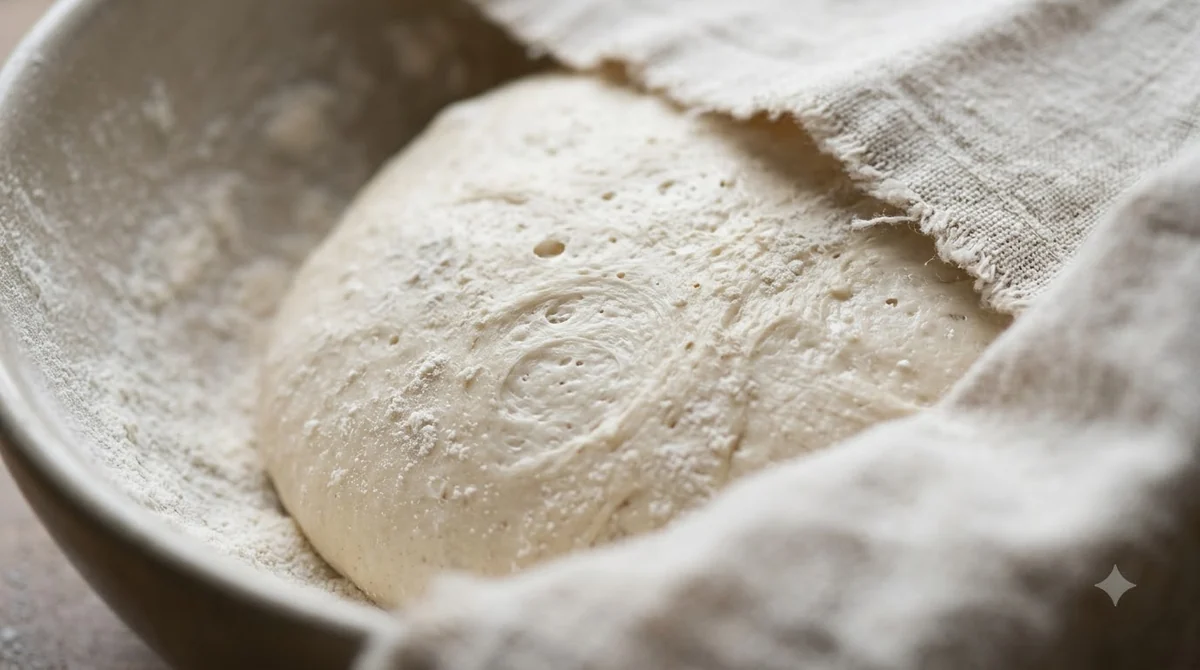
The extension’s safe thawing practices guide covers the cold water method for food in general. It does not give a water temperature or a time for dough, so this method asks for more attention than the fridge.
When you thaw frozen pizza dough this way, keep the sealed dough submerged, swap the water on schedule, and check the dough by feel once it looks softened. A cold water thaw that runs for hours without checks is harder to control than the fridge method.
Cold water is a sensible backup when the fridge plan falls through. Anyone in a hurry should treat this as the method that needs the most checks.
Methods to avoid: the counter and the microwave
The counter and the microwave are the two ways to thaw frozen pizza dough that you should avoid, because both warm the dough unevenly and leave it in the wrong condition for a good rise. Each one undercuts the careful timing that good dough needs.
The same extension guide lists thawing on the countertop under methods to avoid. It also advises that perishable food should not stay out of refrigeration for more than 2 hours, or 1 hour when the temperature is above 90°F.
The microwave heats unevenly. The guide warns that some parts of a food can enter the 40 to 140°F danger zone during thawing, and that food thawed in the microwave must be cooked right away. Pizza dough is not cooked right away, so the microwave is the wrong tool for this job.
If you are short on time, cold water is the only quicker method the sources support, and the fridge remains the safer plan.
Mistakes that ruin the crust
The two mistakes that do the most damage when you thaw frozen pizza dough are rushing the thaw and refreezing thawed dough, both of which can leave the crust dense and flat.
- Rushing the thaw with heat. Baking Steel warns that rushing the thaw will shock the yeast and ruin the crust.
- Refreezing thawed dough. The same guide says refreezing can damage the yeast and gluten structure, leading to a dense, flat crust.
- Skipping the cover. Leaving the dough uncovered during the thaw and rise invites a dry surface, so keep it covered in its pan or container.
Each of these errors affects either the yeast or the surface of the dough, which is why they matter more than any single number on the clock.
Shaping and baking the thawed dough on schedule is the simplest way to avoid these problems. If the dough stays flat after thawing, read why pizza dough is not rising.
Freezing and storage that help the thaw
Oil each dough ball before freezing so it is easy to thaw frozen pizza dough later, and plan to use it within about 45 days for the best texture, according to Baking Steel.
Oiling helps prevent the dough from drying out and forming a skin in the freezer. The same guide notes that texture and flavor can decline over time as freezer burn sets in, so the freezer is not a permanent holding place. For the basics of freezing, see whether you can freeze pizza dough and how to do it.
Good freezing habits make thawing easier, because the oil and wrapping from the freezing stage are what keep the surface from drying in the freezer.
King Arthur’s bread dough guidance is stricter on time. It says that a rise deteriorates when dough stays in the freezer more than 2 weeks. Because the two sources differ, using the dough sooner gives the most reliable result.
What the sources do not settle
The sources checked for this guide do not confirm exact times for warm water, steam or oven-warming methods, so those figures are left out of this guide on how to thaw frozen pizza dough.
Many blogs list specific minutes for warm water baths, steam and oven-warming. Those figures differ from site to site, and none came from a source that could be checked in full. Treat any such number as unconfirmed and test the dough by feel.
For thawing, the fridge is the one method with clear guidance in the sources reviewed for this guide.
Store-bought dough can also carry its own thawing instructions. Check the package for the manufacturer’s thawing advice, and use the timings above as starting points rather than fixed rules.
Frequently Asked Questions
Can I thaw frozen pizza dough overnight?
Yes. Baking Steel’s guide suggests about 24 hours in the refrigerator, and King Arthur notes that moving frozen bread dough to the fridge the night before saves at least a couple of hours of rising time. Move the dough in the evening so it is ready to shape the next day when you thaw frozen pizza dough this way.
Can I thaw frozen pizza dough on the counter?
It is not recommended. Montana State University Extension lists thawing on the countertop among methods to avoid, and it advises against leaving perishable food out of refrigeration for more than 2 hours. When you learn how to thaw frozen pizza dough, use the fridge for the thaw and keep room temperature for the final rise only.
Can I refreeze thawed pizza dough?
Baking Steel advises against it. Refreezing can damage the yeast and gluten structure and lead to a dense, flat crust. It is better to shape and bake the thawed dough than to return it to the freezer when you thaw frozen pizza dough.
Is the microwave safe to thaw frozen pizza dough?
The microwave heats unevenly, so parts of the dough can warm while others stay cold. Montana State University Extension warns about the 40 to 140°F danger zone during uneven thawing and says microwave-thawed food should be cooked right away. Pizza dough is not cooked at that stage, so for how to thaw frozen pizza dough the fridge is the better choice.
How long can frozen pizza dough stay in the freezer?
Baking Steel recommends using frozen dough within about 45 days for the best texture and flavor. King Arthur’s bread dough guidance says the rise can deteriorate after more than 2 weeks in the freezer, so the sources differ and sooner is the safer choice.
Learning how to thaw frozen pizza dough well takes one planned evening, not a rushed afternoon. Plan to thaw frozen pizza dough a day ahead, keep the dough wrapped in the fridge, and let it finish rising until it stretches easily. Skip the counter, the microwave and refreezing, and the dough is far more likely to bake into a light, evenly risen crust.
 9 min readLearnHow to Reheat Pasta Safely and Keep It MoistUpdated Nov 10, 2026
 9 min readLearnNew York Style Pizza Recipe: Dough Ratios, Rise Times and Oven SettingsUpdated Nov 10, 2026
 8 min readLearnNeapolitan Pizza Dough Recipe: Ratios, Mixing and RiseUpdated Nov 10, 2026
 8 min readLearnHow to Store Leftover Pizza Safely in the Fridge and FreezerUpdated Nov 12, 2026
 5 min readLearnHow to Make Calzone Dough: Flour Blend, Rise Time and Make-Ahead TipsUpdated Nov 13, 2026
 5 min readLearnHow to Make Pizza Crust Puffy: Hydration, Rise and HeatUpdated Nov 13, 2026