
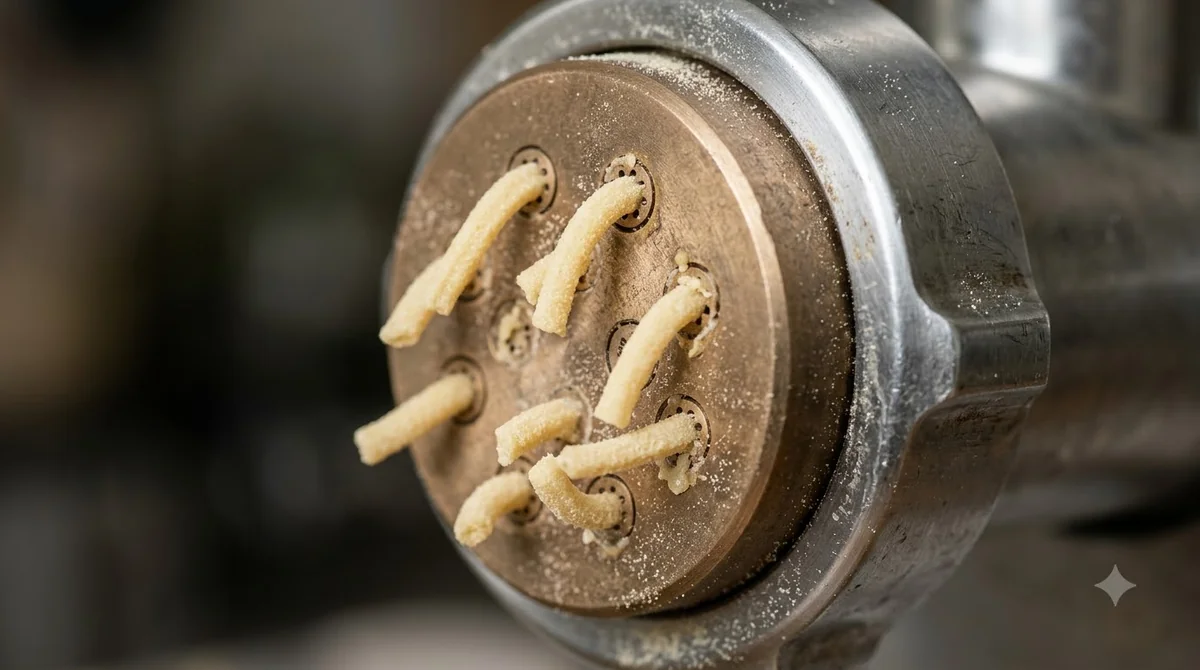

The KitchenAid pasta extruder is a stand mixer attachment that pushes dough through interchangeable plates to make short pasta shapes. It uses the mixer motor, so you set a speed for each plate.
The KitchenAid pasta extruder suits cooks who already own a stand mixer and want tube and spiral shapes without a dedicated machine. It is a poor fit for flat sheets or long strands, and it needs a rest and careful cleaning.

KitchenAid KSMPEXTA Gourmet Pasta Press Attachment
Pros & ConsViewHide
Reasons to buy
- Six quick-change discs: spaghetti, bucatini, rigatoni, fusilli, large and small macaroni
- Built-in wire cutter and a storage case
- Stainless steel cleaning tool included
Reasons to avoid
- Needs a KitchenAid stand mixer, sold separately
- Takes more cleanup than a roller
- Premium-priced attachment
What the KitchenAid Pasta Extruder Kit Includes
The kit includes a press housing, an auger, a pasta ring, a wire cutter, six pasta plates, a combo tool, a cleaning brush and a storage case.
- Press housing, which attaches to the stand mixer
- Auger, the screw that pushes the dough forward
- Pasta ring, which holds the plate in place
- Six pasta plates for the shapes listed in the booklet
- Swing-arm wire cutter that cuts the pasta to length
- Combo tool with a push end and a wrench side
- Cleaning brush and storage case
The booklet names the plates as spaghetti, bucatini, rigatoni, fusilli, large macaroni and small macaroni. Keep every part in the storage case, because the booklet’s assembly order uses all of them and a missing ring or plate stops the press from being set up as described.
How the KitchenAid Pasta Extruder Works
With the KitchenAid pasta extruder, the mixer turns the auger, which pushes dough through the plate, and the cutter trims each strand as it leaves the press.
Dough goes into the hopper in walnut-size pieces. The booklet says the dough should feed itself, and the combo tool is only for dough that gets caught in the press, so you do not need to force it in.
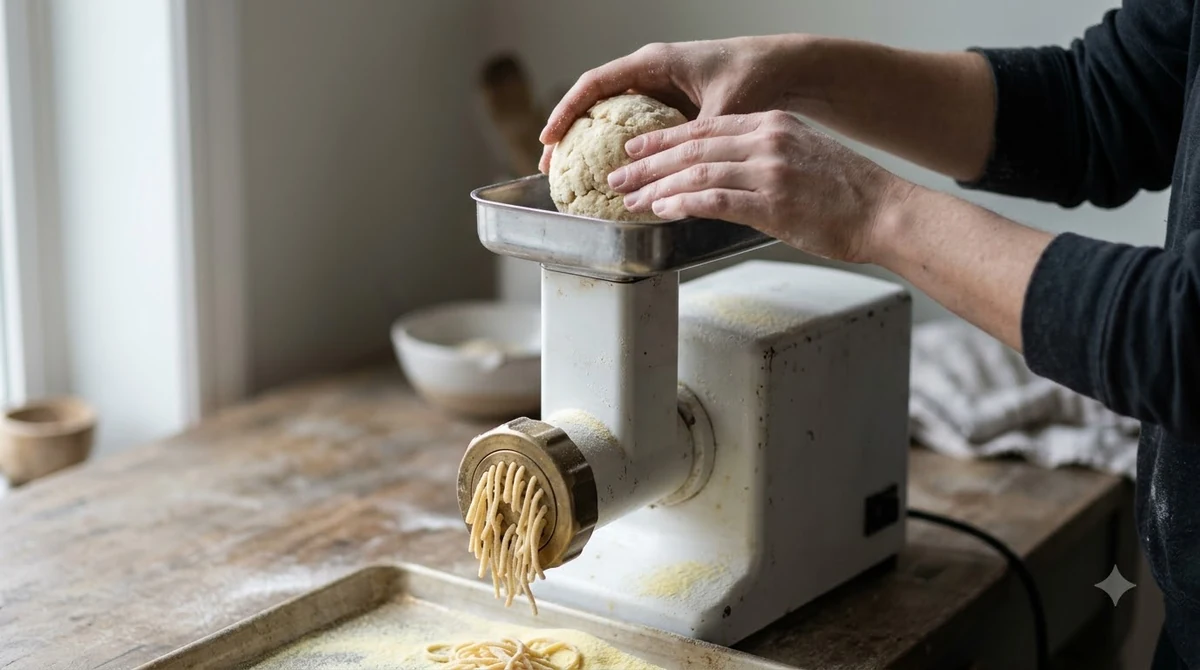
The booklet gives a typical extrusion length for each plate, and the swing-arm wire cutter is what sets the length of each piece you cut. Cut the strands as they come out rather than letting a long strand hang over the tray.
The booklet's assembly order starts with the auger pushed into the housing, then the plate tabs set into the notches. The pasta ring goes on finger tight, and the cutter is pushed in and turned to the right to lock. Following that order is what keeps the plate seated before you add any dough.
Who the KitchenAid Pasta Extruder Suits
The KitchenAid pasta extruder suits home cooks who already own a compatible stand mixer and want tube and short shapes without buying a separate machine.
The press works best with firm dough. The booklet’s test is to pinch a small amount, and it should hold together without sticking to your fingers. If the dough is too moist, dust it with flour or pat flour into the dough before extruding. For dough ratios and sauces to pair with the shapes, see our KitchenAid pasta extruder recipes.
Attach the KitchenAid pasta extruder with the mixer switched off. KitchenAid’s UK assembly FAQ says to turn the mixer to speed 0 and unplug it before attaching the press.
It fits less well if you want flat sheets for lasagna or fettuccine, or long strands much longer than the 9½ inches the booklet lists for spaghetti. A pasta roller or a separate machine suits those cases better, and our guide on how to choose a pasta maker compares the options.
KitchenAid Pasta Extruder Plates, Speeds and Lengths
Each plate on the KitchenAid pasta extruder has a mixer speed and a typical extrusion length in the booklet chart, so read the chart before your first batch. Our summary of the KitchenAid pasta extruder manual walks through the same booklet.
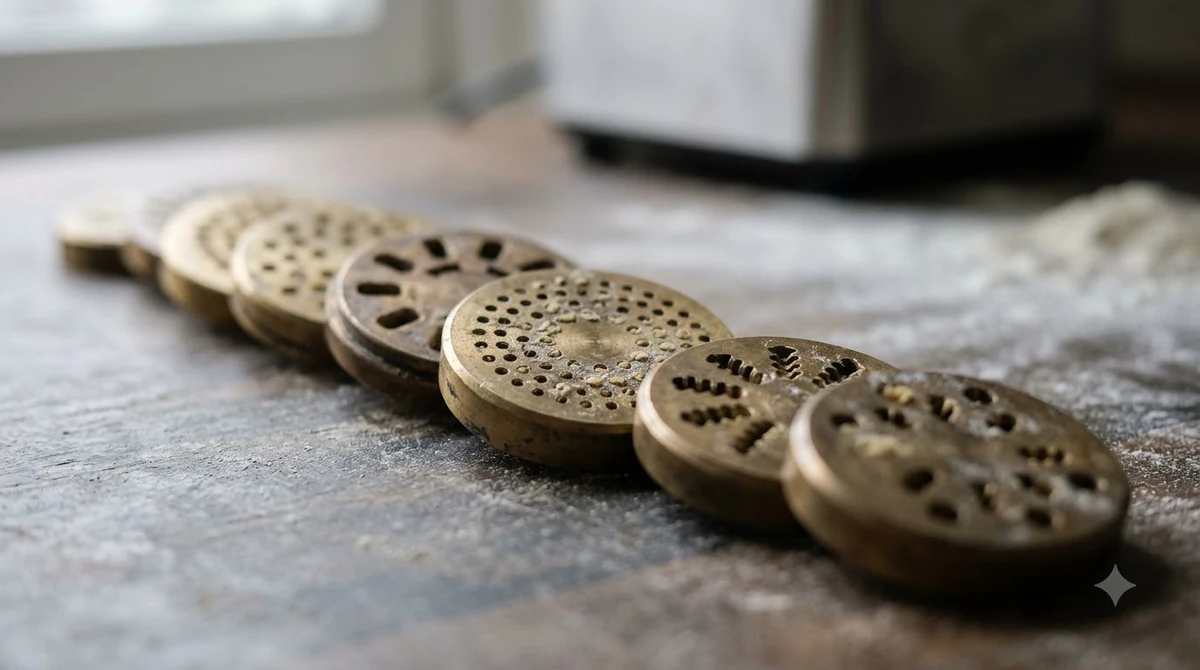
| Plate | Mixer speed | Extrusion length |
|---|---|---|
| Spaghetti | 10 | About 9½ in (24.0 cm) |
| Bucatini | 10 | About 9½ in (24.0 cm) |
| Rigatoni | 6 | About 1½ in (4.0 cm) |
| Fusilli | 2 to 4 on the chart; the text says up to 6 for best results | Traditional 9½ in (24.0 cm) or short 1½ in (4.0 cm) |
| Large macaroni | 6 | Up to 2 in (5.0 cm) |
| Small macaroni | 6 | Up to 1½ in (4.0 cm) |
Fusilli is the one shape with two speed figures. The chart gives 2 to 4, while the text says speed 6 gives the best results, so run a small batch first and check the shape before you cook a full portion.
Changing plates follows a fixed sequence. Turn the mixer off and unplug it, remove the press, then take off the cutter, ring and auger before you swap the plate, and reassemble in the same order as the first setup.
The mixer also needs a rest. The booklet says to let the mixer rest for at least one hour after extruding two consecutive pasta dough recipes, so plan a break when you cook for a crowd.

Trade-offs to Weigh Before You Buy
The main trade-offs of the KitchenAid pasta extruder are dependence on the mixer, a limited shape list, a longer cleaning routine and a mandatory rest period.
- Mixer dependence: the press needs a compatible stand mixer and counter space for it.
- Shape list: six plates cover tube and short shapes, not filled pasta or sheets.
- Cleaning: the housing never goes in the dishwasher or in water, and the cutter and plates are hand washed (step by step in our guide on how to clean the KitchenAid pasta extruder).
- Drying: dough left on the plates should dry overnight before you brush it off.
Seller listings for the KitchenAid pasta extruder disagree on which parts are dishwasher safe. Follow the booklet, which lists the auger, pasta ring, combo tool and storage case as dishwasher safe, over a summary on a retail page.
Checklist Before You Buy a KitchenAid Pasta Extruder
Confirm mixer compatibility, your shape list and cleaning time, since those three decide whether the press fits your kitchen.
- Check your stand mixer model against KitchenAid’s attachment information and confirm the press fits your mixer. KitchenAid’s product help pages show how the press is removed from a mixer.
- List the shapes you cook most. If they are not on the six plates, the press will not cover them.
- Plan the cleaning time, including the overnight drying step for dough left on the plates.
- Read the current price, warranty and included parts on the seller’s page, because this article does not verify those details.
Frequently Asked Questions
Does the KitchenAid pasta extruder make filled pasta?
No. The booklet lists six plates for spaghetti, bucatini, rigatoni, fusilli, large macaroni and small macaroni, and all of them produce tube or short shapes. Filled pasta and flat sheets are outside what this press is designed for, so plan on a different tool for those. The booklet does not list a filled-pasta plate, so do not expect one to be included in this kit.
Which mixer speed should I use for spaghetti?
The booklet chart lists speed 10 for spaghetti and bucatini, and the booklet gives an extrusion length of about 9½ inches for both. Use the chart as your starting point, then check the first batch against the length you expect. The chart is the reference for your model, so follow it rather than a speed from a recipe blog.
Can I wash the housing in the dishwasher?
No. The booklet says the housing is never to go in the dishwasher or in water, so wipe it instead. The auger, pasta ring, combo tool and storage case are listed as dishwasher safe, while the cutter and pasta plates are hand washed in warm sudsy water and dried thoroughly.
How long should the mixer rest between batches?
The booklet says the mixer must rest at least one hour after extruding two consecutive pasta dough recipes. That rule applies to the mixer, so count the rest into your cooking plan. Shorter batches within a single session are covered by the same general caution, and the booklet’s rule is the number to follow.
Is the extruder the same as a pasta roller?
No. The extruder pushes dough through a plate to form shapes such as spaghetti and rigatoni, while a roller flattens dough into sheets for lasagna or fettuccine. Choose based on whether you want shapes or sheets, and if you want both, check whether you have room for a second attachment.
If you already own a compatible stand mixer and cook short pasta often, the KitchenAid pasta extruder is a practical add-on. Before you buy, confirm your mixer model, your shape list and the current price and warranty on the seller’s page, since those were not verified for this article.
 5 min readReviews & VersusKitchenAid Pasta Roller vs Extruder: Which Attachment to BuyUpdated Nov 13, 2026
 7 min readReviews & VersusMarcato Atlas 180 Pasta Machine: Specs, Shapes and Buying TipsUpdated Nov 16, 2026
 8 min readReviews & VersusKitchenAid Ravioli Maker Review: Specs, Fit and Buying TipsUpdated Nov 15, 2026
 9 min readReviews & VersusGvode Pasta Attachment Review: Honest 2026 Buying GuideUpdated Nov 8, 2026
 8 min readReviews & VersusPenne vs Rigatoni: Which Pasta Shape Should You Choose?Updated Nov 10, 2026
 8 min readReviews & VersusPenne vs Ziti: Which Pasta Shape Should You Use?Updated Nov 10, 2026