
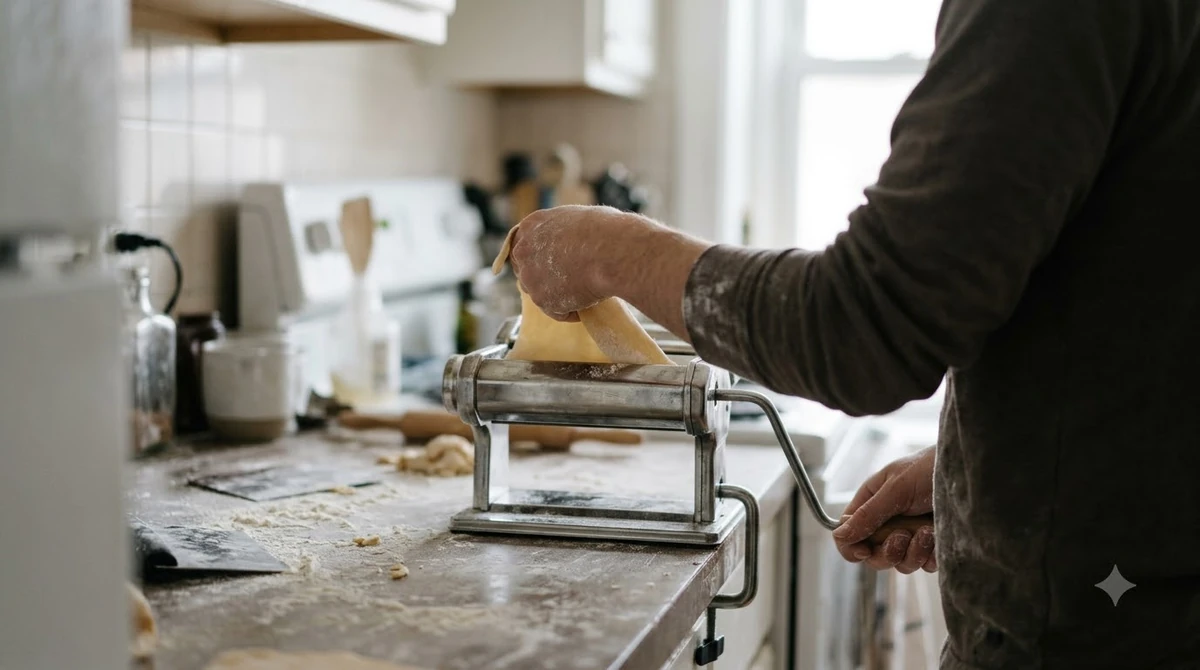

Yes, you can roll a Marcato Atlas 150 lasagna sheet at home, because the rollers are 150 mm wide. The manual’s lasagna row lists the same 150 mm width and regulator settings 6 to 9. This guide explains which setting to use, how to mix the dough, and how to roll and clean the machine.
The base Atlas 150 is hand-cranked, so each sheet takes several passes, but you control the thickness on every pass. Use the steps below if you want wide sheets for layering rather than a cut shape.
Can the Marcato Atlas 150 Make Lasagna Sheets?
Yes, the Atlas 150 rolls dough across its full 150 mm roller width, which is the width the manual lists for lasagna. Lasagne is made from wide, flat sheets, and Wikipedia’s lasagne article describes the dish as stacked pasta layers alternating with fillings, then baked in an oven.
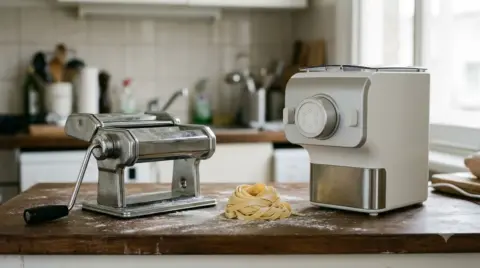
The base box includes the machine body, crank, clamp and manual. Motor models in the same manual add a Pastadrive motor, but this guide uses the hand-crank method only.
A Marcato Atlas 150 lasagna starts with the same dough and crank as any hand-rolled pasta, so the machine is the only specialist tool you need for the sheets. Plan your dish size around the 150 mm width before you start rolling. If you use a stand mixer instead, see KitchenAid pasta roller lasagna.
Before you start, gather these items for your Marcato Atlas 150 lasagna session:
- The machine body, crank and clamp from the box.
- A work surface wide enough for the clamp and the sheet.
- Dough made from the manual’s basic recipe, plus flour for dusting.
- A cloth and brush for cleaning before and after use.
Setting the Regulator for Marcato Atlas 150 Lasagna
The manual lists regulator settings 6 to 9 for the 150 mm lasagna sheet, which give sheets from about 1.0 mm down to 0.5 mm.
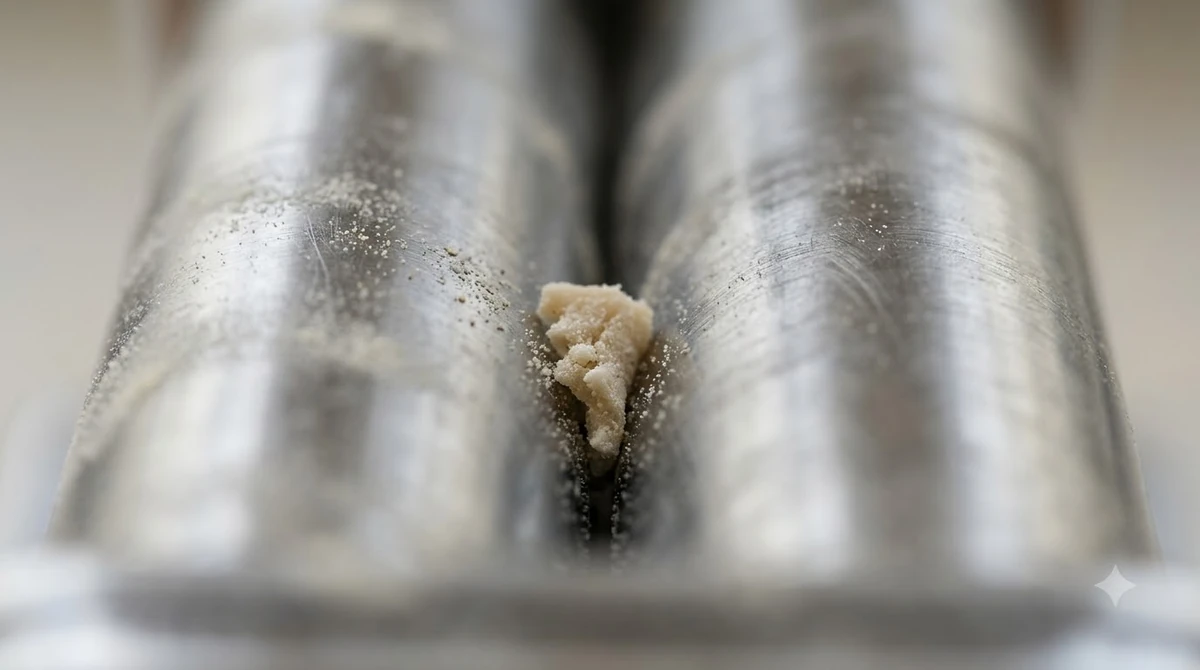
Start each new piece of dough at No. 0, then move up one number at a time. Thickness also depends on the dough and how evenly you roll, so treat the numbers as a guide and check the sheet by eye. The table below shows the thickness that Marcato’s instruction booklet gives for each regulator number.
| Regulator No. | Sheet thickness (manual) | Use for lasagna |
|---|---|---|
| 0 | About 4.8 mm | Kneading and first passes |
| 1 | About 3.7 mm | Thicker passes, not in the lasagna row |
| 2 | About 3.1 mm | Thicker passes, not in the lasagna row |
| 3 | About 2.4 mm | Thicker passes, not in the lasagna row |
| 4 | About 1.8 mm | Thicker passes, not in the lasagna row |
| 5 | About 1.5 mm | Thicker passes, not in the lasagna row |
| 6 | About 1.0 mm | Lasagna row starts here |
| 7 | About 0.8 mm | Lasagna row |
| 8 | About 0.6 mm | Lasagna row |
| 9 | About 0.5 mm | Lasagna row ends here |
Because the manual’s lasagna row covers settings 6 to 9, those are the settings to start from when you want Marcato Atlas 150 lasagna sheets for layered dishes. Settings 0 to 5 produce thicker sheets that you pass through on the way down.
Setting 6 gives a Marcato Atlas 150 lasagna sheet of about 1.0 mm, while setting 9 gives about 0.5 mm. Choose the number based on how sturdy you want each layer in the finished dish, and roll a test sheet first.
Making Dough for Your Atlas 150 Lasagna
The manual’s basic fresh dough uses 250 g of 00 flour, 250 g of re-milled durum semolina and 5 eggs, mixed by hand on a board.
Mix the dough by hand using the method the manual describes, then roll it through the machine. Pizza dough is a separate recipe, so this guide does not cover it. If you would rather fold the dough around a filling, see whether the Marcato Atlas 180 for ravioli works at home.
- Place the flour on a board and make a well in the middle.
- Break the eggs into the well and beat them with a fork.
- Mix the eggs into the flour, then knead the dough by hand until it forms a ball.
- Check the texture. Add water if the dough is too dry, or flour if it is too soft.
- Aim for a dough that does not stick to your fingers before you start rolling.
The dough is the same base for every Marcato Atlas 150 lasagna, so the manual’s ratio is a starting point you can adjust by touch. For a general egg dough, compare it with this fresh pasta dough recipe.
Rolling and Cutting Marcato Atlas 150 Lasagna Sheets
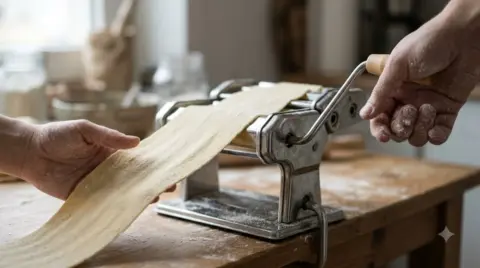
Clamp the machine, set the regulator to No. 0, fold and pass the dough, then move up one number per pass until the sheet reaches the thickness you need.
The manual says to clean the rollers with a damp cloth before first use, then pass a little dough between them, which is discarded. Follow these steps for each batch of dough.
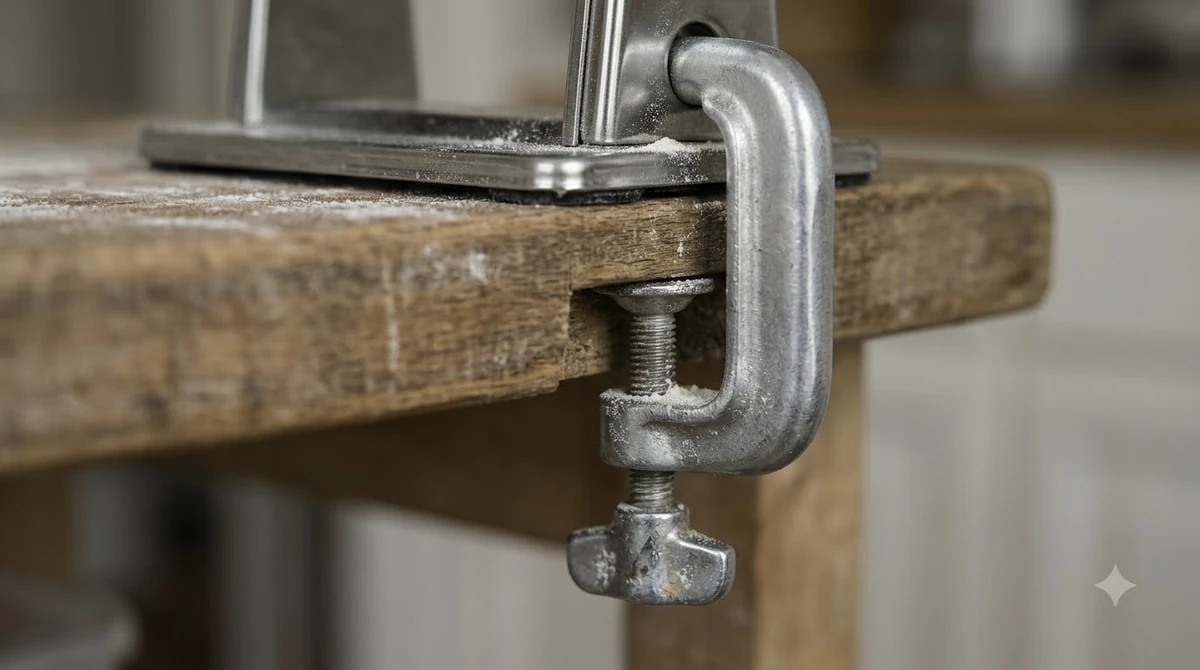
- Clamp the machine to the work surface through the matching hole, then insert the crank.
- Always turn the crank clockwise.
- Pull the regulator outwards and turn it to No. 0.
- Pass the dough several times at No. 0, folding the sheet in half and flouring it at each step, until the shape is regular and compact.
- Pass the sheet once for each number until you reach the thickness you want, such as 6 to 9 for lasagna.
- Cut the sheet into pieces about 25 cm long and flour both sides lightly.
Cut the sheets to the length of your dish, then stack them with your filling for a Marcato Atlas 150 lasagna, following a recipe such as how to make lasagna. Other shapes use the cutting accessories, and each accessory has its own width and setting. The ravioli accessory is a separate step from lasagna, so check its row in the manual before you roll ravioli.
Repeat the fold-and-pass steps for each batch, because a Marcato Atlas 150 lasagna needs a smooth, compact sheet before you move to the thinner settings.
Check the sheet surface and edges after the final pass, and trim any torn edges before you assemble the dish. A clean edge makes the layers easier to stack.
Cleaning and Caring for the Atlas 150
The manual says not to wash the Atlas 150 or its accessories in water or the dishwasher, and to clean them with a cloth and a brush.
- Wipe the machine with a cloth and use a brush for the rollers.
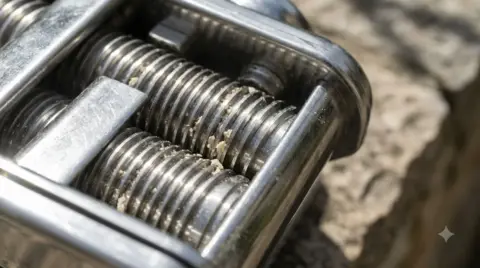
- Pull out the combs under the cutting rollers. The manual says they are removable for a deeper clean.
- Clean the rollers and combs with a brush or cloth, then put them back in reverse order.
- If the machine squeaks, add a few drops of food-contact Vaseline oil at the ends of the rollers.
Keep the manual with the machine, because the table for your exact model may differ from the one above. A fuller summary is in the Marcato Atlas 150 manual guide.
Regular cleaning keeps the Marcato Atlas 150 lasagna rollers ready for the next batch, and the removable combs make the cutters easier to reach.
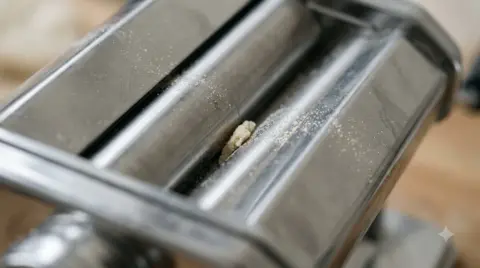
Look for dough residue on the rollers after each session, and clean the combs when they collect dough, using only the cloth and brush the manual describes. The full routine is in how to clean a Marcato Atlas 150.
Frequently Asked Questions
Is the Marcato Atlas 150 only for lasagna?
No. The manual lists cutting accessories for fettuccine, tagliolini, spaghetti and other shapes, and each one has its own width and regulator setting. Lasagna is one of the rows in that table, so the same machine covers both.
Which setting should I use for lasagna sheets?
The manual’s lasagna row points to regulator settings 6 to 9, which give about 1.0 mm to 0.5 mm. Start your passes at No. 0 and move up one number at a time until you reach your target.
Can I put the Marcato Atlas 150 in the dishwasher?
No. The manual says not to wash the machine or its accessories in water or in the dishwasher. Use a cloth and a brush, and remove the combs under the cutters for a deeper clean.
What dough should I use with the Atlas 150?
The manual’s basic fresh dough uses 250 g of 00 flour, 250 g of re-milled durum semolina and 5 eggs. If the dough is too dry, add water, and if it is too soft, add flour.
Why does my Atlas 150 squeak?
The manual suggests a few drops of Vaseline oil at the ends of the rollers. Use only oil that is suitable for food contact, as the manual specifies.
Is 150 mm wide enough for a Marcato Atlas 150 lasagna?
The manual gives 150 mm as the lasagna width, so each sheet cannot be wider than the rollers. Measure your dish before you roll, and layer shorter sheets if the dish is wider than the sheet. A Marcato Atlas 150 lasagna is built from these sheets, so plan the width first.
Do I need a motor to roll Marcato Atlas 150 lasagna sheets?
No. The base Atlas 150 is hand-cranked, and the crank method in this guide needs no motor. Motor models add a Pastadrive motor, but the manual’s lasagna row works with the crank alone, so a Marcato Atlas 150 lasagna does not require one.
Start at setting 6 for Marcato Atlas 150 lasagna sheets, and check each one by eye before you stack the layers.
 6 min readBy Use & ModelKitchenAid Pasta Roller Lasagna: How to Roll Sheets for LayersUpdated Nov 7, 2026
 7 min readBy Use & ModelMarcato Atlas 150 Replacement Parts: Box Contents, Cleaning and WarrantyUpdated Nov 8, 2026
 8 min readBy Use & ModelMarcato Atlas 150 Attachments: Which Cutter Shapes FitUpdated Nov 8, 2026
 8 min readBy Use & ModelHow to Clean Marcato Atlas 150: Brush, Dry, and Store It RightUpdated Nov 6, 2026
 8 min readBy Use & ModelMarcato Atlas 150 Manual: Setup, Thickness Settings and CareUpdated Nov 7, 2026
 7 min readBy Use & ModelMarcato Atlas 180 Ravioli: Can You Make It at Home?Updated Nov 6, 2026