
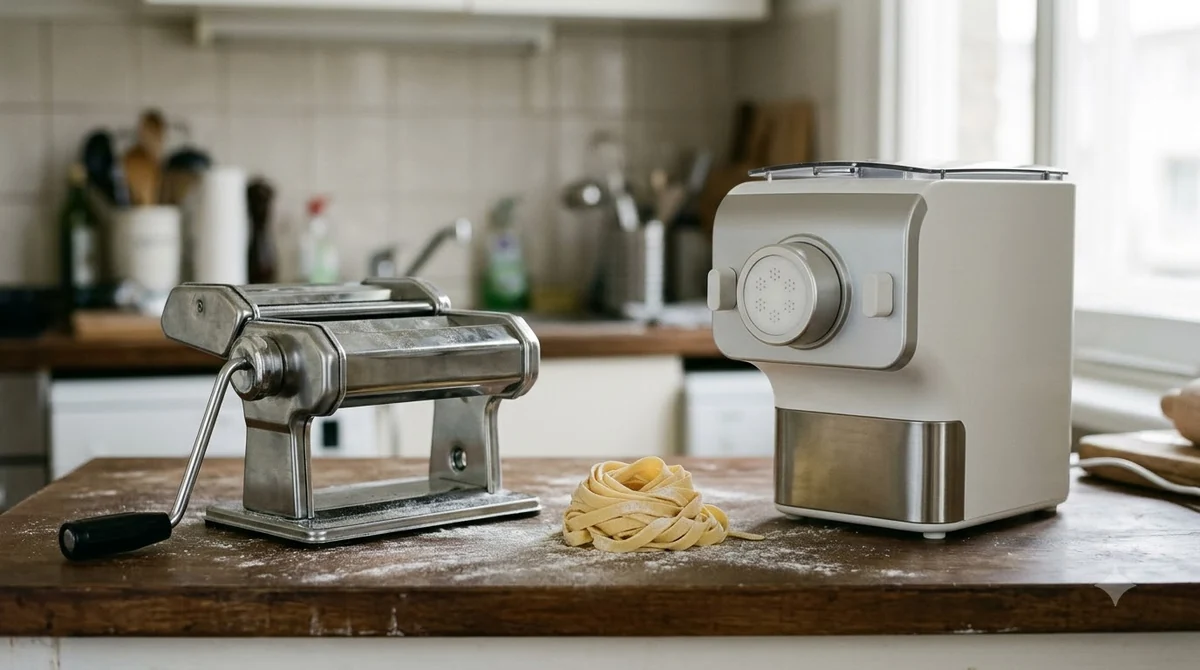

Your Marcato Atlas 180 ravioli plan works in two parts: the machine rolls the sheets, and you fill and seal each ravioli by hand. One retailer’s listing gives the Atlas 180 180 mm rollers and ten thickness settings, but it names no ravioli attachment. The steps below cover the dough, the thickness, the filling and the cooking.
Can the Marcato Atlas 180 Make Ravioli by Itself?
No, the Atlas 180 works as a sheet roller, and its product listing names no ravioli attachment for it. You can still make a full batch of ravioli, because the roller gives you the thin sheets and the rest is manual work.
The listing describes the machine for rolling dough for pasta, bread, appetizers and wide styles like lasagna, a use we cover in our Marcato Atlas lasagna sheets guide. Neither a ravioli mold nor a ravioli attachment is mentioned for this model, so check the box contents and the seller’s page before you buy any accessory for your Marcato Atlas 180 ravioli setup. If you want an attachment-style tool, compare it with the KitchenAid ravioli maker.
What the Atlas 180 Does Well
The Atlas 180 has a chromed steel frame, anodized aluminum rollers and measures about 23.4 by 13.5 by 13.2 cm, according to the same retailer listing. For Marcato Atlas 180 ravioli, its 180 mm width gives you a wider sheet in each pass than a narrow machine would.
- Roller width: 180 mm, for a wider sheet in each pass.
- Thickness: ten adjustable settings.
- Frame: chromed steel, described as built for strength and stability.
- Rollers: anodized aluminum.
- Size: about 23.4 cm long, 13.5 cm deep and 13.2 cm high.
The listing does not give the weight or the included accessories. Read those details on the box or the official Marcato documents before you plan your counter space around the machine.
Making the Dough for Ravioli
A basic ravioli dough uses 400 g of flour and 4 large eggs, kneaded for at least 10 minutes until it springs back under a fingertip. For Marcato Atlas 180 ravioli, the same recipe then rests the dough for 20 to 30 minutes before you roll it.
- Combine 400 g of flour with 4 large eggs. The recipe uses about one large egg for every 100 g of flour.
- Knead for at least 10 minutes, until the dough springs back when you press it with a finger.
- Wrap the dough in a tea towel and rest it for 20 to 30 minutes at room temperature.
- Use the dough within three days, or freeze it for up to a month.
Do not chill the resting dough in the fridge. The recipe says condensation makes the dough too moist, which makes it harder to roll cleanly for Marcato Atlas 180 ravioli.
Marcato Atlas 180 Ravioli: Rolling Sheets to the Right Thickness
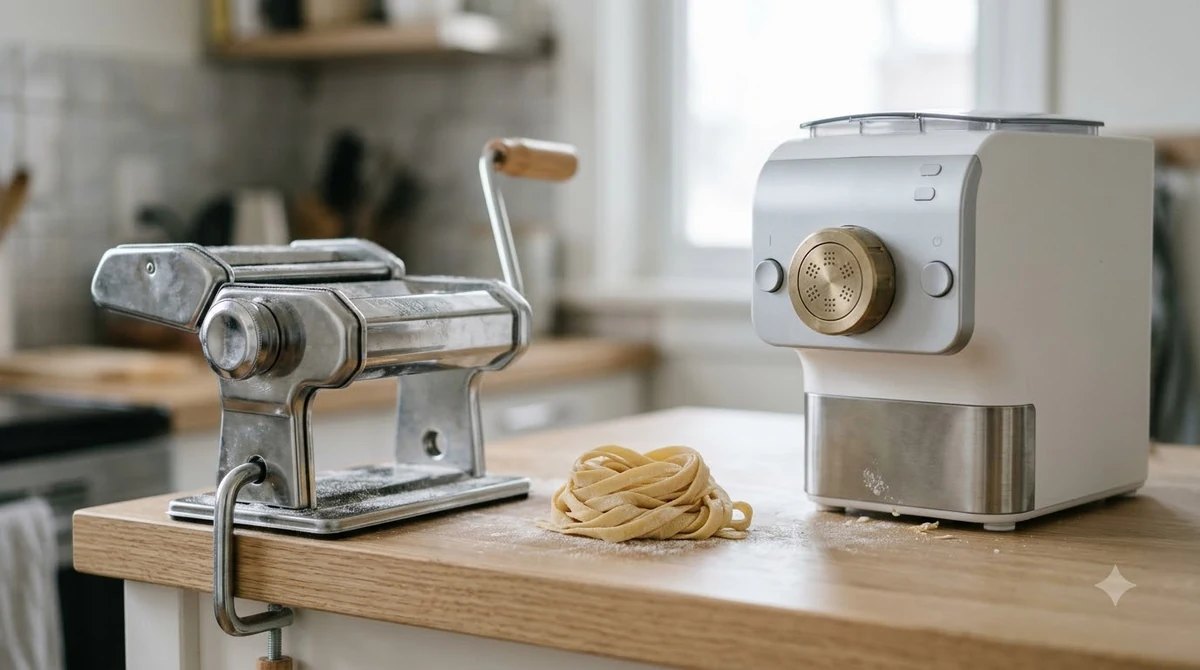
Start on the widest setting, which the recipe gives as usually setting 7, and pass the dough through at least three times per setting. Keep stepping down until you can see your hand through the sheet.
| Stage | What to do | Check |
|---|---|---|
| Flatten | Flatten the dough with a rolling pin before the first pass | Piece fits the rollers |
| Start | Pass through the widest setting, usually setting 7 | At least 3 passes at this setting |
| Thin | Move down one setting at a time | Sheet stays smooth and even |
| Finish | Stop when you can see your hand through the sheet | Sheet is ready for filling |
According to The Takeout’s ravioli thickness guide, the ideal dough is about 1/8 inch, roughly 3 mm, which the chef quoted there calls paper-thin. Dough that is too thick turns chewy and dense, and it cooks unevenly.
Setting numbers differ between machines (see how to use a pasta machine for the basics), so treat setting 7 as a starting point for Marcato Atlas 180 ravioli and trust the light test over the dial. If you have no machine, the same guide notes that a rolling pin works, though a machine gives more even control.
Filling and Sealing Each Ravioli
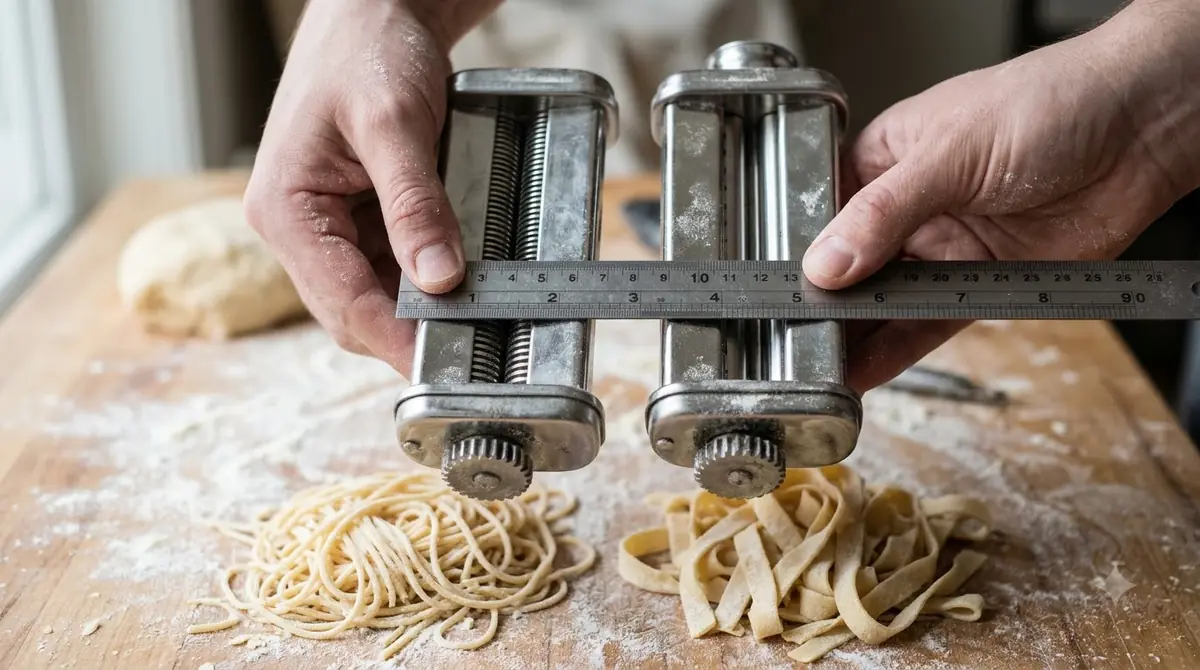
Pipe the filling about 5 cm (2 inches) apart down one sheet, moisten the edges, press out the air and seal firmly before you cut. Square shapes are the common choice, and for Marcato Atlas 180 ravioli they are the simplest to seal with this method.
- Lay one sheet flat and pipe a line of filling down the centre, about 5 cm apart.
- Lightly wet the edges of the sheet with water.
- Lay the second sheet on top and press out the air around each mound.
- Press the edges firmly closed.
- Cut with a square cutter, or use a wine glass for round ravioli, then dust with flour.
One example filling uses 250 g of ricotta, 6 fresh basil leaves chopped coarsely, freshly grated lemon zest, a pinch of sea salt and a pinch of black pepper. Mix it, then spoon it into a piping bag for an even line down the sheet. For a fuller walkthrough, see our homemade ravioli recipe. Round and semicircular versions, called mezzelune, also appear, as Wikipedia’s ravioli article notes.
Cooking and Storing Marcato Atlas 180 Ravioli
Boil fresh Marcato Atlas 180 ravioli for about 3 minutes in generously salted water, or 4 minutes if they are frozen, until they rise to the top. Frozen ravioli need the extra minute because they start colder in the pot.
The same recipe also lists a 10 minute total cook time, which does not match its 3 minute boil. Trust the boiling step and check one piece first before you cook the whole batch.
Where Ravioli Come From
The Marcato Atlas 180 ravioli method follows a long tradition, since ravioli first appear in the 14th-century cookbook The Forme of Cury under the name rauioles, and their fillings vary by region. The word’s ultimate origin is uncertain.
Rome traditionally uses ricotta, spinach, nutmeg and black pepper, while Sardinia pairs ricotta with grated lemon rind. Ravioli were traditionally made at home, and modern versions are also mass-produced by machine.
Frequently Asked Questions
Does the Marcato Atlas 180 come with a ravioli attachment?
For Marcato Atlas 180 ravioli, the product listing names no ravioli attachment, and it lists no included accessories either. Check the box contents and the seller’s page before buying a ravioli tool, because compatibility is not confirmed for this model.
How thick should homemade ravioli dough be?
The Takeout’s guide puts the ideal at about 1/8 inch, roughly 3 mm. Use the light test: if you can see your hand through the sheet, it is thin enough. Setting numbers vary by machine, so for Marcato Atlas 180 ravioli match the sheet rather than the dial.
Can I freeze ravioli?
Yes, according to the recipe, the dough can be frozen for up to a month. Frozen ravioli take about 4 minutes to boil, one minute more than fresh ones, and they are done when they rise to the top.
Why do my ravioli edges not seal?
Lightly wet the edges before you press the two sheets together. Press out the air around each mound of filling, then press the edges firmly closed. Careful sealing matters more than the machine setting for this step.
Can I roll ravioli sheets without a machine?
Yes, a rolling pin can flatten the dough without a machine. The Takeout’s guide notes that a pasta machine lets you adjust the thickness, so a machine is the easier route to thin, even sheets.
If you own an Atlas 180, roll a small test batch of Marcato Atlas 180 ravioli first and check each sheet against the light test before you fill a full tray. Confirm that any ravioli accessory fits your model on the seller’s page before you buy it. The filling and sealing steps stay the same whatever machine you use.
 7 min readBy Use & ModelMarcato Atlas 180 Attachments: What Comes With It and What FitsUpdated Nov 8, 2026
 8 min readBy Use & ModelMarcato Atlas 150 Lasagna: How to Roll Sheets at HomeUpdated Nov 7, 2026
 7 min readBy Use & ModelMarcato Atlas 150 Replacement Parts: Box Contents, Cleaning and WarrantyUpdated Nov 8, 2026
 8 min readBy Use & ModelMarcato Atlas 150 Attachments: Which Cutter Shapes FitUpdated Nov 8, 2026
 8 min readBy Use & ModelHow to Clean Marcato Atlas 150: Brush, Dry, and Store It RightUpdated Nov 6, 2026
 8 min readBy Use & ModelMarcato Atlas 150 Manual: Setup, Thickness Settings and CareUpdated Nov 7, 2026