


A KitchenAid pasta roller lasagna sheet is a wide, flat piece of pasta that you roll in stages until it is thin enough to layer. The attachment does the thinning, while your dough and your baking dish decide how the finished layers turn out. This KitchenAid pasta roller lasagna guide covers what you can confirm and what to check in your own manual.
KitchenAid Pasta Roller Lasagna: What the Sheets Are
Lasagne is a type of pasta made in wide, flat sheets, and the plural form is also used for the baked dish. The name covers both the sheet and the casserole built from it.
According to Wikipedia’s entry on lasagne, the dish is most often served as a casserole of stacked pasta layers, alternating with fillings such as meat, dairy, vegetables and sauces. That layered structure is why sheet width and thickness matter more than shape.
Rolling your own KitchenAid pasta roller lasagna sheets lets you control both. A roller lets you thin dough gradually, so you can match the sheet to the width of your dish instead of working with pre-cut store-bought sheets.
Dough for Roller Lasagne Sheets
Fresh pasta for roller sheets is usually made with eggs and either all-purpose or “00” flour, while dried commercial sheets use durum wheat semolina. Choose the dough your recipe calls for and treat the flour type as part of that recipe, such as this fresh pasta dough recipe.
The Wikipedia pasta entry lists semolina, egg, salt and water as the core ingredients for pasta dough, and it notes that fresh pasta is usually made with eggs and all-purpose or “00” flour. Dough made for rolling needs to hold together as one smooth piece before it goes through the attachment.
Keep the dough you are not working on covered during any KitchenAid pasta roller lasagna batch. A drying edge tears more easily when it passes through the rollers, so cover the pieces while you roll the first one.
Rolling the Sheets in Stages
A pasta machine takes dough by hand and thins it incrementally, so each pass makes the sheet longer and thinner. Wikipedia’s pasta entry describes machine rolling in exactly this way, with the cook feeding sheets of dough into the machine by hand.
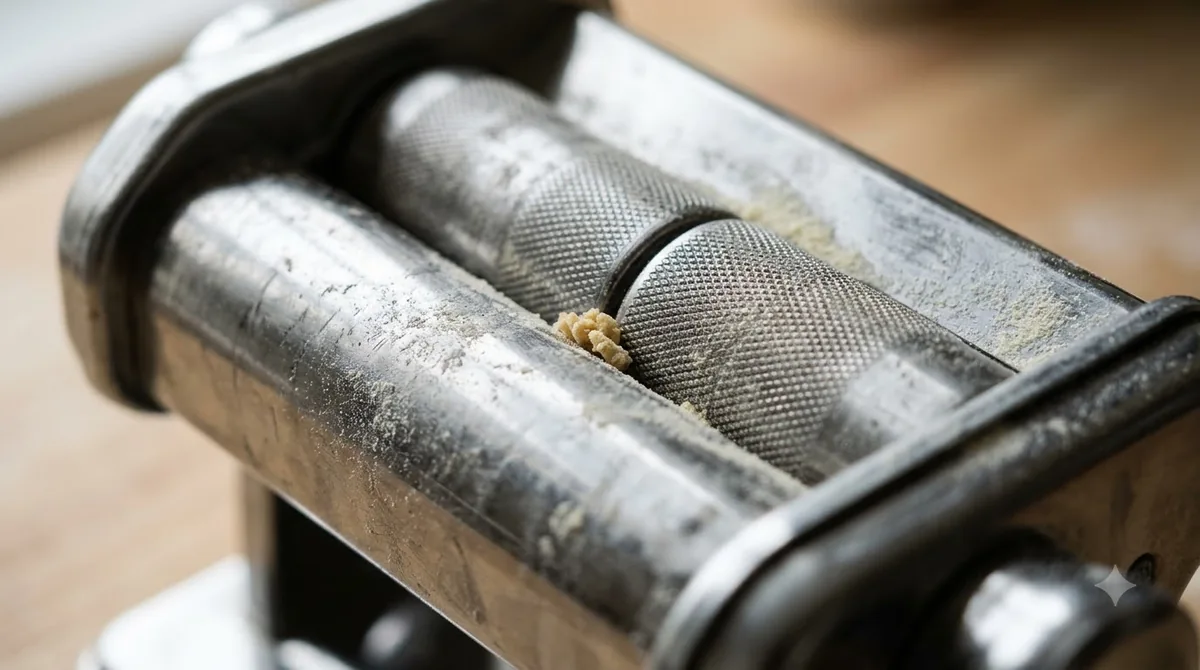
Work through the process in this order:
- Portion the rested dough into pieces small enough to feed through the attachment.
- Flatten each piece into a strip narrow enough to enter the rollers.
- Pass the strip through the widest opening first.
- Step down one opening at a time, rolling once per setting.
- Lay the finished sheets on a floured surface so they do not stick.
Stepping down gradually is the safer approach for KitchenAid pasta roller lasagna sheets. Jumping straight to the thinnest opening makes the sheet more likely to tear, and it leaves less room to correct a bad pass. The same step-down habit applies on other roller machines, and our CucinaPro machine instructions cover its setup, rolling and cutting.
Choosing a Thickness for Lasagne
The right thickness depends on your dish and your dough, and the dial numbers differ between models, so check your manual before you choose a setting, and see how to use a KitchenAid pasta roller for the basics. This KitchenAid pasta roller lasagna guide does not give a setting number because it could not confirm one from an official source.
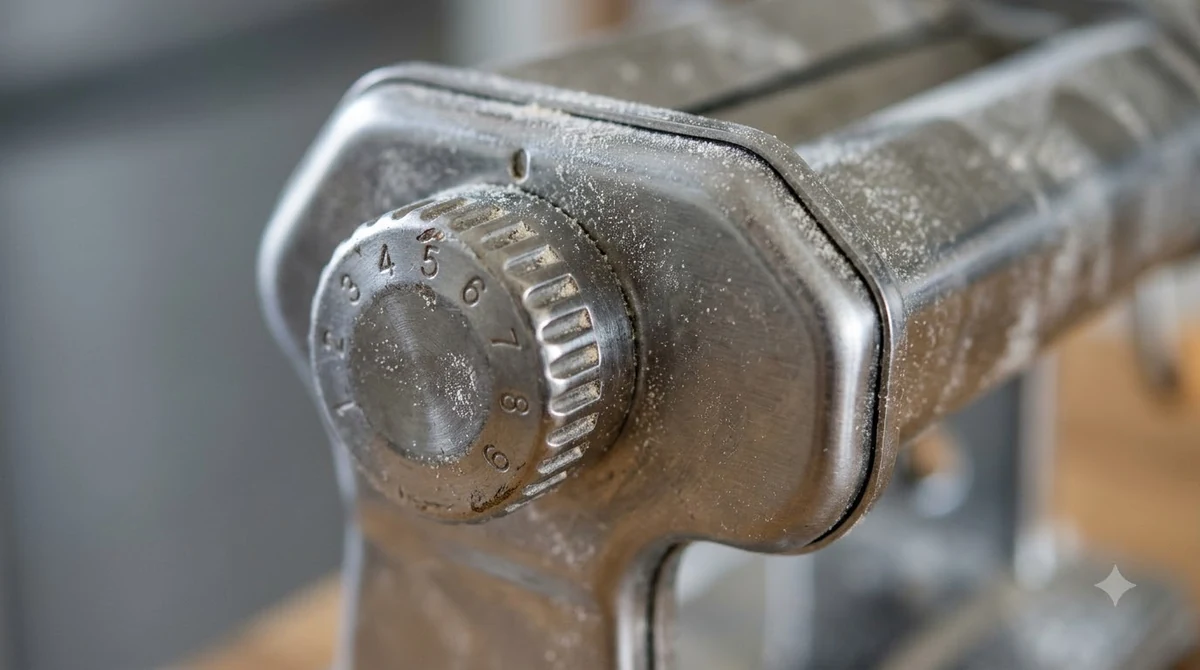
Lasagne sheets need to be thin enough to layer without tearing and wide enough to cover the dish. Those two goals usually decide the setting you aim for, not a fixed number from a chart.
Roll one test sheet first, then cut it and check how it bends. If it tears when you fold it, return to the previous opening and roll it again.
Cutting and Layering Sheets
Cut each KitchenAid pasta roller lasagna sheet to the length of your baking dish so the layers fit without folding over the sides. Measure the dish first, then cut the sheets to match, and keep the offcuts for the top layer or a small second dish.
| Sheet type | Dough base | What it means for you |
|---|---|---|
| Fresh roller sheets | Eggs with all-purpose or “00” flour | Rolled and cut at home, then layered while soft |
| Dried commercial sheets | Durum wheat semolina | Bought ready to use, not rolled at home |
Layer the sheets with your sauce and filling as your recipe directs. Let the finished dish rest before cutting so the layers hold their shape on the plate. For the full dish, see how to make lasagna.
Details to Confirm in Your Manual
The number of thickness settings, the mixer speed for the roller, and any lasagna-specific setting are model details this KitchenAid pasta roller lasagna guide could not confirm from an official source. Check the attachment’s own instructions before you start rolling.
Look for the dial numbers, the recommended speed and the cutter guidance in the paper or PDF manual that came with your attachment. If you no longer have it, find your model number on the attachment or its box and search the manufacturer’s support site for that number.
A single test sheet tells you more than any chart. Roll it, cut it and check the result against your dish before you commit a full batch of dough.
Frequently Asked Questions
Is lasagne the same as lasagna?
Yes, they describe the same dish. Lasagne is the name for the wide, flat pasta and the baked casserole, and Wikipedia notes it is also the plural form. Lasagna is the common American spelling.
Which flour should I use for roller sheets?
Use the flour your recipe names. Fresh pasta is usually made with eggs and all-purpose or “00” flour, according to Wikipedia’s pasta entry, while dried commercial sheets are made from durum wheat semolina.
Why does my dough tear when I roll it?
Dough for KitchenAid pasta roller lasagna usually tears when the edges have dried or when it is thinned too fast. Keep the pieces covered, flour the surface lightly and step down one opening at a time instead of jumping ahead.
Where can I confirm the settings for my model?
Use the owner’s manual for your attachment, or the manufacturer’s support site searched by your model number. This KitchenAid pasta roller lasagna guide does not list settings because it could not confirm them, so treat the manual as the final word. If the attachment misbehaves, read what to check when a KitchenAid pasta roller is not working.
Roll one KitchenAid pasta roller lasagna test sheet before the full batch, cut it to the width of your dish and check how it bends. A small test shows the right setting for your dough faster than any general guide (clean the rollers afterward, as described in how to clean a KitchenAid pasta roller), and it keeps a full batch from being lost to a wrong setting.
 8 min readBy Use & ModelMarcato Atlas 150 Lasagna: How to Roll Sheets at HomeUpdated Nov 7, 2026
 8 min readBy Use & ModelPasta Machine for Lasagna: Roller Width, Settings and StepsUpdated Nov 16, 2026
 8 min readBy Use & ModelKitchenAid Pasta Roller Not Working: What to Check FirstUpdated Nov 10, 2026
 9 min readBy Use & ModelHow to Use KitchenAid Pasta Roller: Step-by-Step GuideUpdated Nov 7, 2026
 9 min readBy Use & ModelHow to Clean KitchenAid Pasta RollerUpdated Nov 10, 2026
 8 min readBy Use & ModelKitchenAid Pasta Roller Parts: What Comes With Each ModelUpdated Nov 11, 2026