
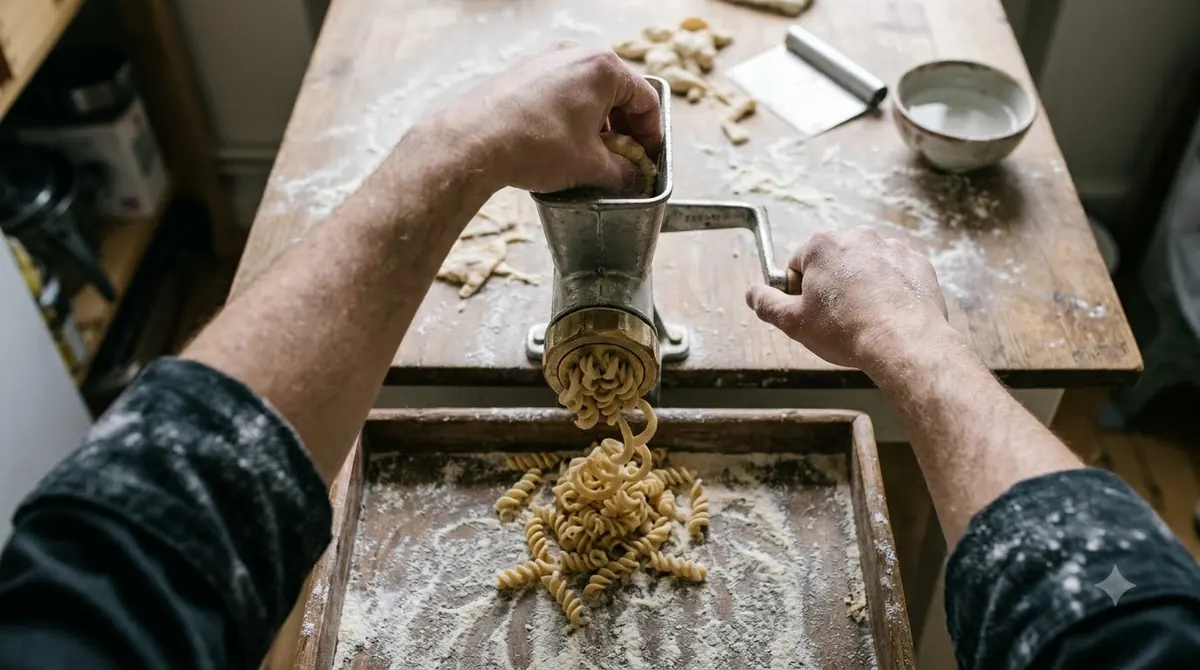

The Marcato Regina is a manual pasta extruder for hollow shapes, such as bucatini, fusilli and rigatoni. It is not a sheet roller, so it does not make flat pasta for lasagna or tagliatelle.
It suits cooks who want tubes and twists from home dough. Before you buy, check that you can clamp it to a counter and that you are ready to work with a stiffer dough.

MARCATO Made in Italy Regina Extruder Pasta
Pros & ConsViewHide
Reasons to buy
- Hand crank, so no power is needed
- Comes with 5 dies for bucatini, fusilli, maccheroni, maccheroncini and rigatoni
- Made and assembled in Italy
Reasons to avoid
- 3.6 average rating, the lowest in this group
- Not dishwasher safe: let residue dry and clean with a dry brush
- Needs a table edge to clamp onto
What the Marcato Regina is
The Marcato Regina is a manual extruder that pushes dough through a die to make hollow and short pasta, with no motor involved.
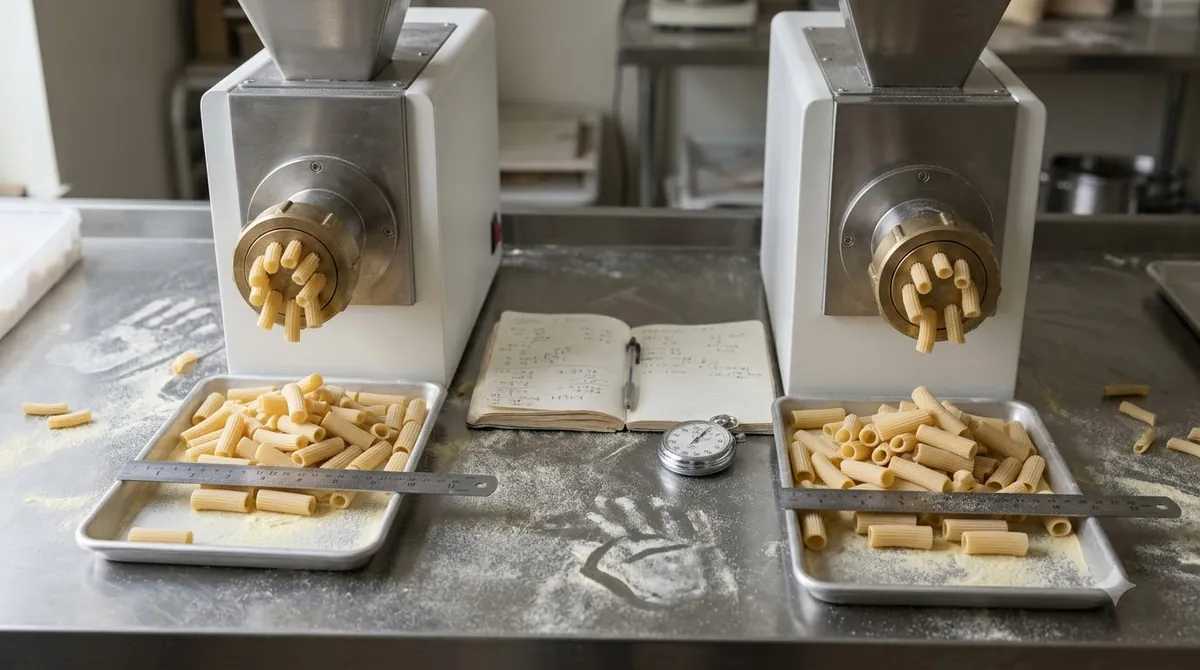
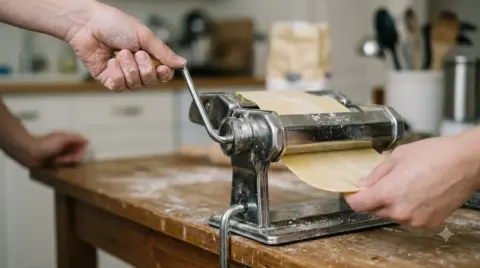
Extruders and roller machines do different jobs. A roller thins dough into sheets for tagliatelle or lasagna. The Regina forces a stiff dough through a shaped die, so the output is tubes, twists and short shapes. If your plan is flat pasta, a roller-style machine from the same brand, such as the Marcato Atlas 150, is the better fit. Our guide on how to choose a pasta maker explains the difference in more detail.
You work it by hand. Turn the crank and the inner screw moves the dough toward the die. A retailer guide describes a slow hole and a fast hole on the crank, so you can test both to see which suits your dough.
Shapes, dies and specs
The Marcato Regina ships with five interchangeable dies that make bucatini, fusilli, maccheroni, maccheroncini and rigatoni, according to a UK retailer’s Regina listing. Our guides to bucatini pasta, fusilli pasta and rigatoni pasta show what each shape suits. The Wikipedia pasta maker entry also notes that the size and shape of the die in an extruder determine the shape of the pasta.
| Attribute | Detail |
|---|---|
| Machine type | Manual extruder for hollow and short pasta |
| Dies included | Five, interchangeable, chrome-plated steel |
| Dimensions | 29.5 x 12.5 x 19 cm |
| Materials | ABS, polycarbonate (PC) and steel; dies and dough cutters in chromium steel |
| Warranty | EU legal guarantee of conformity of at least 2 years for goods sold in the EU |
| Cleaning | Not dishwasher safe |
| UK price | £95.50 including 20% VAT, delivery extra (as of 2026-11-07, one UK retailer) |
The product page read for this article lists no weight, and a manufacturer warranty could not be confirmed from a readable page. Check both on the seller listing before you buy.
Prices vary by retailer and region, so compare the total with delivery rather than the headline figure.
What dough the Marcato Regina needs
Extruded pasta needs a drier, tougher dough than rolled pasta, and the dough should not stick to your fingers.
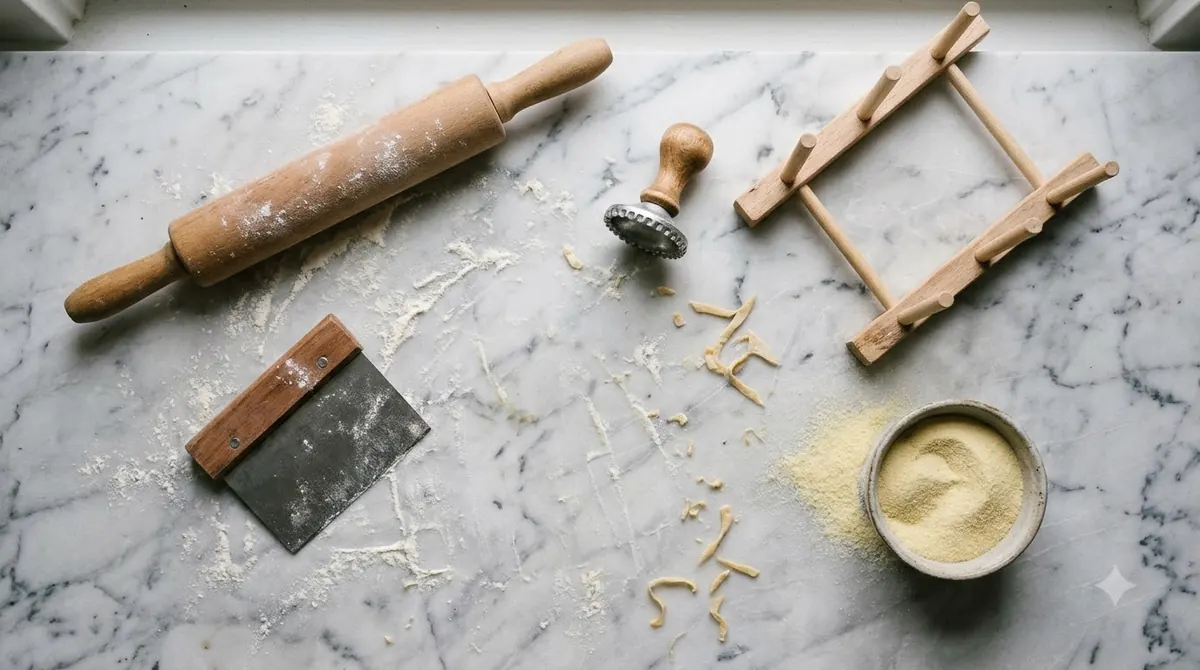
The Borough Kitchen extruder guide says a soft dough changes the shape of the pasta and makes the machine hard to clean. A dough that is too hard puts strain on the crank and the parts.
- Use a dough with a large share of semolina next to “00” flour.
- Add a few drops of water if the dough is dry, or a little flour if it is wet.
- Check that the dough does not stick to your fingers before you load it.
The same guide gives a beginner recipe of 250 g of “00” flour, 250 g of semolina and five eggs, and it skips the resting step. A firm dough like that is the kind the Marcato Regina is built to push through its dies.
Using the Marcato Regina step by step
You clamp the machine to the counter, load the dough through the top window, and crank forward while you test the slow and fast holes.
- Break the dough into small pieces that fit the top window.
- Clamp the machine to a work surface with room to turn the crank fully.
- Feed the dough through the top and turn the crank so the screw moves the dough toward the die.
- Test the slow hole and the fast hole to see which one suits your dough.
- Lift the cutter, sprinkle the shapes with semolina, and cut them as they come out.
The same guide says four of the five dies sit in a tray inside the lid, and the fifth is attached to the ring nut. To change a die, lift the cutter, unscrew the ring nut, swap the die and tighten the nut with the wrench. The metal and plastic layers of the die must line up. If the cutter cannot reach the die, tighten the ring nut further.

Cleaning and care
The Regina is not dishwasher safe, so let the pasta dry for at least two hours before you brush the parts clean.
- Let the dough dry for at least two hours before cleaning.
- Lift the red tab to release the corkscrew, then take the parts apart.
- Scrape off the dough, and use a brush or toothpick for small parts and dies.
- Do not wash the parts with water and soap, and do not put them in the dishwasher.
- If a part gets wet, dry it straight away and fully.
The retailer guide says the Marcato Regina is much easier to clean once the pasta stuck to it has dried, which is why it advises waiting before you brush.
Troubleshooting Dough and Machine Problems
Most problems with a Marcato Regina come from the dough’s consistency rather than from the machine itself. The Borough Kitchen guide to Marcato extruders says a dough that is too soft will change the shapes and make the machine hard to clean, while a dough that is too hard can strain the mechanism. A good dough should feel soft but slightly lumpy, and it should neither stick to your fingers nor crumble.
- Dough too soft: the shapes lose their form, so add flour a spoonful at a time and test a small piece again.
- Dough too hard: stop feeding it, add a few drops of water and mix before you try again, to reduce strain on the machine.
- Feeding: load small portions through the top window rather than packing the chamber, which helps the dough move evenly.
- Cut not clean: if the arc-shaped cutter does not travel fully past the die, tighten the ring nut until it does.
Check the marcato regina cutter and the dies before you blame the dough, because a loose ring nut is one of the simplest fixes. The guide does not address jamming directly, so if the machine locks up, stop, release the mechanism and clear the die before continuing. For each fix, follow Borough Kitchen’s guide to Marcato pasta extruders and your own manual.
Storing Shaped Pasta From the Regina
Shaped pasta from a Marcato Regina needs a plan for storage. Sprinkle the shapes with semolina so the pieces do not fuse, then lay them out in a single layer rather than piling them up. The same guide says extruded pasta can be refrigerated for up to two days, or frozen for up to two months, so you can make a larger batch once and cook it over several meals.
Dry the parts of the machine before storing them. If a part gets wet, dry it straight away and fully, then reassemble only when everything is dry. Keeping the parts dry before reassembly is the safest routine, as the guide’s cleaning advice suggests.
Who the Marcato Regina suits
The Regina suits cooks who want tubes and twists, and it is the wrong pick for anyone who wants flat pasta sheets.
The trade-off is that the Regina asks more of your dough than of your hands. A dough that is too soft changes the shape of the pasta, and one that is too hard strains the parts.
This article did not test the machine, and it could not confirm durability from a source it read, so it makes no claim about how long the plastic parts last.
Before you buy, check these points:
- Shapes: confirm that the five shapes match what you want to cook.
- Dough: be ready to mix a stiff dough, not a soft fresh pasta dough.
- Warranty: read the seller’s warranty terms and check the plastic parts on arrival, since durability was not confirmed.
- Price: check the current total with delivery, since prices change by retailer.
Frequently Asked Questions
Is the Marcato Regina a pasta roller?
No. It is an extruder for hollow and short shapes, so it does not make the flat sheets used for lasagna or tagliatelle. Choose a roller-style machine if flat pasta is your main goal.
Which shapes come with the Marcato Regina?
The five included dies make bucatini, fusilli, maccheroni, maccheroncini and rigatoni. Each die is interchangeable, so you change shapes by swapping the die and tightening the ring nut.
Is the Marcato Regina dishwasher safe?
No. The product information and the retailer guide both say not to put it in the dishwasher, and not to wash the parts with water and soap. Let the dough dry, then brush the parts clean.
What warranty does the Marcato Regina have?
One UK retailer lists the EU legal guarantee of conformity of at least two years for goods sold in the EU. A manufacturer warranty could not be confirmed from a readable page, so check the seller’s terms before you buy.
What dough should I use with the Marcato Regina?
Use a dough that is drier and tougher than regular pasta dough, with a large share of semolina. If the dough sticks to your fingers, add a little flour; if it is dry, add a few drops of water.
If your goal is flat pasta, do not buy the Regina. If you want bucatini, fusilli or rigatoni at home and you can work with a stiff dough, it is a practical choice. Read the seller’s warranty and check the price on the day you buy.
 7 min readReviews & VersusMarcato Atlas 180 Pasta Machine: Specs, Shapes and Buying TipsUpdated Nov 16, 2026
 8 min readReviews & VersusMarcato Atlas 150: Overview, Settings and Who It SuitsUpdated Nov 15, 2026
 8 min readReviews & VersusBertello Grande 16-Inch Pizza Oven: Specs, Price and Who It SuitsUpdated Nov 16, 2026
 8 min readReviews & VersusPhilips 7000 Pasta Maker Review: Specs, Cleaning and Who It SuitsUpdated Nov 16, 2026
 8 min readReviews & VersusSailnovo Pasta Maker: Specs, Pros, Cons and Who It SuitsUpdated Nov 15, 2026
 8 min readReviews & VersusOoni Volt 12: Specs, Who It Suits, and AccessoriesUpdated Nov 15, 2026