
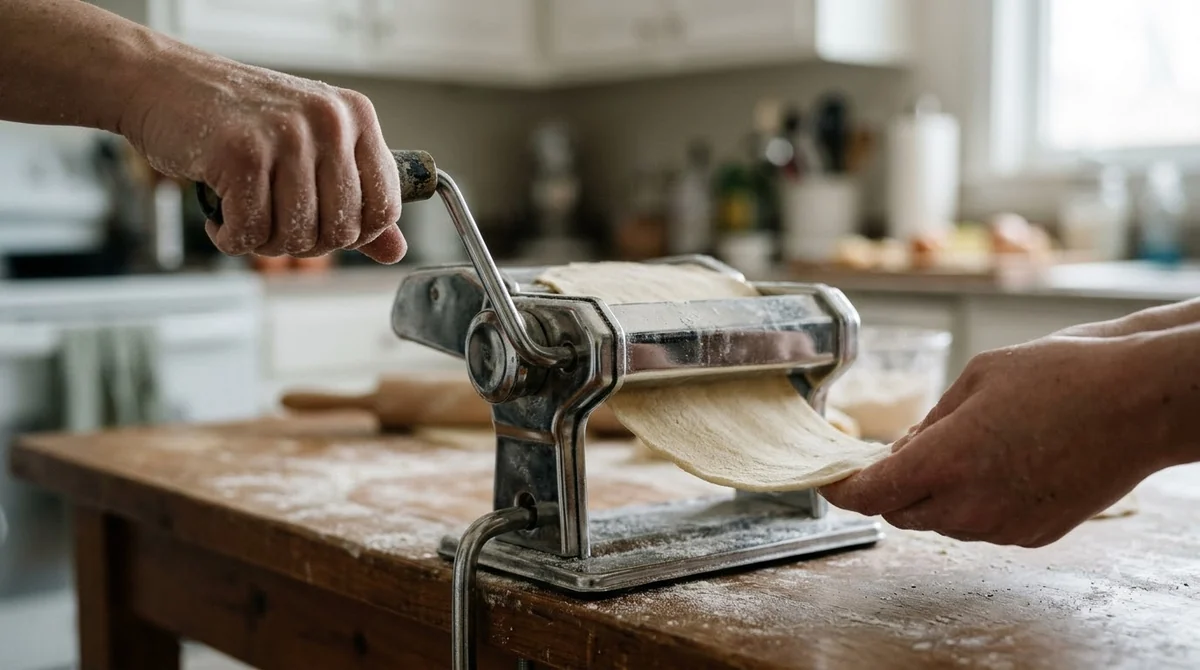

The sailnovo pasta maker is a manual, hand-crank machine that rolls dough into thin sheets and cuts them into noodles. It is sold as a budget kitchen tool, and it clamps to a table instead of running on a motor. Its specs suit home cooks who want fresh pasta without a large spend.
Listings disagree on a few details, including the number of settings and the cutter widths. Check the exact model you are buying before you plan a recipe around it.
What Is the Sailnovo Pasta Maker?
The sailnovo pasta maker is a manual machine that you clamp to a counter and run with a hand crank. It has no motor, so you feed every sheet of dough through by turning the handle yourself.
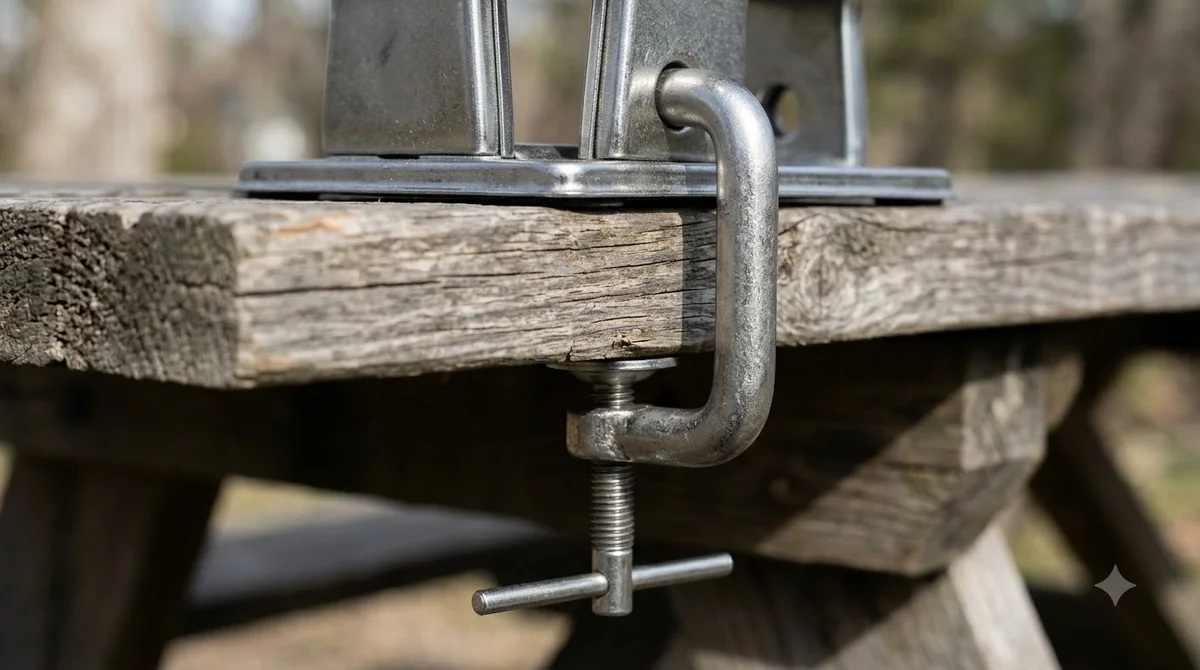
Sailnovo sells its manual pasta makers in more than one version. A 2026 review by Mason Everett describes both a standard model and a red version, and it lists both as manual hand-crank machines. Both come with a table clamp, which the review calls a stable table clamp that holds the machine to the countertop while you crank. You can read the full review on the Home Essentials Guide review.
Because the machine is operated by hand, it suits people who enjoy the process of making pasta. It does not suit anyone who wants a machine that mixes or extrudes dough on its own.
Sailnovo Pasta Maker Specs
The standard model has 9 thickness settings from 0.5mm to 3mm and a 2-in-1 cutter for 2.0mm spaghetti and 4.5mm fettuccine. The red version has a thinner starting setting and a wider cutter, so the two should not be treated as identical.
| Feature | Standard model | Red model |
|---|---|---|
| Thickness settings | 9 | 9 |
| Thinnest setting | 0.5 mm | 0.3 mm |
| Thickest setting | 3 mm | 3 mm |
| Cutter widths | 2.0 mm and 4.5 mm (2-in-1) | 2 mm and 6.25 mm |
| Materials | Stainless steel and aluminum alloy | Aluminum alloy |
| Weight | About 5 lb | About 5 lb |
When you use a sailnovo pasta maker, start at a thicker setting and step down one notch at a time. Thinner passes on dough that is already thin can tear the sheet, so the gradual approach keeps the dough flexible.
The review describes the materials as food-grade in both versions. Thickness is the setting you will use most. Thinner settings suit fine noodles such as fettuccine, while thicker settings suit sheets for wider pasta or dumpling wrappers, which the review says the machine can also handle.
Some retailer listings describe a different version with 7 settings and 2.0mm and 5.0mm cutters. The review does not cover that version, so confirm the settings and cutter widths on the exact listing before you buy.
How a Manual Pasta Maker Works
A hand-crank pasta maker pulls dough through rollers, and each pass makes the sheet a little thinner. The general method is the same on most manual machines, including the Sailnovo model. For a full walkthrough, see our guide on how to use a pasta machine.
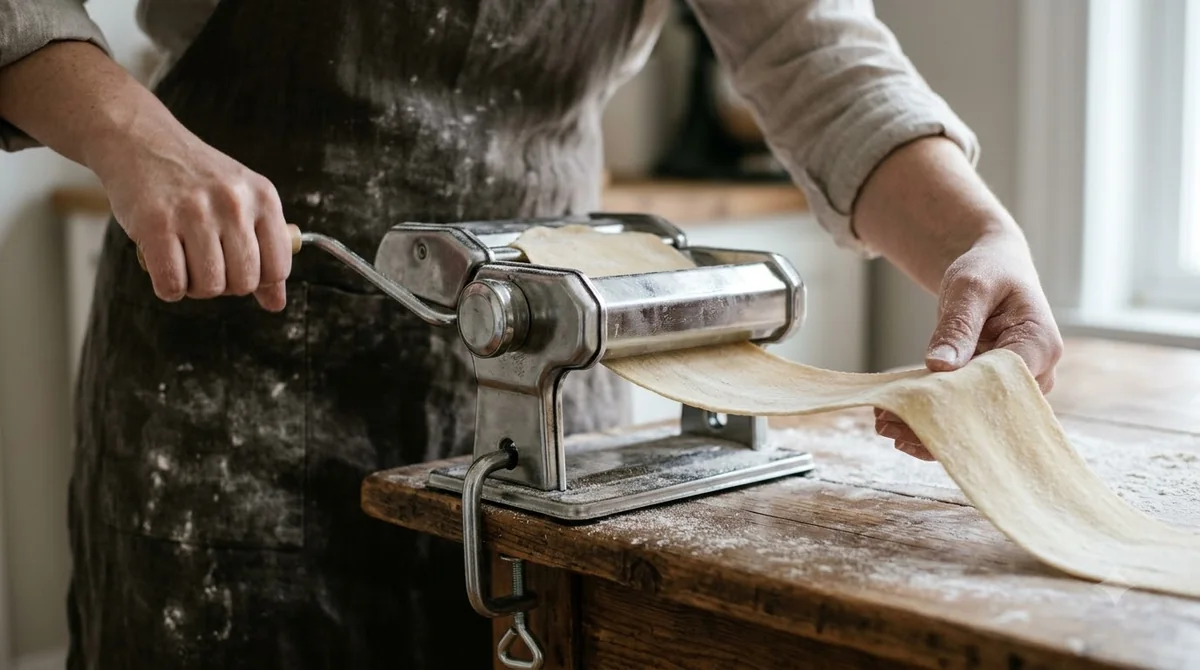
According to the pasta maker entry on Wikipedia, the dough is thinned in successive passes, and on the final pass a comb attachment can shape the pasta as it comes out. A typical process looks like this:
- Flatten the dough into a rough strip and dust it lightly with flour.
- Set the widest thickness setting and feed the dough through the rollers.
- Fold the sheet and pass it through again, stepping down one setting at a time.
- Send the finished sheet through the cutter attachment to shape it.
Keep the dough sheet from sticking and the rollers clean between passes. A dry, lightly floured sheet is easier to feed and less likely to tear. If you need a starting dough, try our fresh pasta dough recipe.
Sailnovo Pasta Maker Pros and Cons
Buyers in the review praise the many thickness settings and the sturdy build, but they note that cleaning takes effort and the handle can slip if it is not fully inserted. These points come from one review, so treat them as buyer impressions rather than lab results.
The review lists the following points:
- Pro: nine thickness settings give fine control over dough thickness.
- Pro: described as sturdy and durable, and easy to assemble and operate.
- Pro: the red version is described as easy for beginners to learn.
- Con: cleaning can be tedious because the machine cannot be submerged in water.
- Con: the handle can slip out if it is not inserted properly, and the red model’s handle can feel loose.

Who Should Buy the Sailnovo Pasta Maker
The sailnovo pasta maker suits beginners and families who want to try fresh pasta without spending much. The review recommends it for both beginners and experienced cooks. New to pasta machines? Our pasta machine for beginners guide covers what to look for.
The review places Sailnovo in a $30 to $80 price range and calls it excellent value for the money. That range comes from a single source, and retailer prices change, so check the current listing before you buy.
Skip this model if you want a motorized machine or a tool you can wash in a dishwasher. Its manual design and its no-submerge cleaning rule point the other way.
The trade-off is simple. A manual machine costs less and needs no power outlet, but every pass takes effort from your arm and your time. If you make pasta now and then, that effort may be a fair price for a low-cost tool. If you make pasta every week, compare motorized models before you commit to a sailnovo pasta maker.
Cleaning and Care
The Sailnovo pasta maker cannot be submerged in water, so clean it with a dry brush or cloth. The review says the red model needs a dry brush or cloth as well. For general care habits, see our guide on how to clean a pasta machine, and always follow the no-submerge rule first.
Keep these habits to protect the rollers and the body:
- Brush dough off the rollers and cutters while it is dry.
- Wipe the body with a dry cloth after each use.
- Do not rinse the machine under running water.
Some retailer listings say the machine is not dishwasher safe. We could not confirm that claim from the review, but the no-submerge rule already means you should not wash it in water.
What to Check Before You Buy
Check the exact model’s thickness range and cutter widths on the listing, because retailer descriptions disagree. Use this short checklist before you order, and read our guide on how to choose a pasta maker if you are still comparing machine types:
- Confirm the number of thickness settings, since listings show either 9 or 7.
- Confirm the cutter widths you need for spaghetti, fettuccine or other shapes.
- Confirm the materials and whether the listing says food-grade.
- Check the current price, which may differ from the review’s range.
- Read the seller’s return policy before you buy.
Frequently Asked Questions
Is the Sailnovo pasta maker electric?
No. The Sailnovo pasta maker is operated by a hand crank and clamps to a table. It does not run on power, so you turn the handle yourself for every pass of dough.
Does the Sailnovo pasta maker come with cutters?
Yes. According to the review, the standard model has a 2-in-1 cutter for 2.0mm spaghetti and 4.5mm fettuccine. The red version lists 2mm and 6.25mm cutters.
How thin can the Sailnovo pasta maker roll dough?
The standard model’s thinnest setting is 0.5mm, and the red model’s is 0.3mm, according to the review. Check the model you are buying before you plan a recipe around a specific thickness.
Can you put the Sailnovo pasta maker in the dishwasher?
The review says the machine cannot be submerged in water, so a dishwasher is not a safe choice. Some retailer listings also say it is not dishwasher safe, but that claim is not confirmed by the review.
Is the Sailnovo pasta maker good for beginners?
The review recommends it for beginners and experienced cooks alike. It also describes the red version as easy for beginners to learn, although handle fit needs care.
How much does the Sailnovo pasta maker cost?
One review places it in a $30 to $80 range. Prices change over time, so check the current listing for the exact figure before you buy.
Before you buy, confirm the exact model and check that its thickness range and cutter widths match what you plan to make. If you want a motorized machine or a dishwasher-safe tool, compare other models instead.
 8 min readReviews & VersusPhilips Avance Pasta Maker Review: Specs, Pros and ConsUpdated Nov 17, 2026
 8 min readReviews & VersusPhilips 7000 Pasta Maker Review: Specs, Cleaning and Who It SuitsUpdated Nov 16, 2026
 8 min readReviews & VersusOoni Fyra 12 Review: Specs, Pros and Who It SuitsUpdated Nov 15, 2026
 9 min readReviews & VersusOoni Karu 2 Pro Review: Specs, Fuel Options and Who It SuitsUpdated Nov 15, 2026
 9 min readReviews & VersusCuisinart 3 in 1 Pizza Oven: Specs, Pros and ConsUpdated Nov 15, 2026
 8 min readReviews & VersusOoni Koda 16 Review: Specs, Pros, Cons and PriceUpdated Nov 15, 2026