
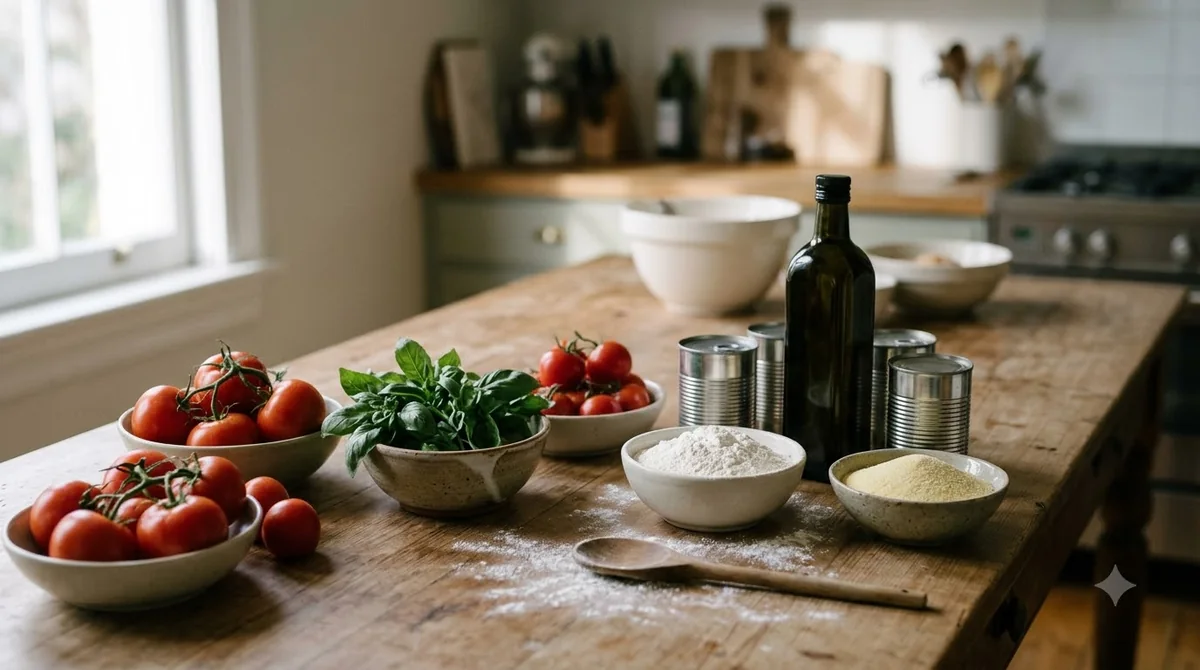

The pasta alla checca recipe makes a no-cook Roman sauce from raw tomatoes, garlic, basil and olive oil. The tomatoes are marinated for about an hour, then tossed with hot spaghetti. Cherry and grape tomatoes also work, as the basic recipe allows.
What Pasta Alla Checca Is
Pasta alla checca is a raw tomato pasta associated with Rome, and its sauce is never cooked. Anyone searching for a pasta alla checca recipe will find that most versions share the same base (it is a close cousin of a classic pasta al pomodoro): raw tomatoes, garlic, basil and olive oil.
The tomatoes are marinated, not heated, before the hot pasta goes in. Most versions use a long pasta such as spaghetti or linguine pasta. The sauce depends on fresh fruit and simple seasoning, so the quality of each ingredient shows clearly in the finished plate.
The origin of the name is uncertain. The sources reviewed for this guide link the dish to Rome but give no firm written history, so this guide does not state a date or a founder.

Ingredients for This Pasta Alla Checca Recipe
The basic recipe for three servings uses three medium firm ripe tomatoes or 20 to 25 grape or cherry tomatoes, 1/4 cup of olive oil, one or two garlic cloves and ten basil leaves.
| Ingredient | Amount for 3 servings | Notes |
|---|---|---|
| Ripe tomatoes | 3 medium firm, or 20 to 25 grape or cherry | Seed and chop medium tomatoes; halve small ones |
| Olive oil | 1/4 cup | Extra virgin, since it is not cooked |
| Garlic | 1 to 2 cloves, minced | Start with one and add more to taste |
| Fresh basil | 10 leaves in the sauce | Chop extra leaves to finish the dish |
| Salt and pepper | 2 to 3 pinches salt, 1 to 2 dashes pepper | Salt the pasta water separately |
| Spaghetti | 3 cups cooked | Linguine works in the same way |
The sauce has only a few ingredients, so each one carries the flavor. Keep the basil fresh with the tips in how to store fresh basil, and taste the tomatoes before you start, since the sauce cannot be cooked down to improve them. Use a good bottle of olive oil too, such as one from our best extra virgin olive oil list.
The two versions covered here scale differently. The basic recipe serves three, while the caciotta version uses 12 ounces of dry spaghetti for three to four servings.
How to Make the Sauce and Toss the Pasta
Following this pasta alla checca recipe step by step keeps the timing simple: marinate the tomatoes for one hour, then cook the spaghetti to al dente (see how to cook pasta al dente) and toss the two together right away. The method below follows the An Italian in My Kitchen basic recipe.
- Cut the medium tomatoes, seed them and chop them. Halve any grape or cherry tomatoes.
- Put the tomatoes in a large bowl with the salt, pepper, minced garlic, olive oil and basil, and toss gently.
- Cover the bowl with plastic wrap and let it sit for one hour.
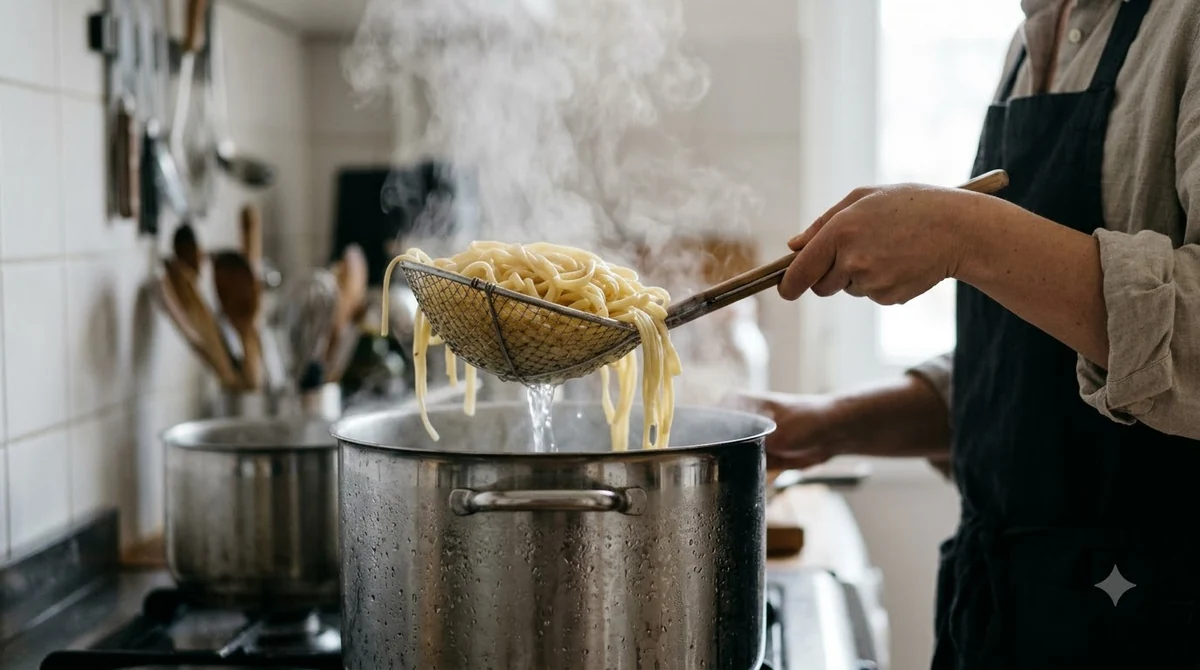
- About 35 minutes into the rest, bring a large pot of salted water to a boil and cook the pasta until al dente.
- Drain the pasta, add it to the bowl and toss gently.
- Serve immediately, with extra chopped basil if you like.
Timing matters because the recipe starts the pasta water about 35 minutes into the rest, so the spaghetti is ready as the hour ends.
Choosing Tomatoes for the Sauce
Choose firm, ripe tomatoes, because the raw sauce depends entirely on the fruit. Tomato choice matters in any pasta alla checca recipe, since nothing cooks down. The author of the basic recipe usually uses Roma tomatoes, and cherry or grape tomatoes work as well. Small sweet varieties such as datterini tomatoes are another option, though the recipe sources do not name them.
The basic recipe asks you to seed medium tomatoes before chopping them, and to halve grape or cherry tomatoes. Both steps keep the cut pieces in the same form the recipe describes.
Large sauce tomatoes can have thicker skins. The Pasta Project, which uses a cooked version, advises blanching and peeling large tomatoes before use, so consider that step if your fruit has tough skin.
Choosing the Pasta
Spaghetti is the usual choice for this pasta alla checca recipe, and linguine works in the same way. Long strands pick up the chopped tomatoes and loose basil well.
A short pasta is also acceptable, as the basic recipe notes. The Pasta Project’s cooked version calls its short-pasta option a pasta salad, so the shape you choose changes how the dish is served. The pasta choice does not change the core of the pasta alla checca recipe, which stays the same.
Raw or Cooked: Which Version to Make
The classic basic recipe keeps the sauce raw, while some newer versions add cheese or warm the tomatoes. Each pasta alla checca recipe on this list shares a core, but the cooking method and cheese decide how the final plate tastes.
| Version | Sauce | Cheese | Servings |
|---|---|---|---|
| Basic raw recipe | Marinated one hour, not cooked | None in the basic recipe | 3 |
| Caciotta version | Raw, with hot pasta water stirred in | Caciotta; fresh mozzarella as a substitute | 3 to 4 |
| Cooked variant | Simmered 10 to 15 minutes over low heat | Burrata, with olives and fennel seed | 4 |
The Pasta Grammar caciotta version combines the chopped tomatoes and cheese in a large bowl with olive oil, salt, pepper and dried oregano. It stirs a few spoonfuls of hot pasta water into the bowl before draining the spaghetti, then tosses everything and serves it right away.
The cooked variant changes the flavor away from the classic. If you want the traditional dish, follow the raw method, and try The Pasta Project’s cooked version only as a separate dish.
Make-Ahead, Serving and Leftovers
The make-ahead window applies to the marinated tomatoes in a pasta alla checca recipe, not to the finished plate. The marinated tomatoes can rest in the fridge for up to 24 hours, then sit at room temperature for 30 to 60 minutes before the pasta goes in. This note comes from a comment by the author of the basic recipe.
Serve the dish immediately after tossing, as the recipe directs. The recipe gives no serving temperature for the sauce, so the method above is the reference for how it is meant to be eaten.
Store leftovers from a pasta alla checca recipe in an airtight container in the fridge for up to two days. The same author advises against freezing this dish, so plan to eat it within that window.
The storage times above come from the recipe author, not from a food-safety agency, so check current USDA guidance if you plan to hold cut tomatoes or leftovers longer.
Common Mistakes With This Pasta Alla Checca Recipe
Most errors in a pasta alla checca recipe come from timing or fruit, not from technique. The main checks are ripe tomatoes, the full one-hour rest and pasta cooked only to al dente.
- Using underripe tomatoes, since a raw sauce cannot be cooked to improve them.
- Skipping the salt in the pasta water, which the recipe calls for in a large pot.
- Cooking the pasta past al dente, so it softens before it meets the sauce.
- Forgetting the pasta water. Stir a few spoonfuls of hot pasta water into the sauce if it looks dry, as one recipe advises.
- Cutting the rest short, when the recipe builds in one full hour for the flavors to come together.
Frequently Asked Questions
Should pasta alla checca be served hot or cold?
The basic recipe says to serve it immediately after tossing the hot pasta with the marinated tomatoes. It gives no serving temperature for cold pasta, so serve it right away to match the recipe as written.
Can I use cherry tomatoes in this pasta alla checca recipe?
Yes. The basic recipe lists 20 to 25 grape or cherry tomatoes as an alternative to three medium tomatoes. Halve them before marinating, as the method describes for small fruit.
Does a pasta alla checca recipe include cheese?
The basic recipe has no cheese. Other versions add fresh mozzarella, caciotta or burrata, so add cheese only if you want a creamier dish.
Can I make the sauce a day ahead?
One author notes that the marinated tomatoes keep in the fridge for up to 24 hours. Bring them to room temperature for 30 to 60 minutes before tossing them with the pasta.
How long do leftovers keep?
Leftovers from this pasta alla checca recipe keep for up to two days in an airtight container in the fridge. The author advises against freezing the dish.
Which tomatoes should I buy?
Pick firm, ripe tomatoes. One author usually uses Roma, while cherry and grape tomatoes also work well for this recipe.
Use this pasta alla checca recipe as the reference for the classic dish: keep the sauce raw and give the tomatoes their full hour. If you want a warmer, creamier plate, try a cooked version with burrata, but expect a different dish.
 7 min readLearnPasta alla Zozzona Recipe: Rome’s Dirty Rigatoni ExplainedUpdated Nov 11, 2026
 8 min readLearnPasta alla Norma Recipe: Fried Eggplant, Tomato and Ricotta SalataUpdated Nov 10, 2026
 8 min readLearnPesto alla Trapanese Recipe: Sicily’s Almond and Tomato PestoUpdated Nov 11, 2026
 7 min readLearnGnocchi Alla Sorrentina Recipe: Baked Gnocchi With Tomato and MozzarellaUpdated Nov 11, 2026
 8 min readLearnPasta alla Nerano Recipe: Zucchini, Provolone and BasilUpdated Nov 11, 2026
 8 min readLearnPasta alla Mollica Recipe: Sicilian Breadcrumb PastaUpdated Nov 11, 2026