

A pasta al pomodoro recipe combines spaghetti with a light tomato sauce made from olive oil, garlic, whole tomatoes and fresh basil. The dish is quick to cook and does not depend on heavy cream or long-simmered meat.
Good results from any pasta al pomodoro recipe depend on three choices: the tomatoes you buy, how gently the garlic cooks, and how the pasta finishes in the pan with a splash of its cooking water. The steps below use quantities for four servings.
What Is Pasta al Pomodoro?
Pasta al pomodoro is an Italian first course in which pasta is tossed in a quick tomato sauce, and pomodoro simply means tomato in Italian.
The Wikipedia entry on the dish describes it as a quick and light preparation rather than a heavy sauce. A typical pasta al pomodoro recipe uses fresh tomatoes, extra virgin olive oil, garlic, basil and salt, with pasta as the main ingredient.
Wikipedia notes that pomodoro is built from pomo (apple), d’ (of) and oro (gold), and suggests the name may come from early yellow tomato varieties.
Because this pasta al pomodoro recipe has so few parts, every ingredient shows in the final bowl. That makes the quality of the tomatoes, the oil and the timing matter more than they would in a long-cooked ragu. If you are choosing between this and a similar sauce, our comparison of pomodoro vs marinara shows how they differ.
Pasta al Pomodoro Recipe Ingredients and Quantities
For four servings, this pasta al pomodoro recipe uses 350 g spaghetti, 800 g whole peeled tomatoes, 40 g extra virgin olive oil, two garlic cloves and four to five basil leaves.
| Ingredient | Quantity | Notes |
|---|---|---|
| Spaghetti | 350 g (about 12 oz) | Cooked in salted water |
| Extra virgin olive oil | 40 g (3 tablespoons) | Warmed with the garlic |
| Garlic | 2 cloves | Keep whole for a milder flavor |
| Whole peeled tomatoes | 800 g (about 1 3/4 lb) | San Marzano preferred |
| Fresh basil | 4 to 5 leaves | Added during the final simmer |
| Fine salt | To taste | Season the sauce to taste |
| Parmigiano Reggiano | Optional | Not among the typical ingredients Wikipedia lists |
The Recipes from Italy spaghetti version lists these amounts for a pasta al pomodoro recipe and a total cook time of 45 minutes, including the simmer. Its author, Silvana Nava, prepares the recipe with a food mill for a slightly rustic texture.
Extra virgin olive oil is the only fat in the Recipes from Italy version, so its flavor carries straight into the sauce. The recipe calls for 40 g, which is about three tablespoons, warmed gently with the garlic.
Amounts differ between sources. The PBS Food version uses 12 to 16 oz of pasta and four large vine-ripened tomatoes instead of a can, so the tomato weight depends on whether you start with canned or fresh fruit.
Pasta al Pomodoro Method, Step by Step
In this pasta al pomodoro recipe, cook the garlic gently in olive oil, then simmer the tomatoes for 30 to 35 minutes, strain them, add the basil, then toss the drained spaghetti in the sauce for about one minute.
- Warm the olive oil over low to medium-low heat and cook the garlic for one to two minutes until fragrant. Keep it pale, not browned.
- Add the whole tomatoes and break them up with a wooden spoon. Season with salt.
- Partially cover the pan and simmer over low heat for 30 to 35 minutes, stirring now and then.
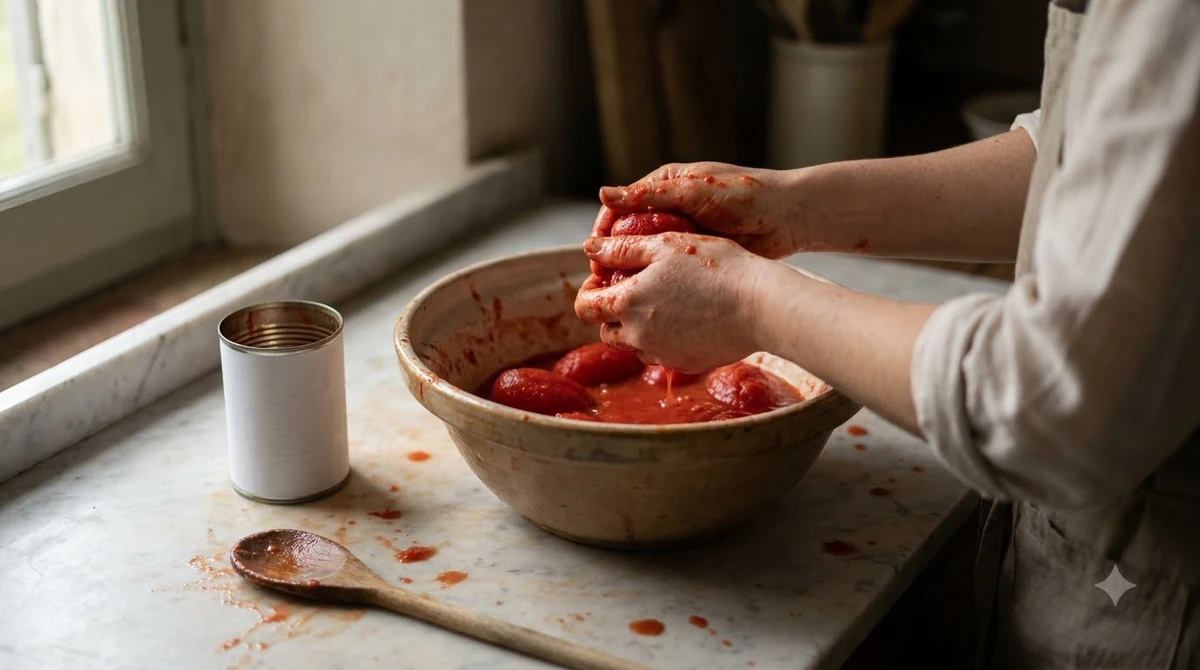
- Pass the sauce through a food mill to strain it. The largest-holed disc gives a slightly rustic texture.
- Return the sauce to the pan with the basil and simmer over very low heat for 8 to 10 minutes.
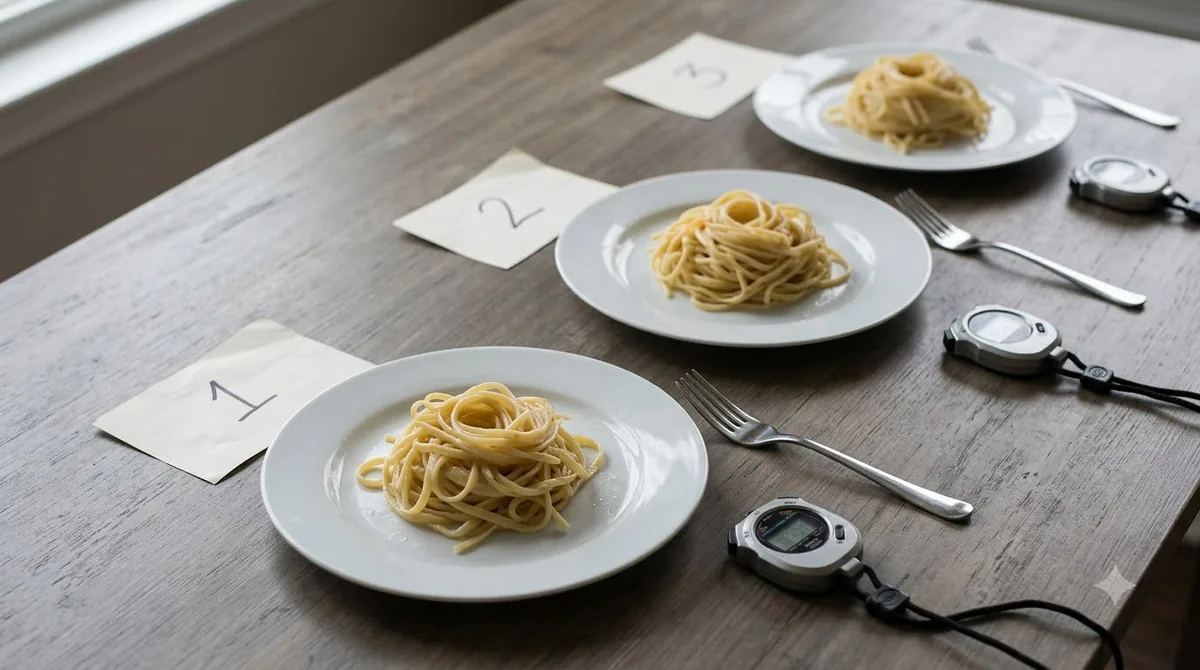
- Boil the spaghetti in salted water. Reserve about 1/2 cup (120 ml) of the cooking water, then drain the pasta one minute before the package’s al dente time.
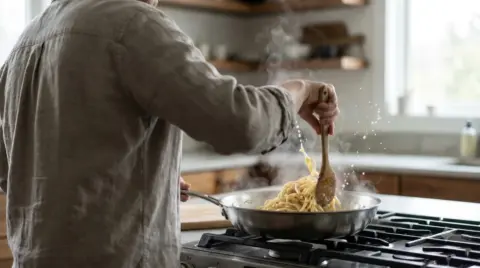
- Toss the spaghetti in the sauce over medium heat for about one minute, adding reserved water as needed. Serve at once with fresh basil.
Al dente describes pasta that is cooked through but still firm at the center. Use the package time as your starting point, and taste a strand about a minute before it is due. For more on timing, see how to cook pasta al dente.
Timing matters most at the end of a pasta al pomodoro recipe. Pasta that leaves the pot a minute early finishes cooking in the sauce, and the reserved water keeps the sauce from drying out; starchy pasta water for sauce explains why it works.
Tomato Choice: Canned, Fresh or Passata
In a pasta al pomodoro recipe, canned whole peeled San Marzano tomatoes give the most consistent result, while fresh plum tomatoes work in summer if you peel them first.
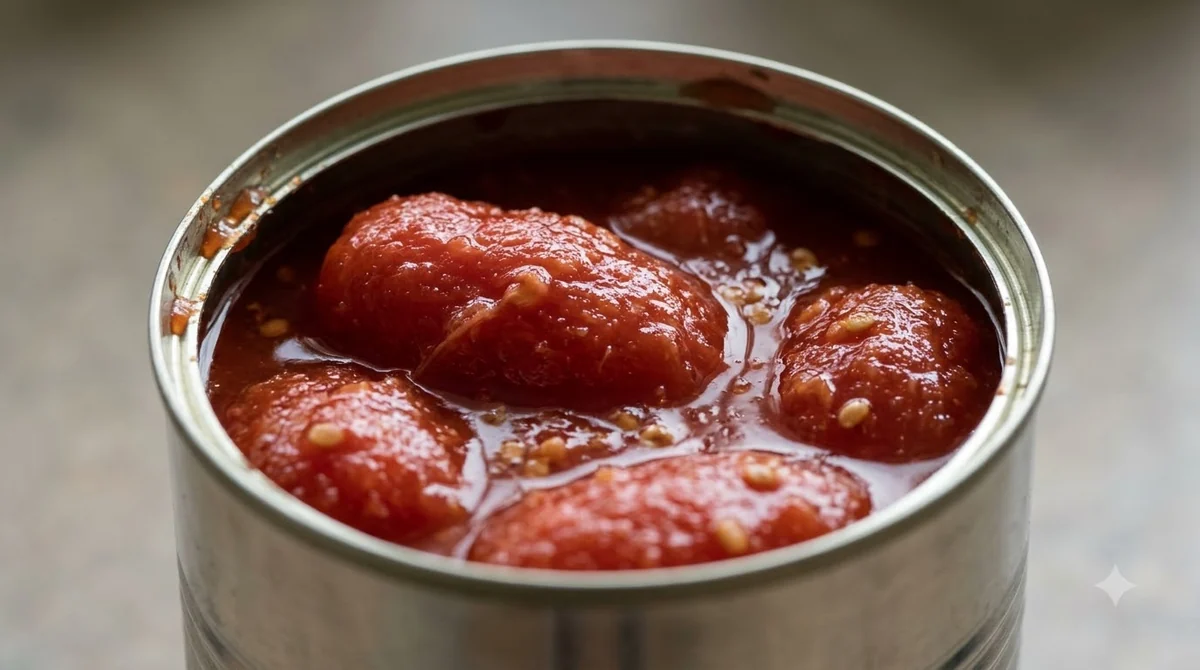
For a pasta al pomodoro recipe, Recipes from Italy calls for canned whole peeled San Marzano, which is available year-round. In summer, fresh San Marzano or Roma-type plum tomatoes can replace the can, peeled before cooking.
The PBS Food fresh-tomato method parboils four large vine-ripened tomatoes for about 30 seconds in the pasta water to loosen the skins. It then sautés them with garlic until the liquid left in the pan is no longer watery.
Passata gives a smoother sauce, and our plain guide to what is passata covers what to look for in a jar. If you use it, skip the food mill and shorten the simmer, since the tomatoes are already crushed.
With whole tomatoes, the food mill decides the texture. Recipes from Italy recommends the largest-holed disc for a slightly rustic sauce, so choose the disc that matches the texture you want. Our guide to what San Marzano tomatoes are explains what the label on the can means.
| Option | Best when | What changes in the method |
|---|---|---|
| Canned whole peeled San Marzano | Any time of year | Break up, pass through a food mill, simmer 30 to 35 minutes |
| Fresh plum or Roma tomatoes | Ripe summer fruit | Peel first, then cook until the liquid is no longer watery |
| Passata | A smoother sauce | Skip the food mill and shorten the simmer |
Common Mistakes With Pasta al Pomodoro
The most common error in a pasta al pomodoro recipe is browning the garlic, which leaves a bitter edge; cook it only until fragrant, about one to two minutes.
- Browning the garlic. The method calls for low to medium-low heat so the cloves soften without coloring.
- Draining the pasta too late. Drain it one minute before the package’s al dente time so it finishes in the sauce.
- Skipping the pasta water. About 1/2 cup helps the sauce loosen and cling to the spaghetti.
- Cooking the basil too long. Recipes from Italy adds the basil only for the final 8 to 10 minutes of very low simmering, after the sauce has been strained.
The recipe lists fine salt to taste, so taste the sauce before tossing in the pasta and adjust it then.
Frequently Asked Questions
Can I make pasta al pomodoro with fresh tomatoes?
Yes. In a pasta al pomodoro recipe, use ripe plum or vine-ripened tomatoes, peeled first, and cook them until the liquid is no longer watery, as the PBS Food method describes.
How long does the sauce take?
The pasta al pomodoro recipe from Recipes from Italy takes about 45 minutes in total, with a 30 to 35 minute simmer for the tomatoes and 8 to 10 minutes more once the basil goes in. The PBS version needs only about five minutes of sauce time.
Should I add cheese?
Cheese is not among the typical ingredients Wikipedia lists for pasta al pomodoro, which are fresh tomatoes, extra virgin olive oil, garlic, basil and salt, so treat it as an optional extra. Leave it off if you want the flavor of the tomatoes and basil to come through clearly.
What if the sauce is too thick?
Add a splash of the reserved pasta water and toss over medium heat. The recipe uses this step so the sauce clings evenly to the spaghetti.
Why should the sauce stay loose?
A loose sauce coats the spaghetti evenly. Recipes from Italy reserves about 1/2 cup of pasta water and adds it while tossing when the sauce needs it, so the pasta finishes in the sauce instead of sitting in a dry pan.
What pasta works best?
The Recipes from Italy version uses spaghetti, and the PBS version calls for 12 to 16 oz of pasta cooked to the package directions. Choose a long pasta so the sauce can coat each strand.
For a better pasta al pomodoro recipe, buy whole peeled San Marzano tomatoes, keep the garlic pale, and reserve pasta water before you drain. Use fresh tomatoes only when they are ripe and in season, and peel them first. These steps cover most of what changes the result in this pasta al pomodoro recipe. For more Italian classics, browse our pasta guides and recipes.
 8 min readLearnPasta al Forno Recipe: 6 Easy Steps to Italian Baked PastaUpdated Nov 11, 2026
 8 min readLearnPomodoro vs Marinara: Texture, Simmer Time and When to Use EachUpdated Nov 10, 2026
 8 min readLearnTrofie al Pesto Recipe: Potatoes, Green Beans and BasilUpdated Nov 11, 2026
 8 min readLearnPizza Al Taglio Recipe: Roman Sheet-Pan Pizza You Can Make at HomeUpdated Nov 10, 2026
 8 min readLearnPasta alla Norma Recipe: Fried Eggplant, Tomato and Ricotta SalataUpdated Nov 10, 2026
 8 min readLearnPink Sauce Recipe: How to Make Creamy Tomato Pasta Sauce at HomeUpdated Nov 11, 2026