

The cacio e pepe recipe is a Roman pasta dish made from pecorino romano, black pepper, pasta and starchy cooking water, with no cream. The method is simple, but the cheese melts into a smooth sauce only within a narrow temperature range, so technique matters more than the ingredient list. This guide explains the traditional ingredients, the steps that keep the sauce creamy, and a full cacio e pepe recipe you can make at home.
Where cacio e pepe comes from
Cacio e pepe is a traditional pasta dish of Lazio, Italy, and its name refers to cheese and pepper in several central Italian dialects.
A common account says the dish was created by shepherds from pastoral communities in Lazio, Abruzzo, Tuscany and Umbria, sometime in the 18th or 19th century. It is presented as a popular account rather than a fully documented history, so it is worth reading the origin story as a tradition rather than a fact about one kitchen. Wikipedia’s cacio e pepe entry sets out this account and the other details in this section.
Black pepper was most likely added to the cacio e pepe recipe later. It was expensive and not easy for shepherds to obtain, so early versions probably leaned on cheese, water and pasta. The pepper that now gives the cacio e pepe recipe its bite was a later addition, and that is why the recipe is still so short. The egg-based Roman cousin of this dish is covered in a separate carbonara recipe guide.
Ingredients and why they matter
Tonnarelli or spaghetti, pecorino romano and black pepper are the traditional ingredients, and each one has a specific job in the sauce. Add guanciale and you have pasta alla gricia, another Roman pecorino classic.
- Tonnarelli or spaghetti: long strands give the cheese paste plenty of surface to cling to. Tonnarelli is the traditional choice, and spaghetti is the common substitute.
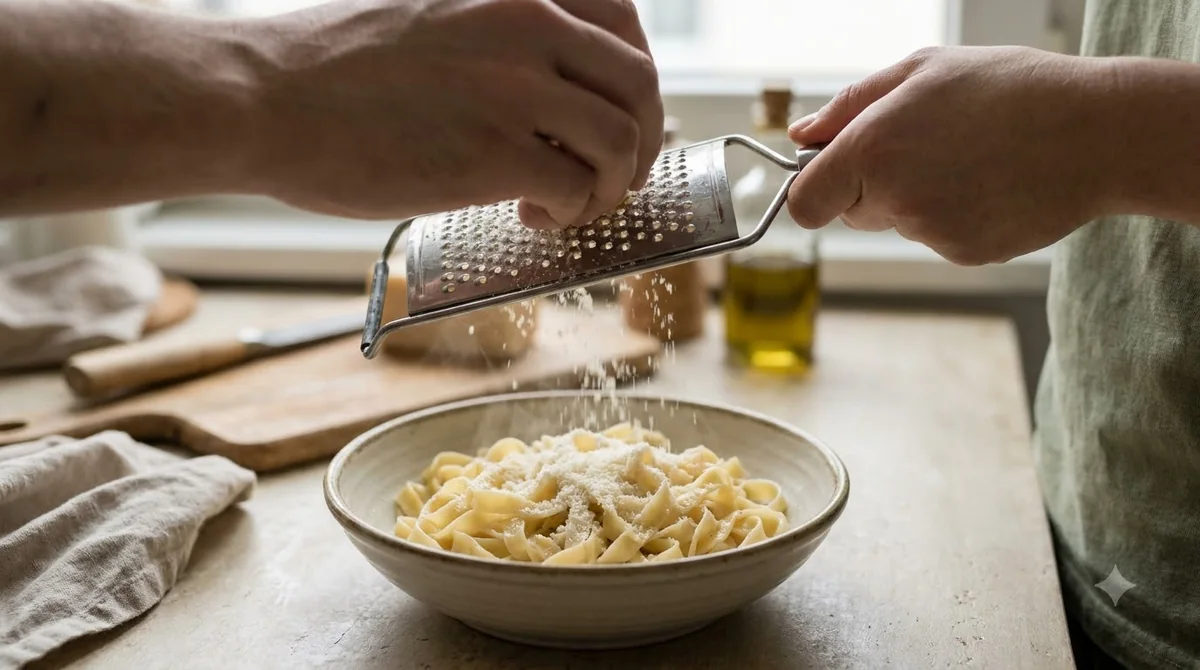
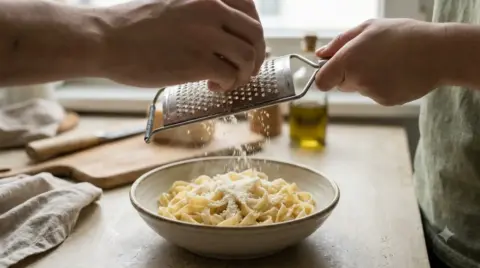
- Pecorino romano: a sharp, salty hard cheese that supplies most of the flavour (see what pecorino romano is for how it is made). Grate it yourself, because the cheese has to melt into the sauce rather than sit on top of it.
- Black pepper: freshly ground pepper gives the sharp bite the dish is named for. Toasting whole peppercorns before you crush them brings out more aroma.
- Starchy pasta water: the liquid that melts the cheese and binds it to the pasta (more in using starchy pasta water for sauce). The Taste of Home version reserves 3/4 cup of it before draining.
Parmesan can stand in for the cheese in a cacio e pepe recipe, and Parmigiano Reggiano vs pecorino romano explains how the two differ. The Taste of Home butter version lists finely shredded Parmesan, Grana Padano or pecorino romano as options. Pecorino is still the traditional choice, and it is the cheese this cacio e pepe recipe is built around, so use it if you want the classic Roman flavour.
The technique that keeps the sauce creamy
Toast and crush the pepper, mix the cheese with hot water into a smooth paste, then toss the pasta with starchy water and the paste in batches, keeping the sauce below the point where it clumps.
The test kitchen method from America’s Test Kitchen builds the sauce in stages so the cheese never gets too hot. Its steps for a spaghetti-style strand pasta are:
- Toast whole black peppercorns in a Dutch oven, then coarsely grind them with a mortar and pestle.
- Grate the pecorino in a food processor, keep it running, and slowly add hot tap water until the mixture becomes a smooth, thick paste.
- Cook the pasta in about half the usual amount of water, so the cooking liquid becomes concentrated and starchy. Stop cooking when the pasta is near al dente (see how to cook pasta al dente).
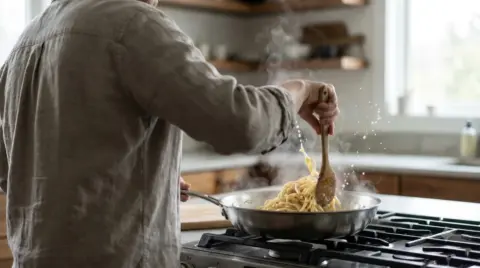
- Reserve some cooking water and drain the pasta. Drizzle a couple of tablespoons of the reserved water over the crushed pepper, then add the pasta, more starchy water and half the cheese paste, and toss vigorously.
- Add the remaining paste in a second batch. Toss for about 3 minutes until each strand is coated, twirl the pasta into nests in warmed bowls, and serve right away.
The test kitchen article describes the method but does not list quantities, so the full amounts for this cacio e pepe recipe come from the butter version in the next sections. The steps above still apply to any cacio e pepe recipe because they explain why the sauce works.
Why the cheese clumps
Clumping is the most common way a cacio e pepe recipe fails. According to the test kitchen, the cheese needs at least 145 degrees to emulsify, and above 180 degrees it clumps. If the bowl cools while you work, set it briefly over the pot of hot pasta water to rewarm it.
Researchers have studied the same problem behind the cacio e pepe recipe. Wikipedia reports that the cheese proteins did not start to clump below 65C, and that higher starch concentrations are needed as the temperature rises to prevent clumping. That study won the 2025 Ig Nobel Prize in physics, and chefs have since found simpler ways to control the temperature without adding starch.

Butter or no butter
The purist cacio e pepe recipe uses no butter, while the Taste of Home recipe melts butter into the pepper and finishes the sauce with it. Both versions rely on the same starchy water and grated cheese, so the choice comes down to how much fat you want and how precisely you follow the steps.
| Version | Fat | Cheese | Source |
|---|---|---|---|
| Test kitchen method | No butter listed | Pecorino romano, grated and mixed with hot water | America’s Test Kitchen |
| Butter version | 1/4 cup butter, divided | Parmesan, Grana Padano or pecorino romano | Taste of Home |
Choose the butter version of this cacio e pepe recipe if you want exact amounts for four. Choose the test kitchen method if you want the traditional cheese and water approach, and you are comfortable working the paste by feel and by temperature.
Step-by-step cacio e pepe recipe at home
This butter version serves four, takes about 20 minutes, and uses 8 ounces of long pasta, 6 cups of water and 3/4 cup of reserved pasta water.
Prep takes about 10 minutes and cooking takes about 10 minutes, according to the Taste of Home recipe. Set out the cheese and pepper before the pasta goes in, because a cacio e pepe recipe has to come together while the pasta is still hot.
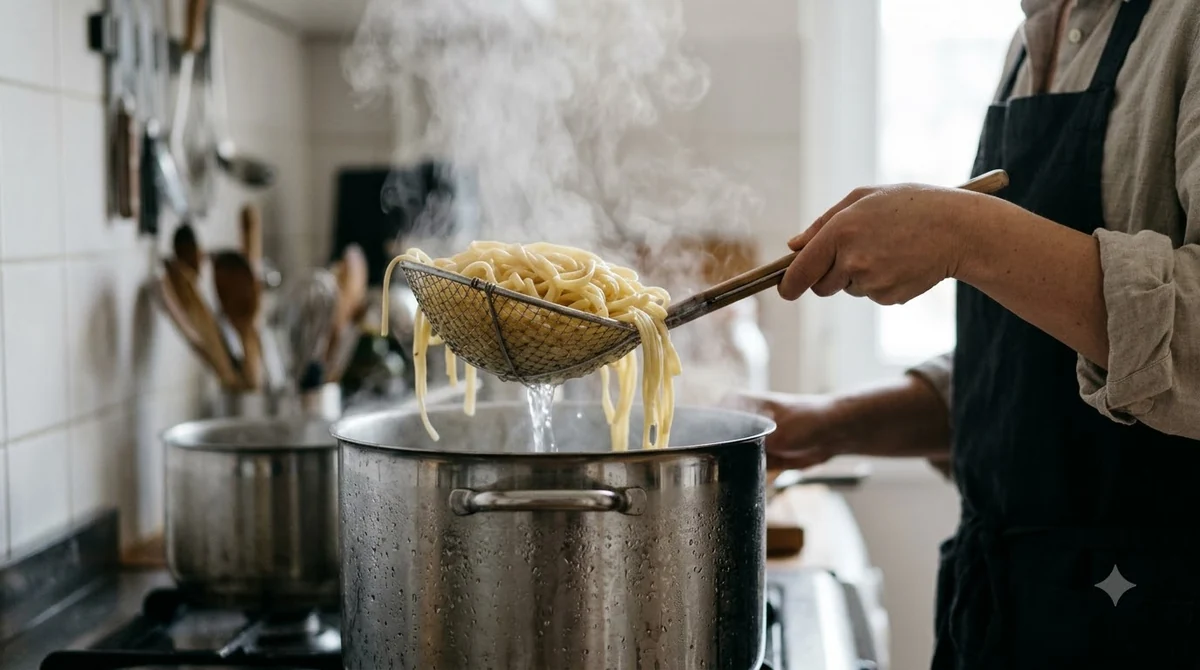
- Bring 6 cups of water and 1-1/2 tablespoons of kosher salt to a boil, then cook 8 ounces of long pasta until al dente.
- Before draining, reserve 3/4 cup of the pasta water.
- While the pasta cooks, melt 2 tablespoons of butter in a large skillet, add 1 teaspoon of freshly ground black pepper and toast it for about a minute.
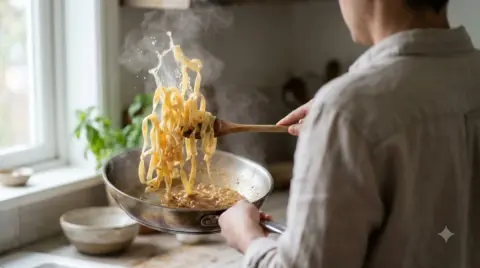
- Add 1/2 cup of the reserved water to the skillet and bring it to a simmer. Add the drained pasta and toss.
- Take the pan off the heat. Stir in 1/4 cup of finely shredded Parmesan or pecorino romano and the remaining 2 tablespoons of butter until melted. Add more pasta water if the sauce looks dry, season to taste and serve.
For the closest match to the classic dish, grate pecorino romano, which is the cheese the test kitchen uses. Serve the cacio e pepe recipe at once, because the sauce tightens as it cools.
Frequently Asked Questions
Can I use Parmesan instead of pecorino?
Yes. The Taste of Home recipe lists Parmesan, Grana Padano or pecorino romano as options. Pecorino is still the traditional choice for a cacio e pepe recipe, so use it if you want the classic flavour.
What pasta shape works best?
Tonnarelli or spaghetti are the traditional choices. Long strands hold the cheese paste better than short shapes, so use a long pasta for this cacio e pepe recipe.
Why did my sauce turn lumpy?
The cheese clumps above about 180 degrees, according to the test kitchen. Rewarm the bowl over the pasta pot, add a splash of starchy water and toss again to bring the sauce back together.
How long does this recipe take?
About 20 minutes in total for four servings, with 10 minutes of prep and 10 minutes of cooking, according to the Taste of Home recipe.
Does cacio e pepe need butter?
No. The test kitchen method uses only cheese, pepper and starchy pasta water. The butter version adds 1/4 cup of butter, divided, which makes the sauce richer.
Taste the sauce before you serve this cacio e pepe recipe. It should coat each strand without pooling at the bottom of the bowl. If it looks grainy, add a splash of hot pasta water and toss again, keeping the cheese below the point where it clumps.
 6 min readLearnHow to Make Cacio e Pepe Without ClumpingUpdated Nov 13, 2026
 8 min readLearnPasta e Ceci Recipe: Creamy Pasta with ChickpeasUpdated Nov 10, 2026
 8 min readLearnCreamy Tuscan Pasta Recipe: A Simple Skillet MethodUpdated Nov 10, 2026
 9 min readLearnAlfredo Sauce Recipe: How to Make Creamy Alfredo at HomeUpdated Nov 10, 2026
 10 min readLearnVodka Sauce Recipe: How to Make Creamy Pasta Sauce at HomeUpdated Nov 10, 2026
 8 min readLearnPink Sauce Recipe: How to Make Creamy Tomato Pasta Sauce at HomeUpdated Nov 11, 2026