
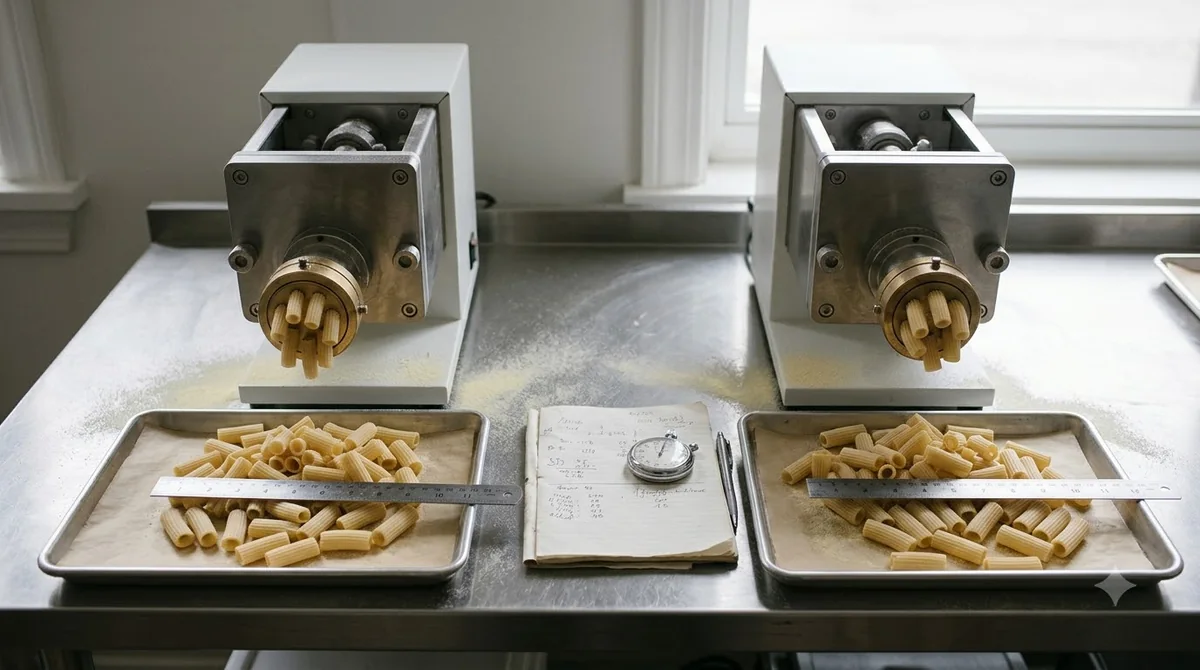

A Philips pasta maker is a countertop machine that mixes dough and pushes it through shaping discs to make fresh pasta or noodles at home. Philips sells several families under this name, and the two most visible today are the Avance Collection and the 7000 series. Model numbers and included parts differ by family and by region, so the number printed on the box is the one to check first.

Philips 7000 Series Pasta Maker
Pros & ConsViewHide
Reasons to buy
- Mixes, kneads and extrudes automatically, ready in under 10 minutes per the listing
- Makes up to 8 portions in one go
- Comes with 8 shaping discs
- Parts are listed as dishwasher-safe
Reasons to avoid
- Costs far more than a manual roller
- Needs permanent counter space
- 11% of ratings are 1-star
Philips Pasta Maker Models You Can Compare
The Avance Collection model HR2375/06 is rated at 150 W and comes with four shaping discs. The 7000 series model HR2660/00 is backed by a 2-year warranty according to Philips’ US product page. As of 2026-11-07, these are the two family entries that could be confirmed on official Philips pages in this check.
| Family and model | Power | Shaping discs | Warranty |
|---|---|---|---|
| Avance Collection HR2375/06 | 150 W | 4 included | Not stated on product page |
| 7000 series HR2660/00 | Not stated on product page | Not stated on product page | 2 years |
The Philips product pages are the best place to confirm each model’s details. The Philips product page for the Avance Collection pasta maker lists the model number, power and included parts. The Philips product page for the 7000 series pasta maker names the series and the warranty. The 7000 series is described on that page as a fully automated Philips pasta maker. Our guide to Philips 7000 pasta maker discs goes deeper on that family.

How the Philips Pasta Maker Makes Dough
The Philips recipe booklet for the Pasta and Noodle Maker, model HR2357, describes the process in two volume settings. Volume 1 uses one cup of flour, about 250 g, and gives about 300 g of fresh pasta or noodles. Volume 2 uses two cups and gives about 600 g.
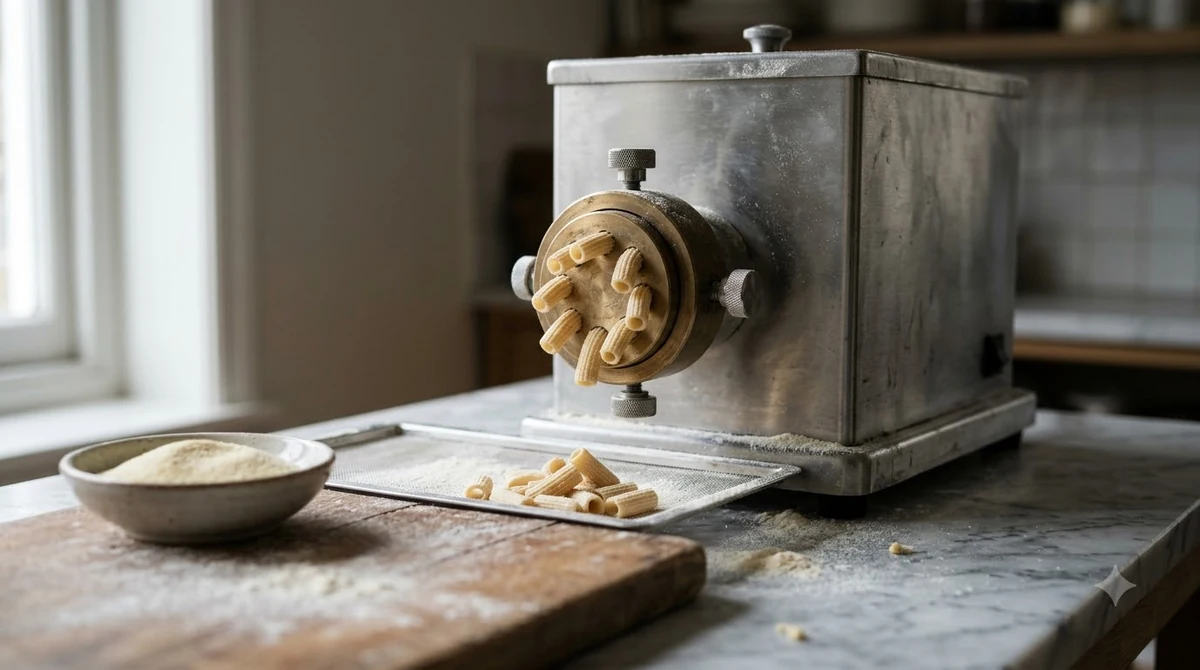
- Add the flour and close the lid.
- Select volume 1 or volume 2 and press start.
- Pour the liquid slowly through the opening in the lid, as the booklet asks.
- Let the machine finish mixing and extruding, then cut the pasta to the length you want.
The booklet is a model-specific reference for the HR2357. Other Philips families may use different volumes and output, so do not apply these figures to another model without checking its own manual. The HR2357 booklet runs to 41 pages and includes recipes and dough tables alongside the basic instructions.
Shaping Discs and What They Make
Shaping discs decide the shape of the pasta from any Philips pasta maker, so the number of discs in the box matters. The Avance Collection HR2375/06 includes four shaping discs, according to the Philips product page. The same page lists 4 shaping mouths and does not give the output for each disc, so check the disc labels when you unbox the machine. For the Avance family, see Philips Avance pasta maker accessories.
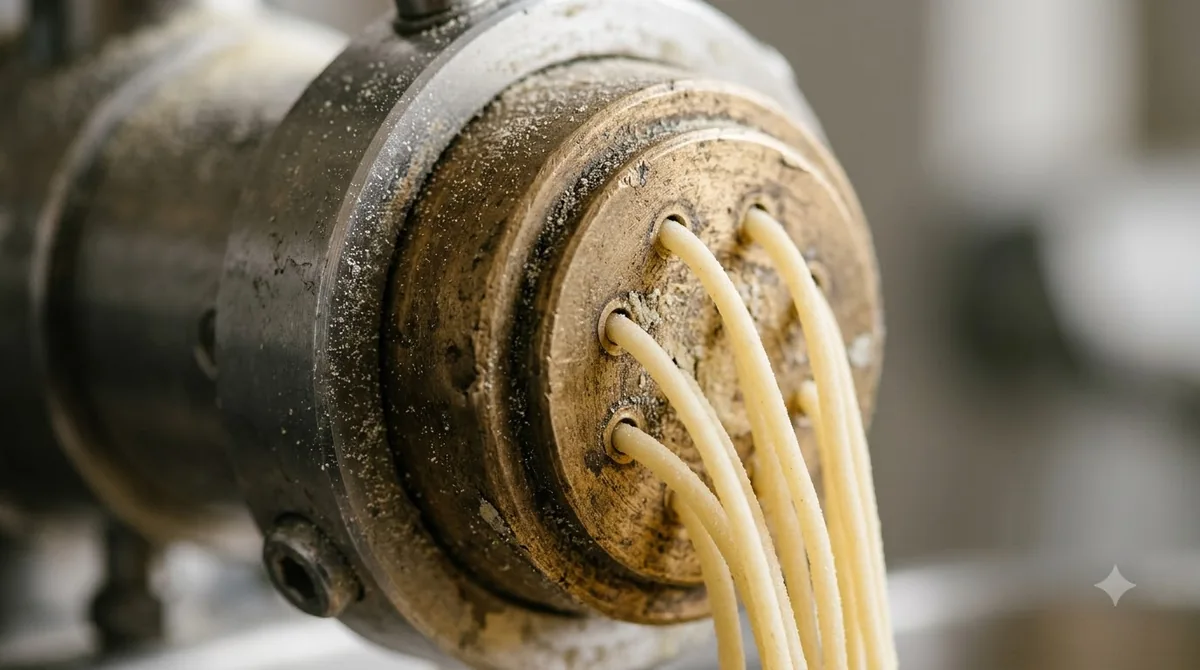
- Count the discs in the box against the number on the product page.
- Match each disc to the shape named in your model’s manual before the first run.
- Keep spare discs with the machine so the set stays complete.
Troubleshooting Dough Problems With a Philips Pasta Maker
Most dough problems with a Philips pasta maker come down to the flour and liquid ratio. Philips support says the ratio should give a crumbly dough in the mixing chamber. If the dough looks like plain flour, it is too dry, and if it looks wet or sticky, it is too wet.
Dough that is too wet or too dry makes the motor work harder, and Philips says the machine can stop in that case. The fix is to discard the dough, let the device cool, and start again after a break of 60 minutes. Forcing the same batch through the machine only keeps the motor under load.
Some owners also see an error code after mixing dry dough. Philips support lists dough that is too dry as a common cause, and its suggested first step is to unplug the machine, clean all the parts thoroughly, and start over by following the manual again. Read the full steps on Philips’ guidance for a pasta maker that stops.
A few habits prevent most of these problems:
- Weigh the flour and liquid on a kitchen scale instead of measuring by eye.
- Push the mixing chamber lid down until it clicks, with the safety pins fully inserted.
- Do not open the lid during kneading or extruding, since that stops the machine until you close it and press start/pause again.
- After a stop, wait 60 minutes before you restart so the device can cool down.
Care, Cleaning and Dishwasher Safety
The Avance Collection HR2375/06 comes with a cleaning tool, and its product page lists the machine as dishwasher safe. The page does not say which parts are safe for the dishwasher, so read the care section of the manual before you load any accessory.
- Use the cleaning tool to clear dough from the discs and the outlet.
- Unplug the machine and let it cool before you wash any part.
- Dry all parts fully before you store them, to prevent dough from sticking in the next run.
Planning Batches for a Philips Pasta Maker
The easiest way to plan a meal is to work from dough weight rather than from the number of people at the table. The Philips booklet gives a useful reference point: at volume 1, one cup of flour, about 250 g, makes about 300 g of fresh pasta or noodles. Use that ratio as a starting point for your Philips pasta maker, then scale the flour up or down by weight.
Fresh pasta is best cut and cooked soon after it comes out of the machine. If you are making more than one batch, keep the next portion of dough covered while you work on the first, so it stays easy to feed through the rollers. Keep the disc you are using close at hand so you can swap shapes without stopping the machine for long.
When the batch is done, clean the disc while it is still cold, so flour does not harden in the grooves. The cleaning steps in the care section above apply to every disc you own, so set aside a few minutes for that before you start the next batch.
What to Check Before You Buy a Philips Pasta Maker
For a general buying guide, read how to choose a pasta maker. Start with the model number, because one Philips pasta maker family name can cover several models with different power and parts. Then compare the included items, the warranty and the country version, since Philips listings can differ between markets.
- Find the exact model number on the box or on the product label.
- Confirm the power rating and the number of shaping discs on the official Philips page for your country.
- Check the warranty length on that same page, and keep the receipt with the box.
- Read the recipe booklet or manual to confirm the dough volumes before you plan a batch.
What Is Not Verified Yet
Several details about the Philips pasta maker were not confirmed on the pages that could be read in this check, so this guide does not state them. The output of the Avance HR2375/06 in grams was not given on its product page. Search listings also show other numbers, including HR2371/05, HR2345/19, HR2665/93 and HR2485/09, and one listing gives 200 W for the HR2375/05 while the HR2375/06 page gives 150 W. These are not confirmed here.
- Dough output for the Avance HR2375/06 and the full Philips model list.
- Which parts are dishwasher safe on each model.
- Current offers and prices, which change often and are not stated here.
To check these points, open the manual that came with your model, or search the model number on the official Philips site for your country.
Frequently Asked Questions
Does Philips make a pasta maker?
Yes. Philips sells pasta and noodle makers under several families, including the Avance Collection and the 7000 series.
How long is the warranty on the Philips 7000 series pasta maker?
The Philips US product page for the 7000 series HR2660/00 lists a 2-year warranty. Check the terms that came with your own purchase.
How many shaping discs come with the Avance Collection HR2375/06?
The product page says four shaping discs are included.
Is the Philips pasta maker dishwasher safe?
The Avance Collection page lists the machine as dishwasher safe but does not say which parts. Read the care section of your manual before washing any accessory.
How much pasta does volume 1 make?
The Pasta and Noodle Maker booklet gives about 300 g of fresh pasta or noodles for volume 1, using one cup of flour, about 250 g.
What should I do if my Philips pasta maker stops while kneading?
Stop, discard the dough, and let the device cool. Philips says to restart the pasta making only after a break of 60 minutes. Check that the mixing chamber lid is closed and the safety pins are seated, and make sure the flour and liquid were weighed correctly before you try again.
A Philips pasta maker can be a practical choice for home cooks who want fresh pasta often, and the best Philips pasta maker for you depends on the model number and the included discs. Confirm the model number, power, disc count and warranty on the official Philips page before you buy, and use the manual for dough amounts. If you would rather use a stand mixer or a hand-crank machine, compare the KitchenAid pasta maker press or the Marcato pasta machine range with this Philips pasta maker guide.
 8 min readReviews & VersusPhilips 7000 Pasta Maker Review: Specs, Cleaning and Who It SuitsUpdated Nov 16, 2026
 8 min readReviews & VersusPhilips Avance Pasta Maker Review: Specs, Pros and ConsUpdated Nov 17, 2026
 9 min readReviews & VersusPhilips Viva Pasta Maker Review: Specs, Discs and What to CheckUpdated Nov 17, 2026
 8 min readReviews & VersusImperia Pasta Maker: Lines, Model Codes and What to CheckUpdated Nov 15, 2026
 9 min readReviews & VersusGozney Pizza Oven: Models, Fuels, Warranty and How to ChooseUpdated Nov 15, 2026
 8 min readReviews & VersusOoni Pizza Oven: Models, Fuels and How to ChooseUpdated Nov 15, 2026