
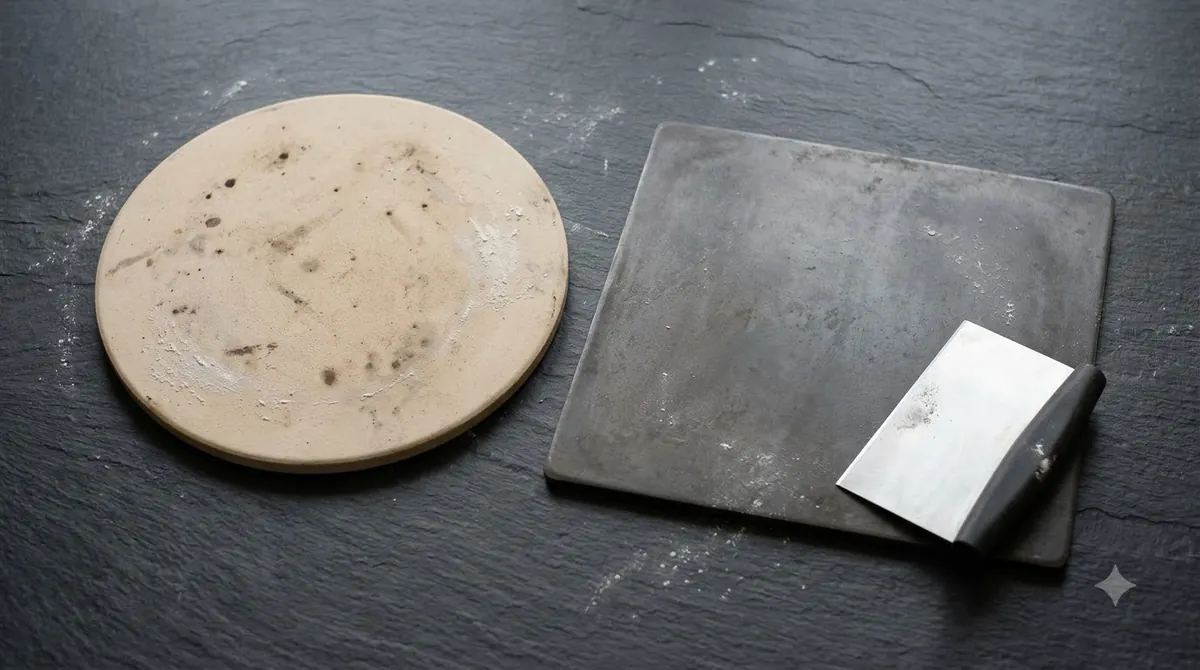

A pizza steel is a thick slab of steel that transfers oven heat faster than a pizza stone, so the crust cooks quickly and browns well at home. Steel conducts heat better than the ceramic most stones are made from, which is why many home bakers prefer it. Sellers also list the same product as a baking steel, so this guide covers both names.
Size, weight, oven fit and budget decide which steel suits you. The sections below cover each one in turn, with the figures and the sources behind them.

Baking Steel Original 14x16 | Pre-Seasoned Pizza
Pros & ConsViewHide
Reasons to buy
- Pre-seasoned carbon steel, ready for the first bake
- 14x16 size holds a 13 inch pizza or two loaves
- Made in the USA by the maker that started the category
Reasons to avoid
- Heavy to lift in and out of a home oven
- Needs hand washing and drying to avoid rust
- Costs more than a typical ceramic stone
How a Steel Stores and Moves Heat
A pizza steel is a slab of steel with sanded edges that stores heat from the oven and passes it into the dough from below.
King Arthur Baking’s comparison describes a steel as literally slabs of steel with sanded edges, and notes that steel has higher thermal conductivity than stone. That means heat moves into the dough faster, which gives quicker cooking, better browning and a crisper base. For the same reason, a pizza steel gets hot faster than a stone of similar size. Our guide on how to use a baking steel covers the preheat and the first bake.
The stone most people compare it with is usually a ceramic called cordierite, not natural stone. The same source says steel transfers heat to the dough faster than this ceramic does, so the difference shows most in how quickly the base sets.
Pizza Steel Versus Pizza Stone
Steel is the better choice if you can pick only one, because it heats faster and transfers heat better, according to King Arthur Baking.
Both surfaces work well for home pizza, and our pizza stone vs pizza steel guide covers the trade-offs in more depth. The differences show up in weight, durability and price, and the table below lists what each source says.
| Criterion | Pizza steel | Pizza stone |
|---|---|---|
| Material | Slab of steel with sanded edges | Usually a ceramic called cordierite |
| Heat transfer | Faster, higher thermal conductivity | Slower |
| Durability | Pretty much indestructible (King Arthur Baking) | Can deteriorate and crack (King Arthur Baking) |
| Weight | 15 to 27 lb (maker claim) | 5 to 10 lb (maker claim) |
| Price | 139 to 189 USD (maker listing, as of 2026-11-07) | 30 to 80 USD (maker listing, as of 2026-11-07) |
| Care | Can rust; season it like cast iron (maker guidance) | Not covered by the sources |
The weight gap matters more than it seems. A heavier piece is harder to lift in and out of a hot oven, so check that you can handle it safely before you buy.
A pizza stone is lighter and cheaper, which suits people who bake only now and then. A steel suits people who bake often and want the fastest surface. Price and weight figures come from the maker’s own comparison page, so check the seller’s current listing before you order.

Choosing the Right Size and Shape
Choose the largest rectangular steel that fits your oven, because a bigger surface gives you room to slide the pizza on and works for bread too.
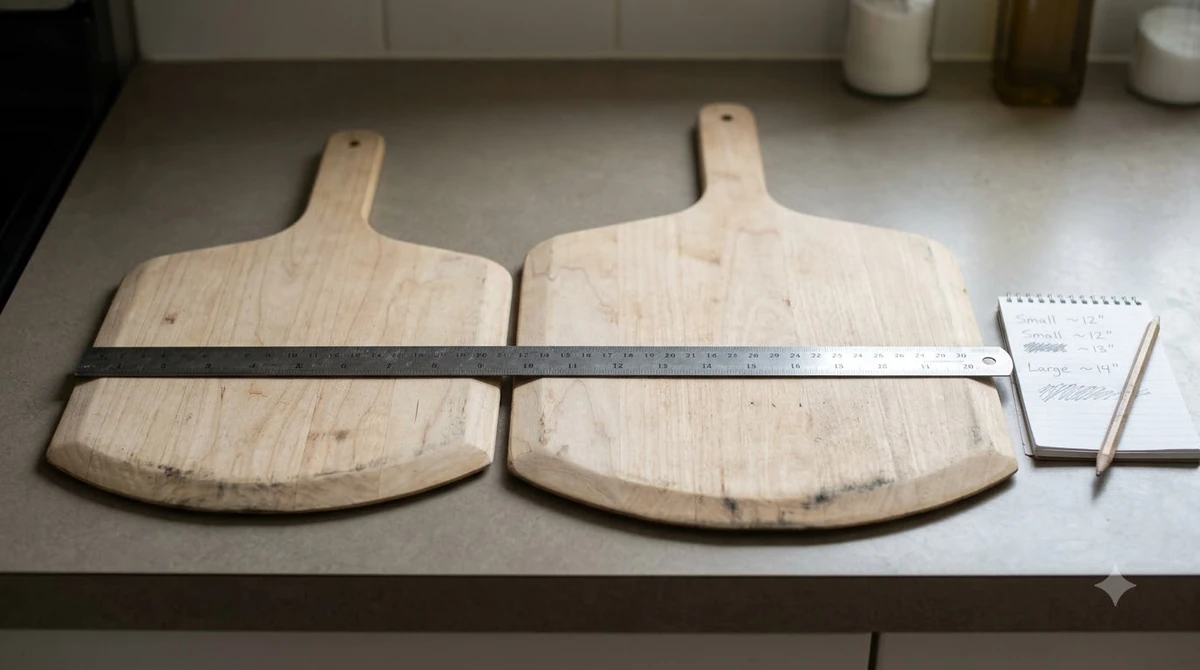
Three rules cover most sizing decisions.
- Pick a rectangle over a round piece, since King Arthur Baking calls the rectangle more versatile.
- Get the largest size your oven can take, because a bigger surface makes sliding the pizza easier.
- Check the maker’s sizes. The Original measures 16 by 14 inches, and smaller sizes are offered for compact ovens (maker claim).
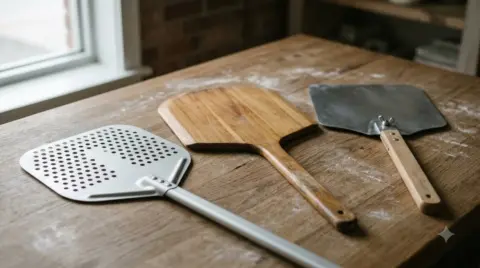
A pizza peel moves the pizza on and off the hot surface. Peels come in several sizes, so match the peel to the pizza steel you buy rather than the other way round.
Checking Whether It Fits Your Oven
Measure the inside of your oven before you buy, because the steel must leave room for air to move, and the maker says a home oven tops out at 500°F.
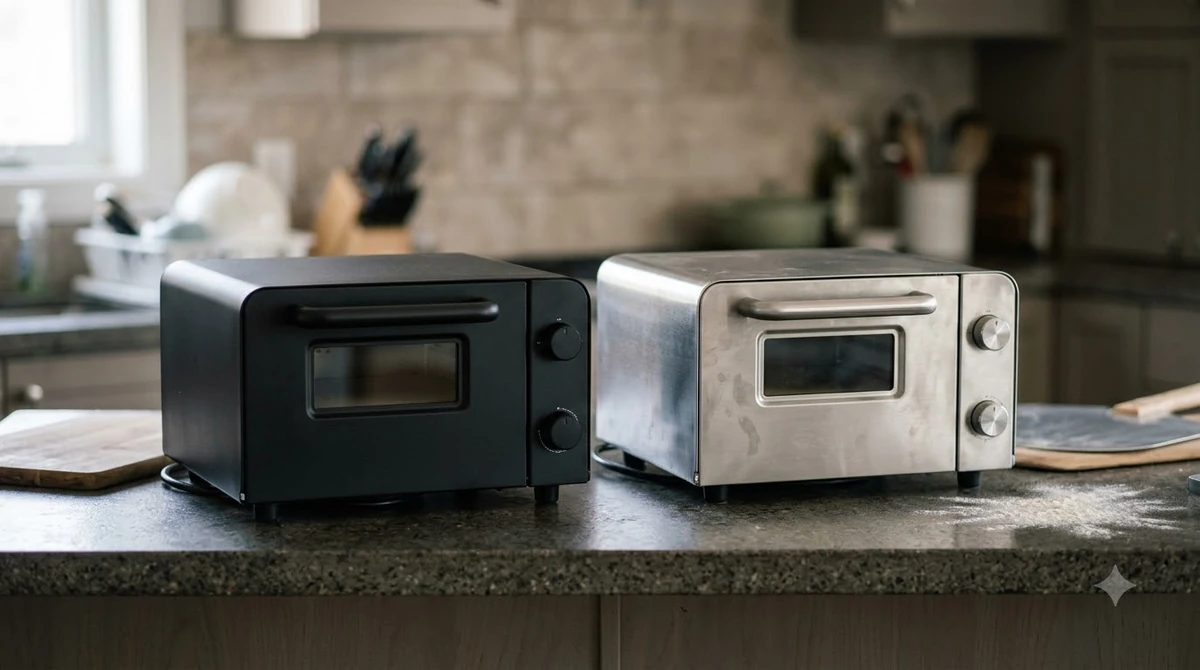
Measure the width, depth and height of the oven cavity, then compare them with the pizza steel’s dimensions. Leave some clearance on each side so the heat can circulate and the door can close fully.
The maker lists 500°F as the top temperature for a home oven and mentions about 900°F for wood-fired ovens as context. If your oven cannot reach 500°F, the steel will not reach the surface temperature King Arthur Baking recommends, so expect a longer bake and judge the crust by its color, not the clock.
This section covers standard electric and gas home ovens. Countertop and wood-fired units may need different measurements, so check their manuals first.
How to Preheat and Use a Pizza Steel
Preheat the steel in the oven for at least one hour, then check that the surface reads at least 500°F on an infrared thermometer before you bake, according to King Arthur Baking.
- Place the steel in the oven and leave it there for the whole preheat.
- Preheat for at least one hour. King Arthur Baking gives this as general guidance for both steel and stone.
- Check the surface with an infrared thermometer and aim for at least 500°F.
- Slide the pizza onto the steel directly or on parchment, since both options are described as normal use.
Convection can speed up preheating a pizza steel if your oven has it, according to the same source. Leave at least five minutes between pizzas so the steel can recover its heat. Without that gap, the surface has less time to reabsorb heat before the next pizza goes on. Our walkthrough on using a pizza steel at home shows the full routine from preheat to the first pizza.
Care, Rust and Lifespan
A steel can rust if it is neglected, so the maker advises seasoning it like cast iron, while stones are said to crack within one to three years.
Dry the pizza steel fully after cleaning and do not leave it wet, since moisture is what starts rust. Seasoning builds a protective layer over the surface, as it does on cast iron.
King Arthur Baking calls steel pretty much indestructible and notes that stones can deteriorate and crack. The maker says steel lasts decades and backs it with a lifetime warranty. These are maker claims, and the sources cited do not include an independent durability test.
- Read the seasoning and cleaning instructions before the first use.
- Check the warranty terms on the seller’s page, not only the headline.
- Confirm the size and weight against your oven and your lifting ability.
Common Mistakes to Avoid
The most common mistakes are skipping the full preheat and baking pizzas back to back, since both affect how hot the surface stays and whether you get a crispy pizza crust.
- Starting to bake before the surface reaches the target temperature.
- Baking the next pizza before five minutes have passed.
- Using a glass pan for pan pizza. King Arthur Baking says steel and stone suit pan pizza, but glass pans do not benefit in the same way.
- Buying a pizza steel by weight alone without measuring the oven first.
Use the numbers in this article as a starting point, and check the seller’s current listing before you buy, since prices change.
Frequently Asked Questions
Is a pizza steel better than a pizza stone?
Yes, for most home bakers who want the fastest heat transfer, according to King Arthur Baking, which says steel is the better choice if you can pick only one. A stone is lighter and cheaper, so it may suit people who bake occasionally. Compare the weight and price figures before you decide.
Can I bake on parchment paper with a pizza steel?
Yes. King Arthur Baking says pizza can go directly on a pizza steel or stone, or on parchment. Parchment makes it easier to slide the pizza in and out, but check the temperature rating printed on the package before you bake at high heat.
What size pizza steel should I buy?
Choose the largest rectangular size that fits your oven with clearance on each side. King Arthur Baking says a bigger surface makes sliding easier. The maker lists an Original at 16 by 14 inches and smaller sizes for compact ovens, which you should check against your own oven measurements.
Can a pizza steel rust?
Yes. The maker says steel can rust if it is not cared for, and it recommends seasoning the steel like cast iron. Dry it completely after cleaning and store it somewhere dry.
How long does a pizza steel last?
King Arthur Baking calls steel pretty much indestructible, while noting that stones can crack. The maker claims steel lasts decades and that stones usually crack within one to three years. These are maker claims, and the sources cited do not include an independent durability test.
If you bake pizza often and have the room, a pizza steel is the more useful upgrade. If you bake only now and then or need something light, a stone will still do the job. Measure your oven, check the current price on the seller’s page, and start with the largest steel that fits.
 7 min readGear & PantryPasta Board: How to Choose, Use and Care for OneUpdated Nov 15, 2026
 9 min readGear & PantryPizza Stone vs Pizza Steel: Which One Bakes Better at Home?Updated Nov 15, 2026
 9 min readGear & PantryMetal Pizza Peel: How to Choose Aluminum or SteelUpdated Nov 17, 2026
 8 min readGear & PantryOoni Koda 12 Pizza Stone: Size, Replacement Checklist and CareUpdated Nov 17, 2026
 8 min readGear & PantryHow to Choose a Baking Steel ThicknessUpdated Nov 11, 2026
 8 min readGear & PantryPizza Peel: What It Does and How to Choose OneUpdated Nov 16, 2026