
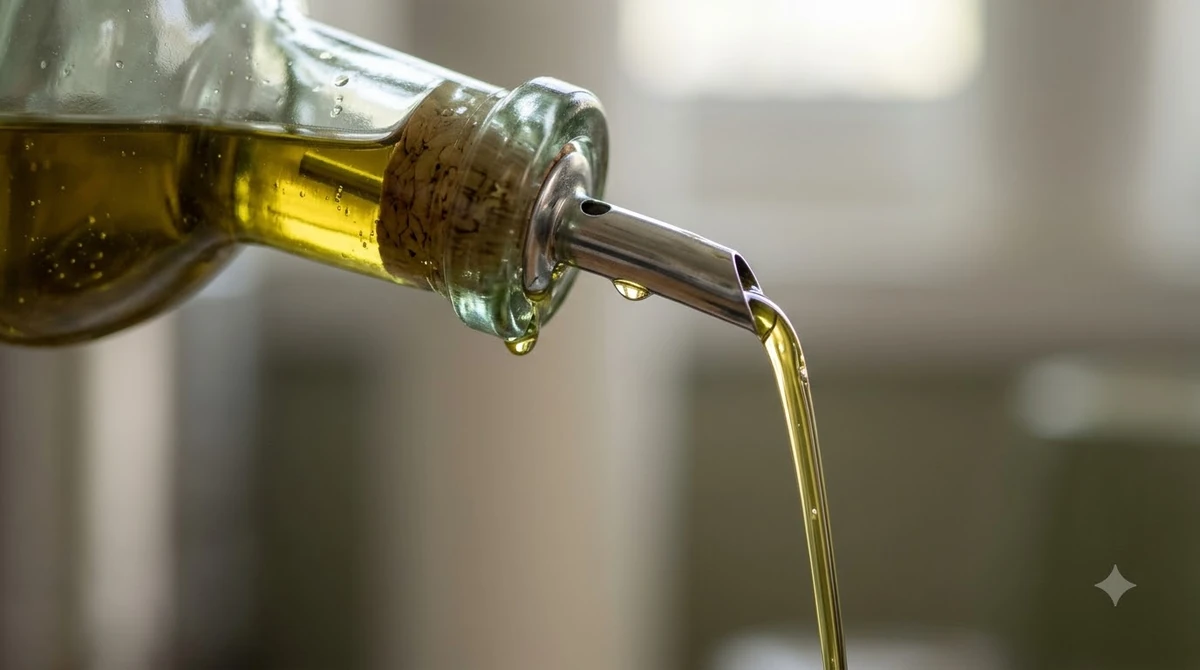

The main types of olive oil are extra virgin, virgin, refined, olive oil blends, and olive pomace oil. Every one of these types of olive oil is sorted by free acidity, by how the oil was extracted, and by whether it was refined, so the grade on the label tells you more than the wording on the front.
The Main Types of Olive Oil at a Glance
The types of olive oil on a shop shelf are set apart by how the oil was made and how much free acidity it contains. Free acidity is the percentage of free fatty acids, measured as oleic acid, and the International Olive Council (IOC) uses it to set its grade limits.
| Type | How it is made | Free acidity limit | Typical use |
|---|---|---|---|
| Extra virgin olive oil | Mechanical or other physical means only | 0.8 g per 100 g or less | Raw use, dressings, finishing; can be used for sauteing |
| Virgin olive oil | Mechanical or other physical means only | 2 g per 100 g or less | Fit to eat as it is, a lesser grade than extra virgin |
| Lampante virgin olive oil | Virgin oil with defects, not fit to eat as it is | Above 3.3 g per 100 g | For refining or technical use only |
| Refined olive oil | Refined from virgin oil without changing its basic fat structure | 0.3 g per 100 g or less | Deep frying and high-heat cooking |
| Olive oil (blend) | Refined oil blended with some virgin oil | 1 g per 100 g or less | Everyday cooking |
| Olive pomace oil | Solvents or physical treatment of pomace, the solid residue | Refined: 0.3 g or less; blend: 1 g or less | Neutral flavor; check the label for cooking guidance |

Extra Virgin Olive Oil Is the Top Grade
Among the types of olive oil, extra virgin is the highest grade, and the International Olive Council’s olive oil standards limit its free acidity to no more than 0.8 g per 100 g. The IOC says virgin oils come from mechanical or other physical means, and only washing, decantation, centrifugation and filtration are allowed after extraction.
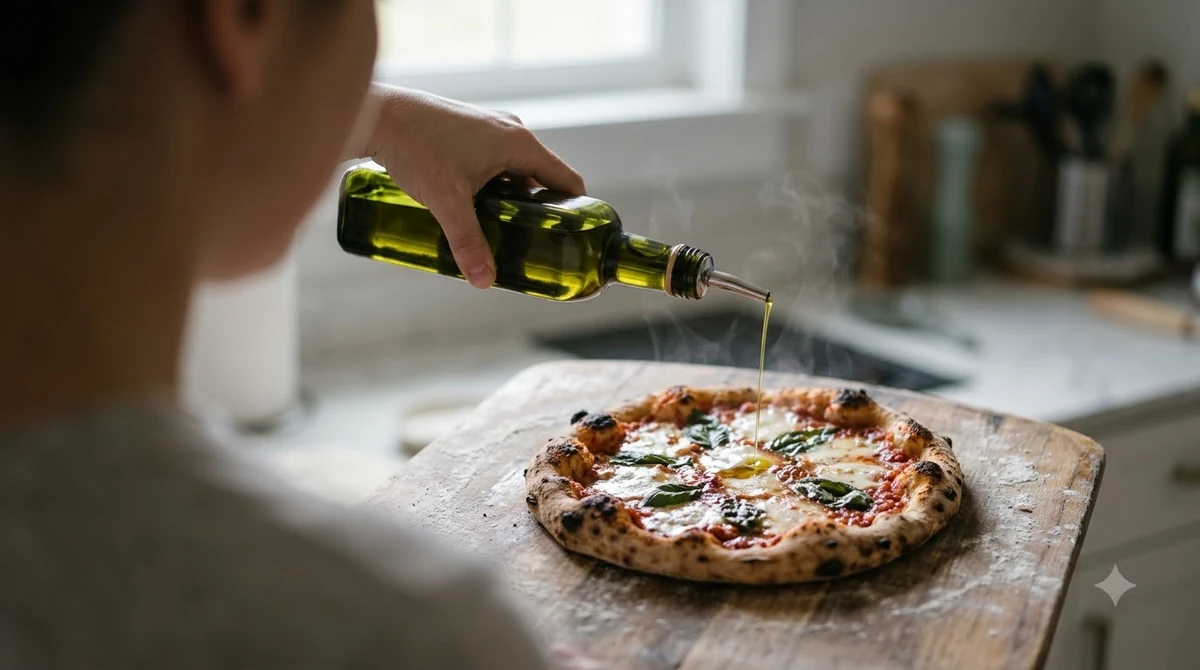
Acidity is only one test. The IOC states that classification relies on physicochemical parameters and organoleptic characteristics, meaning chemistry and taste together. The detailed sensory criteria sit in the IOC standard rather than on its public page, so a number on the label is a starting point, not the full story.
Fresh extra virgin should taste fruity. The University of California describes notes such as grassy, apple, green banana, artichoke and herbaceous, and says a good oil may be bitter and spicy. Those sharp notes are a sign of freshness, not a flaw, and they are the reason many cooks keep this grade for finishing. For a closer look at the grade, read what extra virgin olive oil is.
Virgin Olive Oil and Lampante Oil
Among the types of olive oil, virgin is the second grade, with free acidity up to 2 g per 100 g, and it is fit for consumption as it is. It sits below extra virgin in the IOC ladder, with a higher free acidity limit of 2 g per 100 g against 0.8 g.
Lampante virgin olive oil has free acidity above 3.3 g per 100 g, or other characteristics outside the virgin limits. The IOC says it is not fit for consumption as it is and is intended for refining or technical use. Among the types of olive oil, lampante is a grade you should understand, not one you will normally pick from a shelf.
Refined Olive Oil and Plain Olive Oil
Refined olive oil is another of the types of olive oil, made from virgin oil, and it has free acidity of 0.3 g per 100 g or less. The IOC says refining does not alter the glyceridic structure of the oil. Wikipedia describes the process as filtering with charcoal and other chemical and physical filters.
Among the types of olive oil, plain olive oil usually means a blend. The IOC defines olive oil as refined oil blended with virgin oil that is fit for consumption, with free acidity of 1 g per 100 g or less. Wikipedia notes that the small amount of virgin oil in these blends is there for taste.
Refined oil is suited to deep frying because of its higher smoke point and milder flavor, according to Wikipedia. Pure, Classic, Light and Extra-Light are manufacturer terms that describe purity and taste strength, not IOC grades. Common label words to read carefully include:
- Pure: a manufacturer term, not an IOC grade.
- Light: a manufacturer term about purity and taste strength, not a lower-calorie oil.
- Extra-Light: a manufacturer term, also not an IOC grade.
The common mistake is assuming “light” means fewer calories. Wikipedia notes these terms do not mean fewer calories than extra virgin oil, so use the nutrition panel rather than the word on the front.
Olive Pomace Oil Is a Different Product
Olive pomace oil is the least familiar of the types of olive oil. It is made from the solid residue left after olives are pressed, using solvents or other physical treatments. Wikipedia says pomace keeps about 5 to 10 percent oil that can only be extracted with chemical solvents, in specialized plants rather than oil mills.
Crude pomace oil is not meant for direct consumption. Refined pomace oil has free acidity of 0.3 g per 100 g or less, and pomace blends are capped at 1 g per 100 g, according to the IOC. Wikipedia says pomace oil has a more neutral flavor but the same fat composition as regular olive oil.
Its neutral flavor is what sets it apart from the other types of olive oil. This article could not verify cooking guidance for pomace oil beyond that point, so check the label, and keep extra virgin for a drizzle on bread or salad, where its fruity notes show.
How to Choose a Bottle for Cooking or Finishing
Choosing among the types of olive oil comes down to the job. Pick extra virgin for finishing and raw use, and pick a refined oil or a blend for high-heat frying. The Wikipedia olive oil article says extra virgin is mostly used raw as a condiment and in salad dressings, and that its flavor is stronger when it is not heated.
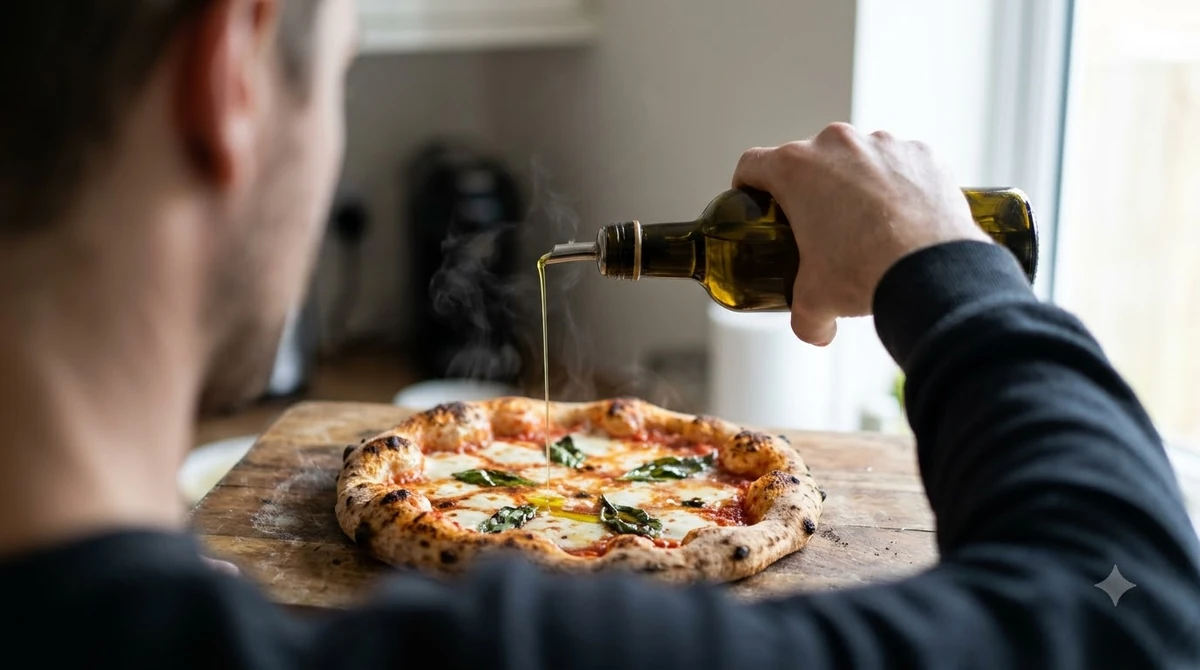
Extra virgin can also be used for sauteing. Wikipedia notes that above about 210 to 216 C, its unrefined particles burn and the taste deteriorates. Its smoke point is listed as roughly 180 to 215 C, and the article gives slightly different figures in different sections, so treat any single number as approximate. The full breakdown by grade is in this guide to olive oil smoke point.
A drizzle over a finished pizza or pasta is a raw use, which is where extra virgin shows its flavor best. If you are shopping for that last-step bottle, see the notes on choosing a finishing olive oil. Save the high-heat pan for a refined oil, and keep the extra virgin for the last step.
Storage, Freshness, and Reading the Label
Whichever of the types of olive oil you buy, choose a bottle in dark glass or tin, store it away from heat and light, and buy a size you can finish in about six weeks. The University of California says freshness diminishes with time, so a size you can finish quickly is the practical choice.
Look for a harvest date on any of the types of olive oil you buy. The University of California buying tips say the most recent harvest is typically October to December in the Northern Hemisphere and May to June in the Southern Hemisphere. The best by date is often two years from bottling rather than from pressing, which makes it an unreliable quality marker.
Quality seals help. The University of California notes that the California Olive Oil Council and the Australian Olive Association require standards stricter than the minimal USDA standards, while other seals may not offer the same assurance. One widely sold California brand is covered in this California Olive Ranch olive oil review. The IOC adds that olive oil should be kept away from excessive heat, air, humidity and, above all, light.
Frequently Asked Questions
Is extra virgin one of the types of olive oil that differs from regular olive oil?
No. Extra virgin is the top grade, with free acidity of 0.8 g per 100 g or less and extraction by mechanical or other physical means only. Regular olive oil is usually a blend of refined oil with some virgin oil, with free acidity up to 1 g per 100 g, according to the IOC.
Which of the types of olive oil is best for pizza?
Extra virgin is the usual choice for a drizzle over a pizza after it comes out of the oven, because its flavor is strongest when raw. For high-heat cooking, a refined oil or a blend is the more practical option. Read the grade on the label before you buy.
Can you cook with extra virgin olive oil?
Yes, for lower heat cooking. Wikipedia says extra virgin can be used for sauteing, but above about 210 to 216 C its unrefined particles burn and the taste deteriorates. Save refined oil for deep frying.
Does light olive oil have fewer calories?
No. Light is a manufacturer term about purity and taste strength, not an IOC grade. Wikipedia notes these terms do not mean fewer calories than extra virgin oil, so check the nutrition panel on the bottle.
How long do the types of olive oil stay fresh after opening?
The University of California suggests buying a container you can finish in about six weeks, because freshness diminishes with time. Keep the bottle cool, dark and tightly closed. The best by date is often two years from bottling, so it is not a reliable freshness guide.
For most home cooks, the simplest rule across the types of olive oil is to keep extra virgin olive oil for dishes where its flavor can shine, such as a drizzle over pizza or a salad dressing. Use a refined oil or a blend for high-heat frying. Read the grade first, then check the harvest date, because that habit tells you more than any brand name.
 8 min readLearnHow to Tell If Olive Oil Is Real: Label, Grade, and Taste ChecksUpdated Nov 11, 2026
 8 min readLearnOlive Oil Smoke Point: What the Numbers Mean for Your CookingUpdated Nov 10, 2026
 9 min readLearnPizza Bianca Recipe: Roman Olive Oil Flatbread at HomeUpdated Nov 10, 2026
 8 min readLearnPizza Dough with Olive Oil: Simple Recipe and MethodUpdated Nov 11, 2026
 9 min readLearnHow Long Does Olive Oil Last?Updated Nov 11, 2026
 9 min readLearnHow to Store Olive Oil So It Stays FreshUpdated Nov 11, 2026