
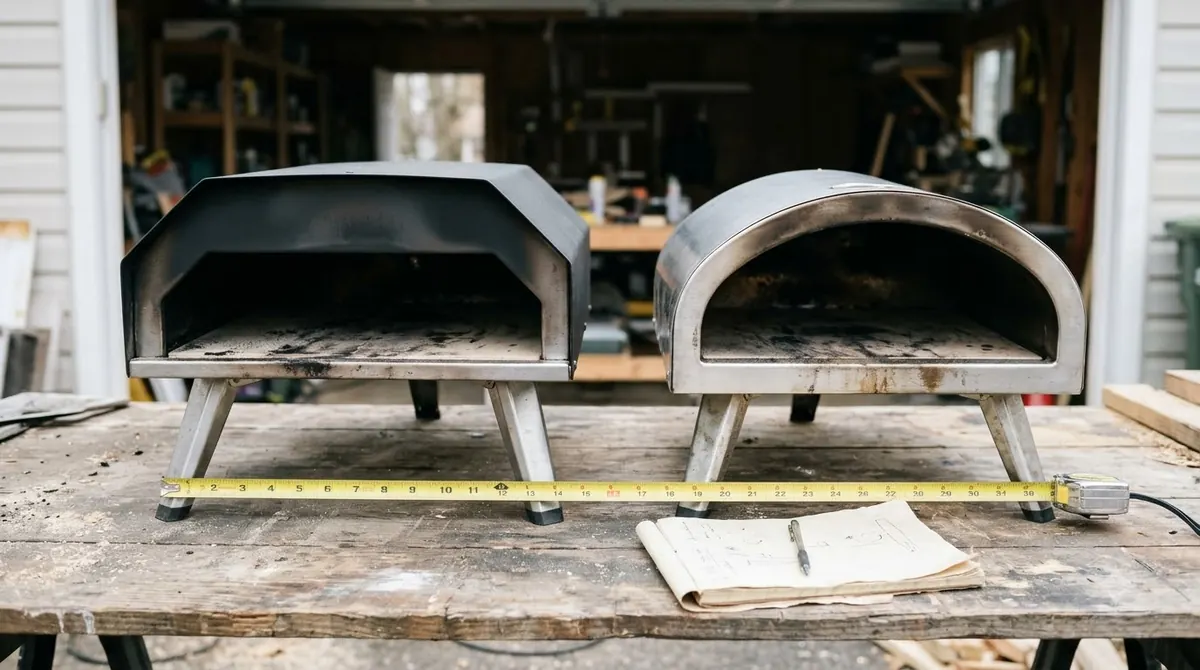

A pizza oven for Neapolitan pizza has to hold very high heat, because the traditional bake takes 60 to 90 seconds at about 485 °C (905 °F). Most home ovens are not built to hold that heat, so the oven type and cooking floor matter as much as the price.
Fuel type, cooking floor and size decide whether a pizza oven for Neapolitan pizza gets close to that result. A smaller unit can still suit you if you accept a slower bake and a different crust.
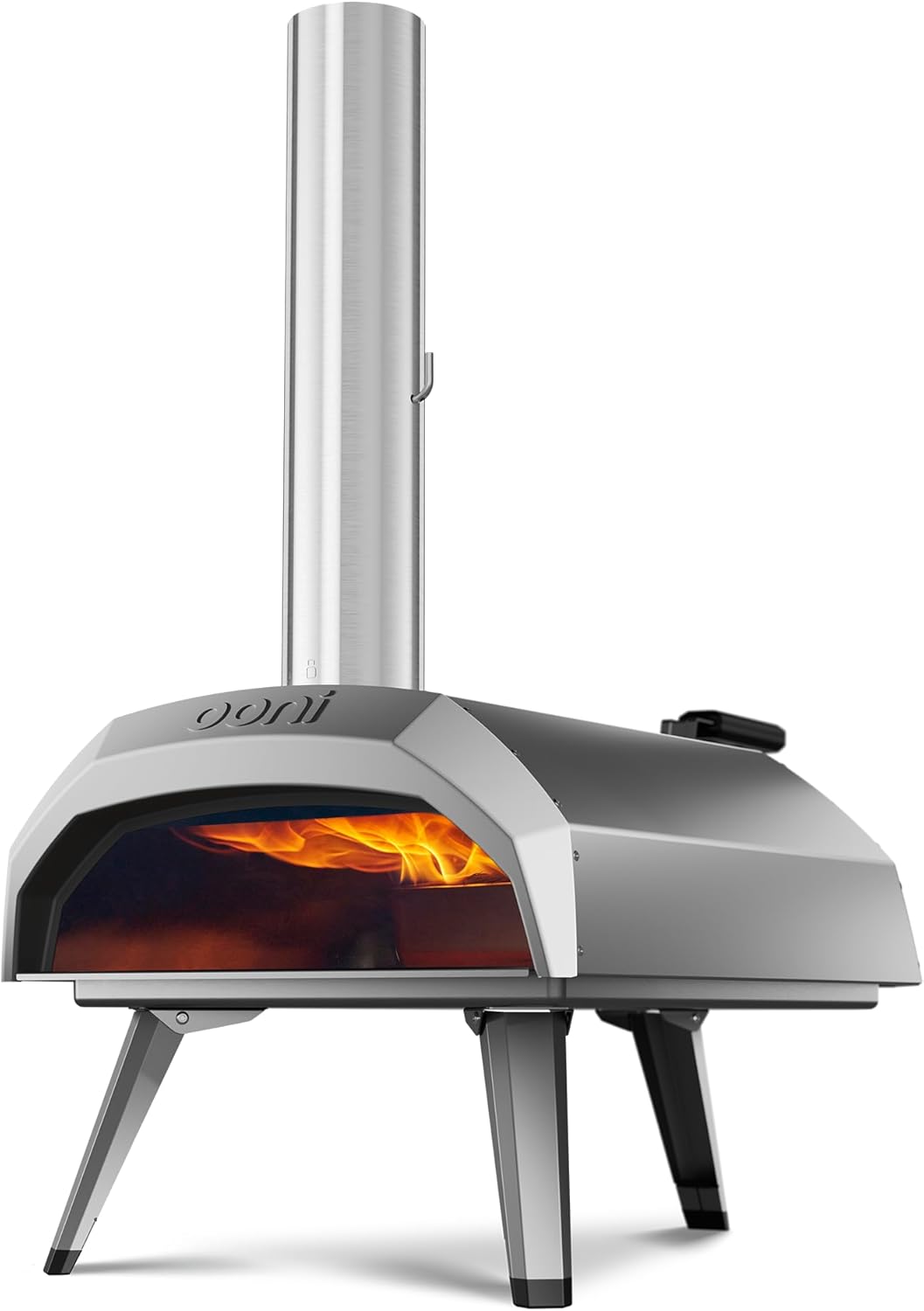
Ooni Karu 12 – Multi-Fuel Outdoor Pizza Oven
Pros & ConsViewHide
Reasons to buy
- Light at about 26 lb, so easy to carry
- Wood or charcoal ready out of the box, gas burner optional
- Reaches 950°F in about 15 minutes, per Ooni
- Strong Amazon rating across roughly 1,500 reviews
Reasons to avoid
- Gas burner is sold separately
- 12-inch pizza limit
- Wood and charcoal take more tending than gas

Ooni Koda 2 Propane Gas Pizza Oven
Pros & ConsViewHide
Reasons to buy
- About 35 lb, light enough to move between spots
- Thicker stone for back-to-back pizzas, per Ooni
- Regulator and hose included for propane
Reasons to avoid
- Propane only and not compatible with natural gas
- 14-inch pizzas at most, smaller than the Koda 2 Pro
- Gas bottle is not included

Gozney Roccbox Outdoor Pizza Oven
Pros & ConsViewHide
Reasons to buy
- Compact, low-profile and portable
- Cooks pizza in about 60 seconds at up to 950°F
- Gas oven with an optional wood burner attachment
- About 4.7 stars from nearly 1,900 Amazon ratings
Reasons to avoid
- 12-inch pizza limit
- Wood burner attachment is an optional extra
- Not as large as the Arc XL or Dome class ovens
Why temperature matters for Neapolitan pizza
Neapolitan pizza is traditionally baked for 60 to 90 seconds at about 485 °C (905 °F) in a wood-fired oven, according to Wikipedia’s Neapolitan pizza article.
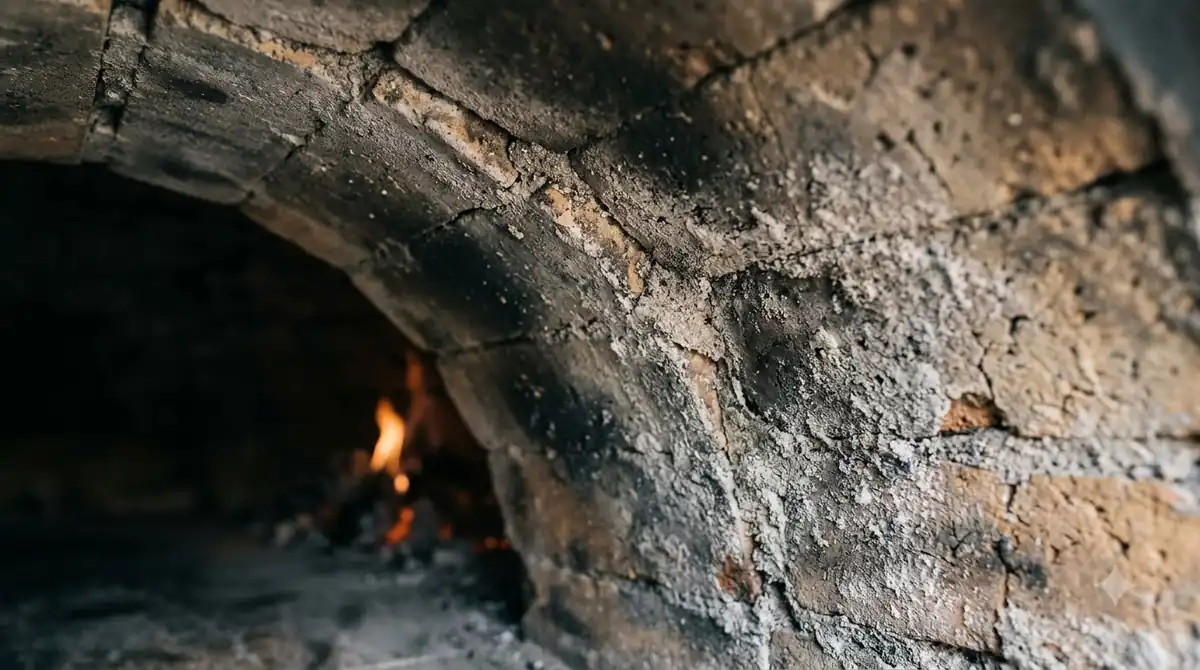
A pizza oven for Neapolitan pizza has to deliver that heat quickly, because a fast bake is what gives the crust its blisters and a soft center. The traditional rules describe a soft, thin dough with high edges, and the dough may be no more than 0.25 cm (about 0.1 inch) high. If you want to practice the dough first, start with our Neapolitan pizza dough recipe.
For a home buyer shopping for a pizza oven for Neapolitan pizza, the maximum temperature on the spec sheet matters more than the advertised pizza size. Gozney’s guide to pizza oven temperatures says thin-crust pizza is best cooked at around 800 to 900 °F, and that regular home ovens top out at roughly 500 to 550 °F (260 to 290 °C). An oven that peaks well below the traditional target can still bake good pizza, but the bake will be longer and the crust will usually look paler and less blistered.
Heat recovery matters too. A dome and a cooking floor hold heat between bakes, so an oven that recovers quickly lets you cook several pizzas in a row without waiting for a long reheat. Open the door often and the temperature drops, which is why a steady working heat is more useful than a single peak reading.
Wood-fired, gas or electric: which oven type fits
Wood-fired domes are the closest match to the traditional method, while gas and electric units trade some of that peak heat for easier control. Choose by the heat you need and the way you want to cook, not by the brand alone.
Pizza ovens can be wood-fired, gas-fired or electric, and some hybrid designs burn both wood and gas. A traditional wood-fired oven uses a circular cooking floor under a dome that reduces heat loss, as Wikipedia’s pizza oven overview describes.
Daily use also differs by fuel. Wood needs dry storage, a supply of fuel and regular ash removal, and wood pizza oven temperature explains what to expect from the fire. Gas needs a connection or a fuel cylinder that you refill, and propane pizza oven temperature covers that fuel. Electric needs a suitable outlet, and the spec sheet should state the power requirement so you can check it against your home wiring before you buy.
| Oven type | Main strength | Main trade-off |
|---|---|---|
| Wood-fired dome | Closest to the traditional method and the highest heat | Needs wood, longer heat-up, more ash to clear |
| Gas-fired | Easy to start and control | Peak heat depends on the model, so confirm the maximum |
| Electric | No flame and simple plug-in use | Heat varies by element design, so check the maximum before you assume a match |
| Hybrid (wood and gas) | Two fuel options in one unit | The spec sheet should show which fuel reaches the target |
A standard kitchen oven is unlikely to reach the traditional 485 °C (905 °F) target, so most people who want true Neapolitan results look at a dedicated outdoor or countertop unit. If you cannot burn fuel indoors or outside, an electric model may be the only practical option, but you still need to confirm its maximum temperature.
Size and cooking surface for a home oven
Check the stated pizza diameter and opening size before you buy, because they decide which pizzas you can make without folding the dough. Compact home models take a smaller pizza than a restaurant oven, so confirm that number on the spec sheet.
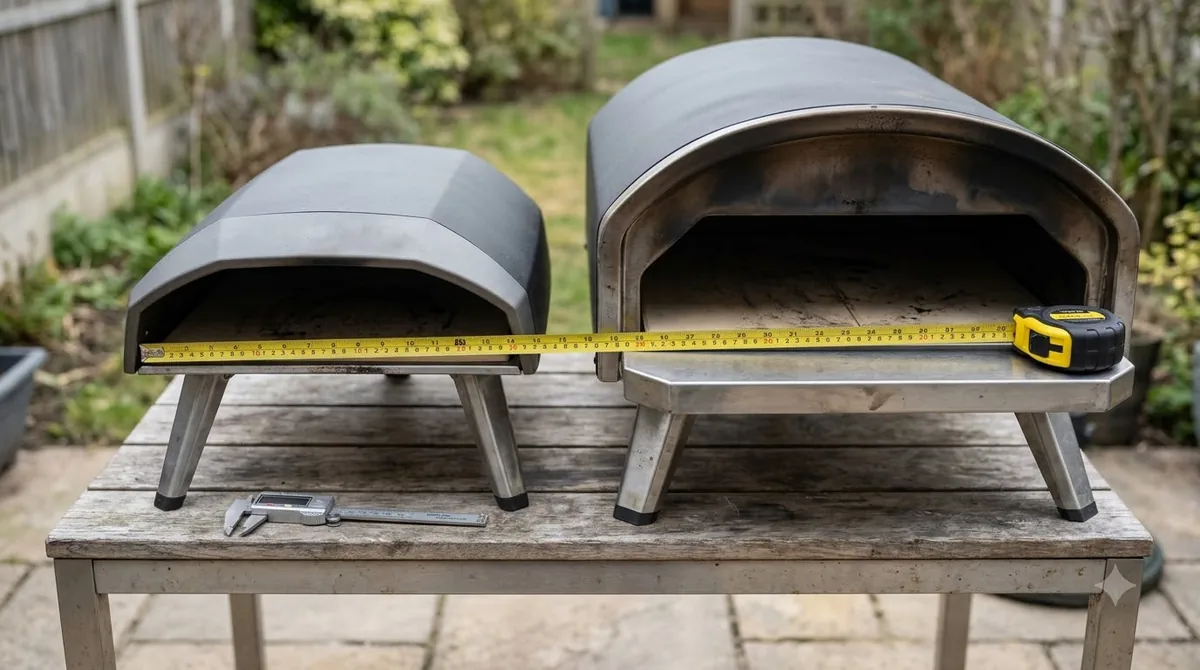
Look at these points when you compare sizes:
- The maximum pizza diameter the maker states, and whether it is a maximum or a comfortable size
- The cooking floor material, with stone or steel listed by name
- The opening height and width, so you can turn and remove the pizza with a peel
- Clearance around the unit for the flame, chimney or vent
The floor matters as much as the dome. Stone and steel carry heat into the base faster than a bare metal tray, which helps the crust cook while the top blisters. Confirm the floor material on the spec sheet, because a floor that is not named is hard to judge.
Also think about how many pizzas you want to make in one session. A larger floor lets you cook two pizzas at once, but it also takes longer to heat and needs more fuel or power. A smaller floor heats faster and suits one or two pizzas at a time, which many home cooks find easier to manage.
Buying checklist for a pizza oven for Neapolitan pizza
Before you buy a pizza oven for Neapolitan pizza, check the maximum temperature, the fuel, the preheat time, the floor material and the stated pizza size on the spec sheet.
- Maximum temperature in °C and °F, compared with the 485 °C (905 °F) traditional figure
- Fuel type, and whether you are allowed to use it where you live
- Preheat time from cold to working temperature
- Cooking floor material, with stone or steel named
- Stated pizza diameter and opening size
- Warranty and where replacement parts are sold
Ask the seller or the manufacturer what conditions sit behind a temperature claim. A maximum reading is not the same as a steady working heat, and only the second one shapes the bake.
A pizza peel helps you slide the pizza onto a hot floor and take it out again. It matters most when the opening is narrow, so measure the opening before you choose one.
Placement is part of the decision. Outdoor units need a level surface, clear space above and around them, and protection from rain unless the maker says otherwise. Follow the clearance and ventilation rules in the manual, and do not use a unit indoors unless the manufacturer states that it is rated for indoor use.

What this guide does not confirm
Several home-oven figures were not confirmed from a page the research could read, so this guide does not state them as facts.
The exact diameter of a traditional Neapolitan pizza, the maximum temperatures of specific home models and their preheat times are not confirmed here. Check the manufacturer’s current spec sheet before you buy, and compare its stated maximum with the 485 °C (905 °F) traditional figure.
Prices and availability change often, so confirm them on the seller’s page on the day you buy.
Frequently Asked Questions
Can any home pizza oven make Neapolitan pizza?
Not every oven can. You need enough heat and a floor that moves heat quickly, and a standard kitchen oven is unlikely to reach the traditional 485 °C (905 °F) target.
Is wood better than gas for Neapolitan pizza?
Wood is the closest match to the traditional method. Gas is easier to start and control, so it suits people who want steady results with less effort, as long as the spec sheet confirms enough maximum heat.
How long does a Neapolitan pizza take to bake?
The traditional bake is 60 to 90 seconds in an oven at about 485 °C (905 °F). An oven that peaks lower will usually need a longer bake, which changes the texture of the crust.
How big should the oven be?
Use the maximum pizza diameter stated for the model, and leave room for a peel and for turning the pizza. Do not assume a size that the spec sheet does not state.
Do I need a pizza peel?
A peel makes it easier to move the pizza in and out of a hot oven. It is most useful when the opening is narrow or the floor is deep.
Can I use a pizza oven indoors?
Only if the manufacturer states that the unit is rated for indoor use. Many wood and gas units are sold for outdoor use only, so read the ventilation and clearance rules in the manual before you light one.
Does the crust need to be thin?
Traditional rules describe a thin, soft center with high edges, and the dough may be no more than 0.25 cm (about 0.1 inch) high. Thin dough cooks quickly, so the oven heat sets the bake time. For how this style differs from a New York pie, see Neapolitan vs New York style pizza.
Choosing a pizza oven for Neapolitan pizza starts with the maximum temperature and the floor. Then decide between wood, gas or electric, and check the floor and size. Treat any figure you cannot confirm on the manufacturer’s page as a question to ask the seller before you pay, and use our Neapolitan pizza recipe once the oven is home.
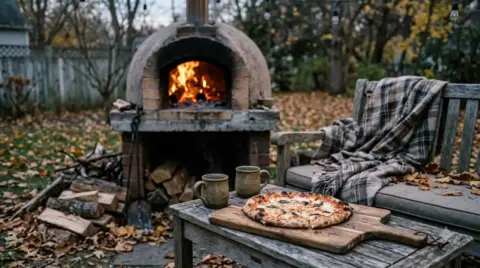 9 min readBy Use & ModelPizza Oven for Bread: What to Look For Before You BuyUpdated Nov 16, 2026
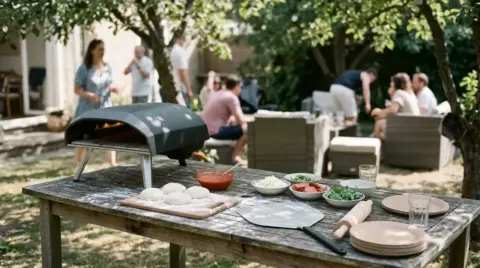 8 min readBy Use & ModelPizza Oven for Parties: What to Look for Before You BuyUpdated Nov 16, 2026
 8 min readBy Use & ModelPasta Machine for Fettuccine: What to Look ForUpdated Nov 10, 2026
 8 min readBy Use & ModelPasta Machine for Ravioli: What to Look For Before You BuyUpdated Nov 10, 2026
 8 min readBy Use & ModelPasta Machine for Tagliatelle: What to Look ForUpdated Nov 10, 2026
 10 min readBy Use & ModelPizza Oven for Frozen Pizza: What to Check Before You BuyUpdated Nov 16, 2026