
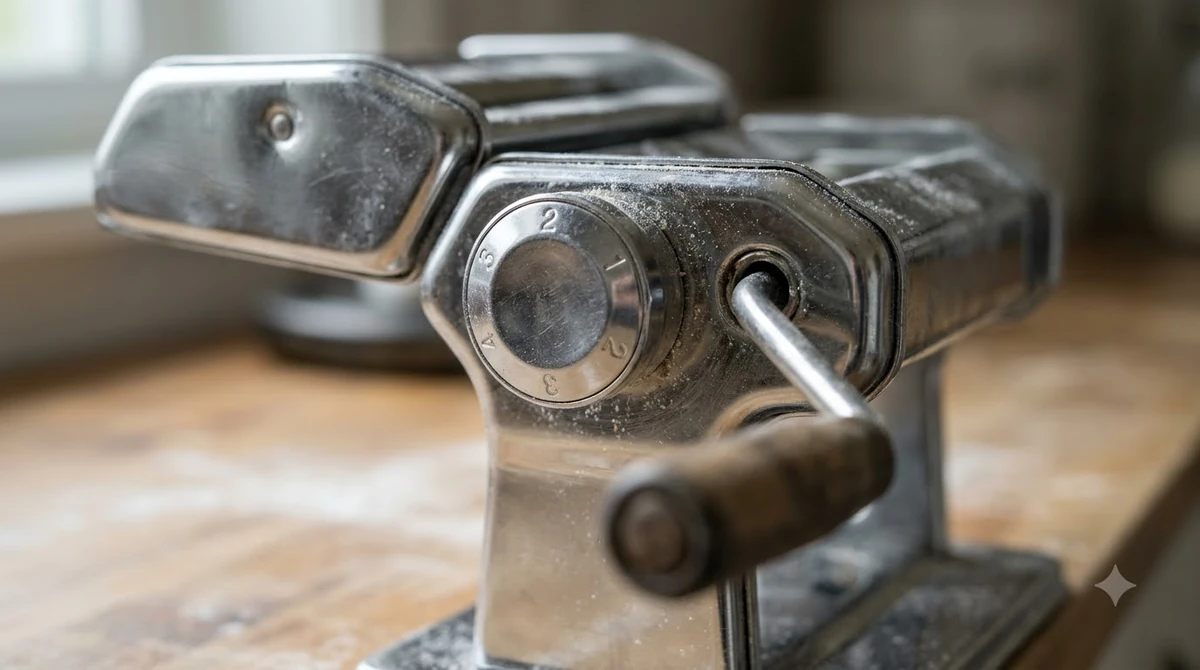

A pasta machine for fettuccine is a roller machine with a cutter that makes flat strips about 6.5 mm (1/4 inch) wide, the usual width of fettuccine. Check the cutter width first, then the power source and how often you plan to cook.
Some machines ship without a fettuccine cutter, so check whether the cutter is included or sold separately. The rest of this guide covers what to look for and what to confirm on the product page. For the shape itself, see our fettuccine pasta guide.

MARCATO Atlas 150 Machine, Made in Italy, Red
Pros & ConsViewHide
Reasons to buy
- Made in Italy hand-crank pasta machine rolling dough in steps
- Includes a pasta cutter and hand crank
- Fits Marcato attachments and the optional motor
Reasons to avoid
- Only rolls and cuts the sheet; tortellini are still shaped by hand
- Takes more counter and storage space than a hand cutter
- Fixed to a countertop edge, so check clamp room

Imperia IPasta Classic Pasta Maker
Pros & ConsViewHide
Reasons to buy
- Made in Italy with chromed steel cutting rollers
- Makes 150 mm sheets, 6.5 mm fettuccine and 2 mm tagliolini
- Six roller thickness settings from 0.5 mm to 5 mm
- Clamp slot accepts a separate motor
Reasons to avoid
- Manual crank, so you turn it for every pass
- Only three cut widths in the box
- Motor is a separate purchase

KitchenAid KSMPRA 3-pc Pasta Roller/Cutter Set
Pros & ConsViewHide
Reasons to buy
- Roller and cutter attachments for KitchenAid stand mixers
- Rolls even sheets without hand cranking
- 88% of 9K Amazon ratings are 5-star
Reasons to avoid
- Needs a compatible KitchenAid stand mixer
- Rolls and cuts the dough, but does not fill or fold tortellini
- One of the costlier tools in this guide

KitchenAid KSMPDX 5-piece Pasta Deluxe Set
Pros & ConsViewHide
Reasons to buy
- Five-piece roller and cutter set for KitchenAid stand mixers
- Stainless steel rollers and cutters
- Eight thickness settings and 6-inch sheets
Reasons to avoid
- Needs a KitchenAid stand mixer, sold separately
- Costs more than the 3-piece KSMPRA set
- Not covered by the sources used in this guide
How wide is fettuccine, and what does that mean for your machine?
Fettuccine is about 6.5 mm (1/4 inch) wide, so a pasta machine for fettuccine should cut strips close to that width.

According to Wikipedia’s entry on fettuccine, the pasta is a flat, thick noodle traditionally made with egg and flour, usually one egg for every 100 grams of flour. Its width is similar to tagliatelle but a little wider and thicker, which is why a cutter labeled for tagliatelle is not always the right choice for fettuccine. Our comparison of fettuccine and tagliatelle shows the two side by side.
The same source gives two relatives that matter when you read cutter labels. Fettucce are about 13 mm (1/2 inch) wide, and fettuccelle are about 3 mm (1/8 inch) wide. A cutter that lists a width far from 6.5 mm makes a different shape, even if the box uses the word fettuccine.
If you are shopping for a pasta machine for fettuccine and also want other shapes, check whether the machine offers a tagliatelle or spaghetti cutter. Those widths sit close to fettuccine, so one machine can cover more than one dish. If you are still deciding between formats, how to choose a pasta maker compares the main types.
Check the cutter width in a pasta machine for fettuccine
The cutter sets the noodle width, so look for a fettuccine cutter that lists a width close to 6 mm or 6.5 mm. Use these three checks before you buy. For the steps, see our guide to using a pasta cutter on fresh sheets.
- Read the cutter width on the product page, in mm or inches, not just the word fettuccine.
- Confirm whether the fettuccine cutter comes in the box or is sold as a separate part.
- Check that the cutter fits the roller or mixer you plan to use, since attachments are not always universal.
A cutter with a clear width is the simplest signal for any pasta machine for fettuccine, but retailer listings often show features without the millimetre figure. If the width is missing, treat the product as unconfirmed until you find it on the manufacturer’s page.
Check the same figure on a second page, such as the manufacturer’s listing or an official distributor, before you treat the number as settled. Two matching figures are a much stronger signal than one retailer description.
Hand crank, electric or stand mixer attachment
A hand-crank pasta machine for fettuccine suits occasional cooks, an electric model suits frequent batches, and a mixer attachment only helps if you already own a compatible mixer.
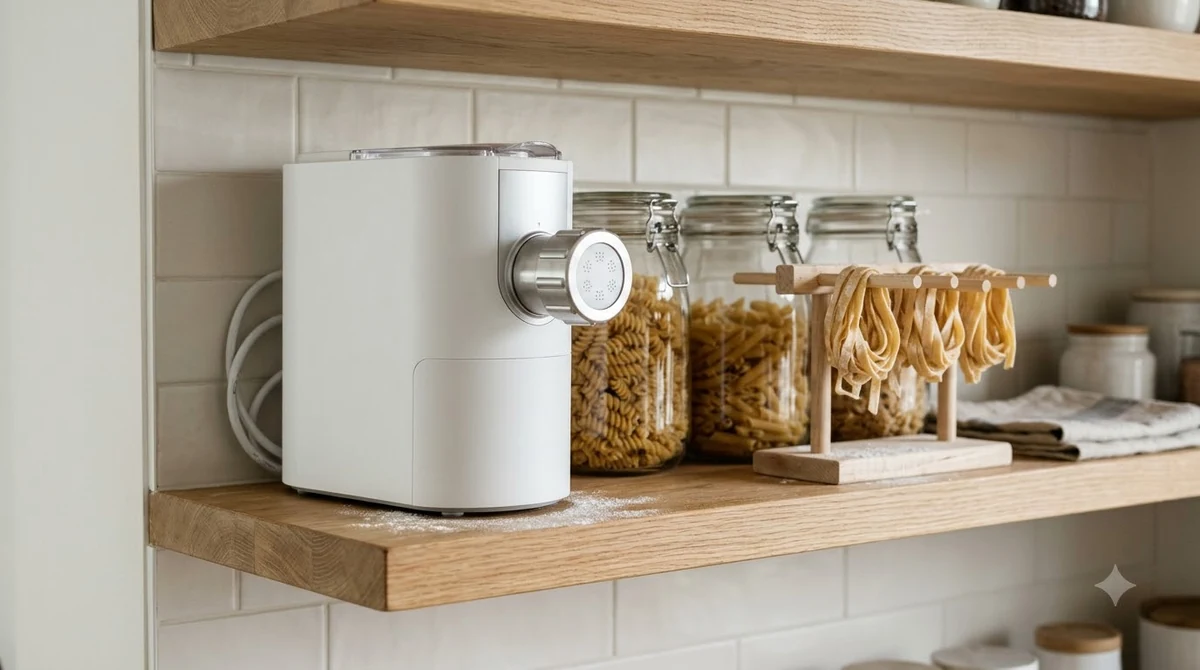
Hand-crank machines are simple to store and clean, and you control the pace as you turn. They take more effort per batch, so they fit a pasta night or a weekend project better than daily cooking.
| Type | Best for | Trade-off |
|---|---|---|
| Hand crank | Occasional cooking and small batches | More hands-on work for each batch |
| Electric | Frequent batches and long sessions | Takes more storage space and has a motor to care for |
| Stand mixer attachment | Cooks who already own a compatible mixer | Works only with that mixer, and adds cost on top of it |
Electric machines remove the crank from the process, which helps when you roll several batches in one sitting. Check the cleaning instructions before you buy, because some models have parts that should be washed by hand only.
Thickness settings and how they shape your fettuccine
Thickness settings roll the dough in stages, and a pasta machine for fettuccine needs a sheet thin enough to cut cleanly but thick enough to hold its shape.
Start with the widest setting, pass the dough through the rollers, fold it if the sheet is uneven, and then step down one setting at a time. Repeat the passes until the sheet reaches the thickness you want for the cutter. Our step-by-step guide to using a pasta machine covers the same routine.
A sheet that is too thin tends to tear as it runs through the cutter, so stop one setting before the thinnest. Dust the sheet lightly with flour so it does not stick to the rollers or to itself.
Dough matters as much as the pasta machine for fettuccine you choose. Fettuccine dough is traditionally made with about one egg for every 100 grams of flour, according to Wikipedia. A crumbly dough cracks in the rollers, so knead it until it is smooth and let it rest before the first pass. The fresh pasta dough recipe on this site gives a full method.
With any pasta machine for fettuccine, feed the dough through the rollers in short passes rather than forcing a thick ball through a thin setting. This keeps the sheet even and makes it easier to feed the cutter without tearing.
Cutter attachments and mixer add-ons
The Ankarsrum fettuccine cutter is listed as making 6 mm wide pasta, with a sale price of $144.95 on the US site, checked on 2026-11-07.
A manufacturer manual gives a second reference point. Marcato’s Atlas and Ampia instruction manual lists a fettuccine cutter for the Atlas 150 at 6.5 mm, recommended at regulator setting 6, and a mafaldine cutter at 8 mm for the same setting. It also lists a tagliolini cutter at 1.5 mm, which makes much thinner noodles. That 6.5 mm figure matches the width Wikipedia gives, so a pasta machine for fettuccine built on that roller can cut the classic shape.
Ankarsrum’s product page describes the cutter in its fettuccine cutter listing, but it does not say which mixer models the cutter fits. Confirm compatibility with the seller before you buy, and check the price again on the day of purchase, because sale prices change.
Common mistakes when buying for fettuccine
The most common mistake when shopping for a pasta machine for fettuccine is buying a roller and assuming it cuts fettuccine, so confirm a cutter comes with the machine or is sold for it.
- Buying a roller without a cutter. A roller makes sheets, not strands.
- Ignoring the cutter width. A 3 mm cutter and a 13 mm cutter make different noodles.
- Rushing the dough. Dough that is too dry tears when rolled.
- Leaving dough in the cutter. Clear the cutter after each batch so the strands do not clog.
A pasta machine for fettuccine that is hard to clean often ends up in a cupboard, so the cleaning steps matter as much as the width.
What to check on the product page before you buy
Several width and price claims for a pasta machine for fettuccine in retailer listings could not be confirmed on manufacturer pages, so check them on the official page before you buy.
Retailer listings for other machines, such as Imperia and Fox Run models, describe fettuccine cutters, but this guide did not confirm those widths on manufacturer pages. Treat them as unverified until you see the figure on the official listing. The checklist below covers what to confirm.
- The cutter width, in mm or inches.
- Whether the cutter is included or sold separately.
- The current price and the date you checked it.
- Compatibility with your mixer, if you plan to use an attachment.
- The cleaning instructions for the rollers and cutter.
Frequently Asked Questions
Is a 6 mm cutter the same as fettuccine?
Not exactly, but it is close. Fettuccine is about 6.5 mm wide, and a 6 mm cutter gives a very similar strip. Check the width on the product page of any pasta machine for fettuccine and compare it with that figure before you buy.
Can a ravioli roller make fettuccine?
Not on its own. A ravioli roller produces sheets, so a pasta machine for fettuccine also needs a fettuccine cutter to turn the sheet into strands.
Do I need an electric machine?
No. A hand-crank machine handles occasional cooking well. An electric model is more useful when you roll several batches in one session.
Can I use a stand mixer attachment?
Only if your mixer is compatible with the attachment. The Ankarsrum fettuccine cutter listing does not name compatible models, so confirm before you buy.
Why does my dough tear?
Dough that is too dry or rolled too thin tends to tear. Let the dough rest, roll it in stages, and dust it lightly with flour so it moves through the rollers easily.
Start with the cutter when you choose a pasta machine for fettuccine, then pick the power source that matches how often you cook. Confirm the width, price and compatibility on the official product page before you buy, since retailer listings and sale prices change.
 8 min readBy Use & ModelPasta Machine for Ravioli: What to Look For Before You BuyUpdated Nov 10, 2026
 8 min readBy Use & ModelPasta Machine for Tagliatelle: What to Look ForUpdated Nov 10, 2026
 8 min readBy Use & ModelPasta Machine for Beginners: How to Choose and StartUpdated Nov 16, 2026
 8 min readBy Use & ModelPasta Machine for Ramen Noodles: What to Check Before You BuyUpdated Nov 10, 2026
 7 min readBy Use & ModelPasta Machine for Egg Noodles: What to Check Before You BuyUpdated Nov 8, 2026
 9 min readBy Use & ModelPasta Machine for Fresh Pasta: What to Check Before You BuyUpdated Nov 18, 2026