
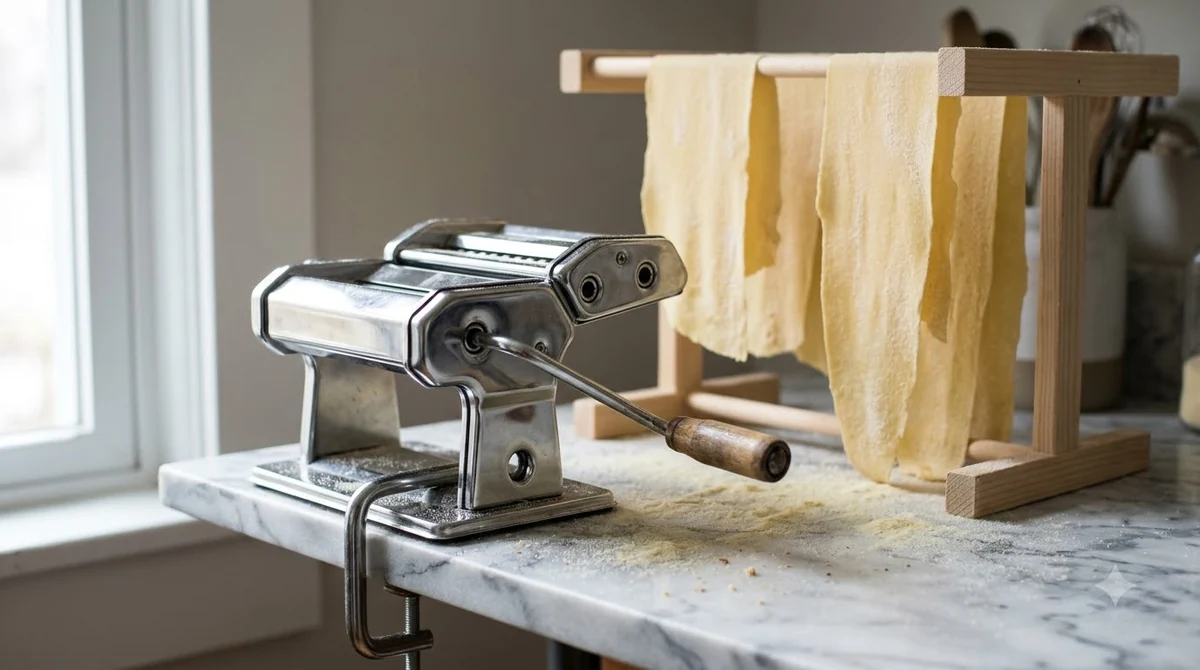

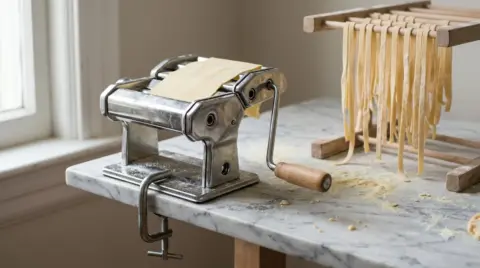
A pasta machine for tagliatelle is a roller that flattens dough into thin sheets and cuts them into ribbons about 6 to 8 mm wide. The cutter width matters more than the brand name, so check it first. A separate cutter attachment can often be added if your model lacks one.
Choose a pasta machine for tagliatelle with a crank if you cook now and then, and an electric extruder only if you make large batches often.

MARCATO Atlas 150 Machine, Made in Italy, Red
Pros & ConsViewHide
Reasons to buy
- Made in Italy hand-crank pasta machine rolling dough in steps
- Includes a pasta cutter and hand crank
- Fits Marcato attachments and the optional motor
Reasons to avoid
- Only rolls and cuts the sheet; tortellini are still shaped by hand
- Takes more counter and storage space than a hand cutter
- Fixed to a countertop edge, so check clamp room

Imperia IPasta Classic Pasta Maker
Pros & ConsViewHide
Reasons to buy
- Made in Italy with chromed steel cutting rollers
- Makes 150 mm sheets, 6.5 mm fettuccine and 2 mm tagliolini
- Six roller thickness settings from 0.5 mm to 5 mm
- Clamp slot accepts a separate motor
Reasons to avoid
- Manual crank, so you turn it for every pass
- Only three cut widths in the box
- Motor is a separate purchase

Pasta Maker Deluxe Set- Stainless Steel
Pros & ConsViewHide
Reasons to buy
- Three attachments make five types: lasagnette, fettuccine, angel hair, spaghetti and ravioli
- Hand crank with adjustable thickness
- Chrome-coated steel body
- 67% of 4.6K Amazon ratings are 5-star
Reasons to avoid
- Manual only, no motor
- Clamps to a countertop edge
- 8% of ratings are 1-star

KitchenAid KSMPRA 3-pc Pasta Roller/Cutter Set
Pros & ConsViewHide
Reasons to buy
- Roller and cutter attachments for KitchenAid stand mixers
- Rolls even sheets without hand cranking
- 88% of 9K Amazon ratings are 5-star
Reasons to avoid
- Needs a compatible KitchenAid stand mixer
- Rolls and cuts the dough, but does not fill or fold tortellini
- One of the costlier tools in this guide
What Tagliatelle Needs From a Machine
A pasta machine for tagliatelle must roll dough into a thin, even sheet and then cut it into flat ribbons. Uncooked tagliatelle is 6 to 7 mm wide and about 1 mm thick, and it is slightly thinner than fettuccine. The difference between fettuccine and tagliatelle is small, so cutter labels for the two shapes can overlap.
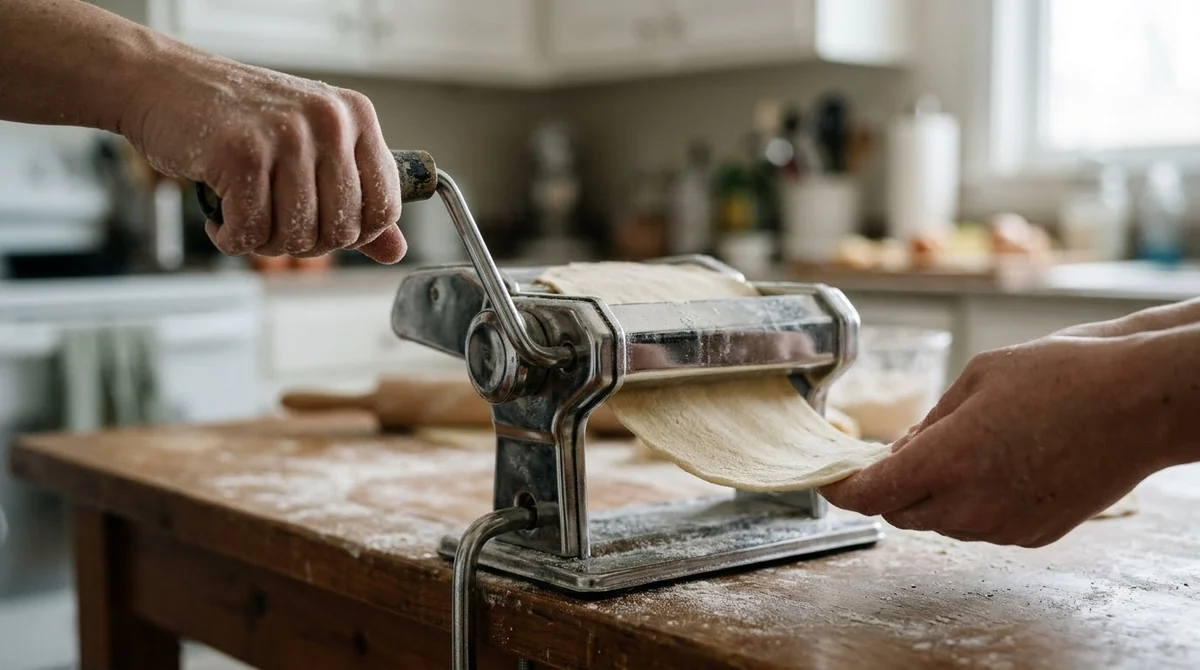
With a pasta machine for tagliatelle, the thickness of the sheet decides how the ribbon cooks and how well it holds sauce. A sheet that is too thick gives chewy, heavy strands, while one that is too thin tears during cutting. According to DeLallo’s tagliatelle guide, the ribbon is about 8 mm wide once cooked, so the cutter should be sized for the uncooked width.
Look for a pasta machine for tagliatelle with a flat roller that accepts a cutter attachment. Some models ship with a fettuccine cutter, which is close to tagliatelle, but the label on the cutter is the most reliable width reference.
Tagliatelle Width and the Cutter You Need
A tagliatelle cutter should produce a ribbon between 6 and 8 mm wide, and the width is usually printed on the cutter itself. Fettuccine cutters are close in size, while narrower cutters make tagliolini or spaghetti. Our pasta cutter step-by-step guide shows how to feed the sheet.
| Cutter | Typical width | Best with |
|---|---|---|
| Tagliatelle | 6 to 8 mm | Meat ragu, cream and butter sauces |
| Fettuccine | 6.5 mm on the Marcato Atlas 150 | Similar sauces |
| Tagliolini or spaghetti | Narrower; the Atlas 150 tagliolini cutter is 1.5 mm | Light oil or broth-based sauces |
The Pasta Project’s tagliatelle page describes the ribbon as normally 6 to 8 mm wide, so a cutter in that range covers the classic shape. For a wider view of the shape itself, read our tagliatelle pasta guide. If your roller has no tagliatelle cutter, buy one that matches the width printed on the blade rather than relying on a product name.
A pasta machine for fettuccine uses a cutter of similar width, so the two guides overlap. Attachment sets for a pasta machine for tagliatelle differ by brand, so confirm that the cutter fits your exact model before ordering.
Marcato’s Atlas and Ampia instruction manual lists no cutter named tagliatelle for the Atlas 150. Its accessory table does give a fettuccine cutter at 6.5 mm and a mafaldine cutter at 8 mm, both used at regulator setting 6, plus a tagliolini cutter at 1.5 mm. A 6.5 mm cut sits inside the 6 to 8 mm tagliatelle range, so a pasta machine for tagliatelle built on that roller can use its fettuccine cutter, while a machine that offers only tagliolini or spaghetti cutters gives you narrower noodles. The manual also says the Atlas 150 takes 12 extra cutting accessories, which is why checking the width on each one matters.
Manual Crank or Electric Extruder for Tagliatelle
A manual crank roller gives you direct control of sheet thickness, which suits tagliatelle well. An electric extruder pushes dough through dies, so it is better for shapes such as penne or rigatoni than for flat ribbons.
Crank rollers are usually the better choice for a pasta machine for tagliatelle because you can feel the dough as it passes between the rollers. You control the thickness on each pass, and you can cut the sheet with a cutter attachment right after rolling.
- Choose a crank roller with a flat roller and a cutter attachment for 6 to 8 mm ribbons.
- Choose an electric extruder only if you mainly make tubes or spirals.
- Check that spare parts and cutters are sold for your model.
Setting Dough Thickness for Clean Ribbons
Roll the dough to about 1 mm thick before cutting, using gradually thinner settings. The usual formula is about 1 large egg for every 100 g of flour, and the dough can be rolled by hand or with a machine.
- Knead the dough until smooth, then wrap it and rest it before rolling.
- Pass the dough through the widest setting, fold it, and repeat a few times.
- Step down one setting at a time until the sheet is about 1 mm thick.
- Lightly flour the sheet and feed it through the cutter, then dust the ribbons.
Marcato’s manual gives a base recipe for five people of 250 g of 00 flour, 250 g of fine durum semolina and 5 whole eggs. It says to add water if the dough is too dry and flour if it is too soft, and that good dough should not stick to your fingers. It also starts every batch at regulator position 0, passing the dough several times while folding the sheet in half, and then cutting the rolled sheet into pieces about 25 cm long before it goes through the cutter. Those steps suit any pasta machine for tagliatelle that works like the Atlas.
Rolling too thin makes the ribbons break during cutting, so stop at the setting where the sheet stays intact. Our guide to using a pasta machine walks through the same rolling steps in more detail.
Fresh and Dried Tagliatelle: Timing and Storage
Fresh tagliatelle cooks in 3 to 4 minutes, and dried tagliatelle takes 7 to 10 minutes to reach al dente, according to DeLallo. The timing you choose depends on whether you cook the same day or store the dough.
| Form | Cook time | Storage |
|---|---|---|
| Fresh | 3 to 4 minutes | Refrigerate a couple of days |
| Dried | 7 to 10 minutes | Cool, dry place |
To freeze fresh ribbons, place them in single layers separated by parchment, then store them in an airtight container for up to 3 months. Freezing keeps the texture better than leaving the strands in a pile. For longer-term advice, see how to store fresh pasta.
Common Mistakes When Buying a Pasta Machine for Tagliatelle
Most buyers of a pasta machine for tagliatelle focus on the roller and forget the cutter, but the cutter decides the ribbon width. Check three things before you buy a pasta machine for tagliatelle.
- The cutter width is not printed or listed, so the ribbon size is unknown.
- The machine has too few thickness settings to reach about 1 mm.
- Replacement cutters are not sold for your model.
Before you order, read the listing for the cutter width in millimetres and the number of thickness settings. Those two details tell you more about tagliatelle than the product category name does, and they are easy to compare across models.
Troubleshooting Tagliatelle Dough
Most problems with tagliatelle come from dough that is too wet or too dry, or from a sheet rolled too thin. Run these checks before you blame the machine.
- Dough sticks to the rollers: the dough is too soft. The Marcato manual advises adding flour when dough is too soft, and says good dough should not stick to your fingers.
- Dough is crumbly and will not form a sheet: it is too dry. Add water a few drops at a time, as the manual suggests.
- Ribbons break after cutting: the sheet was rolled too thin, or the dough skipped its rest. Go back one setting and rest the dough before rolling again.
- Strands clump after cutting: dust the ribbons with flour or semolina and gather them into loose nests before they dry.
Cleaning Your Pasta Machine
Marcato’s care instructions for the Atlas line say the machine and its accessories should not go in water or the dishwasher. Clean with a dry cloth or a soft brush instead. Let any dough stuck to the rollers or cutters dry fully, then brush it off, rather than wetting it.
Clean your pasta machine for tagliatelle after each session and wipe the cutters before storage, especially after heavy use with flour or semolina. Store it somewhere dry so dust does not settle on the rollers before the next batch.
Frequently Asked Questions
Is tagliatelle the same as fettuccine?
No. Tagliatelle is slightly thinner than fettuccine and is usually made with eggs, according to DeLallo. Fettuccine dough does not always contain eggs.
Can a pasta roller make tagliatelle without a cutter?
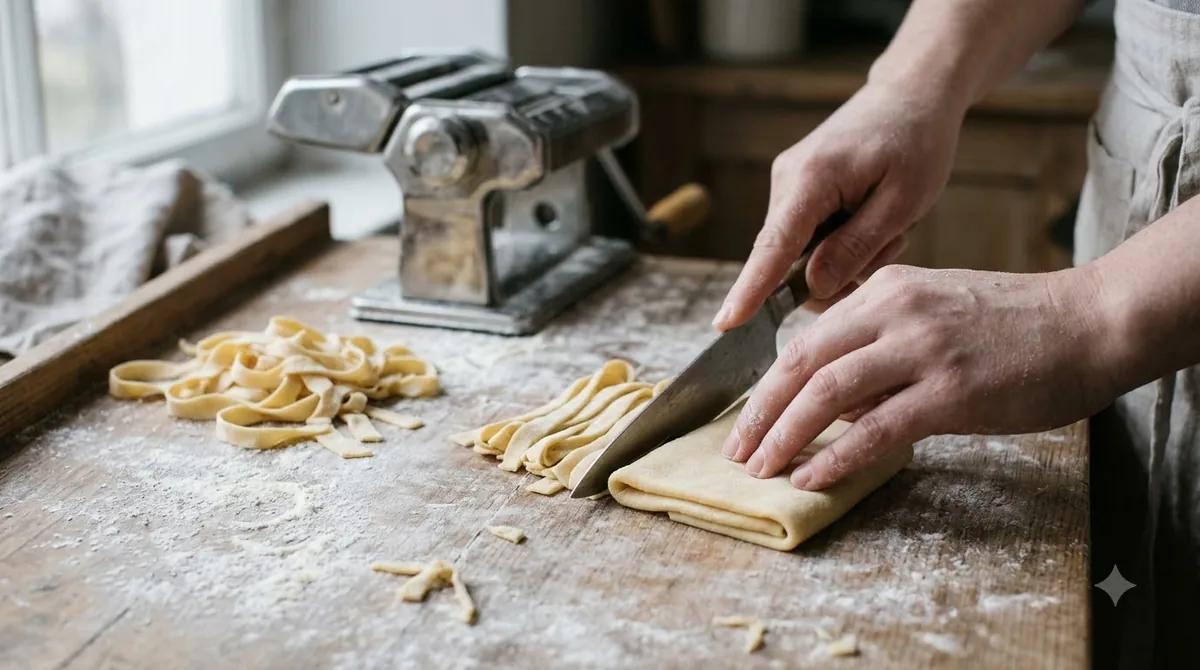
A roller can make a thin sheet, but a pasta machine for tagliatelle still needs a cutter to make ribbons. Cut the sheet by hand with a knife if you have no attachment, aiming for strips of similar width.
How thin should tagliatelle dough be?
Roll the dough to about 1 mm thick before cutting. Sheets that are too thin tear during cutting and cook unevenly.
Do I need eggs for homemade tagliatelle?
The egg version is the usual one. A common ratio is 1 large egg for every 100 g of flour. Semolina and water versions also exist.
How long does fresh tagliatelle keep?
Fresh tagliatelle from a pasta machine for tagliatelle keeps for a couple of days in the refrigerator when lightly floured and covered. It can be frozen for up to 3 months in single layers.
Choose a pasta machine for tagliatelle with a 6 to 8 mm cutter if you cook occasionally. Add a tagliatelle cutter first, then decide whether an extruder is worth the extra space.
 8 min readBy Use & ModelPasta Machine for Ravioli: What to Look For Before You BuyUpdated Nov 10, 2026
 8 min readBy Use & ModelPasta Machine for Fettuccine: What to Look ForUpdated Nov 10, 2026
 8 min readBy Use & ModelPasta Machine for Ramen Noodles: What to Check Before You BuyUpdated Nov 10, 2026
 8 min readBy Use & ModelPasta Machine for Beginners: How to Choose and StartUpdated Nov 16, 2026
 7 min readBy Use & ModelPasta Machine for Egg Noodles: What to Check Before You BuyUpdated Nov 8, 2026
 9 min readBy Use & ModelPasta Machine for Fresh Pasta: What to Check Before You BuyUpdated Nov 18, 2026