
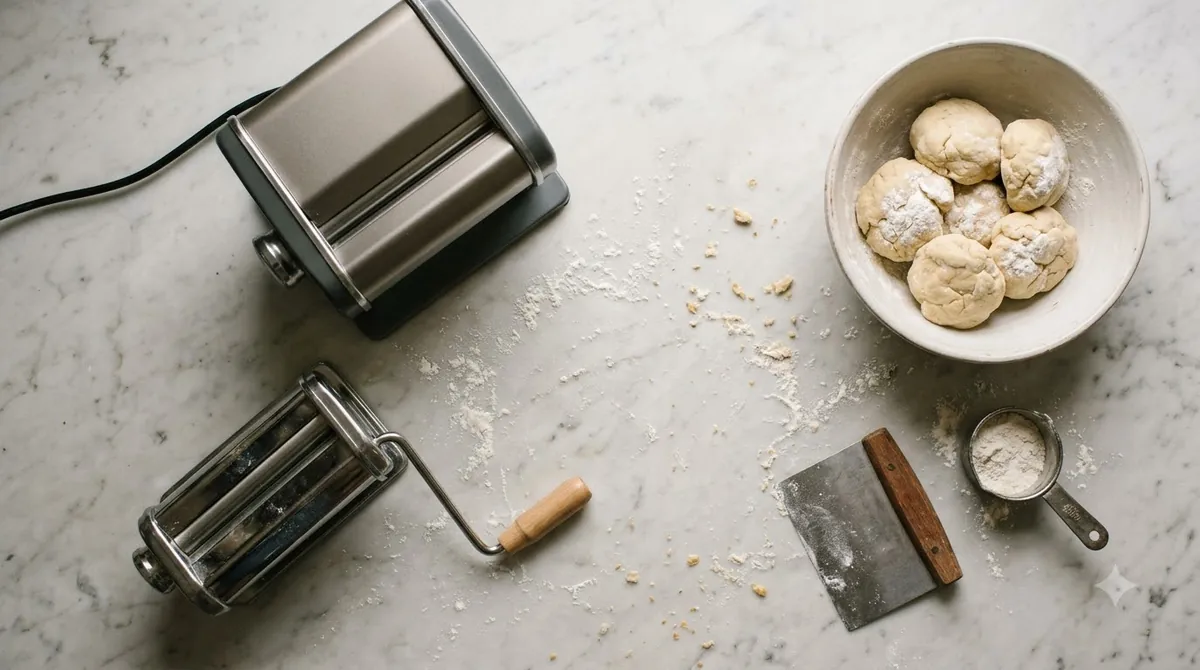

A pasta machine for ravioli needs a ravioli attachment or a dedicated mould to join two dough sheets around a filling. A plain pasta roller only makes the sheets, so check the ravioli part before you buy.
The right pasta machine for ravioli depends on how many you make and whether you already own a roller. Attachments cost less, while a dedicated mould gives a fixed shape and size.

Marcato Ravioli 150 Attachment for Atlas 150 Pasta
Pros & ConsViewHide
Reasons to buy
- Adds filled ravioli to an Atlas 150 setup
- Aluminum rollers per the listing
- 73% of ratings are 5-star
Reasons to avoid
- Booklet marks ravioli as hand-crank only, not for the motor
- Higher price than the cutter attachments

MARCATO Atlas 150 Machine, Made in Italy, Red
Pros & ConsViewHide
Reasons to buy
- Made in Italy hand-crank pasta machine rolling dough in steps
- Includes a pasta cutter and hand crank
- Fits Marcato attachments and the optional motor
Reasons to avoid
- Only rolls and cuts the sheet; tortellini are still shaped by hand
- Takes more counter and storage space than a hand cutter
- Fixed to a countertop edge, so check clamp room
Choosing a Pasta Machine for Ravioli
A suitable machine rolls dough into thin, even sheets and has a ravioli mould or attachment to seal them. Traditional ravioli are usually square, though round and semi-circular shapes also exist.
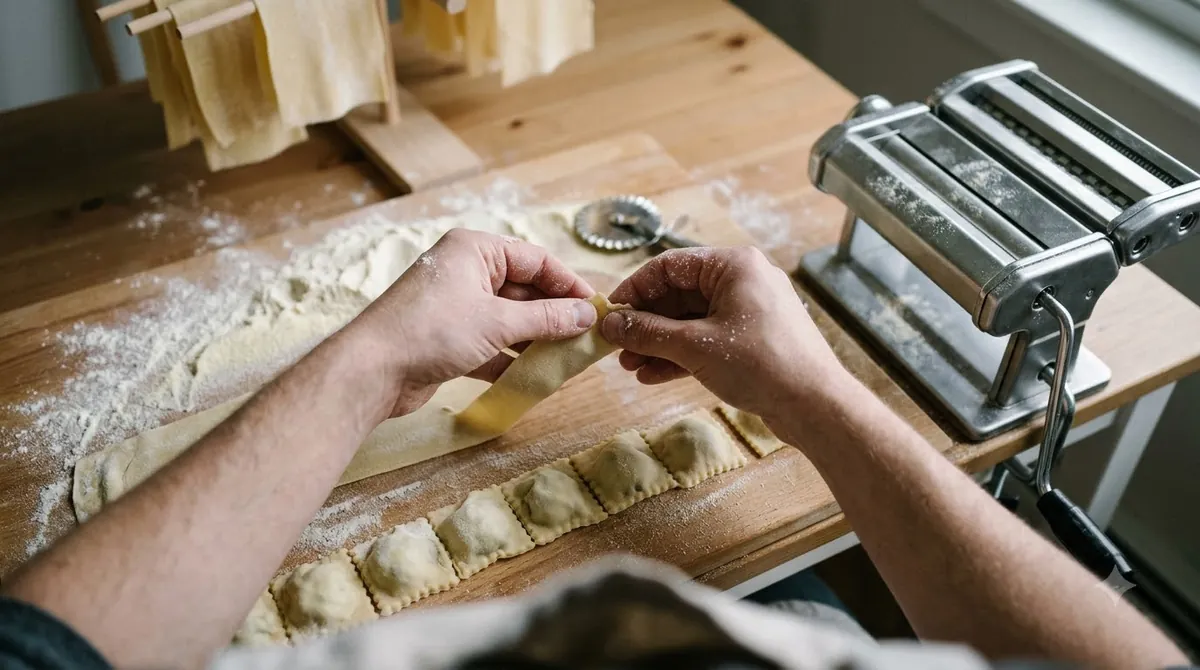
Ravioli are a type of stuffed Italian pasta, with a filling enveloped in thin dough. According to Wikipedia’s ravioli article, the dough is usually water and flour, sometimes with eggs. The filling varies by region, from ricotta with spinach and nutmeg in Rome to ricotta with grated lemon rind in Sardinia.
Check five things before you buy a machine for ravioli. Each one decides whether the machine works for the shape you want.
- Roller settings that make sheets thin enough to seal cleanly.
- Whether a ravioli mould or attachment is included or sold separately.
- The mould size, which sets how large each ravioli is.
- Filling capacity per batch, so you know how much a single fill makes.
- Materials that touch the dough, such as stainless steel parts.
How Batch Size Changes Your Choice
A pasta machine for ravioli should match how many you cook in one session, and our homemade ravioli recipe shows what one batch of dough and filling looks like. If you make ravioli for a single dinner, an attachment on a roller you already own usually covers the need, since you only add one part to clean and store.
If you make ravioli every week for a family, filling capacity and the number of refills matter more. A small filling cylinder means more refills per batch, which adds time at the counter, so check the capacity before you compare prices.
The manual mould on the Lineapasta page has a 1 kg cylinder, which suits small home batches. A countertop unit suits larger batches, but its output should be confirmed on the manufacturer page for that model, not on a listing summary.
Plan the filling before you choose a pasta machine for ravioli, since the filling shapes what you need. Soft fillings such as ricotta need a mould that seals the edges without leaking, so read the mould instructions closely before buying.
Attachment or Dedicated Ravioli Maker
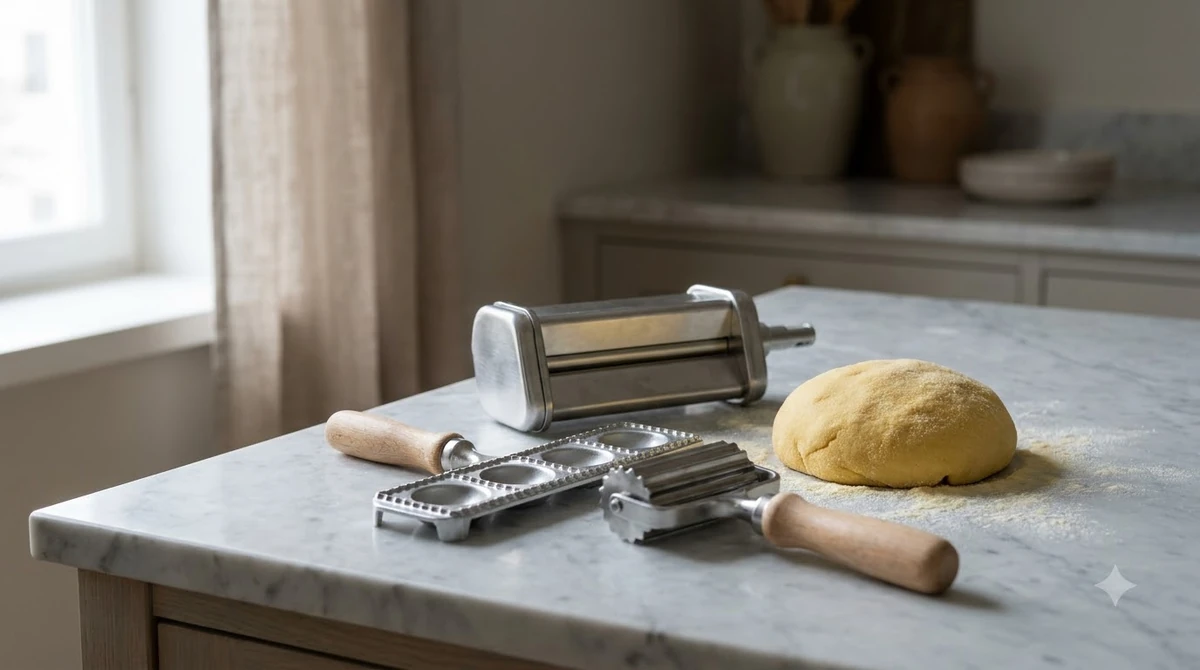
An attachment fits a pasta roller you already own, while a dedicated maker works without one. The better pasta machine for ravioli depends on how often you cook and how much you want to spend.
| Option | How it works | Best for | Watch for |
|---|---|---|---|
| Ravioli attachment | Clips onto a compatible pasta roller and shapes filled ravioli | Cooks who already own a roller | Compatibility with your exact model |
| Dedicated manual mould | Clamps to a table and forms double-sheet ravioli at a fixed size | Occasional home cooks who want one shape | Fixed size and fixed filling quantity |
| Countertop or commercial unit | Larger batches with interchangeable moulds | Restaurants and production kitchens | Higher cost and more counter space |
An attachment saves money if your roller already does the sheets well, so the pasta machine for ravioli you buy is only the ravioli part. A dedicated mould gives a consistent size every time, which suits a cook who makes the same shape often.
Two examples show how attachments differ. KitchenAid’s ravioli maker is approved for use with all KitchenAid household stand mixers, forms three rows of ravioli per pass and is turned by hand with the mixer switched off, according to KitchenAid’s instruction guide. The guide gives the sheet size as 1/16 inch thick and 5 1/2 inches wide, and the Pasta Sheet Roller is sold separately. Our KitchenAid ravioli maker guide walks through the steps. For the sheet and filling steps, read our guide to using a ravioli maker with dough sheets.
For a hand-crank machine, a retailer guide to Imperia says its ravioli maker attaches to the SP150 and forms rows of three 30 mm squares, but it is manual only and cannot be used with the Pasta Facile motor. The product box above also lists a Marcato Ravioli 150 attachment for the Atlas 150, so match any ravioli part to your exact roller before you order. If you own a wider roller, read Marcato Atlas 180 ravioli first, and see CucinaPro pasta maker for ravioli for a budget option.
Manual Ravioli Moulds
As a pasta machine for ravioli, the Lineapasta manual mould clamps to a table, takes two 100 x 2 mm sheets, and forms double-sheet ravioli at a fixed 34 x 40 mm size. The details below come from the manufacturer’s product page.
- Clamp: attaches to a bench or work table with an adjustable clamp.
- Sheets: two 100 x 2 mm sheets, each wound onto its own roller.
- Mould: fixed double-sheet format of 34 x 40 mm, with a fixed filling quantity.
- Filling: cylinder capacity of 1 kg per fill.
- Size and weight: 35 x 45 x 46 cm, 14 kg net.
The product page does not describe a cutter. Ravioli come out already marked, and you separate them by hand. The frame is anodized aluminium, and the parts that touch the pasta are stainless steel.
Commercial and Countertop Ravioli Machines
Countertop and commercial ravioli machines make larger batches with interchangeable moulds. For a pasta machine for ravioli at that size, they suit restaurants and production kitchens more than a typical home kitchen. If you plan to use a hand mold instead, see our ravioli mold how-to guide.
Search results list countertop double-sheet units such as the Lineapasta RV 30, and the Bottene BE90, which one listing says can seal up to 150 parcels per hour. Check the current manufacturer specs before you compare these units with a home option.
What Is Not Confirmed Yet and How to Check It
Some claims in this guide come from search listings, not from manufacturer pages read in full. These include the attachment descriptions, the RV 30 mould system, and the BE90 output rate. Check the current product page or manual before buying.
Confirm that an attachment fits your exact pasta machine for ravioli model, since compatibility is set by the roller and not by the ravioli part alone. Prices change often, so compare current listings rather than older figures.
Dough and Filling for Ravioli
Ravioli dough is usually flour and water, sometimes with eggs. The Lineapasta mould page accepts any flour, semolina, or semolina-flour mix.
The same page says the dough can be made from eggs alone or from eggs and water. Choose the recipe that suits your machine and check the manual for the thickness setting you need.
Dough is the first step with any pasta machine for ravioli, and a well-rested dough is easier to feed through the rollers without tearing. Keep the dough covered while you work so the surface does not dry out.
The filling is a matter of taste. Regional fillings range from ricotta with spinach to ricotta with lemon, so match the filling to the mould size you own.
Frequently Asked Questions
Can I make ravioli with any pasta machine?
Not directly. A plain roller makes sheets but does not seal the dough around a filling, so a pasta machine for ravioli needs a ravioli attachment or a dedicated mould.
What size ravioli does the manual mould make?
The Lineapasta manual ravioli mould forms double-sheet ravioli at 34 x 40 mm. The mould and the filling quantity are both fixed.
Is a commercial ravioli machine worth it at home?
Usually not. Commercial units cost more and are built for higher output, so a home cook often gets more value from a pasta machine for ravioli built around an attachment or a manual mould.
What dough works best for ravioli?
Ravioli dough is usually flour and water, sometimes with eggs, and any pasta machine for ravioli uses the same basic mix. The manual mould page accepts flour, semolina, or a mix, with eggs alone or eggs and water.
Do I need special equipment to shape ravioli by hand?
No. Ravioli are traditionally made at home by hand, so a pasta machine for ravioli is optional, and a mould or attachment mainly speeds up sealing and keeps the size even.
How do I stop ravioli from opening while they cook?
Press the edges firmly so the two sheets join with no trapped air, and keep the filling away from the edge. A mould does the pressing for you, which is one reason cooks choose a mould over shaping by hand.
If you cook ravioli once in a while, a pasta machine for ravioli with an attachment or a manual mould is enough. If you make them every week, compare countertop units on output and capacity before you decide.
 8 min readBy Use & ModelPasta Machine for Ramen Noodles: What to Check Before You BuyUpdated Nov 10, 2026
 7 min readBy Use & ModelPasta Machine for Egg Noodles: What to Check Before You BuyUpdated Nov 8, 2026
 9 min readBy Use & ModelPasta Machine for Fresh Pasta: What to Check Before You BuyUpdated Nov 17, 2026
 8 min readBy Use & ModelPasta Machine for Rigatoni: 6 Simple Checks Before You BuyUpdated Nov 16, 2026
 8 min readBy Use & ModelPizza Oven for Parties: What to Look for Before You BuyUpdated Nov 16, 2026
 9 min readBy Use & ModelPizza Oven for Bread: What to Look For Before You BuyUpdated Nov 16, 2026