
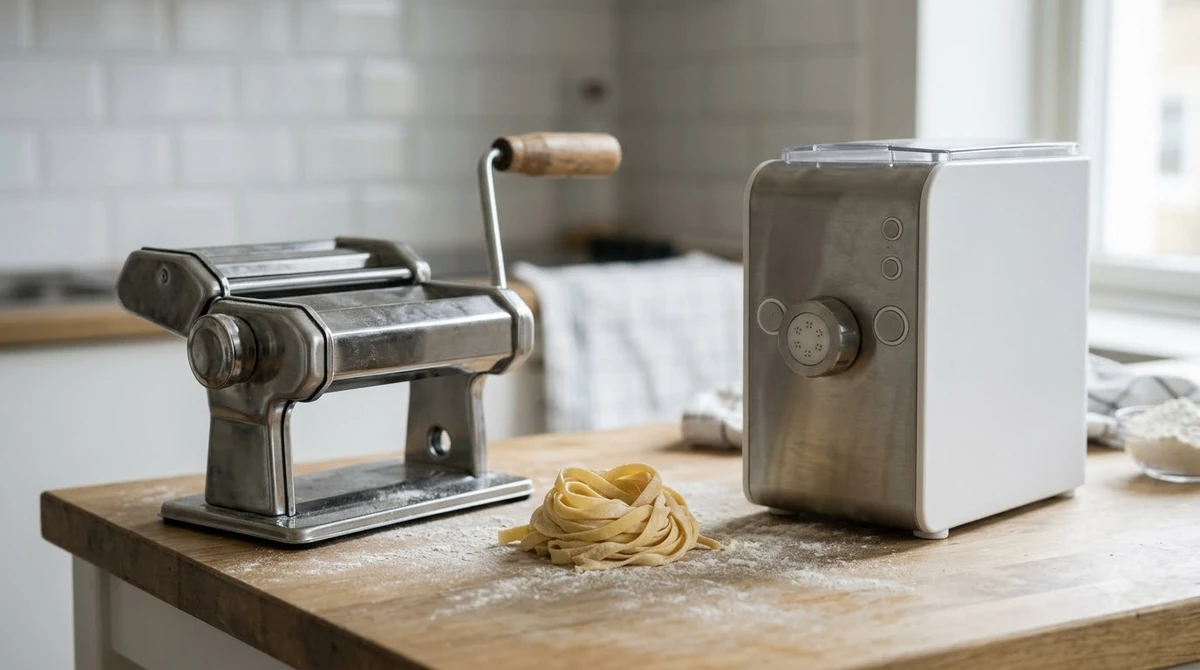

A pasta machine for beginners is a hand-cranked or electric kitchen tool that rolls dough thin and cuts it into noodles. Most new cooks do well with a manual model, which costs less and gives direct control over thickness. Electric models are easier to start with for some cooks, but they cost more and suit people who cook pasta often.

MARCATO Atlas 150 Machine, Made in Italy, Red
Pros & ConsViewHide
Reasons to buy
- Made in Italy hand-crank pasta machine rolling dough in steps
- Includes a pasta cutter and hand crank
- Fits Marcato attachments and the optional motor
Reasons to avoid
- Only rolls and cuts the sheet; tortellini are still shaped by hand
- Takes more counter and storage space than a hand cutter
- Fixed to a countertop edge, so check clamp room

Imperia IPasta Classic Pasta Maker
Pros & ConsViewHide
Reasons to buy
- Made in Italy with chromed steel cutting rollers
- Makes 150 mm sheets, 6.5 mm fettuccine and 2 mm tagliolini
- Six roller thickness settings from 0.5 mm to 5 mm
- Clamp slot accepts a separate motor
Reasons to avoid
- Manual crank, so you turn it for every pass
- Only three cut widths in the box
- Motor is a separate purchase

Pasta Maker Deluxe Set- Stainless Steel
Pros & ConsViewHide
Reasons to buy
- Three attachments make five types: lasagnette, fettuccine, angel hair, spaghetti and ravioli
- Hand crank with adjustable thickness
- Chrome-coated steel body
- 67% of 4.6K Amazon ratings are 5-star
Reasons to avoid
- Manual only, no motor
- Clamps to a countertop edge
- 8% of ratings are 1-star

Philips 7000 Series Pasta Maker
Pros & ConsViewHide
Reasons to buy
- Mixes, kneads and extrudes automatically, ready in under 10 minutes per the listing
- Makes up to 8 portions in one go
- Comes with 8 shaping discs
- Parts are listed as dishwasher-safe
Reasons to avoid
- Costs far more than a manual roller
- Needs permanent counter space
- 11% of ratings are 1-star
What a pasta machine does for beginners
A pasta machine for beginners thins dough in steps between two rollers, then cuts the sheet into shapes such as tagliatelle or fettuccine. The rollers do the physical work of stretching the dough, so you can focus on the texture of the sheet.
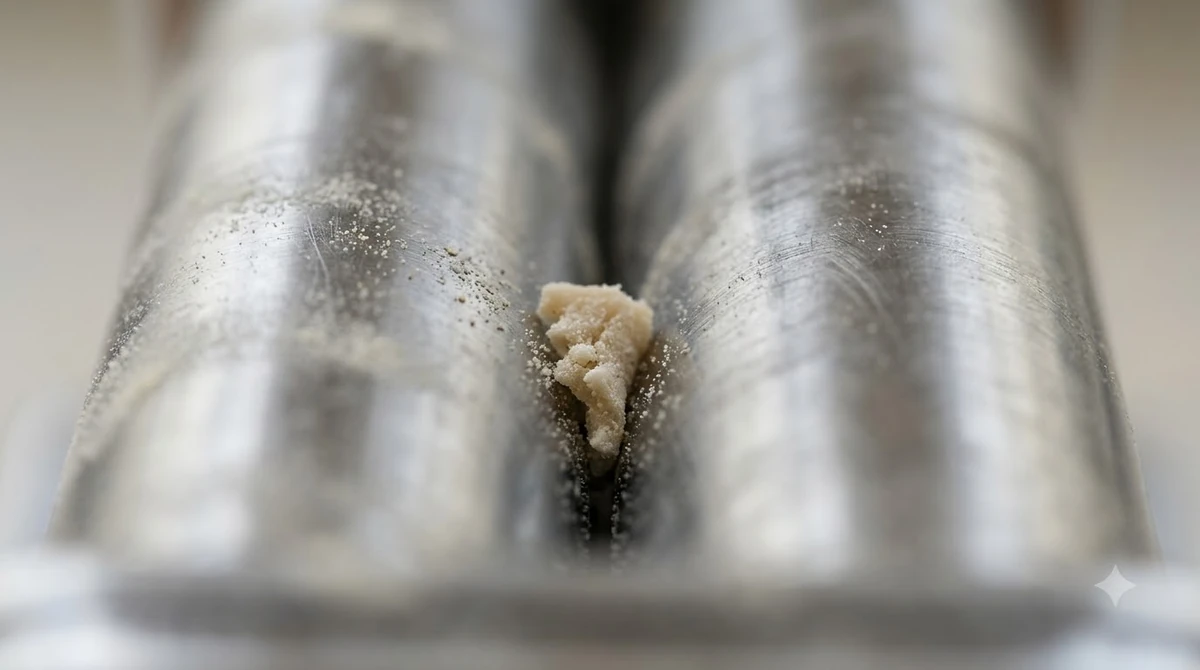
The cook feeds a piece of dough into the machine and, by turning a hand crank, rolls the pasta to thin it a little at a time. Each pass through the rollers makes the sheet longer and thinner, which is why the process is called incremental. Wikipedia’s pasta article describes this hand-cranked method as the standard way home cooks thin fresh dough.
Pasta machines are popular with cooks who make large amounts of fresh pasta, but a pasta machine for beginners can serve the same way for a single batch. Many sets include a cutting attachment, while some rollers only sheet the dough. Check the attachments before you buy a pasta machine for beginners, because a roller without a cutter leaves you to cut every strand by hand.
A pasta machine for beginners does not replace good dough. If the dough is too dry, it cracks at the rollers. If it is too wet, it sticks and tears. A beginner gets better results by learning the feel of the dough first, then letting the machine do the thinning. Our guide to using a pasta machine walks through the first sheet step by step.
Manual or electric: which pasta machine for beginners suits you
When you shop for a pasta machine for beginners, a manual machine is usually the lower-cost start, while an electric model is often the easier one to get going with. If you want a wider comparison, how to choose a pasta maker covers the main types. Food Network’s pasta maker review states that electric machines tend to be easier to use for beginners, and that many of them also mix and knead the dough.
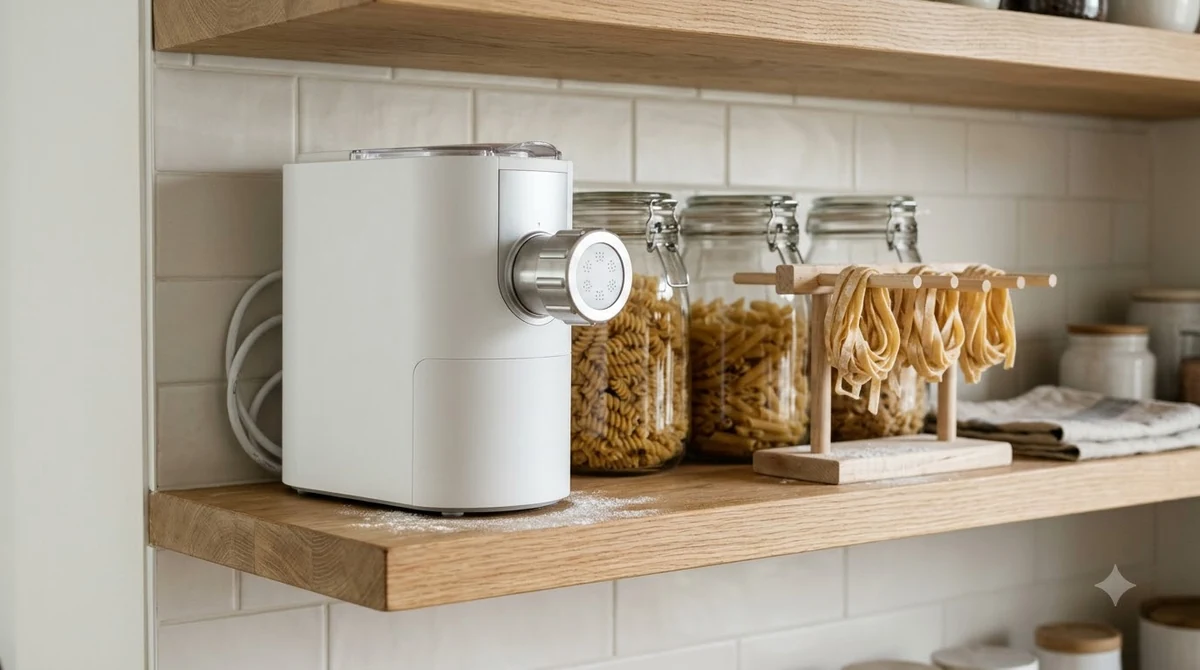
The same review notes that manual machines suit thin sheets for lasagna or filled pasta, while electric models require you to cut the extruded pasta to length. The table below compares the factors that matter most to a first-time buyer.
| Factor | Manual hand-crank | Electric |
|---|---|---|
| Upfront cost | Lower. Listed manual examples run from about $100 to $141. | Higher. One listed smart maker is $450. |
| Learning curve | Hands-on, so you feel the dough at each pass. | Easier to start for many beginners, per the review. |
| Cutting | Done with a cutter attachment that you turn by hand. | Extruded pasta must be cut to length by hand. |
| Cleaning | Dry cloth and soft brush. Most makers advise against washing in water. | Discs are air-dried with dough on them, then cleared with a cleaning tool. |
Storage is part of the decision too, as it is with any pasta machine for beginners. Measure the counter or drawer space you have, because a machine that is hard to store is less likely to get used, whichever type you choose.
If you cook fresh pasta once in a while, a manual pasta machine for beginners is usually enough. If you cook it every week or want to make extruded shapes, an electric model may save time, as long as you are ready to clean it more carefully.
Price points to expect
Listings in a February 2026 review ranged from about $90 for a mixer attachment to $450 for an electric smart maker. We did not re-check these prices, so confirm the current price on the seller page before you buy any pasta machine for beginners.
- Imperia pasta maker: listed at $100 in the review.
- Marcato Atlas 150: listed at $141, regularly $150.
- KitchenAid pasta roller attachment: listed at $90, regularly $130. It needs a KitchenAid stand mixer.
- Philips Artisan smart pasta and noodle maker: listed at $450.
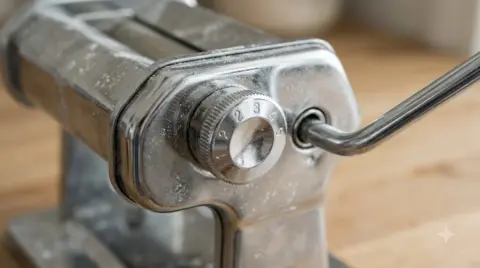
The same review lists nine thickness settings for the Marcato Atlas 150, while Marcato’s own manual numbers the dial 0 to 9, which is ten positions, so count the numbers on the dial when you compare models. Either way, that range gives a beginner a clear path from thick sheets to thin ones. A cheaper model with fewer settings can still work, but you will have fewer steps to adjust the dough gradually.
Your first batch of dough
Fresh pasta dough is usually made from flour, eggs, salt and water. Wikipedia lists semolina flour as a common pasta ingredient, and fresh pasta is often made with all-purpose or 00 flour and eggs.
- Mound the flour on a clean surface and make a well in the center.
- Crack the eggs into the well, add a pinch of salt, and mix with a fork until a shaggy dough forms.
- Knead by hand until the dough is smooth, then wrap it and let it rest before rolling.
- Cut the dough into pieces that fit the roller opening.
- Pass each piece through the widest setting first, then thin it one setting at a time.
Work in a cool room and cover the dough you are not using, so the rest of it does not dry out while you roll the first pieces. Dry dough tends to crack at the rollers, and damp dough tends to stick, so these habits help a first batch turn out well.
Marcato’s instruction manual describes the same routine for its Atlas machines. It says to clamp the machine to the work surface, and on first use to clean the rollers with a damp cloth and pass a little dough through, which is then thrown away. After that, set the regulator to position 0 and pass the dough several times, folding the sheet in half each time, before stepping down. A pasta machine for beginners from another brand may differ, so read its own manual first.
Egg size and kitchen humidity change how much flour a dough needs. The fresh pasta dough recipe on this site gives a starting ratio, and a good pasta machine for beginners should handle it. Because the ratio shifts with the day, adjust in small amounts rather than following a fixed one. A common beginner mistake is adding too much flour to stop sticking, which makes the dough dry and prone to cracking at the rollers.

Cleaning and care
Keep a manual pasta machine for beginners dry. Most manufacturers advise against washing the machine or its accessories in water, so use a cloth and a soft brush instead.
- Brush dough off the rollers while it is still dry.
- Wipe the body with a dry cloth after each session.
- For electric discs, let the dough air-dry on the disc for 2 to 4 hours, then push it out with the cleaning tool.
- Store the machine somewhere dry between uses.
Cleaning is easier when the dough is dry. For a fuller routine, see how to clean a pasta machine. The review notes that electric discs are harder to clear when the dough is fresh, so a quick brush after each batch saves effort later.
Frequently Asked Questions
Is a manual pasta machine easier for beginners than an electric one?
Not always. Food Network’s review says electric machines tend to be easier for beginners, while manual machines cost less and give more hands-on control over thickness. Your choice of pasta machine for beginners depends on budget and how often you cook.
How much should a pasta machine for beginners cost?
Listings in a February 2026 review ranged from about $90 for a mixer attachment to $450 for an electric smart maker. Prices change often, so check the current price before you buy.
Can I wash a pasta machine for beginners in water?
Most manual machines, including a typical pasta machine for beginners, should not be washed in water. Wipe them with a dry cloth and brush dough off the rollers. Electric discs can be cleared by letting the dough dry for 2 to 4 hours, then pushing it out with the cleaning tool.
What flour should I use for a first batch with a pasta machine for beginners?
Fresh pasta is often made with all-purpose or 00 flour and eggs, according to Wikipedia’s pasta article. Semolina is also a common pasta ingredient. Start with one flour and keep the recipe the same until you learn how the dough handles.
How many thickness settings do beginners need?
The review lists nine settings for the Marcato Atlas 150, and Marcato’s manual numbers its dial 0 to 9. Start on the widest setting of your pasta machine for beginners and step down one setting at a time. Moving down slowly makes the dough easier to control and reduces tearing.
If you cook fresh pasta once a month, a manual machine is a practical way to learn the feel of the dough. If you make pasta every week, an electric model may save effort. Either way, buy the cutter attachments you plan to use. Once you are comfortable, a pasta machine for fresh pasta guide goes deeper on settings and cutters. Confirm the current price before you order.
 8 min readBy Use & ModelPasta Machine for Spaghetti: How to Choose the Right TypeUpdated Nov 16, 2026
 10 min readBy Use & ModelPasta Machine for Home Use: How to Choose the Right TypeUpdated Nov 16, 2026
 8 min readBy Use & ModelPizza Oven for Beginners: What to Check Before You BuyUpdated Nov 16, 2026
 8 min readBy Use & ModelOoni Karu 2 Pro Recipes: What to Cook and How to StartUpdated Nov 8, 2026
 7 min readBy Use & ModelGozney Tread Recipes: What You Can Cook and How to StartUpdated Nov 6, 2026
 7 min readBy Use & ModelPasta Machine for Egg Noodles: What to Check Before You BuyUpdated Nov 8, 2026