
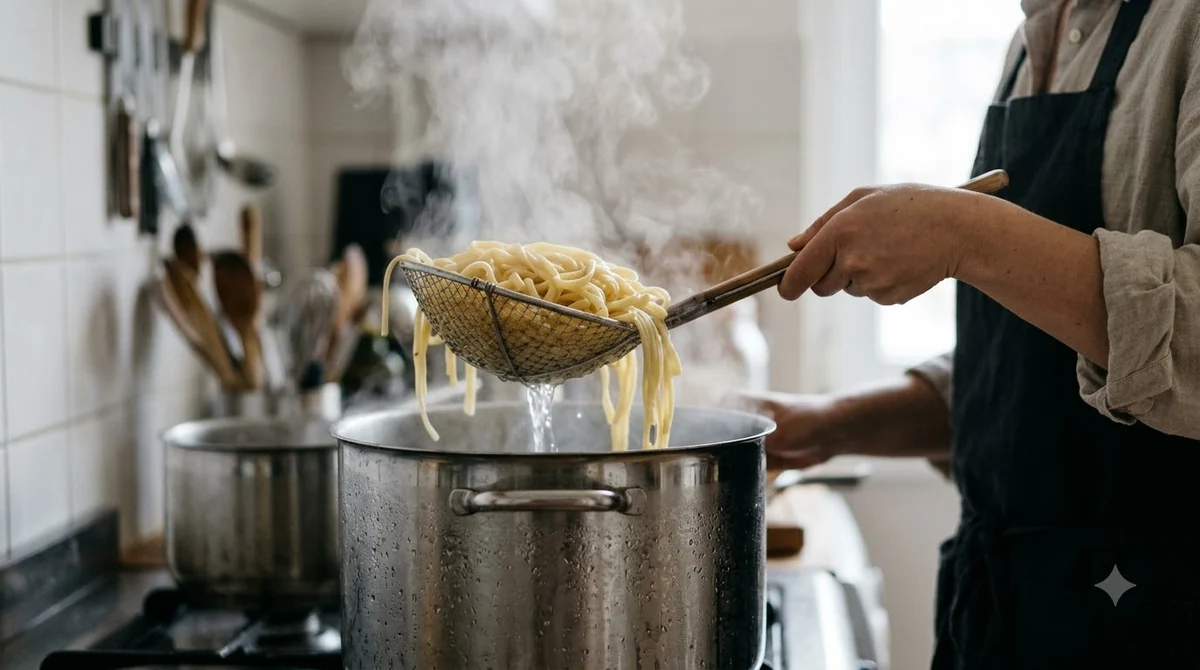

Spaghettoni pasta is a long, round Italian shape that is thicker than regular spaghetti. Its extra body holds heavier sauces well, and it needs a few more minutes in the pot than standard spaghetti.
The main difference is thickness, not shape. Pick spaghettoni when your sauce is rich or chunky, and choose a thinner strand for light, brothy dishes.
What Is Spaghettoni Pasta?
Spaghettoni is a thicker form of spaghetti, and its name translates roughly as “thick spaghetti.” Wikipedia’s pasta list also gives “spaghetti spessi” as an alternate name.
Wikipedia’s spaghetti entry describes spaghettoni as the thicker cousin of spaghetti and spaghettini as the thinner one. Spaghetti itself is a long, thin, cylindrical pasta made from semolina or flour and water.
The same entry notes that spaghettoni takes more time to cook than regular spaghetti, while spaghettini cooks faster. Thickness is the single change that drives most of the decisions covered below.
How Thick Is Spaghettoni Compared With Spaghetti?
Spaghettoni pasta is thicker than spaghetti, and spaghettini is thinner than spaghetti, so the three shapes sit on a clear ladder of thickness.
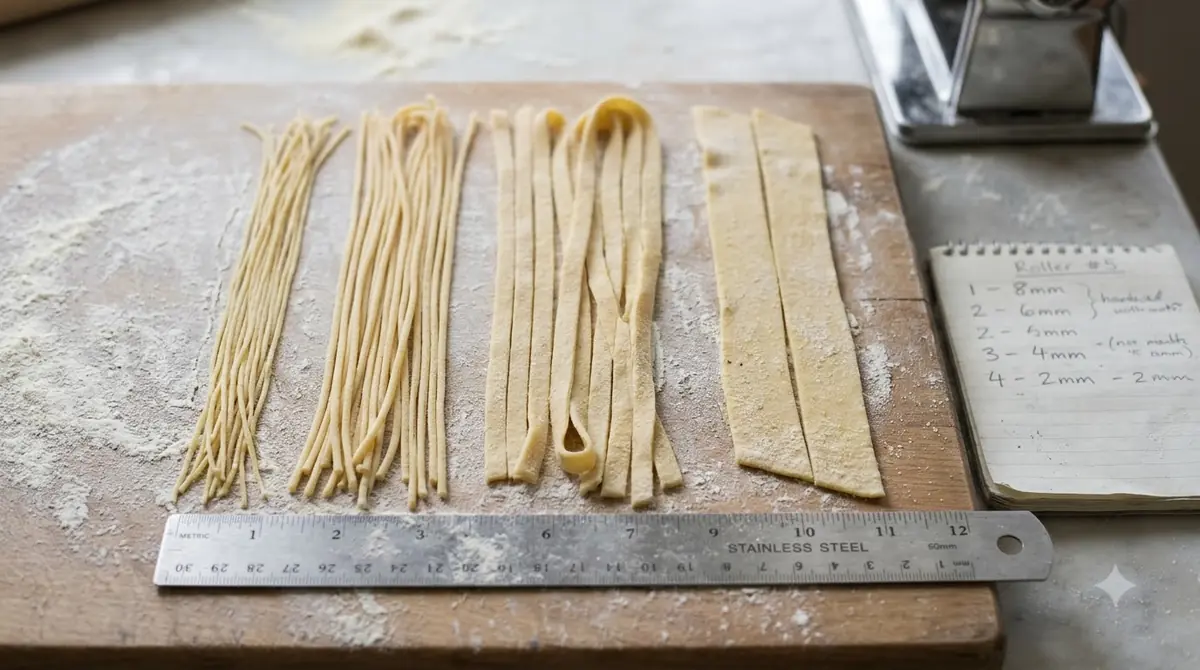
| Shape | Thickness vs. spaghetti | Cooking time vs. spaghetti |
|---|---|---|
| Spaghettini | Thinner | Shorter |
| Spaghetti | Reference shape | Reference time |
| Spaghettoni pasta | Thicker | Longer |
One comparison guide gives a diameter of 2.00 to 2.15 mm for spaghettoni, but published figures vary and that range comes from a single source. Treat any number as approximate and check the package, since brands make strands of different diameters.
Tasting Table notes that the larger diameter gives each strand more surface area, which makes spaghettoni easier to fork than thinner pasta. That practical benefit matters more at the table than the exact millimeter count.
Because each strand is heavier, a portion of spaghettoni looks more substantial on the plate than the same weight of thin pasta. Choose it when you want the pasta to be the centerpiece of the meal (see how bucatini compares with spaghetti for another thick strand), and skip it for a light starter where a delicate strand fits the course better.
Which Sauces Go Best With Spaghettoni Pasta?
Spaghettoni suits heavier and chunky sauces, because its thicker strands carry more sauce and small pieces of meat or vegetable on each bite.
Tasting Table says thicker noodles are better carriers for chunky sauces, since thinner noodles can lose the chunky bits when forked. The same guide names three strong matches for spaghettoni pasta.
- Bolognese and other chunky meat sauces, where each forkful picks up pasta, meat and vegetable bits together.
- Carbonara, which the guide recommends for its creamy sauce and porky bites.
- Amatriciana, the tomato sauce with pork cheek, which holds well on a sturdy strand.
Light, brothy dishes or simple oil-based sauces may suit a thinner shape better than spaghettoni pasta, because the extra body can feel heavy against a delicate sauce.
Wikipedia’s spaghetti entry says spaghetti is frequently served with tomato sauce, meat or vegetables, and it names amatriciana and carbonara as common preparations. Those same dishes are a natural starting point for spaghettoni, since the thicker strand suits the richer versions of each.
Grated hard cheese is the usual finish. The same entry lists pecorino romano, Parmesan and Grana Padano as the cheeses often sprinkled on top, and a light dusting adds salt and body without thinning a heavy sauce.
How to Cook Spaghettoni Pasta
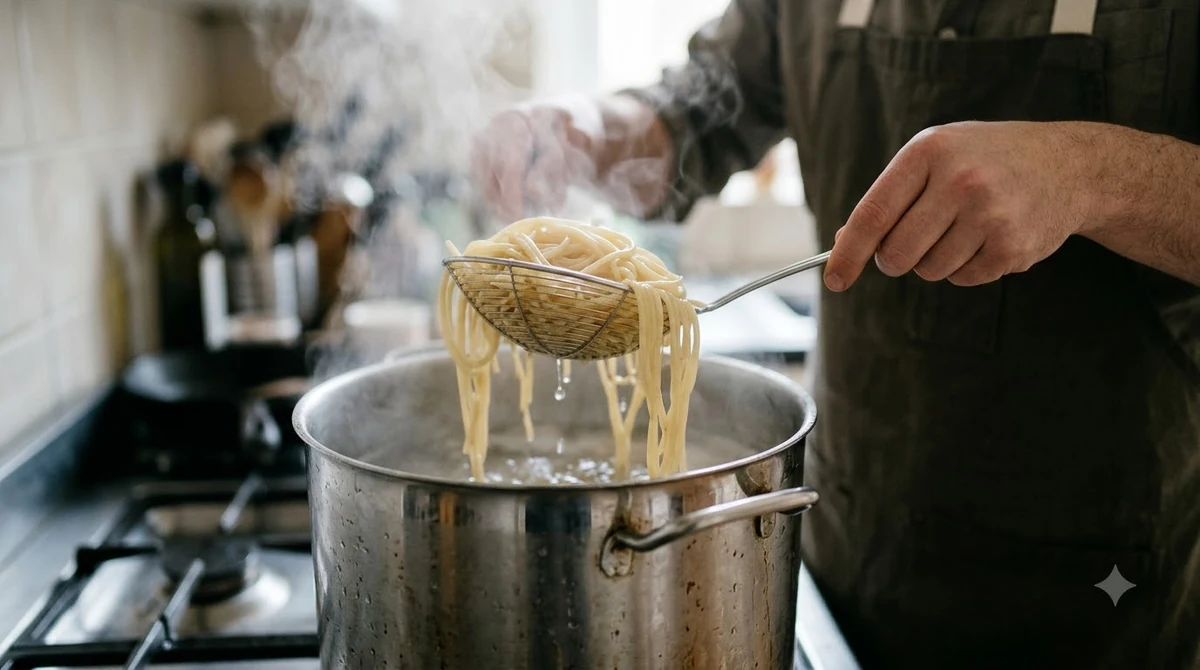
Cook spaghettoni pasta in a large pot of well-salted water and follow the time on the package, because it takes longer than regular spaghetti.
- Bring a large pot of water to a rolling boil and salt it generously before the pasta goes in.
- Add the spaghettoni pasta and stir during the first minute so the long strands do not stick together.
- Check the printed time on the box. One comparison guide gives 10 to 12 minutes, but brands differ.
- Taste a strand near the low end of that range. It should be al dente, firm to the bite with no chalky center.
- Drain, keep a splash of the cooking water, and finish the pasta in the sauce for a few seconds.
Starting the taste test early matters with thick pasta (for the regular strand, see how long to boil spaghetti), because overcooked strands soften quickly and lose the bite that makes spaghettoni worth choosing.
Wikipedia’s spaghetti entry describes the standard method as cooking in a large pot of salted, boiling water, and says that in Italy spaghetti is generally cooked al dente. The same method works for spaghettoni, but the wider time window means the taste test carries more weight.
Skip spaghettoni when you need dinner on the table in a rush. Its longer cooking time compared with regular spaghetti adds minutes to the plan, so a quick weeknight sauce that cooks in minutes may suit a thinner shape better.
Why Bronze-Die Spaghettoni Feels Different
Bronze-die spaghettoni has a coarser surface than pasta pushed through a smooth Teflon die, and one Tasting Table guide says that texture helps sauce cling.
Bronze-cut versions of spaghettoni pasta are made by pushing semolina dough through a bronze die. According to the Tasting Table bronze-cut pasta guide, the bronze gives the outside of the pasta a coarse texture, while smooth dies produce a glossier finish.
The same guide says the rough surface and higher starch help sauce stick instead of pooling at the bottom of the plate. It presents this without caveats, so treat it as one editorial view rather than a settled measurement.
The guide also states that bronze-cut pasta costs more than standard grocery store pasta, and that the slower bronze process limits how much can be made. Compare the price per package against how much you cook at home.
On the label, look for wording such as bronze-cut or bronze-drawn to confirm the die type. If the box does not say how the pasta was extruded, assume the surface is smoother and check the brand’s product page for production details before paying extra. Our guide to bronze-cut pasta brands lists options.
Common Mistakes When Cooking Spaghettoni Pasta
The most common mistake is cooking spaghettoni on regular spaghetti timing, which can leave the center firm while the outside turns soft.
- Using the timing from thin spaghetti or spaghettini, since thicker strands need longer in the pot.
- Cooking in too little water, which slows the boil and makes the strands clump together.
- Pairing thick strands with a thin, watery sauce that cannot coat them.
- Skipping the taste test before draining, so the pasta is drained at the wrong point.
Most of these mistakes come from treating spaghettoni like thinner spaghetti, so adjust the timing and the sauce together.
Storage is simple but easy to forget. Keep dried spaghettoni pasta sealed and away from heat and moisture, and check the package date before you cook.
Frequently Asked Questions
Is spaghettoni pasta the same as spaghetti?
No. Spaghettoni is a thicker form of spaghetti, so it is sturdier and cooks a little longer. Wikipedia’s spaghetti entry describes it in exactly those terms, and the thickness is the main difference you will notice on the plate.
Is spaghettoni thicker than spaghettini?
Yes. Spaghettini is the thinner form of spaghetti, and spaghettoni pasta is the thicker one, so the two sit on opposite ends of the thickness scale with regular spaghetti in between.
What sauce goes best with spaghettoni pasta?
Heavier sauces suit it best, including chunky meat sauces such as bolognese, carbonara and amatriciana. Tasting Table recommends thick pasta for chunky sauces because thinner strands can lose the chunky pieces when forked.
How long should you cook spaghettoni pasta?
Follow the time printed on the package, because brands differ. One comparison guide gives 10 to 12 minutes, and tasting near the low end of that range helps you find the right texture before you drain.
Is bronze-die spaghettoni worth the extra cost?
That depends on your sauce and budget. One guide says its coarse surface helps sauce cling, but it also costs more and takes longer to make. If your sauce is heavy and clings poorly to smooth pasta, the price may be worth testing once.
If your sauce is heavy, chunky or meat based, spaghettoni pasta is a sensible choice that keeps its body on the plate. For light dishes, a thinner shape usually makes more sense. Read the package time before you start, and taste near the end rather than trusting one number.
 7 min readLearnUmbricelli Pasta: The Thick Hand-Rolled Noodle of UmbriaUpdated Nov 6, 2026
 8 min readLearnBigoli Pasta: A Thick Venetian Noodle ExplainedUpdated Nov 6, 2026
 6 min readLearnBest Sauce for Paccheri: 4 Thick Sauces That Fill the TubeUpdated Nov 13, 2026
 6 min readLearnBest Sauce for Campanelle: Thick Sauces That Cling to the RufflesUpdated Nov 13, 2026
 6 min readLearnBest Sauce for Casarecce: Thick Sauces That Fill the CurlsUpdated Nov 13, 2026
 5 min readLearnBest Sauce for Conchiglie: Chunky, Thick and Cheesy OptionsUpdated Nov 13, 2026