

Bronze cut pasta brands are makers that push their dough through bronze dies, which leave a rougher surface that holds sauce better than smooth pasta. Brands that use this method often say so on the pack, but the wording varies and prices change. As of 2026-11-07, the most useful steps are knowing the label terms, reading the ingredient list, and matching the shape to your sauce.

Pros & ConsViewHide
Reasons to buy
- Bronze cut rigatoni with ridges that hold sauce
- 85% of Amazon ratings are 5-star
- Made from durum wheat, not a gluten-free blend
Reasons to avoid
- Fewer reviews than the big supermarket brands
- Not the gluten-free Rummo version, so check the label

De Cecco Spaghetti No. 12 Pasta, 16 Oz
Pros & ConsViewHide
Reasons to buy
- Slow-dried durum wheat spaghetti, the No. 12 cut
- Low shelf price per 16 oz box
- 83% of 3K Amazon ratings are 5-star
Reasons to avoid
- Single box means more reorders for a weekly cook
- Price can change by store and seller
What Bronze Cut Pasta Brands Have in Common
Bronze cut pasta is dried pasta that has been pushed through a die made of bronze, a naturally porous metal. Tasting Table says that al bronzo simply means pasta that has been cut with a bronze die. Our guide on what bronze cut pasta is covers the basics.
The die is a metal plate with holes, and the shape of those holes depends on the pasta type. During extrusion, the dough is forced through the holes, cut to length, and then dried. Brands that use bronze dies follow the same basic sequence as brands that do not, so the difference lies in the die and the drying.
The main alternative is a Teflon-coated die, which gives the pasta a smooth finish. Many modern pastas use these dies, and the choice shapes how the pasta looks, feels, and holds sauce when it is cooked.
Texture and Sauce Grip
Bronze dies leave a coarser exterior that helps sauce cling, while smooth Teflon-die pasta lets sauce slide toward the bottom of the plate.
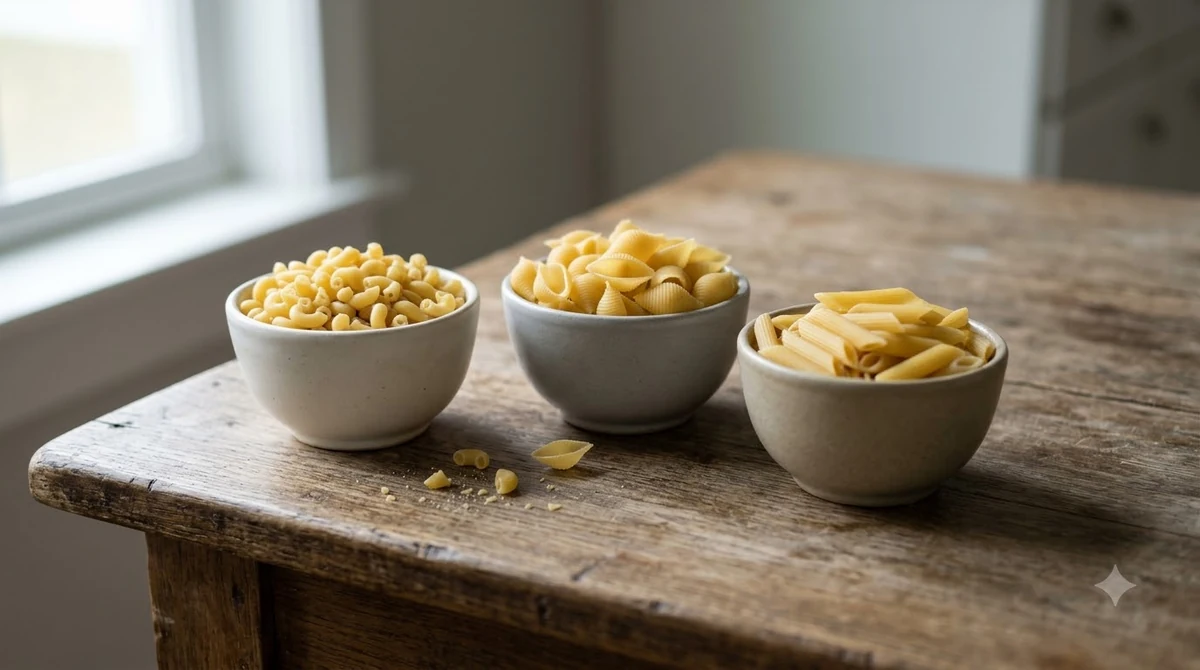
America’s Test Kitchen describes the effect directly: when dough is pressed through bare metal, it winds up with a coarser exterior and better grip. The same article says craggy pasta extruded through bronze dies makes sauces cling, which is why cooks who serve thick sauces often look for it.
Smooth Teflon dies are cheaper and faster to run. ATK notes that the nonstick coating reduces friction and heat, which also extends the life of the machinery. Those production gains are the reason many mass-market pastas use them.
| Feature | Bronze die | Teflon die |
|---|---|---|
| Surface | Rough and porous | Smooth and slippery |
| Sauce grip | Holds sauce well | Sauce can slide off |
| Production speed | Slower | Faster |
| Color after drying | Stays paler | Takes on a deeper yellow hue |
In one blue-dye test, ATK found that bronze-cut De Cecco absorbed a deep blue color, while Teflon-die Ronzoni stayed much paler. That test measured how much dye the pasta soaked up. It does not measure flavor, so treat it as a sign of surface porosity rather than proof of a taste difference.
Brands That Sources Name
The bronze cut pasta brands that Tasting Table names are Barilla, Rustichella d’Abruzzo, La Molisana, Rummo and De Cecco, and ATK used a bronze-cut De Cecco in its test. These are names from the sources, not a ranking of quality. For single-brand detail, see the Rummo vs De Cecco comparison, the Barilla al Bronzo review and the Rummo pasta review.
According to Tasting Table’s bronze-cut guide, Barilla released an al bronzo collection of popular pasta types in late 2022. The same guide describes Rustichella d’Abruzzo as a premium bronze-cut source and says the brand became popular in the United States after it was used in pasta dishes at Dean & DeLuca in New York in the 1980s.
La Molisana, Rummo and De Cecco are each said to offer around 50 varieties of bronze-cut pasta. Pasta Tirrena is described as a Tuscan producer that prioritizes ancient grains and an extra-slow drying process.
- Barilla: an al bronzo collection, released in late 2022
- Rustichella d’Abruzzo: described as a premium bronze-cut source
- La Molisana: around 50 bronze-cut varieties
- Rummo: around 50 bronze-cut varieties
- De Cecco: around 50 bronze-cut varieties, and bronze-cut in ATK’s test
The sources used here did not confirm the current line-up for any of these bronze cut pasta brands. Before you buy, check that the exact product you want says bronze-die or al bronzo on its pack, because a brand can make some shapes with bronze dies and others with Teflon.
How to Read a Bronze-Cut Label
To compare bronze cut pasta brands, look for “bronze-die”, “bronze cut” or “al bronzo” on the front or back of the pack, then read the ingredient list, because US rules allow several different flours.
ATK says bronze-cut brands often say “bronze-die” on the label, though the article notes that this can be hard to spot. Tasting Table uses “al bronzo” and “bronze cut” for the same process. A pack without any of these terms does not prove the pasta was made with a Teflon die, so the label is a clue rather than a guarantee.
| Label term | What it tells you |
|---|---|
| “bronze-die” | Made with a bronze die, the term ATK says brands often use |
| “bronze cut” | Same process, the term Tasting Table uses |
| “al bronzo” | Means cut with a bronze die, per Tasting Table |
| No bronze term | Not stated on the pack; check the brand’s product page |
The federal standard for macaroni products allows the dough to be made from semolina, durum flour, farina, flour, or any combination of two or more of these. Durum is therefore not a legal requirement, so the ingredient list is where you see which flour the maker used. The full text is in the federal standard for macaroni products at Cornell Law School.
The same section allows optional egg white, measured as solids between 0.5 and 2.0 percent of the finished food’s weight. Egg pasta is a different product from plain dried pasta, so match the ingredient list to the dish you plan to cook.
Why Bronze-Cut Costs More
Bronze cut pasta brands usually cost more because bronze dies are pricier and slower to use, and artisanal drying runs at lower heat for longer. As of 2026-11-07, the sources read for this guide confirm these cost drivers, but they did not confirm current shelf prices.
Tasting Table states that bronze-cut pasta is more expensive than standard grocery store alternatives. It gives two reasons: the bronze dies cost more than Teflon dies from the start, and passing dough through a bronze die is slower than using a smooth Teflon version.
Drying is the other cost. Tasting Table says manufacturers can use high heat to speed up drying and produce more in less time. Artisanal bronze-cut pasta typically dries at lower temperatures over an extended period, which adds time to production.
- Dies: bronze dies cost more than Teflon dies
- Output: slower passing through bronze limits volume
- Drying: lower heat over a longer time
- Shelf price: reflects all three, so compare the price per gram or ounce

Cooking Bronze-Cut Pasta
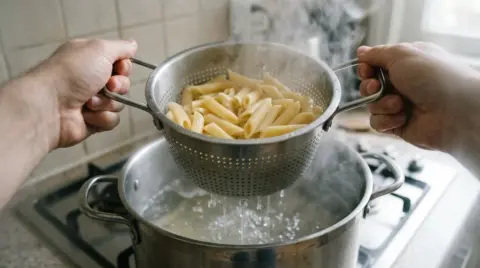
Bronze-cut pasta releases more starch into the cooking water, so the water turns cloudy faster, and it is worth draining a few minutes early so the pasta can finish in the sauce.
Tasting Table says more starch is released into the water as the pasta cooks, and that the water will quickly become starchier than many cooks expect. It also advises draining the pasta a few minutes early so it can finish cooking in the sauce.
- Start tasting near the time printed on the package, and do not rely on the time alone.
- Drain the pasta a few minutes early, while the center is still firm.
- Finish it in the sauce over low heat so the two bind together.
- Keep a cup of the cooking water before draining if the sauce needs loosening.
These steps are general cooking practice. The sources did not give a cooking time for any specific bronze-cut brand, so the package time is the starting point.
Choosing a Bronze-Cut Pasta for Your Sauce
Bronze-cut suits thick, clingy sauces such as meat ragu and cheese-based sauces, while a smooth die can be enough for light oil-based dishes. The reason follows from the texture finding: a rougher surface gives sauce more to grip.
The difference matters most when the sauce is thin enough to slide off smooth pasta. With light sauces, the gap is smaller, and the sources do not quantify it.
- Meat ragu and other thick meat sauces: bronze-cut has the most to offer
- Cheese-based sauces: grip helps the sauce cling to each strand
- Light oil-based dishes: a smooth die may be enough
- Tight budgets: smooth-die pasta usually costs less, per the sources
Shape matters as well. A textured, grooved shape gives sauce more places to sit, so pick the shape first and then decide whether the bronze cut pasta brands you are comparing are worth the price for that shape.
What We Could Not Verify
Current prices, the full product range, and the current bronze-die lines of the bronze cut pasta brands above were not confirmed for this guide. Brand websites could not be read in this run, and the main sources are a publisher guide and a 2023 test article, so product details may have changed.
- The pack: the bronze term and the ingredient list
- The brand’s product page: which lines use bronze dies today
- The retailer listing: size and price per unit
- Customer service: which die a specific product uses
Frequently Asked Questions
Are all Barilla pastas bronze cut?
No. Tasting Table describes an al bronzo collection from Barilla released in late 2022, so check the individual pack for the bronze term rather than assuming the whole range is bronze-cut.
Does bronze cut pasta taste different?
The sources read here describe texture, sauce grip and color, not a proven taste gap. ATK’s dye test showed differences in how much color the pasta absorbed, but it did not measure flavor.
Is bronze cut pasta healthier?
The sources read for this guide do not show a health difference. Both kinds are dried formed dough under the same federal definition, so compare the nutrition panel on each pack.
Is durum wheat required on the label?
No. The federal standard allows semolina, durum flour, farina, flour, or a combination of these, so read the ingredient list to see which flour the maker used.
Where do I find bronze cut pasta?
Start in the dried pasta aisle and look for the label terms used by bronze cut pasta brands. Specialty Italian import shelves may also carry bronze-cut lines, though availability varies by store and was not verified for this guide. For a wider pick that is not limited to bronze-cut boxes, see our guide to the best dried pasta brands.
Does the bronze die change the price much?
The sources say bronze-cut costs more than standard grocery pasta because of the dies, the slower production, and the longer drying. They do not give a percentage, so compare shelf prices per gram or ounce.
If sauce grip is your main reason to buy bronze cut pasta brands, look for the bronze term on the pack. If price matters more, compare the cost per gram, read the ingredient list, and choose the shape that suits your sauce.
 8 min readGear & PantryRummo Pasta Review: Bronze-Cut Texture, Price and Who Should BuyUpdated Nov 8, 2026
 9 min readGear & PantryWhat Is Bronze Cut Pasta and Is It Worth Buying?Updated Nov 5, 2026
 9 min readGear & PantryBarilla Al Bronzo Review: Is Bronze-Die Pasta Worth It?Updated Nov 9, 2026
 9 min readGear & PantryGarofalo Pasta Review: Is This Bronze-Drawn Italian Pasta Worth It?Updated Nov 8, 2026
 9 min readGear & PantryLa Molisana Pasta Review: Bite, Brand and What to Check Before You BuyUpdated Nov 8, 2026
 9 min readGear & PantryThe Best Italian Pasta Brand: How to Choose a Good BagUpdated Nov 17, 2026