
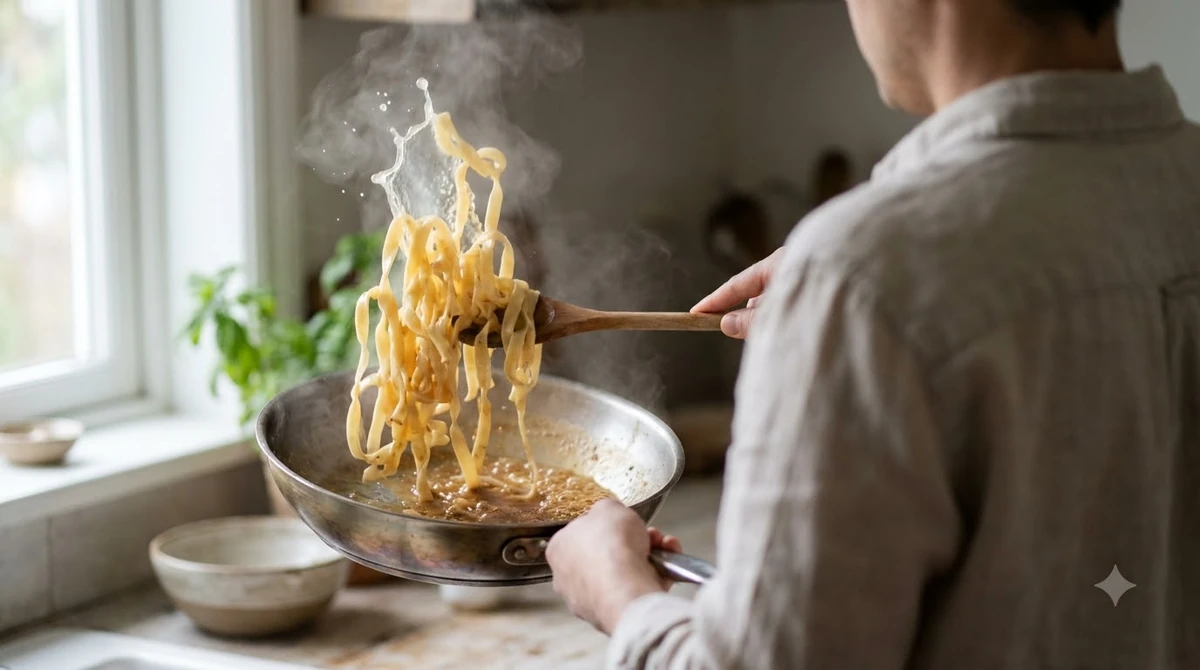

The short answer to what is pancetta is an Italian salt-cured pork belly, seasoned and dried rather than smoked like bacon. It is a salume, the Italian term for cured meat, and cooks use it to add savory depth to pasta, soups and vegetables.
Pancetta is sold rolled or flat, and the label often tells you more than the name. Knowing how it differs from bacon, guanciale and prosciutto helps you pick the right one.
What is pancetta, exactly?
What is pancetta in plain terms? It is salt-cured pork belly, the same cut bacon is made from, seasoned with spices such as black pepper, garlic and juniper.
Italians classify pancetta as a salume, a broad category of cured meats. Most pancetta is salt-cured and dried without smoke. A smoked version exists and is called pancetta affumicata; Wikipedia describes it as salt-cured and smoked, similar to bacon.
Because most pancetta is not smoked, Food Network notes that it has a deeper pork flavor than bacon.
How pancetta is made
Pancetta is brined for 10 to 14 days, rolled with its fat on the outside, wrapped and dried for 3 to 4 weeks. The finished product keeps about 70 percent of its original weight.
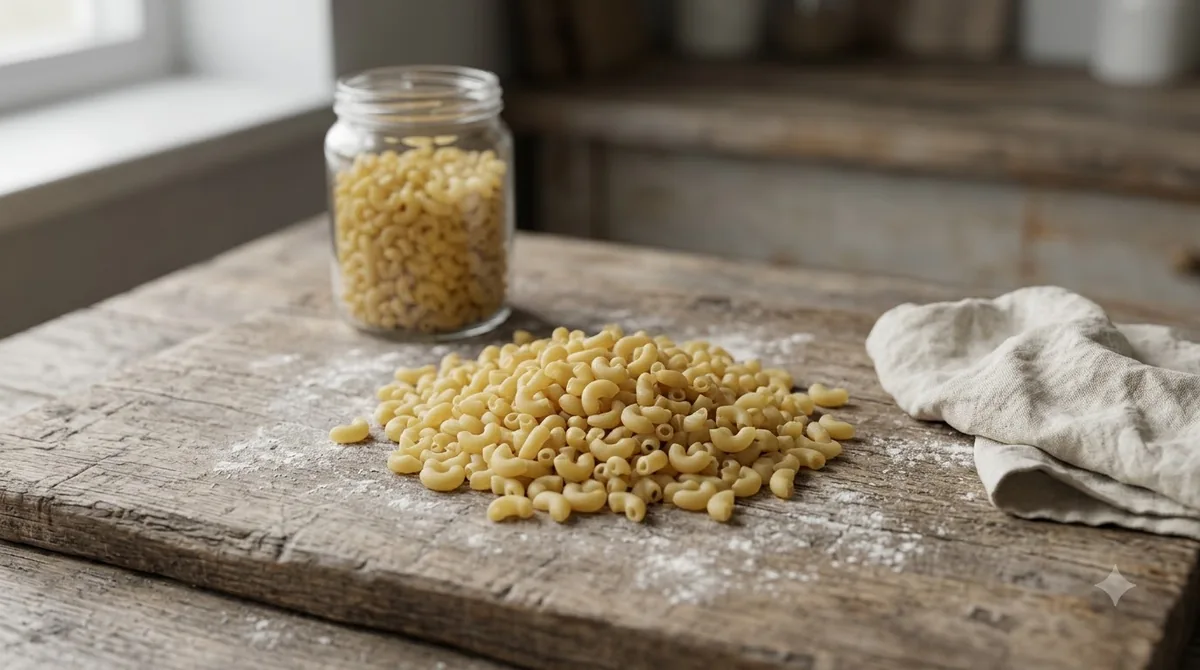
The process starts with the skin removed. The pork is salted and held in brine for 10 to 14 days in a low-temperature, high-humidity room, according to Wikipedia’s pancetta entry.
After brining, the belly is rolled so the fat wraps the outside around a meaty core, then packed into netting or a fibrous casing. The casing helps prevent case hardening during drying.
The roll rests for 24 to 36 hours at 22 to 24 °C. Dried for 3 to 4 weeks at 12 to 14 °C and 72 to 75 percent relative humidity, it loses weight steadily until it keeps about 70 percent of its starting mass. The same source notes that some producers expose the meat to cold smoke during the resting stage, so smoked and unsmoked styles are not always cleanly separated.
Rolled and flat pancetta
Pancetta comes in two shapes: rolled, called arrotolata, which is typical of northern Italy, and flat, called tesa, which is typical of central and southern Italy.
In American shops the rolled form is the most common. Food Network says it is usually sold as a log to slice at the deli counter, or pre-sliced, or cut into thick cubes. The log can be sliced to any thickness, so you can ask the counter for the cut that suits your recipe.
Labels can be more specific. Under EU protected designation of origin rules, only pancetta from Calabria may carry the name pancetta di Calabria. Check the label to see where the product was made.
How pancetta compares with bacon, guanciale and prosciutto
Pancetta and bacon share the same cut, but pancetta is usually not smoked. Guanciale is pork jowl, and prosciutto is a dry-cured ham from the hind leg.
| Product | Cut | Smoked? | Eat without cooking? |
|---|---|---|---|
| Pancetta | Pork belly | Usually not | Sources disagree; check the label |
| Bacon | Pork belly | Almost always | No, must be cooked |
| Guanciale | Pork jowl | Not stated in the sources read | Not stated; see our guanciale guide |
| Prosciutto | Hind leg (ham) | Not stated | Yes, per America’s Test Kitchen |
Bacon is almost always smoked and must be cooked before eating, according to Food Network. America’s Test Kitchen describes pancetta as firm in texture with a deep flavor, and it is not smoked.
Prosciutto is much drier than pancetta and is aged for 9 to 36 months, according to Food Network. America’s Test Kitchen’s pancetta versus prosciutto guide describes prosciutto as safe to eat without cooking and recommends cooking pancetta before eating.
Smoked pancetta, or pancetta affumicata, is the version closest to bacon, according to Wikipedia. Guanciale is the closest substitute for pancetta, according to Food Network, and our pancetta vs guanciale comparison shows how the two differ. Wikipedia notes that guanciale is generally regarded as more traditional than pancetta in carbonara.
How to cook with pancetta
Dice pancetta and render it slowly over low heat, starting with water in the pan so the fat melts before the meat crisps.
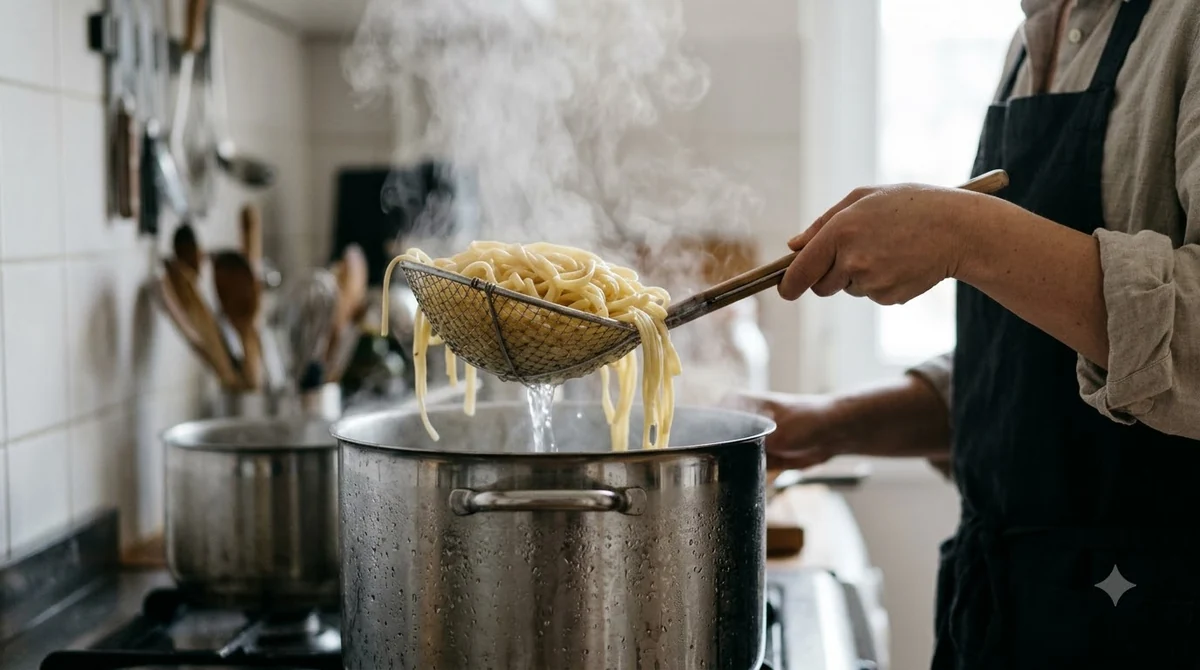
In Italy, pancetta is often cut into cubes, called pancetta a cubetti, to flavor pasta sauces such as amatriciana, soups such as pasta e fagioli, risotto and vegetables. Thin slices are also served as cold cuts, and pancetta is a classic ingredient in carbonara.
Food Network gives a simple method:
- Dice the pancetta into small cubes.
- Add 1/2 cup water to the pan first, so the fat renders without crisping too early.
- Cook slowly until the fat has rendered and the pieces are golden.
- Remove the crisp bits before you sauté other ingredients, then add them back later.
Thin slices can also be cooked like bacon, according to Food Network, so they can stand in for bacon in many recipes. Because pancetta is already salt-cured and seasoned, taste the dish before you add extra salt.
Can you eat pancetta raw?
Sources disagree. America’s Test Kitchen says pancetta must be cooked before eating, while Food Network says dry-cured, fully aged pancetta can be eaten thinly sliced.
Wikipedia notes that in Italy pancetta is commonly served as thinly sliced cold cuts, so the real question is usually about the specific product and its label. The sources do not settle the question for every product. Check the package label and cooking instructions. If the label does not say the product is ready to eat, cook it before serving, which is the more cautious approach America’s Test Kitchen takes.
Buying and storing pancetta
Unopened pancetta keeps up to 12 months in its original packaging. Once opened, it lasts 2 to 3 weeks in the refrigerator or up to 3 months in the freezer.
- Buy it sliced to order at the deli counter, or pre-sliced in a package.
- Avoid pre-diced cubes, which America’s Test Kitchen says often taste sour.
- Check the use-by date and the storage advice printed on the package.
Wikipedia lists about 5.0 grams of protein and 11.0 grams of fat per 30-gram serving of pancetta. The same source says pancetta has less fat than some other bacon products.
Frequently Asked Questions
Is pancetta the same as bacon?
No, although both come from pork belly. Pancetta is usually salt-cured and dried without smoke, while bacon is almost always smoked. Food Network also notes that bacon must be cooked before eating, and that pancetta has a deeper pork flavor because it is not smoked.
Is pancetta smoked?
Most pancetta is not smoked. Smoked versions are called pancetta affumicata, and Wikipedia describes them as similar to bacon. Check the package label to see which type you have.
Can you eat pancetta without cooking it?
Sources disagree. America’s Test Kitchen says it must be cooked, while Food Network says dry-cured, fully aged pancetta can be eaten thinly sliced. Check the label and cooking instructions before you eat it uncooked.
How long does pancetta last?
Unopened pancetta keeps up to 12 months in its original packaging. After opening, keep it 2 to 3 weeks in the refrigerator or up to 3 months in the freezer, according to Wikipedia.
What can you use instead of pancetta?
Guanciale is the closest substitute, according to Food Network, and it comes from pork jowl. Bacon can stand in, but it is smoked, so the flavor will be different.
Where does pancetta come from?
Pancetta is an Italian product. Rolled pancetta is typical of northern Italy and flat pancetta of central and southern Italy, according to Wikipedia. Under EU rules, only pancetta from Calabria may be labeled pancetta di Calabria.
Is pancetta the same as prosciutto?
No. Pancetta is pork belly, while prosciutto comes from the hind leg and is dry-cured for 9 to 36 months, according to Food Network. America’s Test Kitchen says prosciutto is safe to eat without cooking.
If you want a salty, savory base for pasta and soups, pancetta is a good choice, and the pizza and pasta guides have more ways to use it. Read the label for the cooking method, and if you cook carbonara and want the traditional option, Wikipedia points to guanciale.
 9 min readLearnWhat Is Capocollo? An Italian Cured Pork Neck ExplainedUpdated Nov 11, 2026
 8 min readLearnWhat Is Lardo? An Italian Cured Pork Fat ExplainedUpdated Nov 11, 2026
 8 min readLearnWhat Is Guanciale? A Guide to Italy’s Cured Pork JowlUpdated Nov 10, 2026
 8 min readLearnWhat Is Bresaola? A Lean Italian Cured Beef GuideUpdated Nov 11, 2026
 9 min readLearnWhat Is Speck? A Smoked Italian Cured Ham ExplainedUpdated Nov 11, 2026
 9 min readLearnPancetta vs Guanciale: Cut, Cure, and Which to UseUpdated Nov 10, 2026