
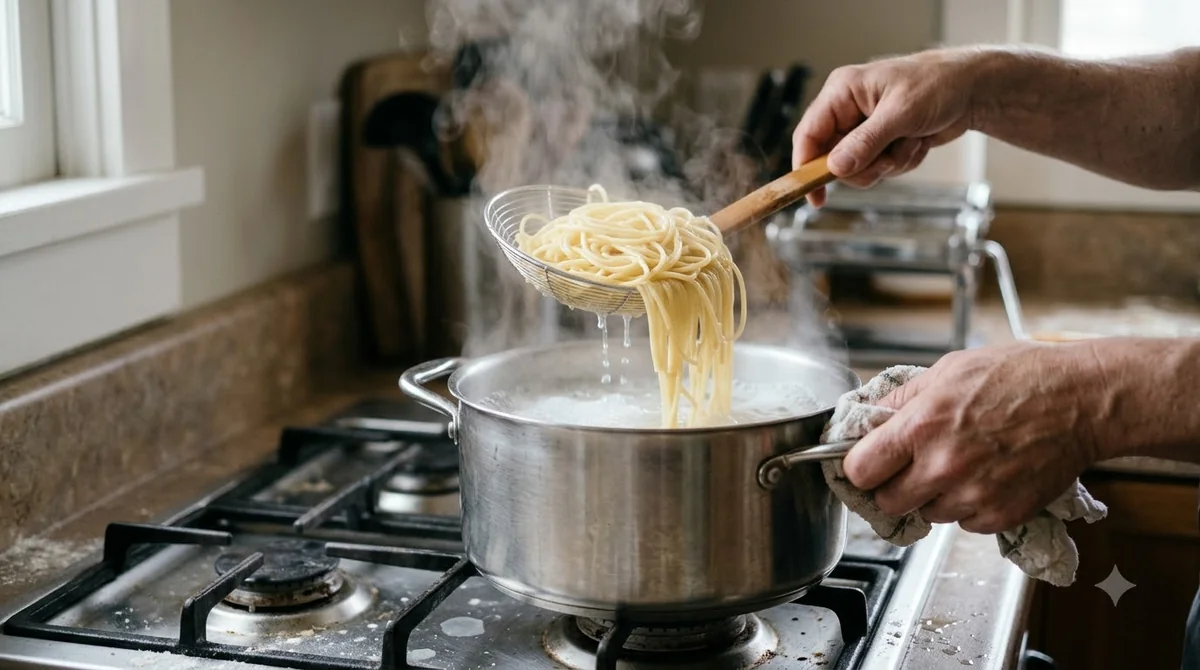

Linguine pasta is a long Italian noodle from Liguria with an oval cross-section about 4 mm wide. It sits between round spaghetti and flat fettuccine, which makes it easy to match with many sauces, especially seafood and pesto. Below you will find what it is, how to cook it, how to make it at home, and which sauces and substitutes work best.
What Is Linguine Pasta?
Linguine pasta is a ribbon-style noodle from Liguria, the coastal region of northern Italy, and it was first documented in Genoa in the 1700s, in the work of Giulio Giacchero. The name means “little tongues,” and linguine is the plural of linguina. Most versions are made from durum wheat semolina or flour and water, and some add egg. According to DeLallo’s linguine guide, the pasta is extruded through a shaped die, which gives it an oval profile rather than a flat one.
The usual width of linguine pasta is about 4 mm. That is wider than spaghetti and less wide than fettuccine, so the noodle has enough surface to hold a light sauce without becoming heavy. Some sources describe linguine as flattened spaghetti, while others describe it as a thinner fettuccine. The oval shape is the most useful way to recognize it on the shelf.
Linguine vs Spaghetti and Fettuccine
Linguine pasta is wider than spaghetti and narrower than fettuccine, and its shape is the main difference. Spaghetti is round, fettuccine is flat, and linguine is oval. Because linguine has an elliptical section, each strand has a broader face than a spaghetti strand, which is the practical reason it feels different on the fork. The table below sets the three side by side, and the full linguine vs spaghetti guide goes further on sauces.
| Pasta | Shape | Width | How it is made |
|---|---|---|---|
| Linguine | Oval | About 4 mm | Extruded through a die |
| Spaghetti | Round | Thinner than linguine | Extruded through a die |
| Fettuccine | Flat | Wider than linguine | Rolled and cut |
Spaghetti and linguine are both extruded, so they are often treated as interchangeable with thin sauces. Fettuccine is thicker and completely flat, and it is rolled and cut rather than extruded, so its bite and its surface are different. For another flat ribbon, see tagliatelle ribbons, which are about 6 to 8 mm wide. For a direct match-up, read linguine vs fettuccine.
How to Cook Linguine Pasta
Cook linguine pasta in a large pot of salted boiling water, and start checking it at about 8 minutes. General guidance for dry linguine is 8 to 10 minutes, while DeLallo gives 11 minutes as its ideal time for its own brand. Cooking times vary by brand and by dryness, so the package time is only a starting point.
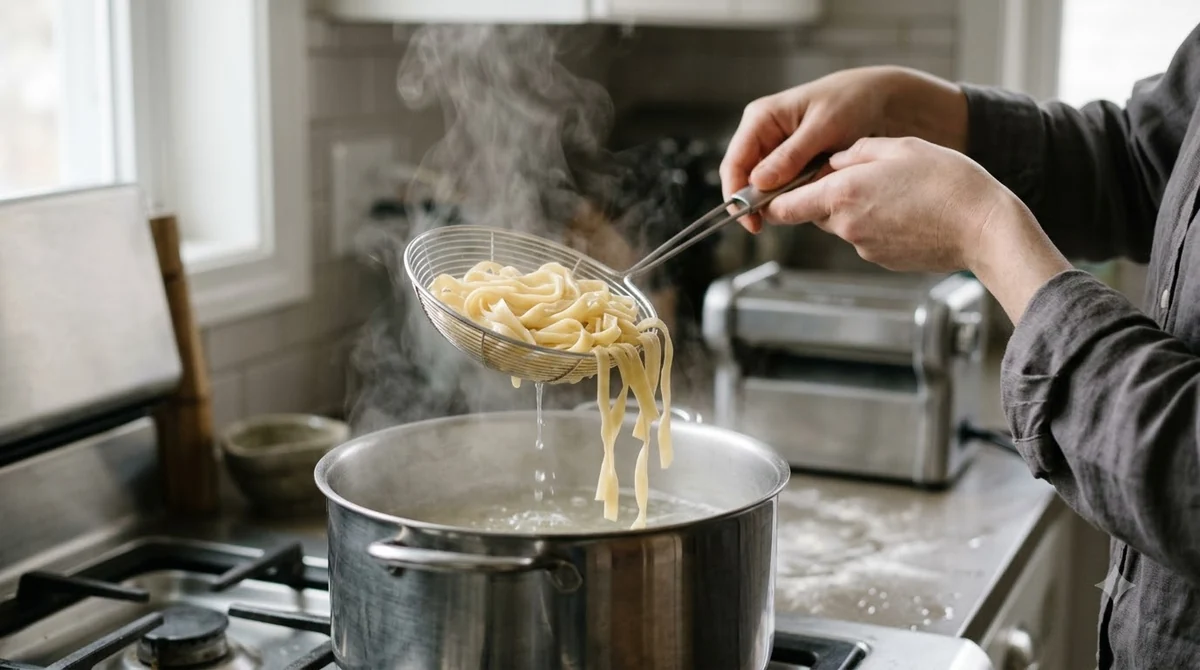
- Bring about 5 quarts of water to a rolling boil for each pound of pasta.
- Add about 2 tablespoons of kosher salt once the water is boiling.
- Stir in the linguine pasta so the strands separate, then start the timer.
- Test a strand at 8 minutes and keep tasting until it is al dente.
- Drain the pasta and toss it into the sauce right away, while it is still wet.
Reserve some of the cooking water before draining. A splash of it helps a sauce cling to the oval strands and loosens a thick sauce without diluting the flavor. The DeLallo ratio of 5 quarts of water and 2 tablespoons of kosher salt per pound gives the strands room to move and seasons them as they cook. The water also carries a little salt, which helps the sauce taste seasoned throughout.
Best Sauces for Linguine
The best sauce for linguine is usually a seafood, pesto or light tomato sauce, because the flat-oval shape holds thin, glossy coatings well. Traditional pairings include basil pesto and seafood, and linguine with clams is a common match.
- Clams, mussels, shrimp or anchovies, the seafood pairings DeLallo links to Liguria.
- Basil pesto, the Ligurian pairing that remains the most traditional choice.
- Fresh tomato, olive oil and lemon for a light, bright plate, or a simple tomato sauce such as the one in how to make marinara sauce at home.
- Bolognese, one of the heartier options DeLallo lists for linguine.
- Alfredo, for a creamy option that coats the noodles evenly.
Heavier sauces work too, but start with the light sauces if you are new to linguine pasta. They show how the noodle carries a coating before you add more body.
How to Make Homemade Linguine
Homemade linguine pasta starts with about 5 ounces of flour for every whole egg plus two yolks, then a rest of at least 30 minutes. According to Chef’s Cornerstore’s pasta dough guide, that ratio is a good base for a dough that rolls out smoothly.
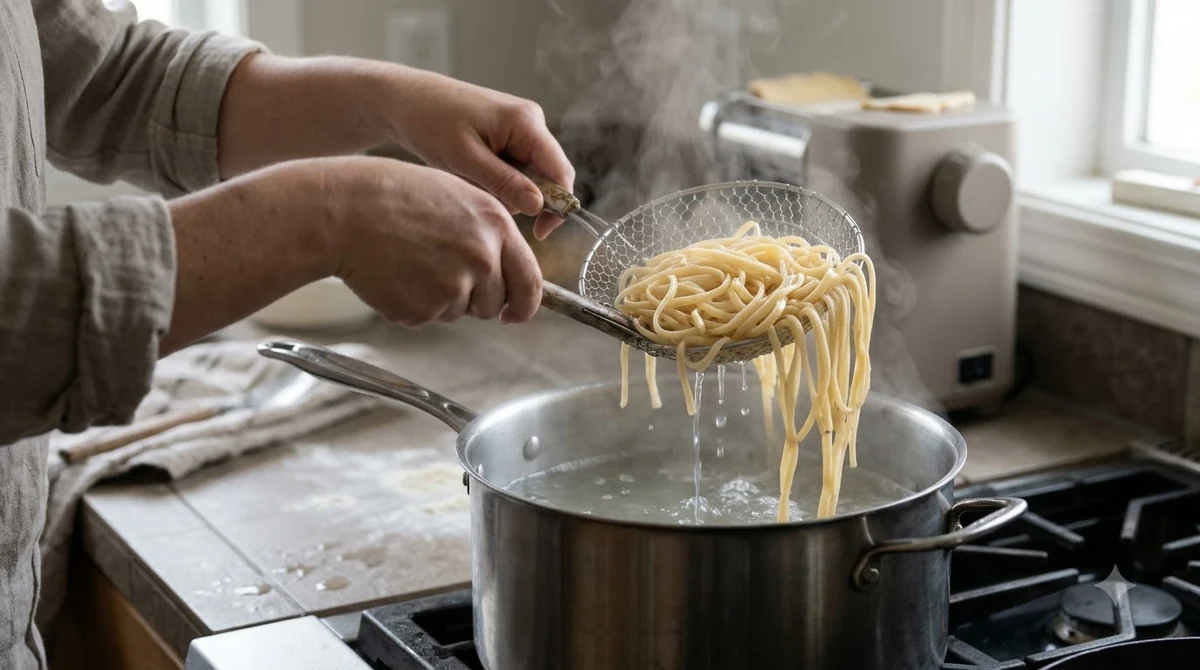
Knead the dough until it is smooth, wrap it, and let it rest.
- Mix the flour and eggs until a dough forms, then knead until smooth.
- Rest the dough for at least 30 minutes.
- Pass the dough through a pasta roller, folding it as needed.
- Roll it through progressively thinner settings, checking the setting before each pass.
- Cut the sheet into linguine by machine or by hand, dusting the strands with flour.
Fresh linguine pasta cooks far faster than dried, so check it early. Overcooked fresh pasta turns soft quickly, so taste a strand before the time you expect and drain it while it still has some bite. If you do not have a pasta machine, roll the sheet thin with a rolling pin and cut it by hand into strands about 4 mm wide to match store-bought linguine.
Linguine Substitutes
Fettuccine, trenette, spaghetti and bucatini are the closest substitutes for linguine when the shelf is empty. Each one changes the bite slightly, so match the substitute to the sauce as well as the width.
- Fettuccine, which is somewhat wider and works well in most linguine dishes (see fettuccine pasta).
- Trenette, a flat noodle similar to linguine in the way it is described in reference sources.
- Spaghetti, the round option that suits thin tomato and oil sauces.
- Bucatini, a thicker noodle that DeLallo lists as a workable substitute, covered in bucatini pasta.
Cooking times differ between these pastas, so check the package and test early. The substitute will still work, but the texture of the finished dish will change a little. For a much thinner strand, capellini pasta is a long, very thin noodle that cooks in about 3 to 4 minutes and needs a lighter sauce.
Frequently Asked Questions
Is linguini the same as linguine?
Yes. Linguini is a common alternate spelling of linguine, and both names refer to the same long, oval Italian pasta from Liguria. In Italian, linguine is already the plural of linguina.
What is the difference between linguine and fettuccine?
Linguine is oval and about 4 mm wide, and it is extruded through a die. Fettuccine is thicker and completely flat, and it is rolled and cut, so the two differ in both shape and texture.
How long should I cook linguine pasta?
Cook dry linguine for about 8 to 10 minutes, or follow the package time, and test for al dente before draining. Fresh linguine cooks faster than dried, so start testing early.
Is linguine thicker than spaghetti?
Yes, in width. Linguine is about 4 mm wide and sits between spaghetti and fettuccine, so linguine pasta is wider than spaghetti but narrower than fettuccine. Spaghetti is cylindrical, while linguine is oval in section.
What sauce goes best with linguine pasta?
Seafood, pesto and light tomato sauces are the usual choices, with clams, mussels, shrimp, anchovies, basil pesto, or tomato with olive oil and lemon. Bolognese and Alfredo are heartier options if you want a richer plate.
What is linguine pasta made of?
Linguine pasta is usually made from durum wheat semolina or flour and water, and some versions add egg.
Can linguine pasta be made without eggs?
Yes. Most dried linguine is made from durum wheat semolina or flour and water, and some versions add egg for a richer dough.
Linguine pasta is a good choice when you want a light, glossy sauce and a noodle that feels substantial without being heavy. Start with a seafood or pesto sauce, cook it to al dente, and keep some pasta water on hand to finish the dish.