
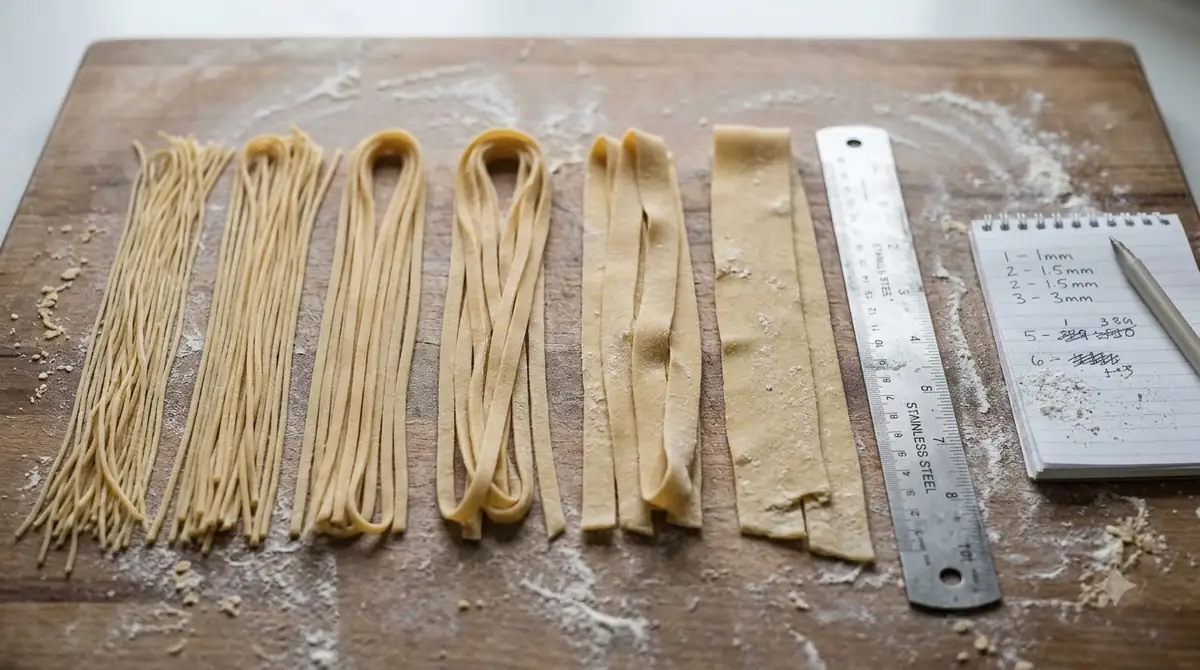

Pici pasta is a thick, hand-rolled pasta from Tuscany, made from flour and water. It is shaped by hand into fat, irregular strands that look like spaghetti. Its home is the province of Siena in Tuscany.
Because every strand is rolled by hand, the thickness changes along its length. Recipes also disagree on cook time, so test one strand before you cook the full batch.
What Is Pici Pasta?
Pici is a thick, hand-rolled Tuscan pasta that Wikipedia describes as fat spaghetti, slightly thinner than a common pencil. The strands are rolled from a thick rope of dough, so the width and length vary from piece to piece. Reluctant Gourmet describes finished strands up to 50 centimeters long. That irregular look is part of the appeal of pici pasta.
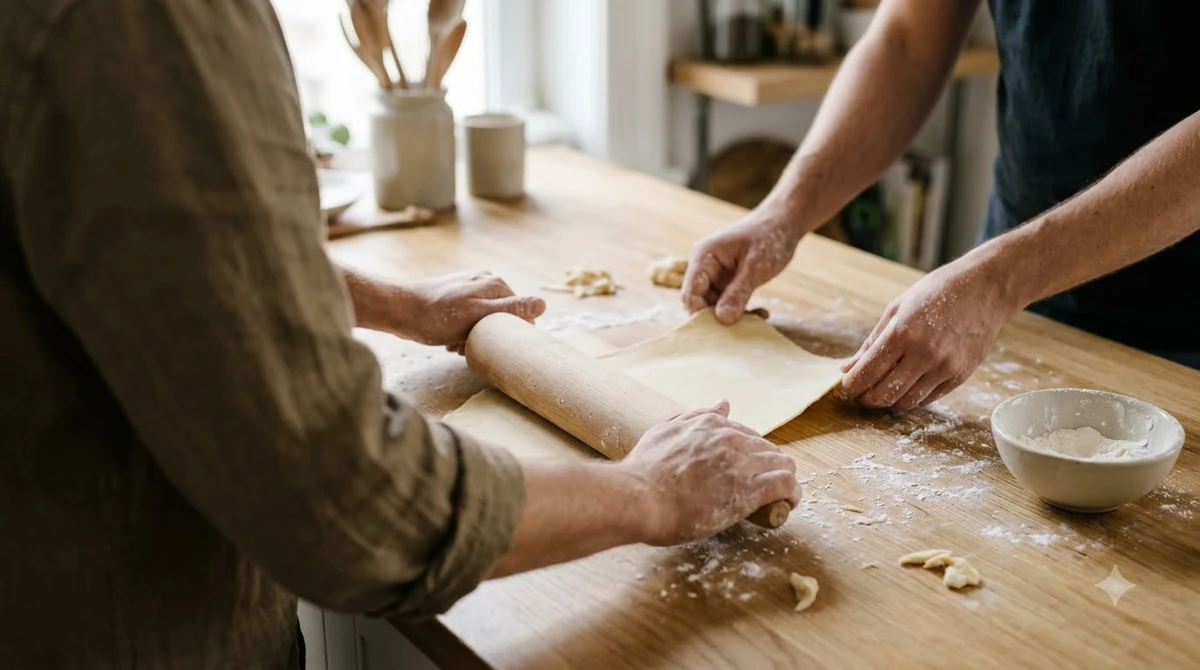
The dough is usually just flour and water. Eggs are optional, according to Wikipedia, and some cooks replace the water with finely chopped or shredded spinach. For a richer dough, the egg-based pasta dough on this site shows the egg version. Because the dough has so few ingredients, the flour you choose and the way you shape it make the biggest difference to the final result. If you would rather make a flat ribbon than a round strand, wide ribbons such as hand-cut pappardelle are another fresh pasta worth trying.
- Choose pici pasta if you enjoy slow, hands-on shaping and do not need every strand to match.
- Choose machine-cut spaghetti pasta or a stamped shape if you want uniform strands for weeknight cooking.
Where Pici Pasta Comes From
Pici originates in the province of Siena in Tuscany, and the name pinci is used in the Montalcino area. Wikipedia’s entry on pici lists the provinces of Arezzo, Firenze, Grosseto and Siena as the wider Tuscan region where it is made.
Other names for pici pasta include pici senesi and pici all’etrusca, which point to the Siena area and to an Etruscan link. The Etruscan connection is a belief rather than a documented fact. Reluctant Gourmet notes that the exact origins are not well documented, so treat the history with some caution. For another hand-shaped pasta from central Italy, see strozzapreti pasta, which is twisted instead of rolled into round strands.
Pici Pasta Ingredients and Dough
Pici pasta dough is traditionally flour and water, and eggs are optional, so the recipe can stay simple. Two published recipes show how much to use. America’s Test Kitchen mixes all-purpose flour with semolina, while Reluctant Gourmet uses only all-purpose flour.
| Ingredient | America’s Test Kitchen (serves 4) | Reluctant Gourmet (serves 4) |
|---|---|---|
| All-purpose flour | 1 1/4 cups (6 1/4 oz / 177 g) | 2 cups |
| Semolina | 1 cup (5 3/4 oz / 163 g) in the dough, plus 1 cup for coating | Not listed |
| Water | 2/3 cup, room temperature | 2/3 cup |
| Olive oil | 2 tbsp in the dough, 1 tbsp for brushing | Not listed |
| Salt | 1 tbsp in the cooking water | 1/2 tsp |
America’s Test Kitchen asks you to knead the dough for 6 to 8 minutes, then rest it wrapped in a damp towel for 30 minutes. The dough can also be refrigerated for up to 2 days.
The flour type changes the water you need when you make pici pasta at home. That recipe was developed with Bob’s Red Mill No. 1 durum wheat semolina, and a finer semolina such as Caputo Semola needs about 1 1/2 tablespoons more water.
How to Roll Pici by Hand
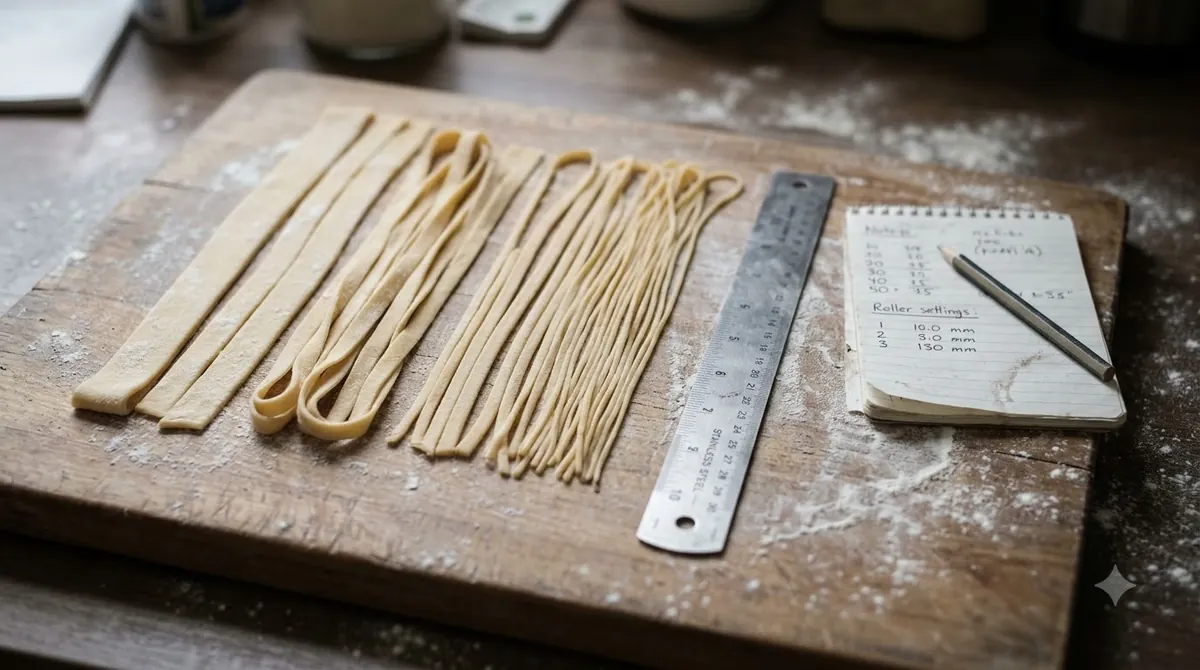
To roll pici pasta by hand, cut the dough into strips and roll each strip into a strand about 1/8 inch wide and at least 24 inches long. America’s Test Kitchen’s pici recipe gives the most specific steps, and the method follows the same order.
- Knead the dough until smooth and elastic, then rest it under a damp towel for 30 minutes.
- Divide the dough into four pieces. Pat one piece into a 3-inch disk, brush it with extra-virgin olive oil, and stretch it into a 6-inch square. Cut the square into 12 strips.
- Starting at the center of a strip, roll it into a strand about 1/8 inch wide. Keep the width even, since that matters more than the length.
- Toss each strand in semolina, shake off the excess, and lay it on a parchment-lined sheet. Keep the rest of the dough covered while you work.
- Refrigerate covered pici pasta if you are not cooking it right away. It can be stored for up to 1 day.
Start at the center of the strand and move your hands outward. Then roll your hands back and forth to thin the ends evenly. Work on a clean surface, because the friction helps the strands roll. If the pasta slides, moisten your hands, and if a strand breaks, pinch the pieces back together before you keep rolling.
Reluctant Gourmet takes a different route. It rolls the dough into ropes about 1/4 inch thick, cuts them into 8-inch lengths, and then rolls each piece into a thick cylinder. The result is a slightly different shape, so choose the method that matches the look you want.
How Long to Cook Pici
Cook pici pasta in 4 quarts of boiling salted water, and expect about 3 minutes in the America’s Test Kitchen method or 6 to 8 minutes in the Reluctant Gourmet method. The two sources give different times, so check the texture early.
| Source | Cook time | Doneness to look for |
|---|---|---|
| America’s Test Kitchen | About 3 minutes after the water returns to a boil | Tender but still springy |
| Reluctant Gourmet | 6 to 8 minutes | Al dente |
Neither source explains the gap, so start testing at the shorter time and keep tasting. Before you drain the pasta, reserve about 1 cup of the cooking water. America’s Test Kitchen recommends it for loosening the sauce.
Classic Sauces for Pici
Wikipedia lists breadcrumbs, spicy garlic tomato, porcini mushrooms, cacio e pepe and meat ragu as traditional pici sauces. The same entry also names game such as wild boar, hare and duck for richer versions.
- Briciole: pici with breadcrumbs
- Aglione: a spicy garlic tomato sauce
- Boscaiola: a porcini mushroom sauce
- Cacio e pepe: cheese and black pepper
- Ragu: a meat sauce
America’s Test Kitchen has related recipes for Pici alla Boscaiola, Pici con ‘Nduja and Pici con Le Briciole, so you can test these sauces with the same dough. For a plainer tomato sauce, a simple homemade tomato sauce is an easy starting point.
Common Mistakes When Making Pici
Uneven strands are the main thing to watch, and America’s Test Kitchen says consistent width matters more than length. The other errors are easy to avoid once you know them.
- Skipping the semolina coat, which lets the strands stick together.
- Rolling on a slippery surface instead of a clean work surface.
- Using a finer semolina with the same water, which leaves the dough too dry.
- Holding shaped pici pasta too long before cooking, since covered pici keeps for up to 1 day only.
Frequently Asked Questions
Can you make pici with eggs?
Yes. Eggs are optional, according to Wikipedia, and the traditional version uses only flour and water. Reluctant Gourmet’s recipe also uses no eggs, so you can follow either one without them.
Can you make pici in a pasta machine?
Pici is traditionally hand-rolled, and both recipes describe rolling by hand. A pasta machine can make strands, but the irregular shape that defines pici pasta will be different. Another hand-shaped flour-and-water pasta is Ligurian hand-twisted trofie.
How thick is pici?
Pici is slightly thinner than a common pencil, according to Wikipedia. Reluctant Gourmet describes strands about 2 to 3 millimeters in diameter, although the thickness varies along each piece.
What flour should you use for pici?
America’s Test Kitchen developed its recipe with Bob’s Red Mill No. 1 durum wheat semolina. A finer semolina needs about 1 1/2 tablespoons more water, so adjust the water to match the flour you use for your pici pasta.
How do you store pici?
America’s Test Kitchen says covered pici can be refrigerated for up to 1 day. The dough can be wrapped tightly and refrigerated for up to 2 days before you roll it.
Before you roll the full batch of pici pasta, shape one strand and check that it is about 1/8 inch wide. Cook a test portion, since the two recipes differ on cook time. Keep some of the cooking water, because a cup of it helps the sauce cling to the pasta.