
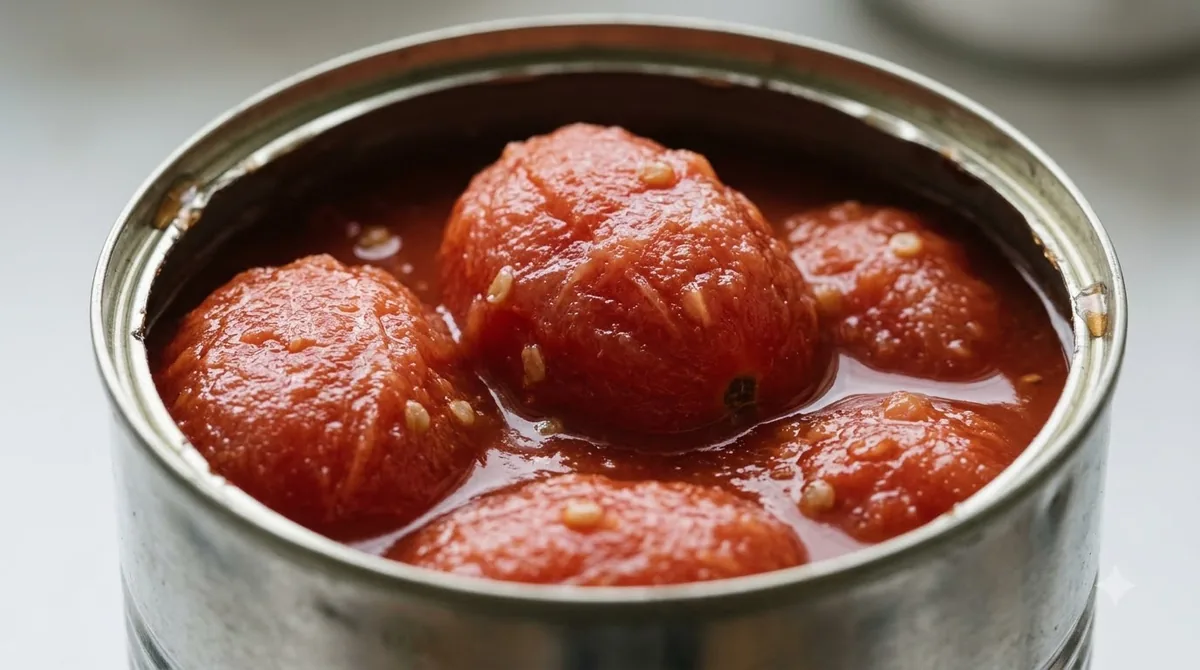

The best canned tomatoes for most cooks are whole peeled tomatoes packed in juice, with a short ingredient list. Whole, crushed and diced cans behave differently in a pot, so the right type matters as much as the brand. This guide explains what to check on the label and how the common types compare for sauce, pizza, chili and soup.
Italian San Marzano cans and American-style cans differ in salt, firming agents and flavor once they are cooked. Choose the form by recipe first, then use the label to narrow the brand.
Canned Tomato Types at a Glance
Among the best canned tomatoes, whole peeled ones give you the most control, because you can crush them by hand to the texture you want. Crushed tomatoes are already broken down, so they save a step for a quick pizza sauce or pasta sauce.
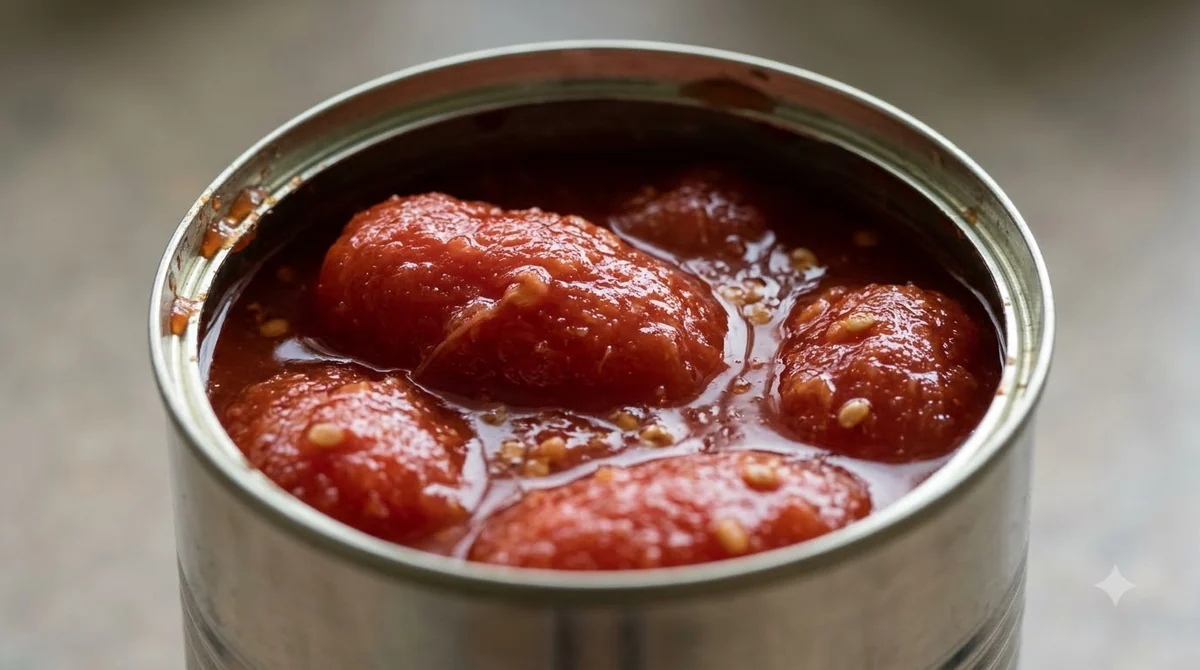
Diced tomatoes hold their shape in chili, soup and stew, while stewed tomatoes arrive soft and usually seasoned. The table below matches each type to the dish where it works best.
For pizza, the best canned tomatoes are usually crushed or whole peeled tomatoes that you can crush yourself. A thick, smooth base spreads evenly under cheese and does not run off the crust. For a rustic pasta sauce, whole peeled cans give you bigger pieces that you can break up at the pot.
| Type | Best for | Watch for |
|---|---|---|
| Whole peeled | Simple tomato sauce, braises, hand-crushed sauces | Check for added basil, salt or citric acid |
| Crushed | Pizza sauce and quick pasta sauce | Smooth body means less chew; compare the ingredient list |
| Diced | Chili, soups and stews where pieces should stay visible | Pieces add less smooth body to a sauce |
| Stewed | Soups and stews that need soft tomato pieces | Usually seasoned, so taste before adding salt |

Hunt’s San Marzano Style Whole Peeled Tomatoes
Pros & ConsViewHide
Reasons to buy
- Lowest-cost can in this group, a single 28 oz can
- US-grown San Marzano style, firm enough for chunky dishes
- 72% of Amazon ratings are 5-star
Reasons to avoid
- Style name only, not the protected Italian DOP
- Most US-style cans contain calcium chloride and citric acid
- In the cited test it was soft in sauce and not very firm eaten plain

Song' E Napule San Marzano DOP Authentic Whole
Pros & ConsViewHide
Reasons to buy
- DOP San Marzano from the Agro Sarnese-Nocerino area, per the listing
- Each can is numbered and certified DOP, per the listing
- Whole peeled plum tomatoes for hand-crushed sauce
Reasons to avoid
- Pack of 6 is a bigger spend than a single can
- 4.2 average with 10% 1-star ratings
- Only about 120 Amazon ratings

Cento Certified San Marzano Whole Peeled Tomatoes
Pros & ConsViewHide
Reasons to buy
- Certified San Marzano tomatoes from the Sarnese Nocerino area
- Packed with basil for simple sauces
- 4.7 stars across 2K+ Amazon ratings
Reasons to avoid
- Six-can pack is a large purchase
- Basil is added, so it is not plain tomatoes

Colavita Crushed Tomatoes, Non GMO, No Salt Added
Pros & ConsViewHide
Reasons to buy
- Crushed tomatoes with no salt added, so you control the seasoning
- Smooth texture suits quick pizza and pasta sauces
- 83% of 2K+ Amazon ratings are 5-star
Reasons to avoid
- Sold as a pack of 16 cans, a large purchase
- Already crushed, so you cannot hand-crush the texture

Pros & ConsViewHide
Reasons to buy
- Organic, non-GMO and kosher whole peeled tomatoes
- 28 oz can for sauces and braises
- 83% of 2K+ Amazon ratings are 5-star
Reasons to avoid
- No San Marzano or DOP origin claim
- Store brand, so the recipe can change
How to Choose the Best Canned Tomatoes
Start with the ingredient list when you choose the best canned tomatoes, then check the salt, the form and the origin claim. Those four details explain most of the difference between two cans that look the same on the shelf.
The best canned tomatoes list tomatoes, juice and salt, and sometimes basil. Many American-style cans also list calcium chloride and citric acid, which change how the tomatoes hold together and taste once cooked.
- Ingredients: tomatoes, juice and salt are the core. Additives are not a reason to avoid a can, but they change texture and acidity.
- Sodium: check the amount per serving on the nutrition panel, then lower the salt in your recipe to match.
- Form: match whole, crushed or diced to the dish, using the table above.
- Origin claim: look for the protected label on the can itself, not just the words on the front.
- Packing: a can of whole tomatoes in juice gives more options than a pre-seasoned product.
When you compare the best canned tomatoes on the shelf, read the ingredient list before you look at the price per can. In the taste test covered below, Red Gold Whole Peeled earned the Best Buy pick, which shows that the most expensive can is not always the best choice for a weeknight sauce.

San Marzano Tomatoes and the DOP Label
Canned San Marzano tomatoes qualify for the name only when grown in the Sarno Valley in Italy, and the label carries the EU protected designation of origin emblem. See our guide to what San Marzano tomatoes are for more background. According to the San Marzano tomato overview on Wikipedia, qualifying cans may be labeled pomodoro di San Marzano dell’agro sarnese-nocerino.
The DOP mark is a useful first filter, but it is not the only signal. Some cans sold as San Marzano-style are American products with different ingredients, so read the label rather than trusting the name on the front. Check the label for the emblem and the Italian origin before you pay for a premium can.
If a can sold as San Marzano carries the name on the front but gives no origin on the back, it has not shown the proof you need. Treat that front-label claim as marketing until the back of the can supports it, and you will avoid paying a premium for a product that does not match the name.
What Taste Tests Show About Salt and Additives
In America’s Test Kitchen’s whole canned tomato tasting, the imported San Marzano cans tasted bland when eaten plain but broke down into a rich, silky sauce once cooked.
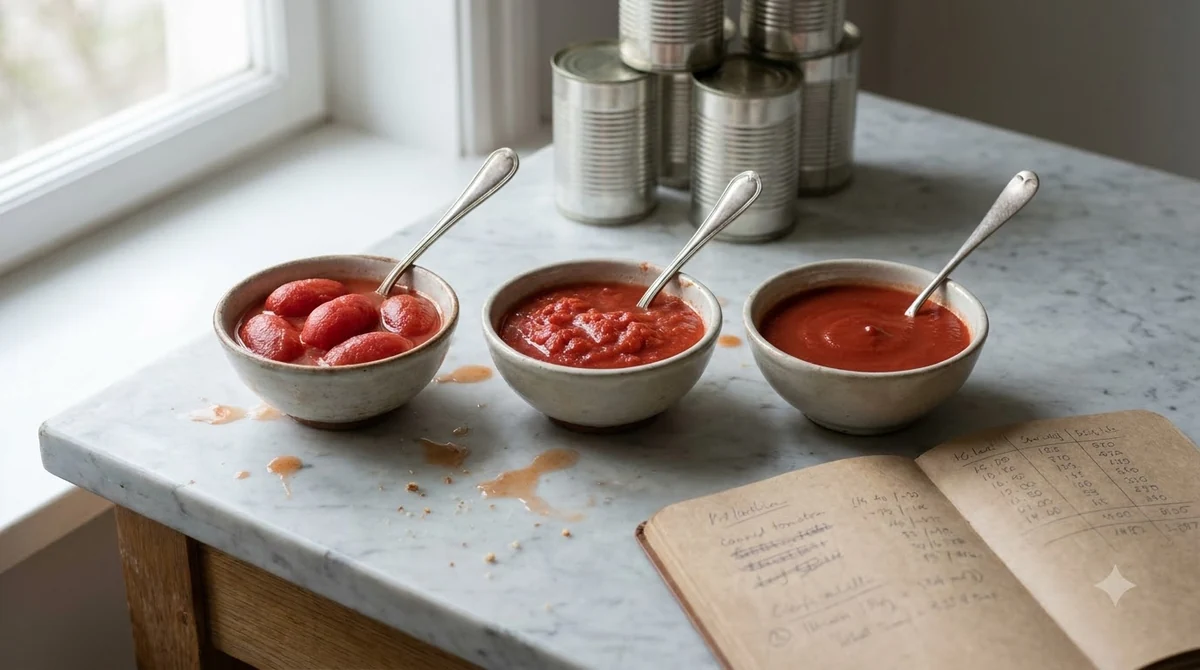
The test cooked each can into a simple tomato sauce with the same weighed salt, garlic and simmer time, so the tomatoes were the only variable. The imports were underseasoned when tasted plain, and testers noted metallic notes that salt can help mask.
The American cans in the same tasting often contained calcium chloride, a firming agent that keeps tomatoes intact during cooking, and citric acid, which brightens flavor and adjusts acidity. The imported cans contained neither. Several American-style cans were saltier than the imports, and the top sauce pick was Cento San Marzano Certified Peeled, with no calcium chloride and 40 mg of sodium per half-cup serving, according to the America’s Test Kitchen whole canned tomato tasting.
Most canned tomatoes end up in a cooked dish, so the cooked result is the more useful test of the best canned tomatoes. If you want to compare the best canned tomatoes you can buy locally, make the same simple sauce with two or three cans and taste them side by side.
Treat the test as a guide to what to expect, not a permanent ranking. Formulas and shelf prices change, so compare the current label with the one the tasting describes before you decide which of the best canned tomatoes belongs in your pantry.
Common Mistakes When Buying Canned Tomatoes
The most common mistake when buying the best canned tomatoes is buying by the front label and skipping the ingredient list, the sodium and the form. Each of these errors is easy to avoid once you know what to check.
- Wrong form: a diced can in a recipe that needs a smooth sauce leaves chunks you may not want.
- Double salting: a seasoned can plus a full pinch of salt can make a sauce too salty, so taste before seasoning.
- Choosing by logo alone: the best canned tomatoes for a recipe depend on form, salt and origin, not on the brand name.
- Assuming the name means the same product: the San Marzano label and the San Marzano-style name are not the same thing.
- Paying for the name alone: in the same tasting, Red Gold Whole Peeled, an American can, was named the Best Buy pick.
How to Store and Use Opened Canned Tomatoes
Once opened, move leftover tomatoes out of the metal can and into a covered glass or plastic container, then refrigerate them. Check the label for the storage guidance and use-by advice printed on your brand.
Unopened cans keep well in a cool, dry pantry. Smooth tomato passata and concentrated paste, which we compare in tomato paste vs tomato puree, are separate products from canned whole tomatoes. Discard any can that is bulging or leaking, because those are signs the seal may have failed.
Frequently Asked Questions
Are whole or crushed canned tomatoes better for sauce?
Whole peeled tomatoes give you more control, because you can crush them to your preferred texture. Crushed tomatoes save a step and suit a quick, smooth base for pizza or pasta sauce.
Are San Marzano tomatoes worth the extra cost?
They can be, especially for simple sauces where tomato flavor is the main ingredient. In America’s Test Kitchen’s sauce test, the imported San Marzano cans performed well once cooked, and the top pick was a San Marzano can. For chili or soup, a less expensive diced or fire roasted can may suit the dish just as well, so the best canned tomatoes for your budget depend on what you cook most often.
What are the best canned tomatoes for chili?
Diced or fire roasted tomatoes suit chili because the pieces stay visible and the roasted notes add depth. In one roundup, Ro-Tel Original Diced & Green Chilies was recommended for adding heat to chili, and Muir Glen Fire Roasted Organic Diced for chili and soup.
Is calcium chloride in canned tomatoes a problem?
The America’s Test Kitchen tasting describes calcium chloride as a firming agent that keeps tomatoes intact during cooking. If you want a softer, simpler sauce, choose a can whose ingredient list leaves it out.
Does pizza sauce need San Marzano tomatoes?
No. Pizza sauce works well with any good whole peeled or crushed tomato, so the best canned tomatoes for pizza are the ones with a clean ingredient list and a texture you like. Our homemade pizza sauce recipe shows how simple that base can be. Tasting the can plain and again after a short simmer tells you more about a brand than its name does.
Start with the recipe, then pick the form, then read the ingredient list and the sodium. One whole peeled can with few additives covers most sauces, and one diced can handles soups and chili, so keep one of each in the pantry. With those two cans on hand, you can make the best canned tomatoes work for most weeknight cooking. For more pantry staples, browse our gear and pantry guides.
 9 min readGear & PantryBest Whole Wheat Pasta: Types, Texture and How to ChooseUpdated Nov 12, 2026
 10 min readGear & PantryBest Canned Anchovies: How to Choose the Right Tin for Your KitchenUpdated Nov 16, 2026
 8 min readGear & PantryThe Best Crushed Red Pepper for Pizza and PastaUpdated Nov 13, 2026
 8 min readGear & PantryBest Sun Dried Tomatoes: Picks, Storage and How to ChooseUpdated Nov 12, 2026
 9 min readGear & PantryThe Best Marinated Artichoke Hearts: Jarred, Canned, and HomemadeUpdated Nov 13, 2026
 9 min readGear & PantryBest San Marzano Tomatoes for 2026: Honest PicksUpdated Nov 17, 2026