
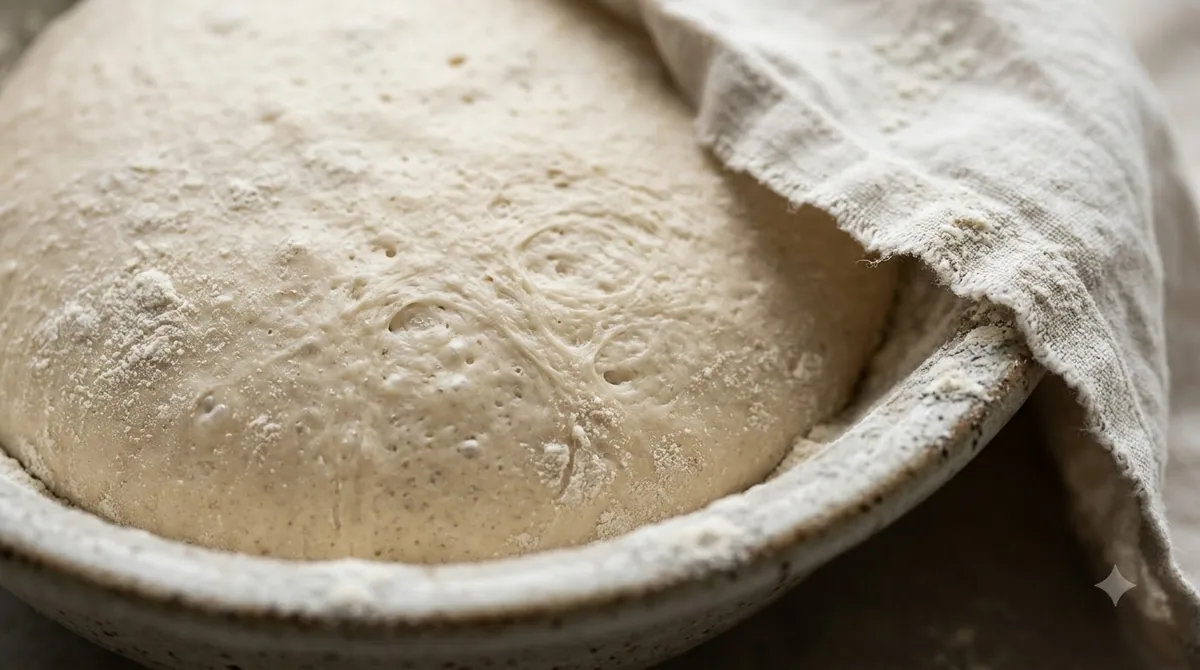

The Caputo pizza dough recipe starts with 250 grams of Caputo 00 flour and makes two 10 to 12 inch pizzas. It needs only flour, water, yeast, salt and a little sugar, plus a short mix, a first rise and a rest in the refrigerator. The timing is the part most home cooks plan around.
Caputo 00 flour is an Italian flour, and this Caputo pizza dough recipe works in a standard home oven with a baking stone or steel. The steps below follow one published recipe, with its amounts and timings kept as written. Where the source leaves something out, this article says so.
What Caputo 00 Flour Brings to Pizza Dough
Caputo 00 Pizzeria flour is listed at 12.50 percent protein and a W value of 260 to 270 on a retailer spec sheet. The W value is a flour strength rating, and a flour in this range is built for a dough that rises slowly and stretches without tearing easily.
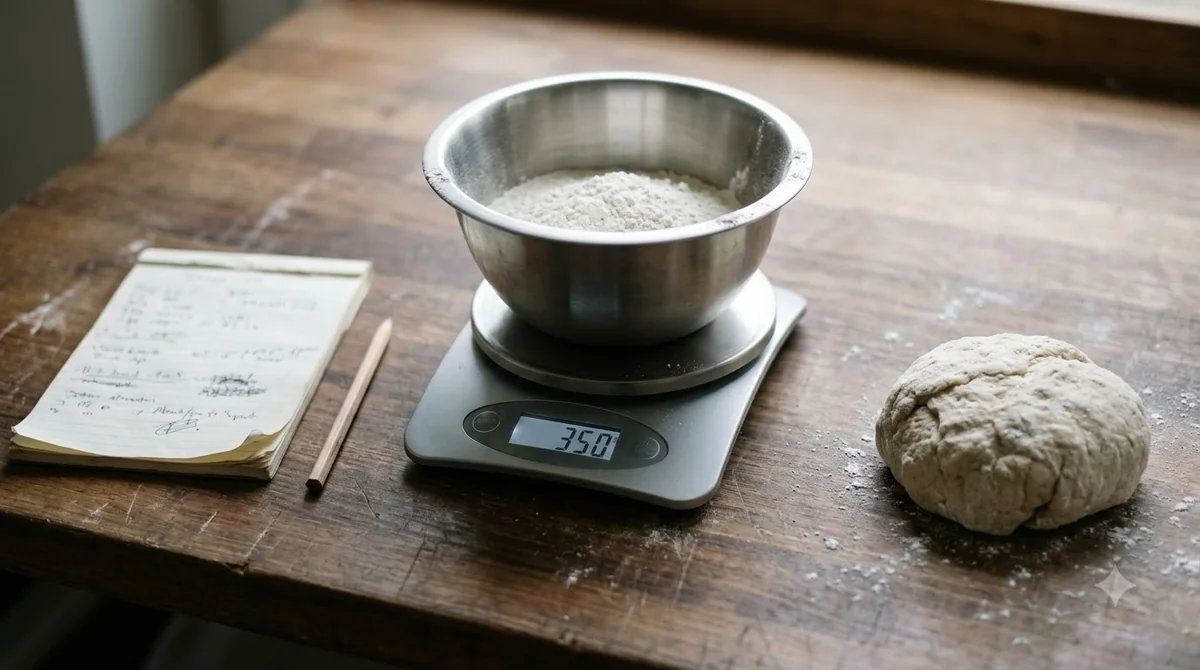
The same listing gives a P/L value of 0.50 to 0.60, a second measure of how a dough balances stretch and firmness. These figures come from a retailer’s Caputo Pizzeria spec sheet, so compare them with the current manufacturer sheet before you buy a bag. For a plain-language explanation of the flour itself, read what 00 flour is.
Caputo Pizza Dough Recipe Ingredients
This Caputo pizza dough recipe makes two 10 to 12 inch pizzas from 250 grams of flour, 1/4 cup of warm water, 1/2 cup of cool water, 1/4 teaspoon of active dry yeast, 1 teaspoon of fine sea salt and 1/2 teaspoon of granulated sugar. The amounts below come from the source, which lists cups and teaspoons rather than weights for everything except the flour.
| Ingredient | Amount | Role in the dough |
|---|---|---|
| Caputo 00 flour | 250 g (about 2 cups) | The structure of the dough |
| Warm water | 1/4 cup | Dissolves the yeast and sugar |
| Cool water | 1/2 cup | Added to the mixer bowl with the yeast mixture |
| Active dry yeast | 1/4 teaspoon | Makes the dough rise |
| Fine sea salt | 1 teaspoon | Adds flavor and controls the rise |
| Granulated sugar | 1/2 teaspoon | Helps browning, according to the source |
| Extra virgin olive oil | Enough to oil the bowl | Keeps the dough from sticking while it rises; no quantity is given |
Cup measures are the weak point of the Caputo pizza dough recipe. The source does not give a gram weight for the water, and a reader comment on the same page reports that a dough made by cups was too sticky. Cup sizes vary from one kitchen to another, so a kitchen scale is the more reliable tool for the water.
The recipe source is Ditalia’s Caputo 00 pizza dough recipe, and this article keeps its amounts as written. If you convert cups to milliliters, 3/4 cup of total water is about 177 milliliters using a standard 237 milliliter cup, which is roughly 70 percent of the flour weight. That figure is our arithmetic, not a number from the source.
Caputo Pizza Dough Recipe Method
Dissolve the yeast and sugar in the warm water, combine that mixture with the cool water, then knead the Caputo pizza dough for 8 to 10 minutes until it is smooth. The mixing happens in two stages, a batter first and then a dough.
- Dissolve the yeast and sugar in the warm water. Pour this mixture into the cool water in the mixer bowl.
- Fit the paddle attachment and mix on slow. Add about one third of the flour, then increase the speed and mix for a minute or two until a smooth batter forms.
- Add the rest of the flour and the salt. When the dough starts to come together, switch to the dough hook.
- Knead on slow to medium speed for 8 to 10 minutes until the dough is smooth and elastic.
- Oil a bowl with extra virgin olive oil, place the dough inside and turn it once so the surface is lightly coated.
The batter stage matters in this Caputo pizza dough recipe because it wets the flour before the dough hook takes over. If the flour is added all at once, some of it can stay dry and the dough may need more mixing time to come together.
Rising and Cold Rest for Caputo Dough
Let the Caputo pizza dough rise covered for about 1.5 hours, divide it into two balls, then refrigerate both for 24 hours on a floured sheet pan. The first rise should make the dough grow slightly but not double in size.
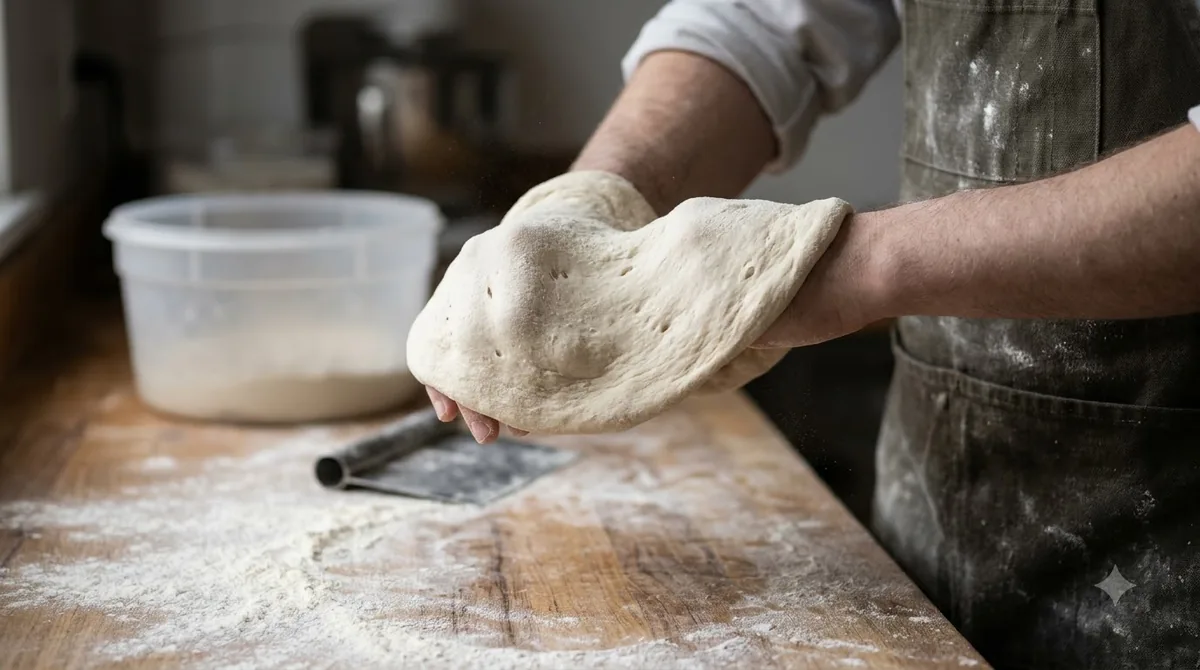
After the first rise, divide the Caputo pizza dough into two balls and place them on a sheet pan dusted with flour. Cover the pan tightly so the surface does not dry out, then refrigerate for 24 hours. Take the dough out about 1.5 hours before you shape it so it can soften and become easier to stretch.
The 24-hour rest is the main reason to plan the Caputo pizza dough a day ahead. It gives the yeast time to work slowly and gives you a dough that is easier to handle when it is cold, but the source does not describe the flavor change in detail, so treat that as a general cooking principle rather than a measured result.
If you need pizza sooner, the source offers a room-temperature second rise of about 4 hours instead of the refrigerator rest. Do not leave the Caputo pizza dough long enough to more than double. A same-day dough has less time to develop, so the crust may taste less rich than a rested one. Our guide on how long to proof pizza dough compares other timings.
Preheating and Baking Your Caputo Dough
Preheat a baking stone or steel for one hour at the oven’s maximum setting, which the source puts at about 500 degrees Fahrenheit in a conventional oven. A hot stone gives the base of the pizza most of its heat, so do not shorten this step.
For other oven heat ranges, see pizza oven temperature. The source lists a cook time of 20 to 25 minutes for the Caputo pizza dough recipe, but it does not give a bake temperature in the method. Home ovens vary, so check the crust color and cheese melt, not only the clock. Shape each ball on a floured surface, add your toppings lightly and slide the pizza onto the hot surface.
Common Problems With Caputo Pizza Dough
Sticky dough from this Caputo pizza dough recipe most often points to a water measure that is off, because cup sizes vary between kitchens. Each problem below comes with a fix.
- Dough too sticky: weigh the water if you can, and add flour a spoonful at a time during kneading rather than all at once. More fixes are in this guide to pizza dough that is too sticky.
- Dough that did not rise: check that the yeast is fresh and that the water was warm, not hot, when it dissolved the yeast and sugar.
- Dough that doubled during the first rise: the source says it should only grow slightly, so shorten the rise next time and keep it covered in a cooler spot.
- Dough that tears when stretched: let it rest out of the refrigerator for the full 1.5 hours before shaping.
Who This Caputo Pizza Dough Recipe Suits
This Caputo pizza dough recipe suits home cooks who can plan a day ahead and want a dough that rests in the refrigerator. It is also a good match for anyone who has a scale and a stand mixer, since both make the method more consistent. If you do not own a stand mixer, a bread machine pizza dough recipe is another hands-off way to mix and rest the dough.
- Good fit: cooks who can start the Caputo pizza dough the day before and want a planned bake.
- Good fit: cooks with a baking stone or steel and an oven that reaches its maximum setting.
- Poor fit: anyone who needs pizza within a few hours and cannot use the 4-hour room-temperature option.
- Poor fit: anyone who wants a recipe with weights for every ingredient, since the source gives cups for the water and yeast.
Frequently Asked Questions
Can I make this Caputo pizza dough the same day?
Yes. The source offers a room-temperature second rise of about 4 hours in place of the 24-hour refrigerator rest. Keep the Caputo pizza dough covered and check it so it does not more than double, because a same-day dough has less time to develop flavor.
How many pizzas does the Caputo pizza dough recipe make?
The source states that the Caputo pizza dough recipe makes two 10 to 12 inch pizzas from 250 grams of Caputo 00 flour. Divide the dough into two balls before the cold rest so each pizza gets its own portion.
Can I use a different flour?
This Caputo pizza dough recipe is written for Caputo 00 flour, and the source gives no guidance on substitutes. Another flour may absorb water differently, so expect the amounts and the handling to change and adjust by feel. For two flours side by side, see Polselli Classica vs Caputo Pizzeria.
Do I need a pizza stone?
The source says to preheat a baking stone or steel for one hour before baking. A stone or steel holds heat well, which helps the base cook through, so the Caputo pizza dough recipe assumes one of these surfaces is in the oven.
Why does the Caputo pizza dough recipe add sugar?
The source says the sugar helps browning. It is dissolved with the yeast in the warm water, and the recipe uses only 1/2 teaspoon, so it is a small addition rather than a sweetener.
If you plan one day ahead, this Caputo pizza dough recipe is worth the wait. Weigh the water if you can, watch the first rise, and give the oven a full hour to heat. Make one ball first, learn how it stretches in your kitchen, then bake the second with the same steps.
 8 min readLearnCapricciosa Pizza Recipe: Ingredients, Dough and Baking StepsUpdated Nov 10, 2026
 9 min readLearnThin Crust Pizza Dough Recipe: 6 Easy StepsUpdated Nov 6, 2026
 9 min readLearnSourdough Pizza Dough Recipe: Step-by-Step for Home OvensUpdated Nov 6, 2026
 8 min readLearnSicilian Pizza Recipe: Dough, Toppings and Bake StepsUpdated Nov 10, 2026
 8 min readLearnCheese Pizza Recipe: 2 Doughs and Easy Bake StepsUpdated Nov 10, 2026
 8 min readLearnSupreme Pizza Recipe: Toppings, Dough and Bake StepsUpdated Nov 11, 2026