
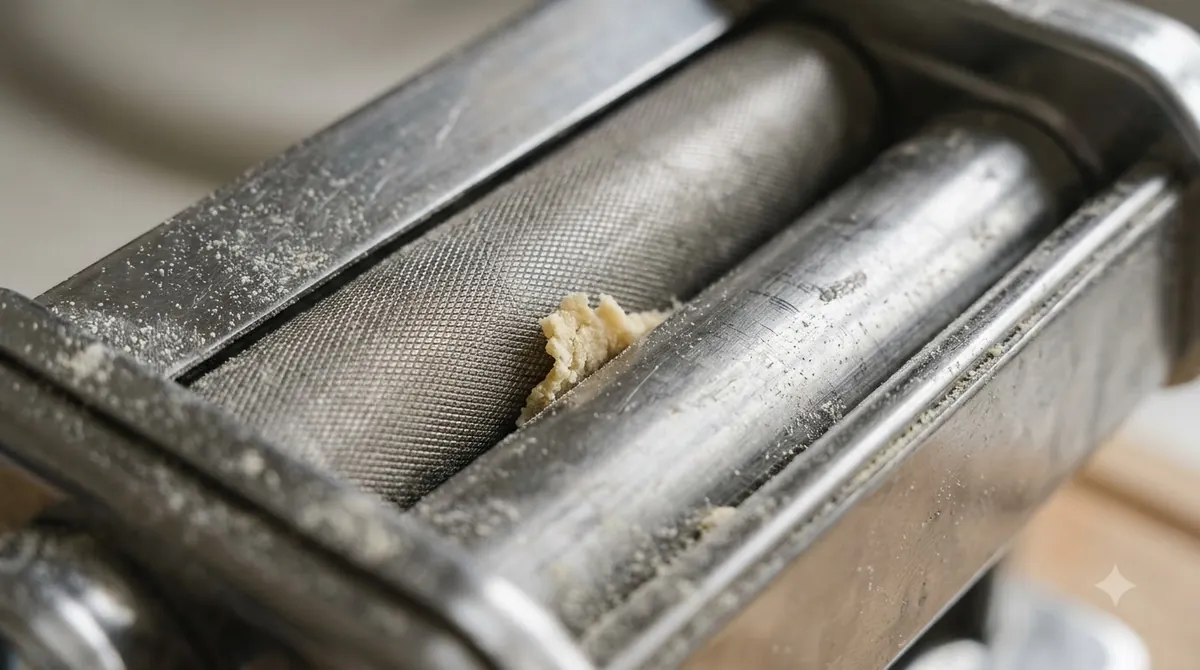

Homemade capellini is fresh egg pasta rolled thin and cut into the finest strands your machine makes. You need flour, salt, eggs, a rest, and a pasta roller. The method follows the same steps as fresh fettuccine; what changes is how thin you roll and how closely you watch the cooking, since the strands finish in moments.
Making capellini at home gives you control over texture. Fresh egg dough cooks softer than most dried pasta and holds light sauces well, so it suits a simple garlic, oil, or herb butter dinner. The steps below use a standard hand-crank machine and stick to measured amounts.
What Makes Capellini Different From Other Pasta?
Capellini is a very thin long strand, so the dough has to be rolled thinner than fettuccine dough and cut with the finest blade your machine has.
The name comes from the Italian word for fine hair, and that fineness is why capellini needs careful handling. Thin strands dry out quickly if they sit on the counter and overcook in seconds if you forget the pot.
Ingredients and Dough Quantities
A fresh capellini dough built on about 360 grams of flour and four large eggs gives a firm dough that the machine can handle without tearing.
- 3 cups (360 g) unbleached all-purpose flour
- 1/2 teaspoon table salt
- 4 large eggs, at room temperature
These amounts come from King Arthur Baking’s fresh pasta dough. Use a scale if you can, because egg size and flour brand change how the dough feels, and adjust by feel rather than by adding large amounts of water.
How to Make Capellini Dough Step by Step
Mix, knead until firm, rest, then roll through the machine one setting at a time until the sheet reaches setting 7.
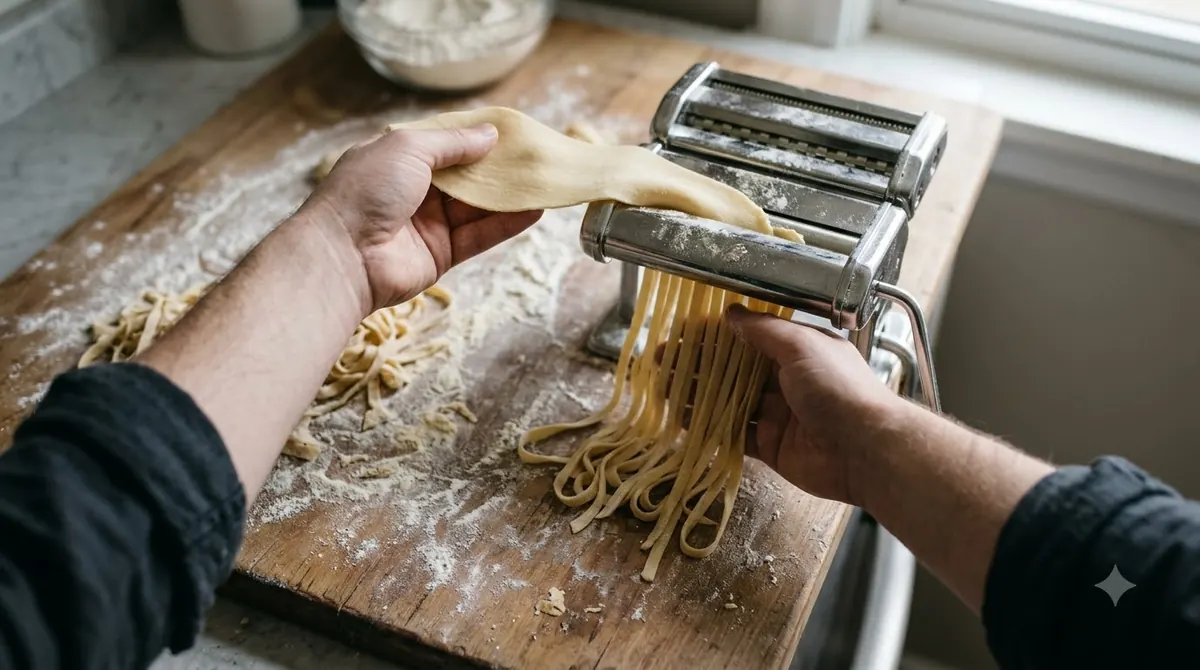
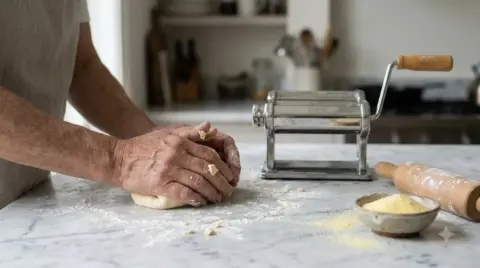
Mix the flour and salt, add the eggs, and work the dough together by hand or in a food processor. Knead for 8 to 10 minutes until you have a firm but not dry dough. Then follow these steps:
- Wrap the dough in plastic wrap and rest it for 30 minutes.
- Divide the dough into four pieces, keep three covered, and lightly dust the working piece with flour.
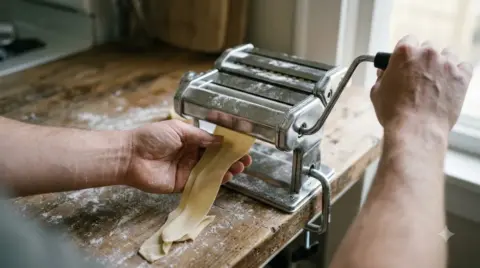
- Roll it through the machine on the largest setting, fold it in thirds like a letter, and roll it again on the largest setting.
- Step the machine down one setting at a time, passing the dough through each time, until you reach setting 7 on a standard roller, which is about 0.8 mm thick.
Keep the unused pieces covered so they do not dry out while you work the first one. A sheet that tears or sticks usually means the dough is too dry or has not rested long enough.
Cutting Capellini to the Right Width
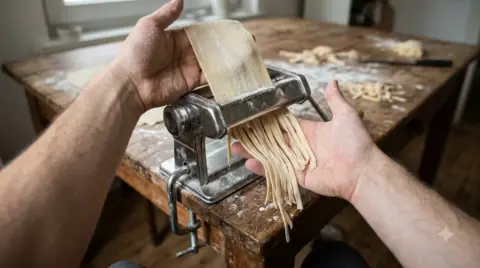
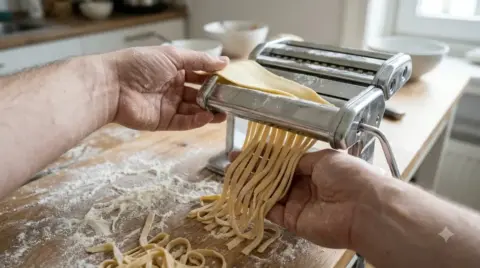
Dust the sheets well and run them through the thinnest cutter on your machine, because a wider blade produces fettuccine or tagliatelle instead.
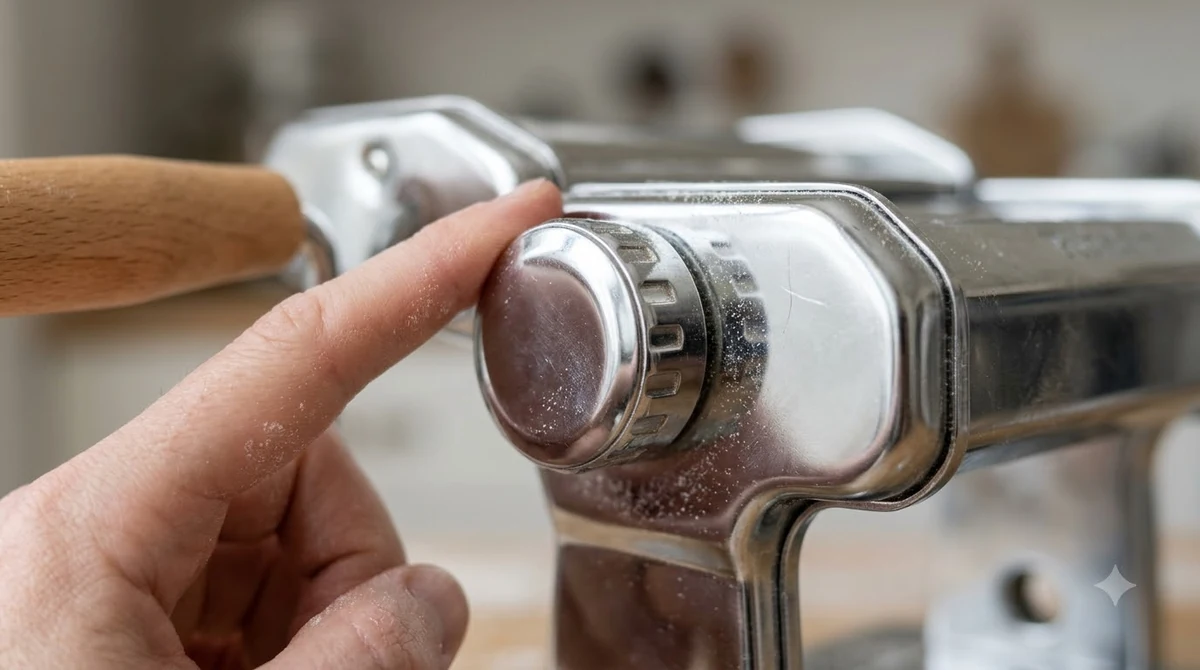
King Arthur’s method says to dust the sheets generously with flour, cut them to length, and run them through the cutting blades. The page does not give a capellini width or a setting beyond setting 7, so check your machine’s manual for the narrowest cutter and the settings it uses.
| Stage | What to aim for | Note |
|---|---|---|
| Kneading | Firm but not dry dough | 8 to 10 minutes |
| Rest | Dough wrapped in plastic | 30 minutes |
| Rolling | Sheet about 0.8 mm | Setting 7 on a standard roller |
| Cutting | Thinnest cutter on your machine | Check the manual for the width |
Dust the cut strands lightly and cook them soon, or lay them on a floured tray in a single layer so they do not clump together.
Work with one batch at a time and keep the rest of the dough wrapped. Thin sheets dry out faster than the dough does, so a sheet left on the counter for several minutes can crack when it reaches the cutter. If you have made fettuccine by hand before, most of those skills carry over; the main adjustment is patience, since each extra pass through the roller brings the sheet closer to tearing.
How to Cook Homemade Capellini
Cook in plenty of well-salted boiling water and check early, because thin fresh strands go from firm to soft quickly.
Salt the water generously so the strands are seasoned as they cook. Keep a small ladle of the cooking water aside, because a splash helps a light sauce coat the strands when you toss them together in the pan.
Use a large pot, add the strands all at once, and stir once or twice so they separate. Fresh pasta cooks faster than dried, so start tasting a strand well before the time your recipe or package suggests, and drain as soon as it is tender with a little bite left.
Capellini suits light sauces that cling to thin strands, such as garlic and olive oil, a simple butter and herb sauce, or a quick tomato sauce. Heavy, chunky sauces tend to weigh the strands down and hide their delicate texture.
Frequently Asked Questions
Can I make capellini without a pasta machine?
Yes. Roll the dough as thin as you can with a rolling pin on a floured surface, then cut it into narrow strands with a sharp knife. The strands will be less even than machine-cut ones, so taste them early and cook in small batches.
How long should the dough rest?
The King Arthur method rests the wrapped dough for 30 minutes before rolling. The rest relaxes the gluten, which makes the dough easier to roll thin without tearing.
Why is my dough crumbly?
The dough should be firm but not dry after 8 to 10 minutes of kneading. If it cracks or crumbles, knead a little longer and add water only a few drops at a time.
Can I cook the strands right after cutting?
Yes, and that is the best way to eat them. Cook the strands soon after cutting, while they are still soft and separate, for the best texture.
Homemade capellini rewards patience: rest the dough, roll it in small steps, and use the thinnest cutter you have. Cook it briefly in salted water and serve it with a light sauce that clings to the strands. The second batch always goes faster than the first.
 5 min readLearnHomemade Pappardelle: Dough, Rolling and Cutting by HandUpdated Nov 13, 2026
 6 min readLearnHomemade Linguine: Dough, Rolling and CuttingUpdated Nov 13, 2026
 8 min readLearnRicotta Ravioli Recipe: Egg Dough, Filling and Cooking StepsUpdated Nov 11, 2026
 6 min readLearnHow to Make Tagliatelle: Egg Ratio, Rolling and CuttingUpdated Nov 13, 2026
 5 min readLearnHomemade Penne: Dough, Shaping and Cooking TipsUpdated Nov 13, 2026
 5 min readLearnHomemade Macaroni: Dough, Shaping, Drying and Cooking TipsUpdated Nov 13, 2026