
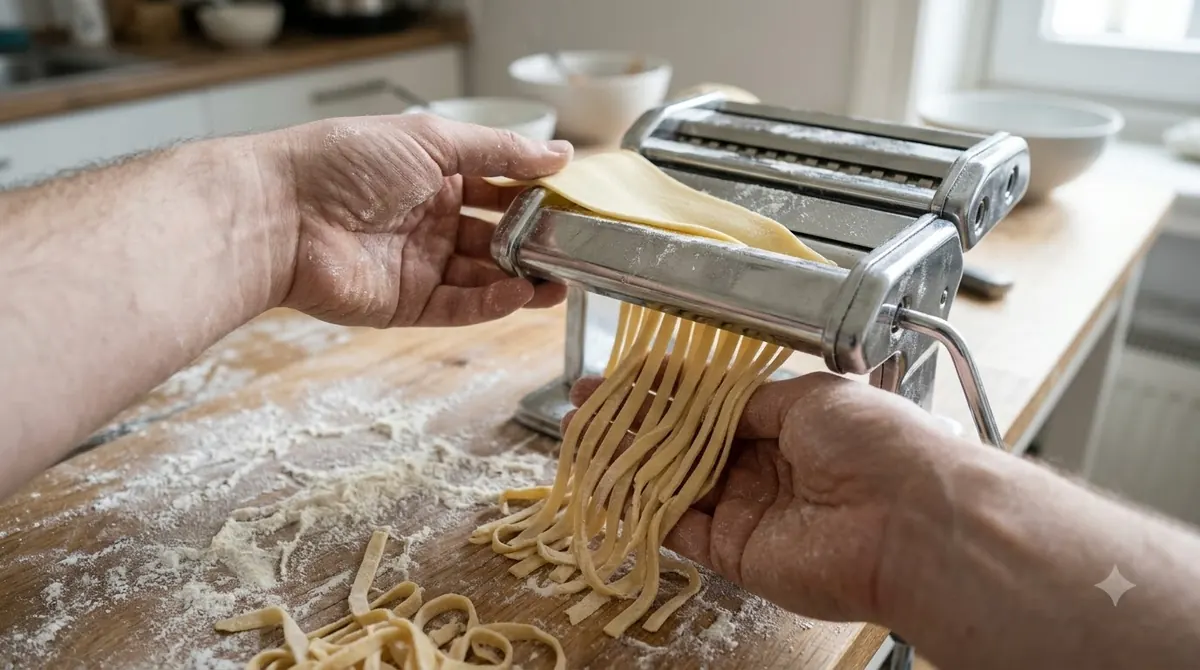

Learning how to make tagliatelle comes down to the egg ratio, a rested dough, and a steady hand when you roll and cut. The classic guideline is about one whole egg for every 100 grams of 00 flour. Once the dough is smooth and elastic, the sheet is rolled thin, folded, and cut into long ribbons that nest easily on the plate.
This tagliatelle recipe from scratch focuses on the decisions that shape the final ribbon: how much egg to use, when the dough is ready, how to roll and cut by hand, and what to do when the dough or the cut ribbons go wrong.
How to Make Tagliatelle Dough: What Is the Egg Ratio?
The standard ratio is one whole egg per 100 grams of tipo 00 flour, which means 200 grams of egg for 400 grams of flour. Egg sizes vary, so weigh the egg after cracking it rather than counting on a size label.
The Tagliatelle.org egg ratio guide notes that a standard Italian medium egg weighs about 50 to 55 grams, and that large eggs from other markets can push the dough too wet. Weighing is the safest way to keep the ratio steady from batch to batch.
Some cooks add extra yolks for a richer, more golden ribbon. America’s Test Kitchen’s egg pasta dough, for example, uses two whole eggs plus six yolks with about two cups of all-purpose flour, plus a little olive oil. The same source says to raise the yolks to seven when using a high-protein flour such as King Arthur.
How Do You Knead and Rest Tagliatelle Dough?
Knead the dough until it is smooth and firm, then wrap it and rest it at room temperature so the gluten can relax before rolling. The shape’s origin and common sauces are covered in our tagliatelle pasta overview.
Work the eggs into the flour on a clean board, pushing and folding until no dry bits remain. The dough should feel firm and springy. If it is too dry to come together, add water only a teaspoon at a time. If it is too sticky, sprinkle in flour a little at a time. Adjust in small steps, since a tablespoon of extra liquid changes the dough quickly.
Wrap the dough in plastic and let it rest for at least 30 minutes. America’s Test Kitchen allows up to four hours, which gives the dough time to become easier to roll without shrinking back. Dough that has rested well yields slowly under the rolling pin and springs back only a little.
How Do You Roll Tagliatelle by Hand?
Divide the rested dough into several small pieces, then roll each one into a thin sheet, working from the centre outward and turning the sheet as you go. Width is the main distinction, as explained in tagliolini and tagliatelle differences.
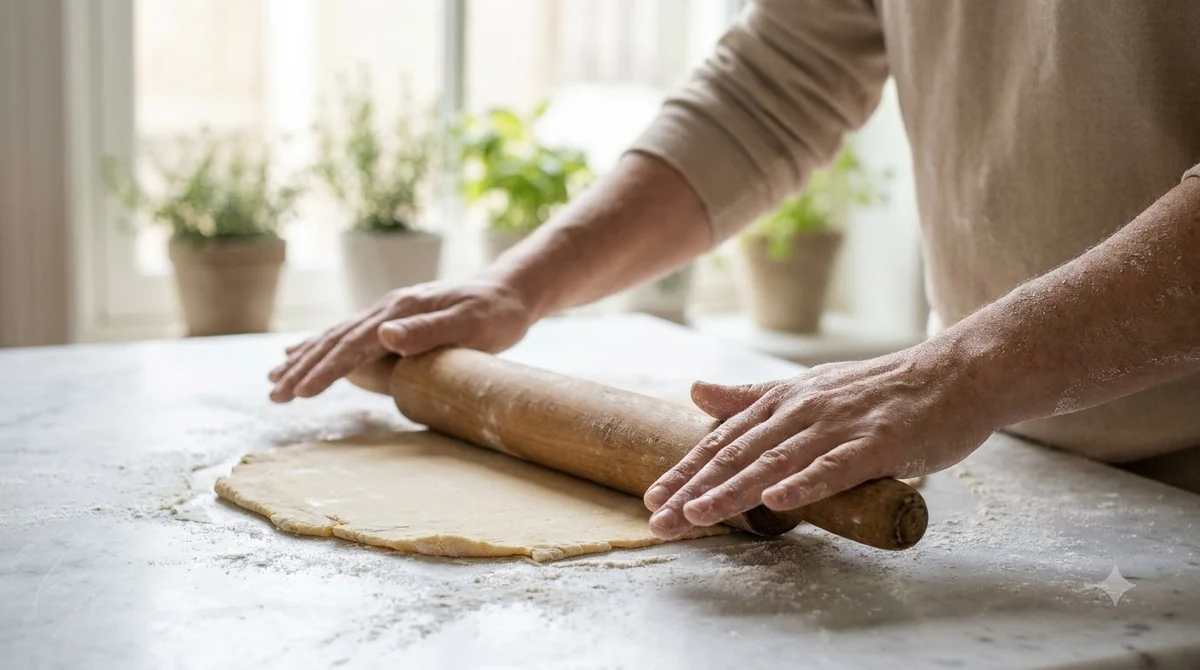
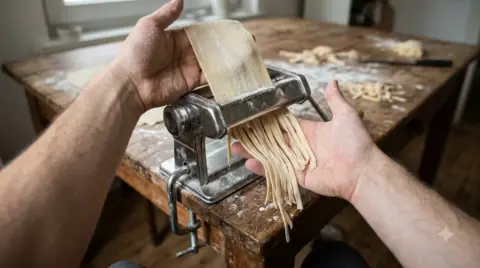
Dividing the dough into at least six portions keeps each piece manageable. Keep the rest of the dough covered while you work on one piece. Use a long rolling pin or a pasta machine, depending on what you have, and roll with even pressure. The sheet should be thin enough to see the shape of your hand through it, but it should not tear.
The Tagliatelle.org guide describes a good sheet as one that “does not tear at mattarello pressure.” If the sheet resists and springs back, let it rest for a few minutes under a cloth before rolling again. A sheet that tears at the edges usually means the dough is too dry or too cold.
How Do You Cut and Nest Tagliatelle Ribbons?
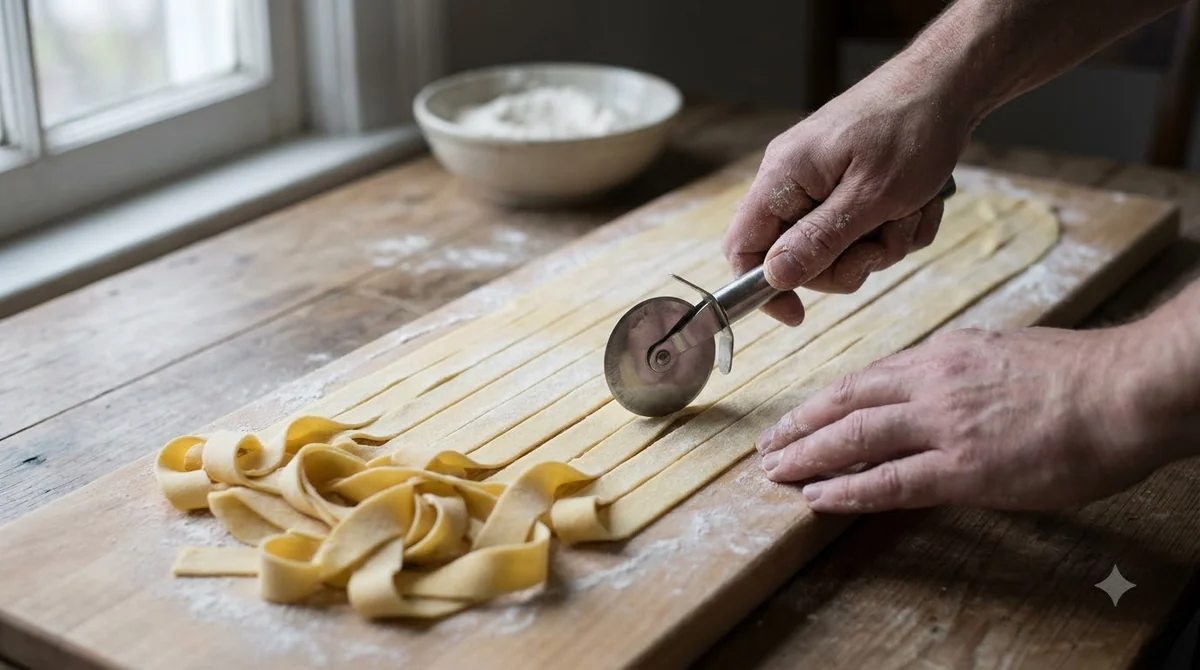
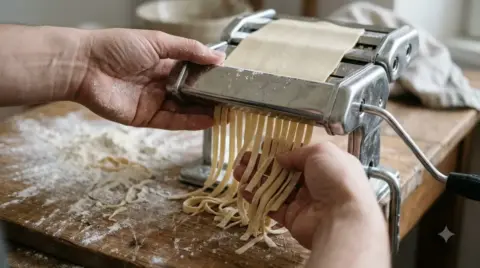
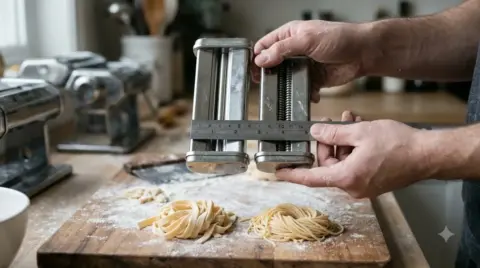
Dust the sheet lightly with flour, loosely fold it into a flat roll, then slice across the roll with a sharp knife to form even ribbons. A frequent question is answered in how tagliatelle differs from fettuccine.
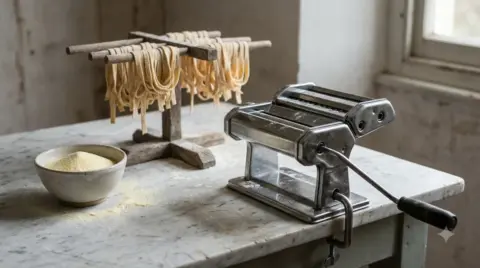
Keep the knife straight and cut with a single, clean stroke so the edges stay smooth. Shake out each ribbon as you go and lay it on a tray dusted with semolina or flour. To nest the pasta for cooking, gather a small bundle and loosen it gently with your fingers before dropping it into the pot. A nest that stays tangled will cook unevenly.
The width is a matter of taste and of the sauce you plan to serve. The sources I read do not give a fixed cutting width, so match the ribbon to the sauce and use your pasta machine’s cutter setting as a guide if you have one.
How Should You Cook and Store Homemade Tagliatelle?
Cook fresh tagliatelle in plenty of salted boiling water for a few minutes, until it is tender with a slight bite. Fresh ribbons cook much faster than dried pasta, so start tasting early. For wider cuts from the same dough, see making wide pappardelle ribbons.
Check the package or your recipe for the exact time, since the thickness of the sheet changes the result. If you are not cooking right away, dust the ribbons with semolina, leave them on a tray to dry for a short time, or freeze them in a single layer before bagging. Cook frozen ribbons directly from the freezer.
Common Mistakes When Making Tagliatelle at Home
Most problems come from dough that was not rested, a sheet rolled unevenly, or ribbons that stuck together before cooking.
- Guessing the egg amount instead of weighing it.
- Skipping the rest, which makes the sheet shrink back.
- Rolling one thick side and one thin side, which cooks unevenly.
- Leaving the cut ribbons in a pile, where they fuse together.
Frequently Asked Questions
What flour is best for homemade tagliatelle?
Italian 00 flour is the usual choice and gives a silky, tender ribbon. All-purpose flour also works, as America’s Test Kitchen’s recipe shows, though its protein content may call for a slight change in egg or yolk amount.
Do I need a pasta machine?
No. A long rolling pin and a sharp knife are enough for tagliatelle. A machine saves effort and gives a more even sheet, especially for beginners.
How long should I rest the dough?
At least 30 minutes, wrapped at room temperature. America’s Test Kitchen allows up to four hours, so a longer rest is fine if your schedule needs it.
Why does my dough feel too dry or too wet?
Flour brands and egg sizes vary. Add a small amount of water if the dough is crumbly, or a little flour if it sticks to your hands. Make one change at a time and knead again before deciding.
Once you know the ratio and the feel of a good sheet, tagliatelle becomes a reliable weekend project. Weigh the egg, rest the dough, roll with patience, and cut clean ribbons. A simple butter, parmesan, or meat sauce suits the ribbon well.
 6 min readLearnHomemade Fettuccine by Hand: Rolling and Cutting Without a MachineUpdated Nov 13, 2026
 5 min readLearnHomemade Pappardelle: Dough, Rolling and Cutting by HandUpdated Nov 13, 2026
 6 min readLearnHomemade Linguine: Dough, Rolling and CuttingUpdated Nov 13, 2026
 6 min readLearnHomemade Capellini: Egg Dough, Cutting and Cooking GuideUpdated Nov 13, 2026
 5 min readLearnHomemade Tagliatelle: Simple Egg Pasta Dough and MethodUpdated Nov 13, 2026
 9 min readLearnTagliolini vs Tagliatelle: Width, Eggs and Sauces ComparedUpdated Nov 6, 2026