
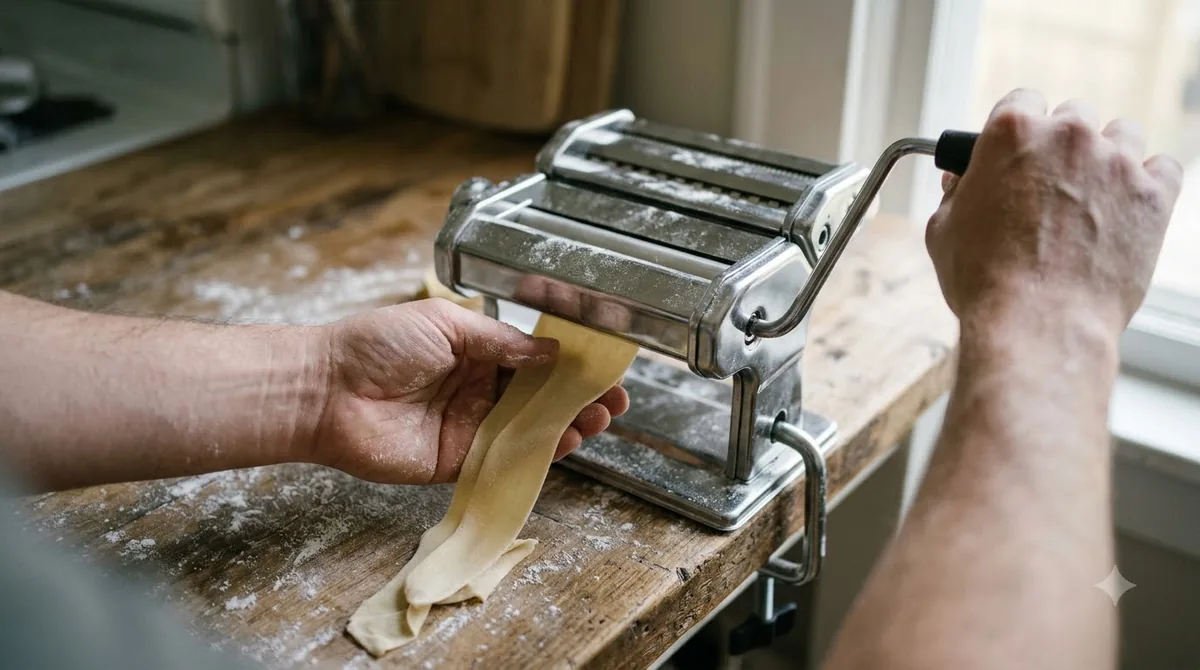

Homemade penne is fresh egg or flour dough rolled thin, cut into squares, then wrapped around a dowel to form tubes with angled ends. You can make it with a pasta machine and a wooden dowel, and it cooks in 6 to 10 minutes in heavily salted water. The shape is the same as the dried penne you buy, so it holds sauce in the same way.
Penne is one of the easiest shapes to make by hand. It does not need a special extruder, and the tubes can be formed one at a time with a dowel or gnocchi board. The steps below cover the dough, the rolling, the shaping, and cooking.
What Penne Is and Why the Shape Matters
Penne is a tube-shaped pasta with angled ends, and its name comes from the Italian word for quill or pen. Wikipedia notes that it was credited to a diagonal cutting machine in Genoa in 1865, though southern Italy is also cited for its origin.
The shape is practical. The hollow center traps sauce, and the grooves on penne rigate, the ridged version, give a rough surface for thick sauces to cling to. DeLallo’s pasta guide notes that the ridges help hold sauce, which is why many cooks choose rigate for meat or chunky tomato sauces.
Making the Dough and Rolling It Thin
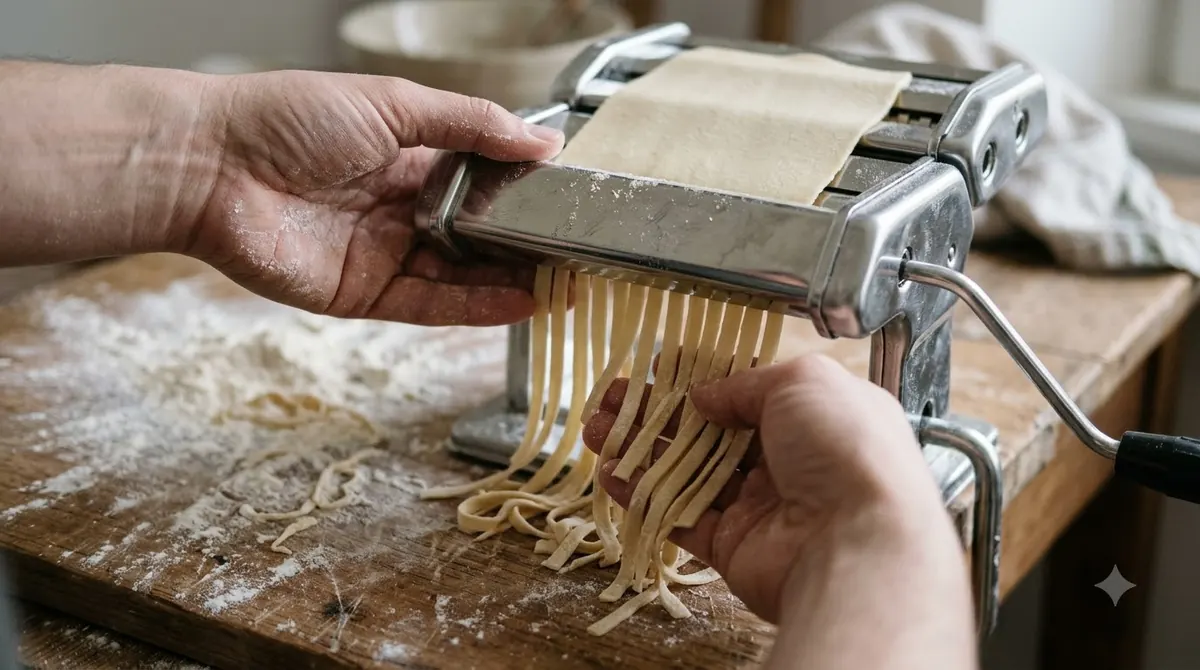
Homemade penne uses a basic egg pasta dough. Mix the flour, eggs and a pinch of salt until a firm dough forms, knead it smooth, and let it rest before rolling. The rest makes the dough easier to feed through the machine without tearing.
Biggerbolder Baking’s penne recipe rolls the dough through a pasta machine on setting 5, twice, to get a sheet thin enough to shape. If you roll by hand, aim for a sheet thin enough to see the surface through, but not so thin that it tears when you cut it.
- Rest the dough, then cut it into sections that feed easily through the machine.
- Roll each section through the machine, starting on a wide setting and narrowing it.
- Lay the sheet flat and cut it into 2-inch (5 cm) squares.
- Place a 1/4-inch (6 mm) dowel diagonally across each square and roll it to form a tube.
- Slide the tube off the dowel, press the seam closed, and cut the ends at an angle.
Drying, Cooking, and Storing Penne
Once shaped, the penne needs to dry before cooking or storing. The recipe’s drying time varies between sources, so judge by feel: the pieces should be firm and no longer tacky. Spread them in a single layer on a floured tray and turn them over during drying.
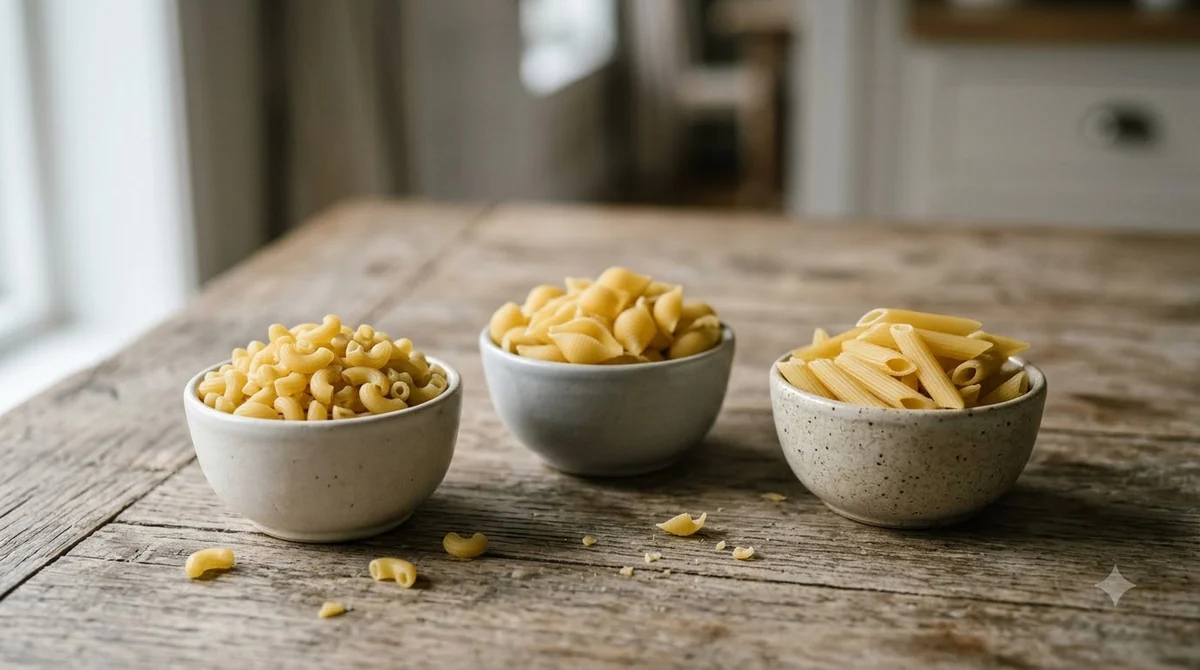
Cook fresh penne in a large pot of salted water for 6 to 10 minutes, testing a piece near the start. DeLallo recommends using about 5 quarts of water for each pound of pasta and salting it to taste, and it advises against adding oil to the water. Drain when the penne is tender but still has a slight bite.
Reserve a little of the cooking water before draining. A spoonful loosens a thick sauce and helps it coat the ridges. Toss the penne in the pan with the sauce over low heat for a minute, so the tubes fill with sauce rather than sitting on top of it. Homemade penne holds sauce well, so a small amount of water is often enough to finish the dish.
| Step | What the sources say |
|---|---|
| Rolling | Pasta machine setting 5, twice |
| Cutting | 2-inch (5 cm) squares, wrapped on a 1/4-inch dowel |
| Cooking | 6 to 10 minutes in salted water |
| Storage | Airtight, room temperature, up to 8 weeks |
Troubleshooting Your Homemade Penne
If your homemade penne tears when you roll it, the dough is probably too dry or has not rested long enough. Add a few drops of water, knead until smooth, and rest it again before feeding it through the machine. Dough that is too wet, on the other hand, sticks to the rollers and to itself, so dust it lightly with flour as you work.
If the tubes come apart in the pot, the seam was not pressed closed. Press each seam firmly after you slide the tube off the dowel, and let the shaped pieces dry on a floured tray. Homemade penne that is cut unevenly will also cook unevenly, so measure the squares before you start and keep them uniform.
Many cooks ask whether a homemade penne can match a store-bought one. With care, it can. The hollow center and ridged surface are the features that matter for sauce, and a well-shaped tube has both. Practice on a small batch first, then make a larger one once the rolling and shaping feel comfortable.
Frequently Asked Questions
Do I need a special tool to make penne at home?
No. A knife or pizza cutter for the squares, and a thin wooden or metal dowel for the tubes, are enough. A pasta machine helps with the rolling but is not essential if you roll by hand.
What is the difference between penne and rigatoni?
Penne has angled ends, while rigatoni is cut straight and is usually wider. DeLallo lists ziti, rigatoni and fusilli among the common substitutes, so a homemade penne can replace them in most recipes.
Can I freeze homemade penne?
The recipe source gives storage advice for dried penne: keep it airtight at room temperature for up to 8 weeks. Freezing is not covered by the sources used here, so check a freezing guide before freezing fresh pasta.
Which sauces go best with penne?
Wikipedia and DeLallo both name heavy meat ragu, chunky tomato, pesto, arrabbiata and vodka sauce. The ridges and hollow center suit thick sauces that cling to the surface.
Homemade penne is a rewarding project because the dough is simple and the shape is easy to master once you have made a few tubes. Rest the dough, roll it thin, cut and wrap carefully, and cook in well-salted water. The result holds sauce like the dried version, with a texture that is hard to match from a box.
 5 min readLearnHomemade Macaroni: Dough, Shaping, Drying and Cooking TipsUpdated Nov 13, 2026
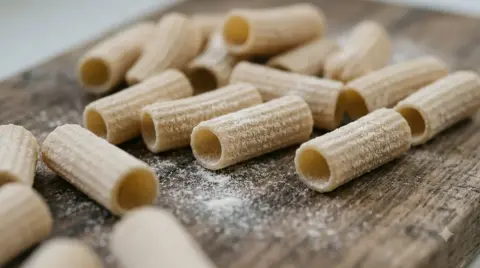 5 min readLearnHomemade Rigatoni: Dough, Shaping and TipsUpdated Nov 13, 2026
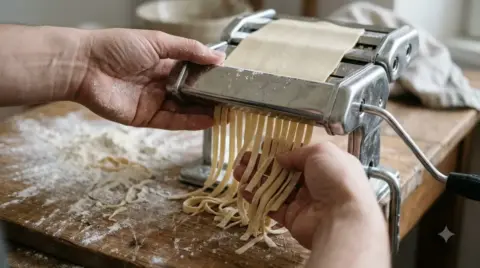 6 min readLearnHomemade Scialatielli: Amalfi-Style Dough and ShapingUpdated Nov 13, 2026
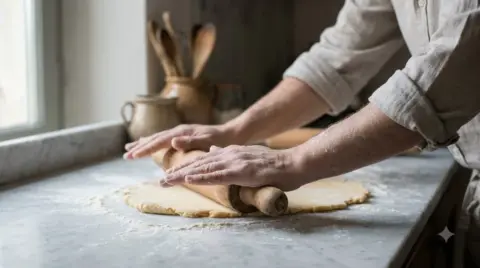 5 min readLearnHomemade Cavatelli: Ricotta Dough and Hand Shaping GuideUpdated Nov 13, 2026
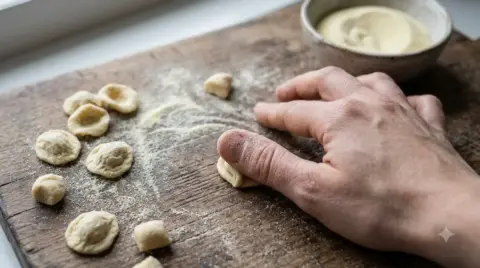 6 min readLearnHomemade Casarecce: Semolina Dough and Rod Shaping GuideUpdated Nov 13, 2026
 5 min readLearnHomemade Fusilli: Dough, Shaping and Press SettingUpdated Nov 13, 2026