
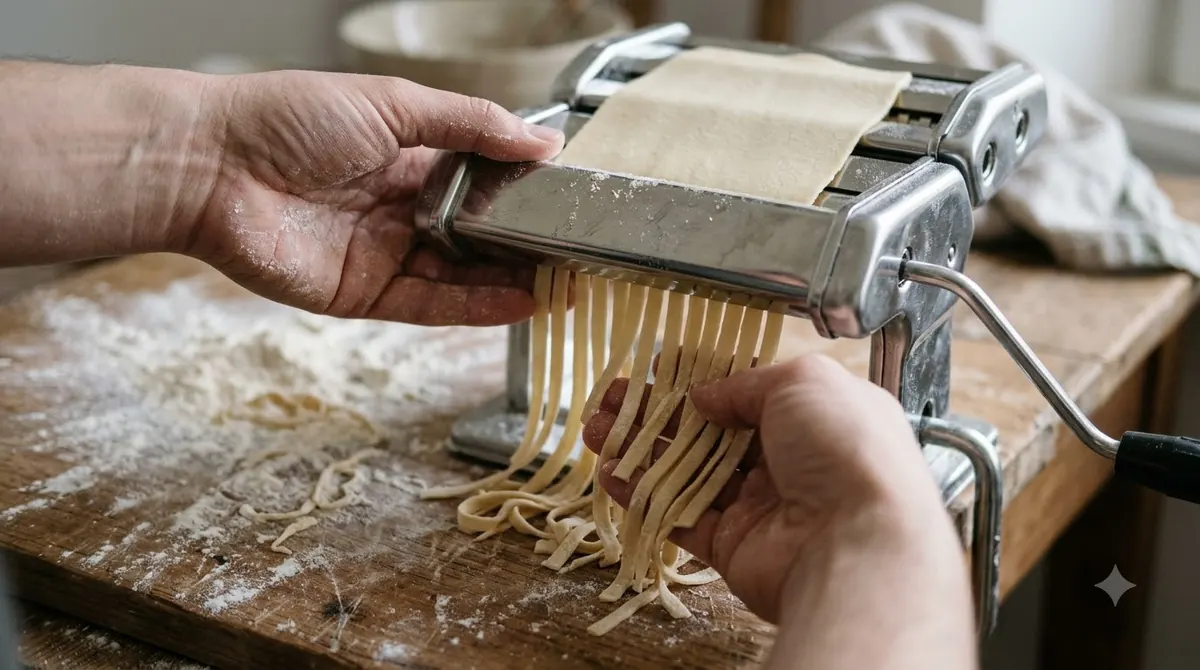

Homemade pappardelle starts with about 300 g of Tipo 00 flour and roughly 185 g of egg, kneaded, rested and rolled into wide ribbons. The dough is simple, but the rest times and the rolling thickness make the difference between tender noodles and tough ones. The method below works by hand or with a hand-crank pasta machine.
Pappardelle is a wide, flat egg noodle from Tuscany, usually about 2 to 3 cm across. Its width is what makes it hold up to a rich sauce, so the goal of homemade pappardelle is a dough that rolls thin enough to cook quickly without tearing when you cut it.
What Homemade Pappardelle Dough Needs
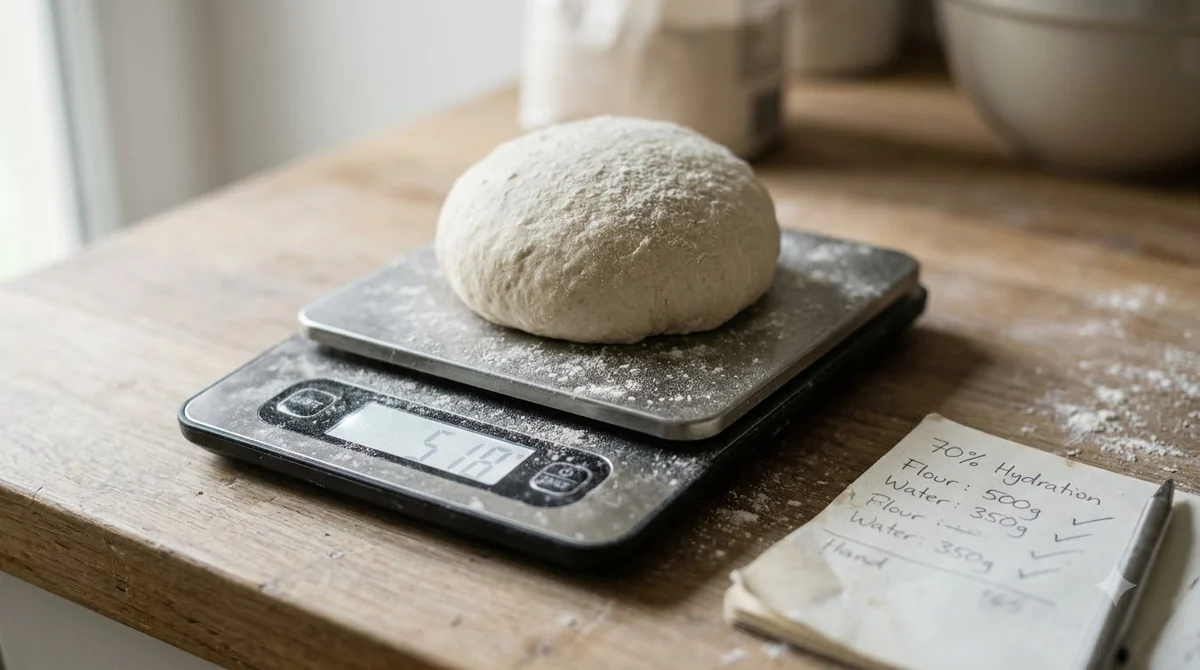
A basic homemade pappardelle dough uses 300 g of Tipo 00 flour and three large eggs plus one yolk, which comes to about 185 g of egg in total.
| Ingredient | Amount | Note |
|---|---|---|
| Tipo 00 flour | 300 g | The dough base in the homemade recipe |
| Large eggs | 3 eggs plus 1 yolk, about 185 g in total | Weigh the cracked eggs for consistency |
| Olive oil | Only if the dough is dry | No amount is given in the source, so add a little at a time |
| Semolina | Optional alternate flour | Adds a firmer bite and a more golden color |
Tipo 00 is a finely milled flour that gives a smooth, supple dough. If you cannot find it, use the best all-purpose flour you have, and expect a slightly softer sheet. Measure the flour by weight where you can, because a cup of flour can vary a lot in how much it weighs.
How to Mix and Knead the Dough
Mix the flour and eggs into a shaggy dough, let it rest for 10 to 15 minutes, then knead it until it is smooth and elastic.
- Make a well in the flour on a clean counter, and add the eggs and yolk to the center.
- Beat the eggs with a fork and gradually pull in the flour from the sides until a rough dough forms.
- Let the dough rest for 10 to 15 minutes so the flour can absorb the egg.
- Knead by hand until the dough is smooth and springs back when pressed. Add olive oil only if the dough feels dry and cracks.
Scrape the board clean as you knead, and keep the dough covered if you pause. A dry, cracked surface is the most common sign that the dough needs a few more seconds of kneading or a light dampening with a wet fingertip.
How to Rest and Roll the Sheets
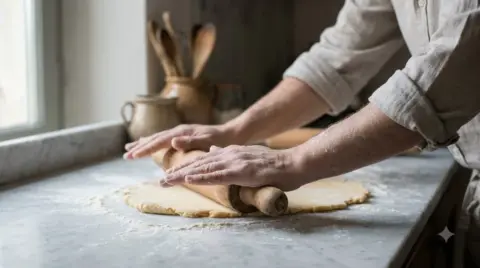
Wrap the dough and let it rest for at least 30 minutes at room temperature, then roll it into sheets about 1 to 2 mm thick.
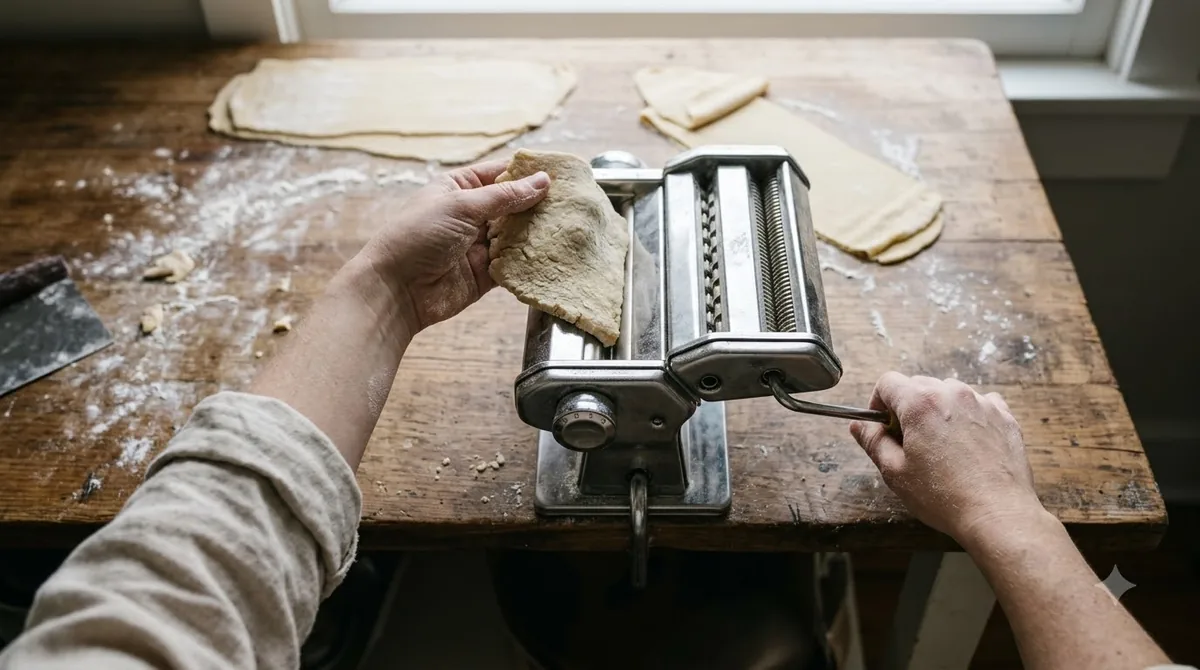
The rest relaxes the gluten, which makes the dough easier to stretch and less likely to spring back. Divide the dough into pieces that are easy to handle, and keep the pieces you are not rolling wrapped so they do not dry out.
- Flatten a piece into a rough rectangle with a rolling pin.
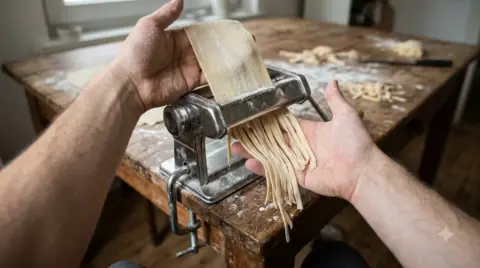
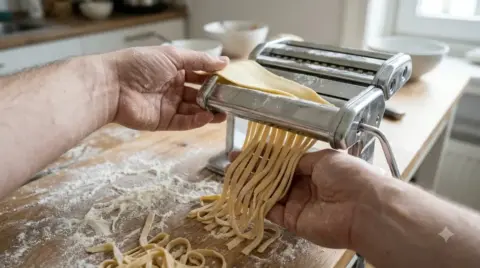
- With a machine, start on the widest setting and pass the dough through. Then pass it through the next few settings, usually stopping at the setting that gives a sheet about 1 to 2 mm thick.
- On a hand-crank machine, many cooks stop around settings 5 or 6, but check the thickness by eye and by feel rather than trusting a single number.
- Dust lightly with flour if the sheet sticks, and let the sheets rest for a few minutes if they start to shrink back.
How to Cut Pappardelle Ribbons
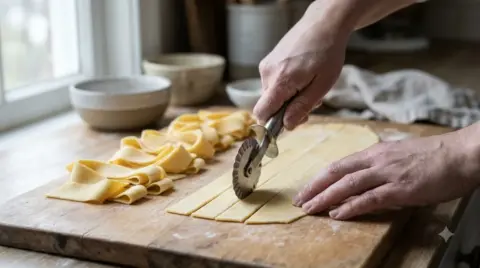
Cut the sheets into ribbons about 2.5 to 3.8 cm wide, then let them rest before cooking so they do not stick together.
Rest the sheets for 5 to 10 minutes before cutting so they firm up slightly. Lay a sheet flat, roll it loosely into a log, and cut straight across with a sharp knife. Unroll the ribbons, separate them gently, and spread them on a floured towel or rack.
A sheet that is too wet will clump, and one that is too dry will crack at the edges. If the ribbons stick, dust them with a little semolina or flour and separate them again before they drape.
Cooking Times and Serving
Fresh pappardelle usually cooks in 3 to 7 minutes, while dried pappardelle takes about 9 minutes according to a package direction cited by one producer.
| Type | Cook time | Note |
|---|---|---|
| Fresh, store-bought | 3 to 7 minutes | Taste early, because thickness varies |
| Homemade | About 5 to 7 minutes | Depends on the sheet thickness |
| Dried | About 9 minutes | Follow the package directions first |
Pappardelle holds heavy sauces well. A slow-cooked ragù is the classic partner, and the Wikipedia entry on ragù alla bolognese lists pappardelle among the accepted pasta shapes. A creamy mushroom sauce also suits the wide ribbons, because the noodles give the sauce plenty of surface to cling to.
Frequently Asked Questions
Does pappardelle always contain eggs?
Most pappardelle is an egg pasta, and the homemade recipe here uses eggs. The Wikipedia entry notes that it is not stated that every pappardelle contains eggs, so read the label when you buy dried pasta.
Can I use tagliatelle instead?
Yes, tagliatelle is a close relative and is often swapped in recipes. It is narrower, so it suits lighter sauces better, while pappardelle carries heavier ones.
Can I use dried pappardelle instead of fresh?
Yes. Follow the cooking time on the package, which is usually about 9 minutes, and taste a strand before you drain it.
Why do homemade ribbons stick together?
The usual causes are a dough that is too wet, cut ribbons that are stacked while still damp, or too little flour or semolina dusting. Separate the ribbons as soon as you cut them and spread them out to drape.
Homemade pappardelle rewards patience more than skill. Weigh the flour, respect the rests, roll to a steady thickness and cut the ribbons while they are still supple. Once you have the dough right, the same method works for other wide egg noodles.
 6 min readLearnHomemade Fettuccine by Hand: Rolling and Cutting Without a MachineUpdated Nov 13, 2026
 6 min readLearnHomemade Linguine: Dough, Rolling and CuttingUpdated Nov 13, 2026
 6 min readLearnHow to Make Tagliatelle: Egg Ratio, Rolling and CuttingUpdated Nov 13, 2026
 6 min readLearnHomemade Capellini: Egg Dough, Cutting and Cooking GuideUpdated Nov 13, 2026
 6 min readLearnHow to Make Pappardelle by Hand Without a Pasta MachineUpdated Nov 13, 2026
 5 min readLearnHomemade Cavatelli: Ricotta Dough and Hand Shaping GuideUpdated Nov 13, 2026