
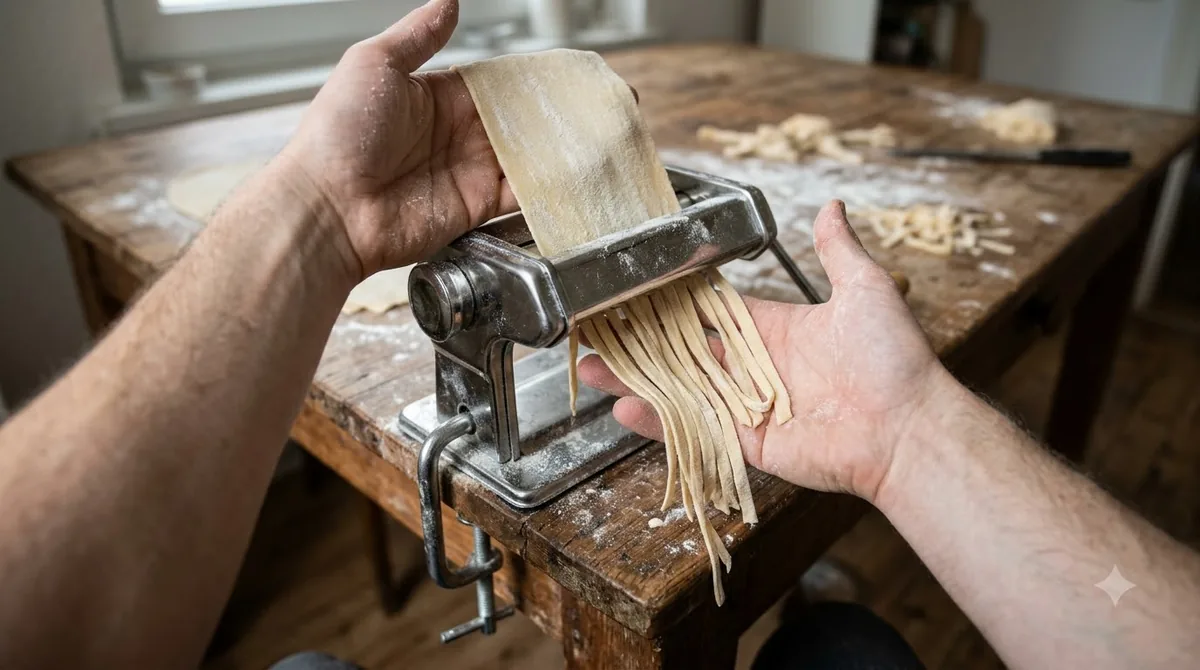

To make homemade linguine, mix 00 flour with whole eggs, knead the dough until smooth, rest it for at least 30 minutes, roll it into thin sheets, and cut the sheet into flat, narrow strands. A common starting point is about one large egg for every 100 g of 00 flour, then you adjust with a little water or flour. Fresh linguine cooks in a few minutes, so the dough work is the main job.
Linguine is a flat, ribbon-style pasta. It is easier to make at home than it looks, and a pasta machine does most of the rolling. The steps below follow the method and ratios from two recipe sources read for this guide, with notes on how to tell when the dough is right.
Start with the right flour and egg ratio
The usual base is 00 flour, which is finely milled and gives a smooth, tender pasta. One home-cook method uses 300 g of 00 flour with 3 large eggs, which is about one egg for every 100 g of flour. That recipe describes the ratio as a starting point, not a fixed rule, so add a splash of water if the dough is dry or a little flour if it is wet.
A larger batch uses more eggs. Another method builds the dough from 400 g of 00 flour and 4 large eggs, with an optional pinch of salt. Both recipes produce a firm, elastic dough, and the size of your eggs is the main variable, so use large eggs for consistent results.
Mix and knead until the dough is silky
Pile the flour on a board, make a well in the centre, and crack the eggs into it. Work the flour in with your fingers or a fork, keeping the walls of the well intact so the eggs do not spill. Once a shaggy dough forms, bring it together by hand and knead it until it is smooth.
- Knead with the heels of both hands for about 7 to 10 minutes, as one method describes, or 10 to 15 minutes in the other.
- Stop when the dough is smooth, silky, and springs back lightly when pressed with a fingertip.
- Wrap the dough in cling film so it does not dry out.
- Rest it at room temperature for at least 30 minutes before rolling.
The rest relaxes the gluten, which makes the dough easier to roll thin without tearing. If the dough springs back hard and resists the rolling pin or machine, give it a few more minutes of rest before you try again.
Roll the sheet on a pasta machine
A pasta machine gives the most even sheets. Cut the rested dough into pieces and keep the unused pieces covered. Flatten one piece into a disc, dust it lightly with flour, and pass it through the machine on its widest setting.
Fold the sheet over itself like an envelope and run it through the widest setting again. Repeat this several times, since a few folds make the dough smooth and elastic. Then narrow the rollers one notch at a time, passing the dough through each setting once or twice without folding.
- Dust the sheet with flour whenever it looks tacky.
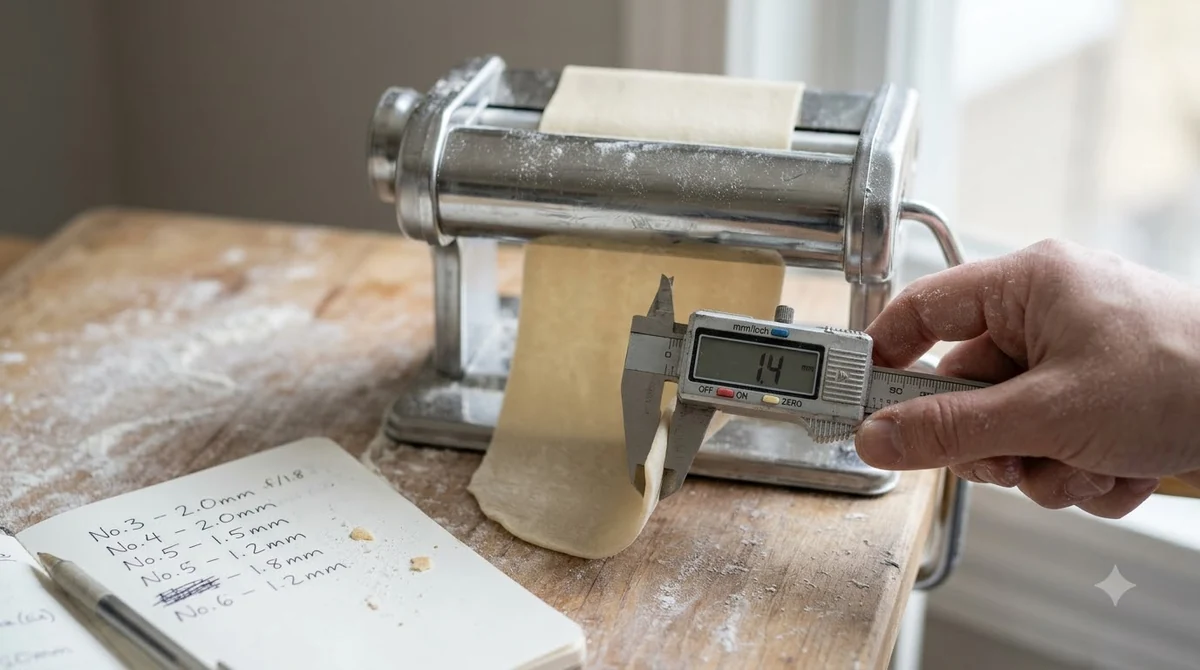
- Stop at the second-thinnest setting. One recipe says the sheet is right when you can read a newspaper through it.
- For linguine, one home cook rolls to setting 6 on a common machine and recommends a test cook to check thickness.
- Keep the sheets covered while you work through the rest of the dough.
Cut the sheets into linguine
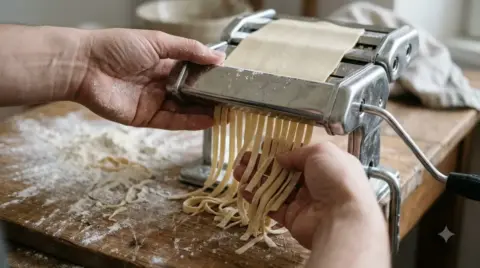
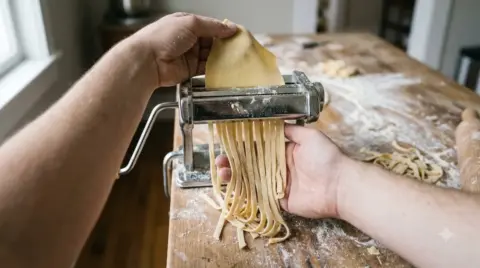
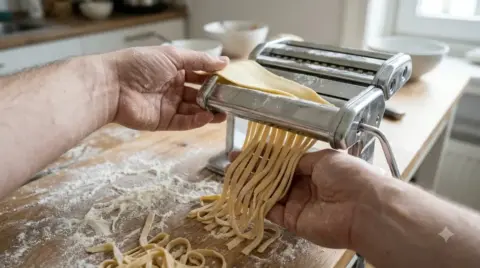
Once the sheet is thin, lay it on a floured board and cut it into long, narrow strands. Use the linguine cutter attachment on a pasta machine, or cut by hand with a sharp knife or pizza wheel. Keep the strands loose and dust them with semolina or fine flour so they do not stick together.
Shape the cut strands into loose nests and set them on a floured tray. Cook them soon after cutting, or let them dry on a rack if you plan to cook them later. Fresh linguine needs only a few minutes in boiling salted water, so start tasting it early.
Storing, drying, and common mistakes
If you are not cooking the linguine straight away, let the cut strands dry briefly on a floured tray so they do not stick. Keep the nests loose and separated, and cover them lightly with a dry towel while you finish the rest of the batch. Cook the pasta within a short window for the best texture, since fresh pasta softens quickly once it sits damp.
The most common mistake is adding too much flour during kneading, which makes the pasta dry and hard to roll. Another is skipping the rest. Dough that goes straight to the machine springs back and tears, while a rested dough stretches smoothly. A third mistake is rolling too thick, which gives a chewy strand and a heavy bite.
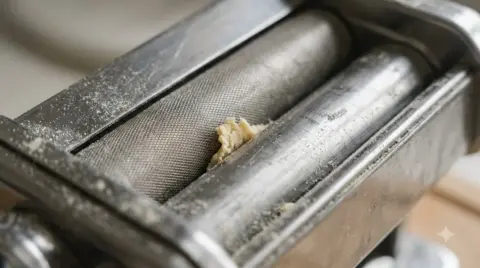
Work in batches, and keep the unused dough wrapped while you roll. Pasta dries out faster at the edges, and a quick dusting with flour before each pass keeps the sheet from sticking to the rollers. These small habits make the difference between a clean batch and a messy one.
Use a clean board and a sharp knife or pizza wheel for cutting by hand, and wipe the board between batches so flour does not build up. A machine cutter gives the most even width, but a hand-cut linguine still tastes good when the sheet is thin and the strands are kept loose.
Frequently Asked Questions
Do I need a pasta machine to make homemade linguine?
A machine makes the job much easier and gives even sheets. You can roll by hand with a long pin, but the sheet is harder to keep even, and cutting by hand takes more time.
Can I use all-purpose flour instead of 00?
Yes, all-purpose flour works, but the texture is firmer and less silky. Expect a slightly different dough, and adjust the water or flour as you knead.
Why is my linguine dough too dry to knead?
Add a small splash of water, a teaspoon at a time, and knead again. Dry dough cracks at the edges and does not hold together, so keep the adjustments small.
How long should fresh linguine cook?
Fresh linguine usually needs only a few minutes in boiling salted water. Start tasting early, since thin fresh pasta cooks quickly and turns soft if left too long.
Homemade linguine rewards a little patience. Get the flour and egg ratio close, knead until the dough is silky, let it rest, and roll in small steps. The first batch will teach you the feel of the dough, and each batch after that gets easier.
 5 min readLearnHomemade Pappardelle: Dough, Rolling and Cutting by HandUpdated Nov 13, 2026
 6 min readLearnHomemade Fettuccine by Hand: Rolling and Cutting Without a MachineUpdated Nov 13, 2026
 6 min readLearnHow to Make Tagliatelle: Egg Ratio, Rolling and CuttingUpdated Nov 13, 2026
 6 min readLearnHomemade Capellini: Egg Dough, Cutting and Cooking GuideUpdated Nov 13, 2026
 6 min readLearnHomemade Farfalle: Cutting and Pinching Bow TiesUpdated Nov 13, 2026
 5 min readLearnHow Long to Rest Pasta Dough Before RollingUpdated Nov 13, 2026