
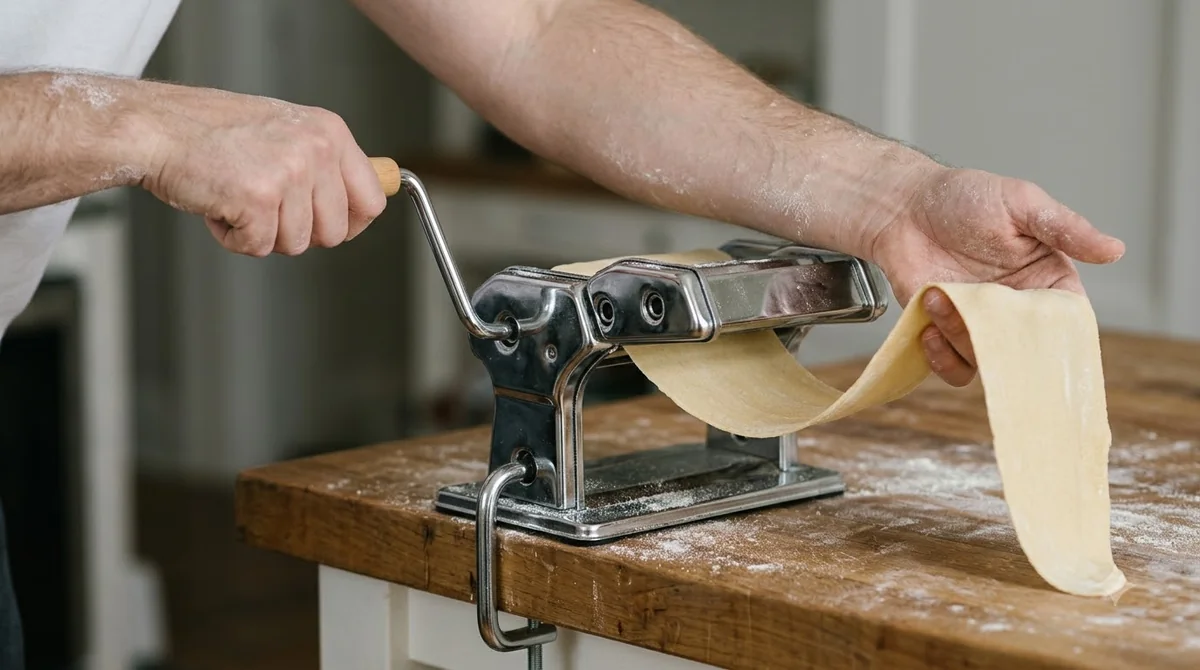

How to make culurgiones starts with a simple semolina dough, a filling of potato, pecorino and mint, and a folded half-moon with a braided edge. These Sardinian filled pasta parcels come from Ogliastra on the island’s east coast. The filling is dense and dry, and the folding takes a little practice, but the shape is forgiving once you get the rhythm.
What Culurgiones Are
Culurgiones are filled pasta from Ogliastra, a province on Sardinia’s east coast. They are often described as a larger, more rustic cousin of ravioli, with a thicker filling and a folded edge that looks like a braid or an ear of wheat.
Because they are sturdier than delicate ravioli, they hold up well to a simple tomato sauce. The traditional filling is potato, pecorino, garlic and mint. Fillings vary from one village to another, so the amounts below are a home starting point rather than a single correct recipe.
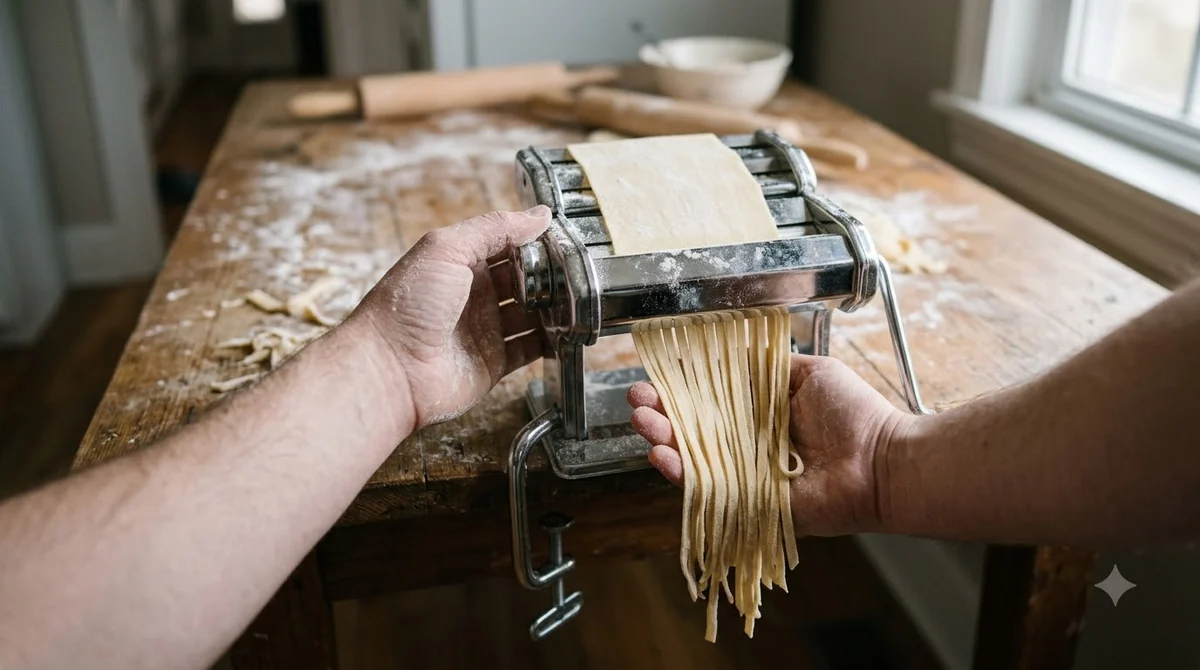
The Pasta Evangelists guide to Sardinian culurgiones describes the same folding method and is a useful reference for the shape.
Culurgiones Dough and Filling
The dough is semolina and warm water with a pinch of salt. One home version from Cooking With Ayeh uses 300 g of semolina and 150 g of room-temperature water, while Pasta Evangelists uses 200 g of semolina and 100 ml of warm water. Start with the smaller amount and add water a spoonful at a time until the dough holds together.
- Mix the semolina with the water and salt, then knead until the dough is smooth and firm.
- Wrap the dough and let it rest for 20 to 30 minutes. Both sources give a rest in this range.
- Boil about 500 g of red potatoes until soft, then peel and mash them while still warm.
- Stir in about 70 g of finely grated pecorino, one finely chopped garlic clove, chopped mint, olive oil and a little salt.
The filling should be firm and fairly dry, because a wet filling leaks out during cooking. Pasta Evangelists uses a larger amount of potato, about 1 kg, and a larger amount of pecorino, about 100 g, so you can scale the filling up if you are cooking for a crowd.
How to Make Culurgiones Step by Step
Shaping is the part that takes practice. Work with one portion of dough at a time and keep the rest covered so it does not dry out.
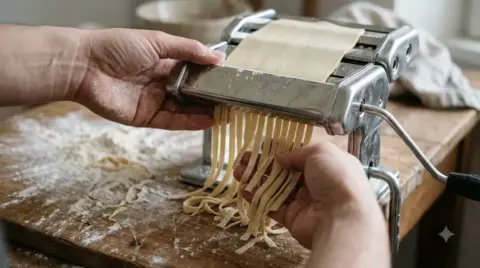
- Roll the dough to about 1 mm thick, using a pasta machine if you have one.
- Cut out rounds with an 8 cm cutter. Cooking With Ayeh uses this size, which gives a generous parcel.
- Place a heaped teaspoon of filling in the center of each round.
- Fold the left and right sides toward the center and pinch lightly to seal each fold.
- Pinch the tip of the half-moon to close it, then pull the edges together with small pleats to form the braided seam.
- Set the finished culurgiones on a floured tray in a single layer.
If the filling spills out during folding, scoop the excess back into the bowl and seal the edge again with a little water. A slightly tighter seal keeps the filling inside in the pot.
Cooking and Serving Culurgiones
Cook culurgiones in heavily salted boiling water. Cooking With Ayeh gives about 5 minutes, while Pasta Evangelists gives 3 to 4 minutes and says they are ready when they begin to float. Test one early so you do not overcook the filling.
| Part | Home amount or time |
|---|---|
| Semolina dough | 200 to 300 g with 100 to 150 ml water |
| Dough rest | 20 to 30 minutes, covered |
| Sheet thickness | About 1 mm |
| Cooking | About 3 to 5 minutes |
Pasta Evangelists serves culurgiones with a simple tomato sauce, a generous sprinkle of pecorino and fresh basil. A light sauce is the safer choice, because a heavy one can hide the mint and the pecorino in the filling.
Common Mistakes With Homemade Culurgiones
Most problems come from a wet filling or dough that is too thin. Both lead to leaks, and leaks are the main reason parcels open in the pot.
A filling that looks loose needs more time to cool and firm up before you fill the rounds. Potatoes that are boiled too long also turn watery, so check them early and drain them well before mashing.
Make a test parcel first and cut it open after cooking. If the filling is grainy or dry, add a little more olive oil and mint next time, and if it looks loose, drain the potatoes longer before mashing.
If the braided seam is weak, the pleats are probably too shallow. Pinch the edge firmly and press the pleats toward the filling, not outward, so the seam closes around the filling as it cooks.
Frequently Asked Questions
Are culurgiones the same as ravioli?
They are similar in idea, a filled pasta parcel, but culurgiones are usually larger, thicker and folded into a half-moon with a braided seam. The filling is also traditionally potato-based rather than ricotta or meat.
Can I use another potato?
Red potatoes are the suggested choice in these recipes. Choose a waxy variety that mashes firm rather than soft, because a floury potato makes the filling wetter.
What if I cannot find pecorino?
Pecorino Sardo is the closest match in these recipes. A firm, salty hard cheese is the best substitute, but grate it finely so it blends into the filling and does not leave pockets.
Can I freeze uncooked culurgiones?
The sources do not cover freezing, so check a tested guide before freezing them. Cooking them fresh on the day is the safest way to keep the filling and dough at their best.
Culurgiones reward patience. Keep the filling dry, roll the dough thin enough to fold easily and pinch the braided seam firmly. Once the shape feels natural, a simple tomato sauce with pecorino lets the potato and mint filling come through. Serve them soon after cooking so the filling stays warm and the pecorino stays soft.
 8 min readLearnCulurgiones Pasta: What It Is and How to Make It at HomeUpdated Nov 6, 2026
 8 min readLearnStuffed Crust Pizza Recipe: How to Make a Cheese-Filled Rim at HomeUpdated Nov 11, 2026
 5 min readLearnHow to Make Malloreddus: Sardinian Gnocchetti at HomeUpdated Nov 13, 2026
 7 min readLearnScarpinocc Pasta: The Shoe-Shaped Filled Pasta From ParreUpdated Nov 11, 2026
 7 min readLearnPlin Pasta: The Pinched Filled Pasta From PiedmontUpdated Nov 11, 2026
 7 min readLearnPillus Pasta: A Sardinian Ribbon Pasta Served in BrothUpdated Nov 11, 2026