
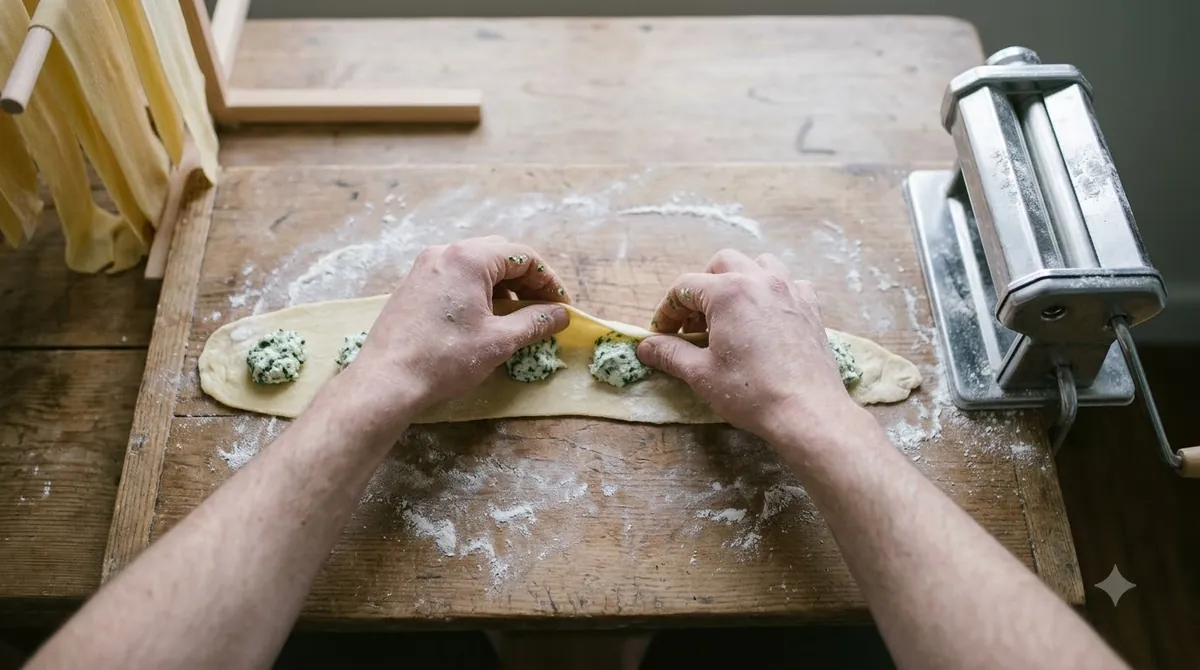

Plin pasta is a small, hand-pinched filled pasta from Piedmont, in northwest Italy, and the name “plin” means “a pinch” in the local dialect. Each piece is folded over a small mound of filling and sealed by pinching the dough between the thumb and forefinger. It is the traditional stuffed pasta of the region, and it is often served with butter and sage or with a meat sauce.
What Plin Pasta Is and Where It Comes From
Plin pasta is a rectangular, hand-pinched filled pasta made with fresh egg dough, and it belongs to the wider agnolotti family of Piedmont.
The word comes from the Piedmontese dialect, where “plin” means a pinch. That name describes the sealing step, which is what makes plin pasta different from pasta that is cut and folded with a tool. Each small packet is closed by hand, one pinch at a time. The Wikipedia entry on agnolotti describes plin as a smaller, rectangular version of the usual square agnolotti and places the pasta in Piedmont.
Plin pasta is made both at home and in restaurants. Its filling is built around meat, and the sample recipe later in this guide uses a mix of veal, pork and rabbit. For another egg pasta from Piedmont, see our guide to tajarin pasta.
Shape and Filling
Plin pasta is almost always filled with meat, and each piece is sealed by pinching the dough between the thumb and forefinger at every mound of filling.
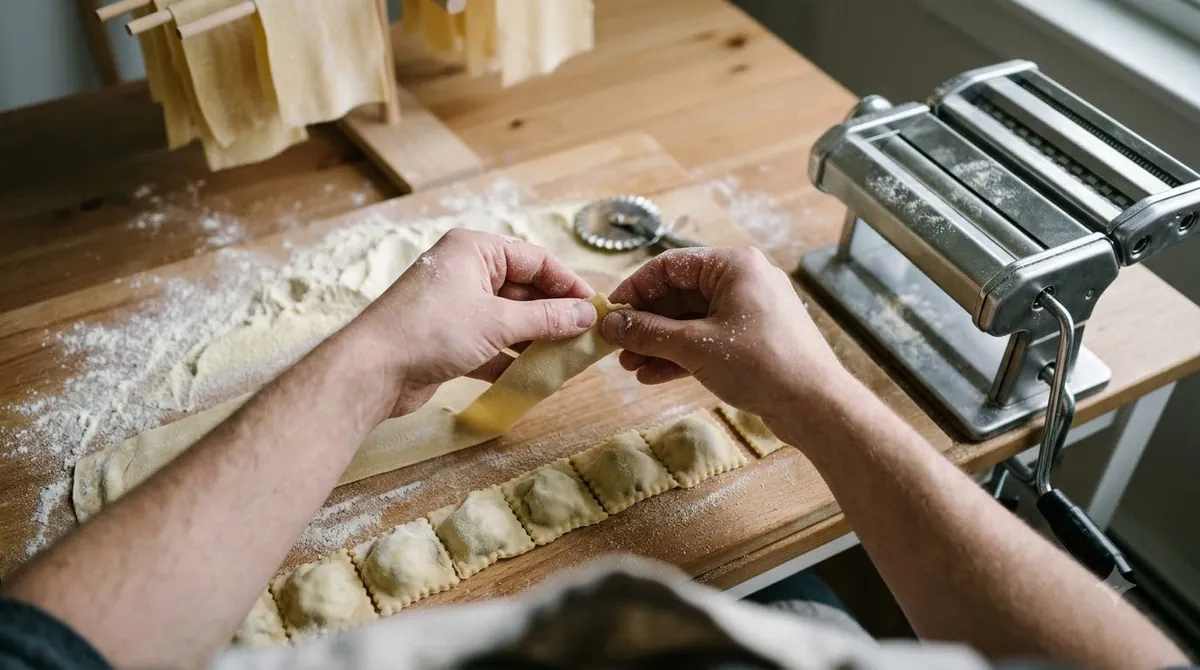
The filling is the part that gives plin its character. Wikipedia’s agnolotti entry notes that agnolotti del plin are almost always stuffed with meat, and a traditional sample recipe from Giallo Zafferano uses a mix of pork loin, veal and rabbit, cooked slowly with carrot, celery and onion, then blended with some of the cooking liquid. Many home versions add greens such as spinach or escarole and a little grated Parmigiano Reggiano.
The shape of plin pasta is set by the way the filling is placed and sealed. In the sample recipe, each filling ball is about 20 g and sits on the lower half of the rolled sheet, with 1 to 2 cm between balls. The sheet is folded over the filling, the edges are pinched closed on either side of each mound, and the pasta is then cut so each piece is about 2 cm long. The key points are:
- Keep the filling in small, even mounds of about 20 g each, so each piece holds a similar amount.
- Leave 1 to 2 cm between mounds, so there is room to pinch the edges.
- Pinch the edges on both sides of each mound, then cut the pieces apart.
- Cut each piece to about 2 cm long, the finished length given in the sample recipe.
Making Plin at Home
A typical home batch starts with about 400 g of Type 00 flour and 4 eggs, each around 70 g, rested for an hour before rolling.
Weigh the flour in grams rather than cups, because the sample recipe is written in grams and a cup can vary a lot in weight. Eggs are listed at about 70 g each, so a large egg is a reasonable reference.
The sample recipe from Giallo Zafferano uses 400 g of Type 00 flour with 4 eggs of about 70 g each. If the dough feels stiff, it suggests adding one or two tablespoons of lukewarm water, and it asks for the dough to rest for 1 hour before it is rolled. In the sample recipe, the meats are covered and cooked for about an hour, the spinach and escarole for about 5 minutes, and the filling is then combined with one egg and grated Parmigiano Reggiano.
- Mix the flour and eggs into a smooth dough, wrap it and let it rest for about one hour.
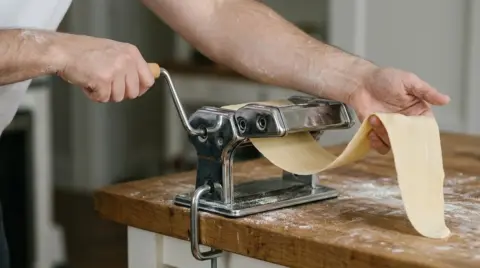
- Roll the dough into a thin sheet, using a pasta machine or a rolling pin.
- Place the filling in mounds about 20 g each, spaced 1 to 2 cm apart.
- Fold the sheet over the filling, pinch the edges on both sides of each mound, then cut the pieces apart (a ravioli cutter can help).
- Cook the pieces in boiling water until they rise to the surface, which takes a few minutes in the sample recipe. Check the package or recipe for your dough thickness.
The sample recipe lists about 2 hours of preparation and 1 hour 30 minutes of cooking, with the pasta dough resting for 1 hour on top of that. Plan for that time if you are making a full batch in one session.
The filling ingredients in the sample recipe are pork loin (200 g), veal (250 g), rabbit ribs (200 g), carrots (300 g), celery (100 g), one large onion, spinach (30 g), escarole (30 g), one egg, Parmigiano Reggiano PDO (15 g), salt, black pepper, vegetable broth and extra virgin olive oil. The sample recipe does not state any different quantities for home batches, so treat these as one reference point.
Plin and Agnolotti
Plin is a smaller, rectangular kind of agnolotti, and the two share a hand-sealed method and a Piedmont background.
| Feature | Plin pasta | Agnolotti |
|---|---|---|
| Shape | Small and rectangular | Standard square form |
| Typical filling | Almost always meat | Varies by household and recipe |
| Sealing | Pinched by hand between thumb and forefinger | Pressed closed around each mound |
| Common sauce | Butter and sage or roast-meat sauce | Butter, sage or a meat sauce |
If you are choosing between the two for a recipe, pick plin pasta when you want the small, rectangular bite with a meat filling and a visible pinch. Pick agnolotti when you want a larger piece or a different shape for the sauce. The sealing method is what matters most for the texture at the table, so check how your piece closes before you cook it. For other filled shapes, compare tortelli pasta.
Serving Plin
Plin pasta is usually served with melted butter and sage, or with a roast-meat sauce that echoes the filling.
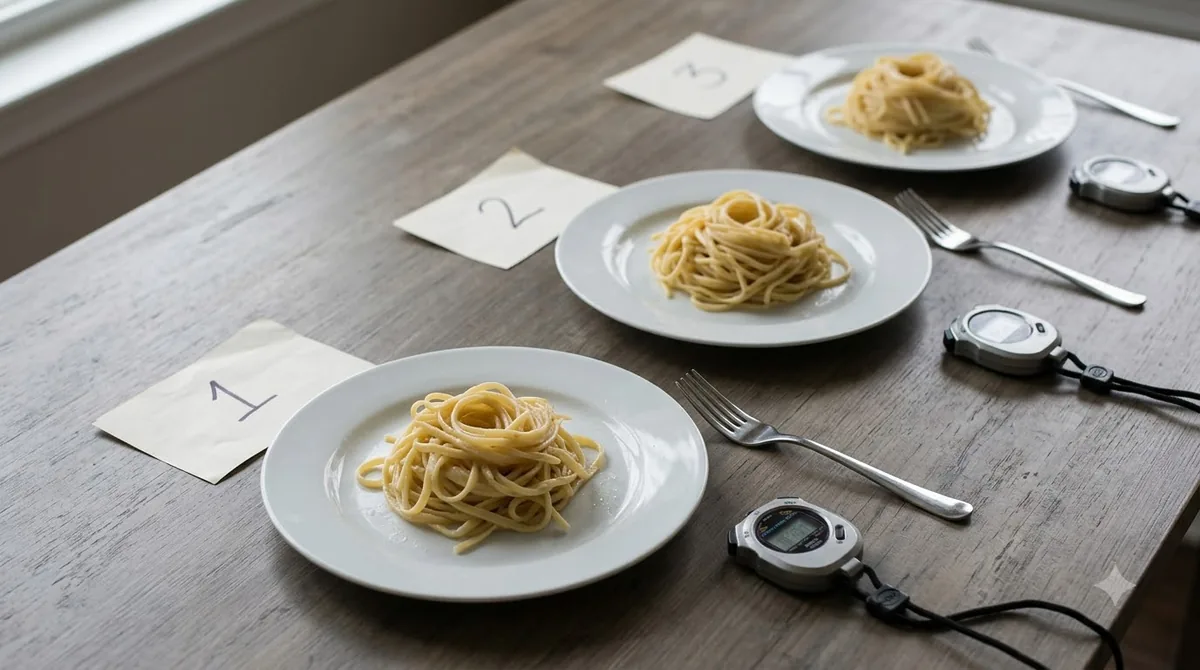
Butter and sage is the classic pairing, and another Lombard filled pasta uses the same finish: scarpinocc pasta. The Pasta Project’s Piedmont guide also describes a version with a cheese fondue filling served with butter and sage, which shows that the sauce can stay simple even when the filling changes. Butter and sage is a traditional sauce for that version, and the simplicity lets the filling and the pinched edges stand out. The roast-meat version, known in Piedmont as al sugo di arrosto, is the richer option, and it suits the meat-based filling.
Cook the plin until the pieces rise to the surface. The Giallo Zafferano recipe blends the stewed vegetables with their cooking liquid until the sauce is smooth, then uses the sauce made from the meat cooking liquid to season the drained pasta.
- Butter and sage: melt butter with fresh sage leaves, then toss the drained pasta in the sauce.
- Roast-meat sauce: toss the pasta with a sauce made from the meat cooking liquid, as the Giallo Zafferano recipe does.
Frequently Asked Questions
Is plin pasta the same as agnolotti?
Plin is a type of agnolotti, specifically the smaller rectangular kind that is pinched closed by hand. Both come from Piedmont, and both are stuffed pasta, so the difference is mostly in shape and sealing.
Is plin pasta always filled with meat?
Almost always, according to Wikipedia’s agnolotti entry, although The Pasta Project describes a cheese fondue version. If you see a plin with a different filling, it is likely a regional or modern variation, so read the menu or recipe description before you buy or cook it.
What does plin mean?
Plin means “a pinch” in the Piedmontese dialect. The name describes how each piece is sealed between the thumb and forefinger.
What fills plin pasta?
The filling is usually meat. The sample recipe uses veal, pork and rabbit, with carrot, celery, onion, spinach, escarole and Parmigiano Reggiano.
How long do you cook plin pasta?
Cook it until the pieces rise to the surface, which the sample recipe describes as a few minutes. Check the package or your recipe, because timing depends on the dough thickness and the size of each piece.
Plin pasta rewards a little patience. Take time to make the pinch firm, keep the filling in even mounds, and choose butter and sage for a simple finish or a roast-meat sauce for a richer one.
 7 min readLearnScarpinocc Pasta: The Shoe-Shaped Filled Pasta From ParreUpdated Nov 11, 2026
 5 min readLearnHow to Make Culurgiones: Sardinian Filled Pasta at HomeUpdated Nov 13, 2026
 8 min readLearnStuffed Crust Pizza Recipe: How to Make a Cheese-Filled Rim at HomeUpdated Nov 11, 2026
 8 min readLearnFusilli Lunghi Pasta: What It Is, Where It Comes From and How to Cook ItUpdated Nov 11, 2026
 7 min readLearnQuadrucci Pasta: The Small Square Egg Pasta for SoupUpdated Nov 11, 2026
 8 min readLearnPennoni Pasta: What It Is, How to Cook It and Which Sauces Suit ItUpdated Nov 11, 2026