
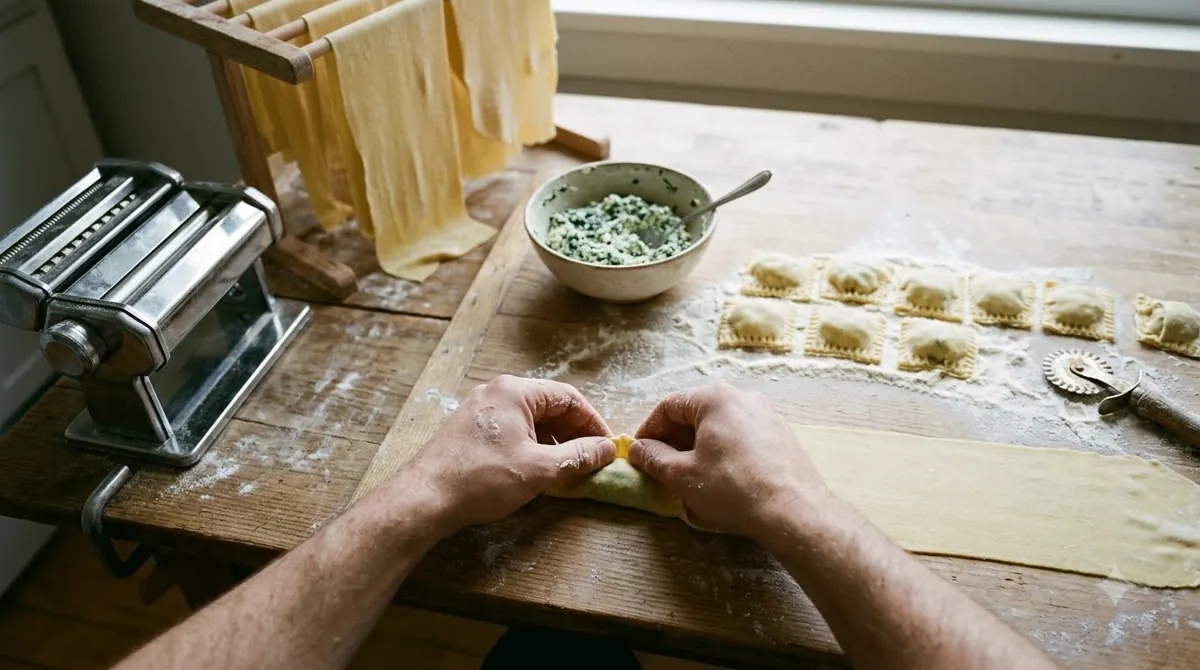

Scarpinocc pasta is a filled pasta from Parre, a village in Bergamo province in Lombardy, Italy. It is folded into the shape of a small shoe and filled with cheese and spices, with no meat. The dough is a soft mix of flour, semolina, egg and milk.
Scarpinocc pasta is usually finished with browned butter and sage. Compared with ravioli, its half-moon shape and cheese-only filling are the main differences to look for.
Where scarpinocc pasta comes from
Scarpinocc pasta comes from Parre, a village of about 3,000 people in the Seriana valley of Bergamo province. The village sits about 25 km from Bergamo and 70 km from Milan.
Parre is the reference point for scarpinocc pasta, and the village holds a festival dedicated to it every August. Traditionally, scarpinocc are made on June 29, the feast day of St Peter, according to The Pasta Project’s scarpinocc recipe.
Outside the valley, the pasta is much less common, so most home cooks learn it from a written recipe rather than from a family tradition. That makes the exact proportions and shaping steps worth following closely the first time.
Why scarpinocc has a shoe name
The name comes from “scarpa,” the Italian word for shoe. The pasta is said to resemble the handmade cloth shoes that villagers wore until the mid-20th century.
The name describes the shape, not an ingredient. That is the practical test: a plain half-moon filled pasta without the folded-up edge does not match the traditional description of scarpinocc.
Because the name is tied to a village object, you will see the same idea in local festival material and recipe notes rather than in a formal standard. Treat the shoe story as the common explanation given by local sources, not as a documented rule.
How scarpinocc is shaped
Each scarpinocc pasta piece starts as a thin circle of dough about 6 cm (0.4 inch) across, folded into a half-moon, with the edge then folded up so the piece stands slightly.
- Roll the dough into thin circles about 6 cm (0.4 inch) in diameter.
- Place a little filling on one half of each circle and fold it into a half-moon.
- Fold the curved edge up so the piece stands slightly.
- Press a small dent into the centre to finish the shape.
The recipe yields 48 pieces. The source does not give a finished weight or length, so judge size by the 6 cm circle and keep the pieces similar so they cook at the same rate.
Work on a lightly floured surface and keep the unshaped dough covered, so the rounds do not dry out before you fold them.
Dough and filling for scarpinocc pasta
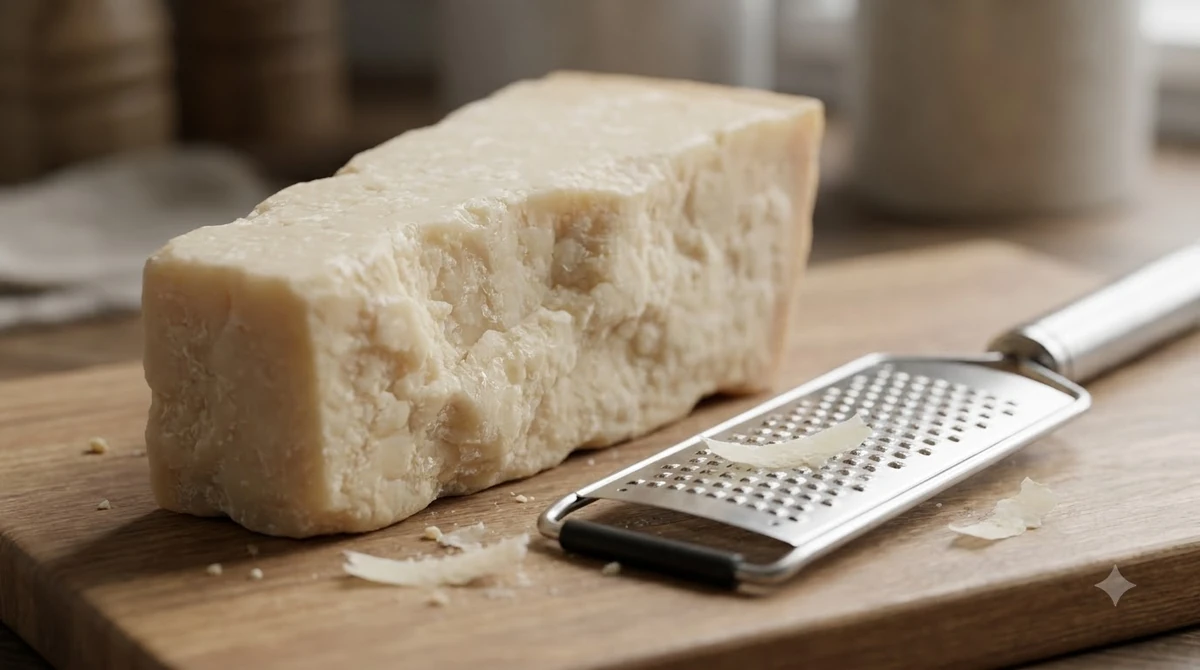
The scarpinocc pasta dough uses 14 oz of 00 or all-purpose flour, 3.5 oz of durum semolina, 2 eggs, 7 fl oz of whole milk and 1 oz of melted butter. The filling is built on grated Grana or Parmigiano Reggiano and breadcrumbs.
| Part | Ingredient | Amount |
|---|---|---|
| Dough | 00 or all-purpose flour | 14 oz |
| Dough | Durum wheat semolina | 3.5 oz |
| Dough | Eggs, whole milk, melted unsalted butter | 2 eggs, 7 fl oz milk, 1 oz butter |
| Filling | Grated Grana or Parmigiano Reggiano | 10.5 oz |
| Filling | Breadcrumbs, homemade preferred | 5.3 oz |
| Filling | Eggs, milk, melted butter | 1 to 2 eggs, 3.5 fl oz milk, 1 oz butter |
| Filling | Crushed cloves, grated nutmeg, cinnamon powder | 2 cloves, 1 pinch, 1/2 teaspoon |
The semolina is one part to four parts soft flour, which is 100 g to 400 g in the article text of the same recipe. The filling contains no meat. It is built on cheese, breadcrumbs, egg and warm spice.
The source is not consistent on the filling milk. The recipe card lists 3.5 fl oz, while the article text gives 200 ml and says you may not need all of it. Start with the card amount and add milk only if the filling is too dry to shape.
Grate the cheese finely and mix it with the breadcrumbs, egg and spices before you add the melted butter. A well-mixed filling holds together as one mixture and stays in place when you fold the dough around it.
How to cook and serve scarpinocc
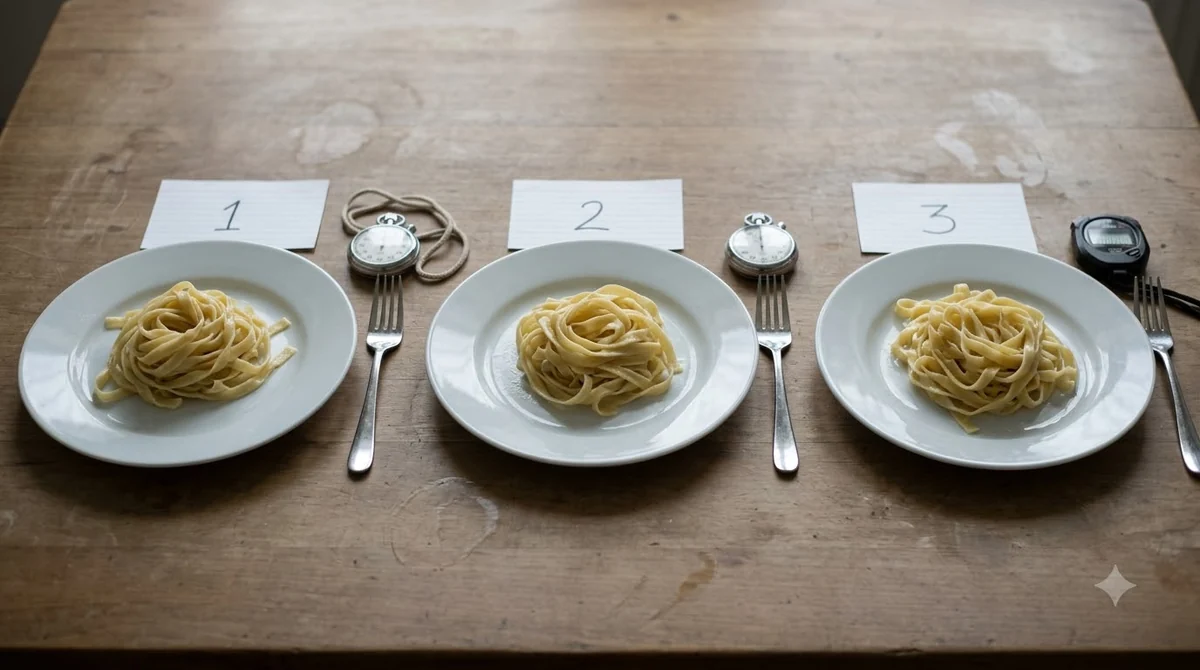
Cook scarpinocc in salted boiling water for about 5 to 7 minutes, depending on size, and taste one piece before you lift them out.
- Bring a large pot of salted water to a boil and add the pieces.
- Cook until the dough is cooked through and the filling is warmed through.
- While the pasta cooks, brown 3.5 oz of melted butter with one handful of torn sage leaves until the sage crisps.
- Lift the pasta with a slotted spoon and toss it in the butter over low heat for about a minute.
- Serve at once, with extra grated cheese if you like.
A traditional alternative uses browned butter with cheese only and no sage. The source does not give the amount of cooking water, so use enough water that the pieces can move freely.
Serve the scarpinocc pasta hot. Browned butter cools quickly, and the sage loses its crispness on a cold plate.
Scarpinocc compared with ravioli
Scarpinocc pasta differs from ravioli mainly in shape and filling. Ravioli are most often square, while scarpinocc is a half-moon with a folded-up edge and a cheese-based filling.
| Feature | Scarpinocc | Ravioli |
|---|---|---|
| Shape | Half-moon with a folded-up edge | Commonly square, with round and half-moon forms also used |
| Filling | Cheese, breadcrumbs and spice, no meat | Varies by region, for example ricotta and spinach in Rome and Lazio |
| Usual sauce | Browned butter with sage | Varies by recipe |
| Origin | Parre, Bergamo province | Named “rauioles” in the 14th-century cookbook The Forme of Cury |
Ravioli fillings vary a lot by region, so this comparison covers the typical case. If you want the closest match to scarpinocc, look for a cheese-filled half-moon rather than a square ravioli. For another filled shape, see tortelli pasta.
Common mistakes when making scarpinocc
The most common problems with scarpinocc pasta are uneven pieces, under-cooked dough and sage butter that burns. The classic cheese also brings a dietary point you should check before serving.
- Keep the circles and folds even so the scarpinocc pasta pieces cook at the same rate.
- Taste one piece before draining, because the 5 to 7 minute window is a range, not a fixed time.
- Stop browning the butter once it turns golden, since the sage can scorch.
- Grana and Parmigiano contain animal rennet, so vegetarians should choose a hard cheese made with plant-based or microbial rennet.
Frequently Asked Questions
Is scarpinocc vegetarian?
Scarpinocc pasta has no meat in its filling, but the classic Grana or Parmigiano Reggiano contains animal rennet. Vegetarians should choose a hard cheese made with plant-based or microbial rennet, which is the note given in the source recipe.
What does scarpinocc taste like?
The filling combines grated hard cheese, breadcrumbs, egg, nutmeg and cinnamon, so the flavor is cheesy and warmly spiced. The browned butter with sage adds a toasty, herbal finish on top.
How many pieces does the classic recipe make?
The Pasta Project recipe yields 48 pieces of scarpinocc pasta from the listed dough and filling. Each piece starts from a circle of dough about 6 cm across, so the count depends on how thin you roll the dough.
Can you make scarpinocc with only all-purpose flour?
The source recipe uses 00 or all-purpose flour with a small amount of durum semolina. Using only one flour changes the texture of the dough, so test a small batch before making a full recipe.
When is the scarpinocc festival in Parre?
The village holds its scarpinocc festival each August. Dates change from year to year, so check the current listing with local organizers before you plan a trip.
How do you tell a scarpinocc from a ravioli?
Look at the shape first. A scarpinocc is a half-moon with the edge folded up, while ravioli are most often square. The filling is also a clue, since scarpinocc has no meat and is built on cheese and spice.
If you are making scarpinocc pasta for the first time, follow the recipe card proportions and cook one test piece before you fill the whole batch. Keep the shapes consistent, and treat the milk amount as a range you adjust by feel.
 7 min readLearnPlin Pasta: The Pinched Filled Pasta From PiedmontUpdated Nov 11, 2026
 5 min readLearnHow to Make Culurgiones: Sardinian Filled Pasta at HomeUpdated Nov 13, 2026
 7 min readLearnCencioni Pasta: A Petal-Shaped Italian Pasta ExplainedUpdated Nov 11, 2026
 8 min readLearnGigli Pasta: The Ruffled Lily-Shaped Pasta ExplainedUpdated Nov 10, 2026
 8 min readLearnCorzetti Pasta: What It Is, How It Is Shaped and How to Serve ItUpdated Nov 6, 2026
 8 min readLearnCappellacci Pasta: The Hat-Shaped Stuffed Pasta From FerraraUpdated Nov 6, 2026