

To make fusilli at home, mix fine semolina with hot water, knead a firm dough, then wrap thin strips around a skewer or rod and roll each one into a spiral. The shaped pieces dry for a while, then cook in salted boiling water for about 3 to 5 minutes.
Learning how to make fusilli takes more patience than a flat pasta, because every spiral is shaped one piece at a time. The method below follows a homemade semolina recipe from a home-cooking site, and it covers the dough, the shaping, the drying and the cooking so you know what to expect at each stage.
What Makes Fusilli Different From Other Shapes?
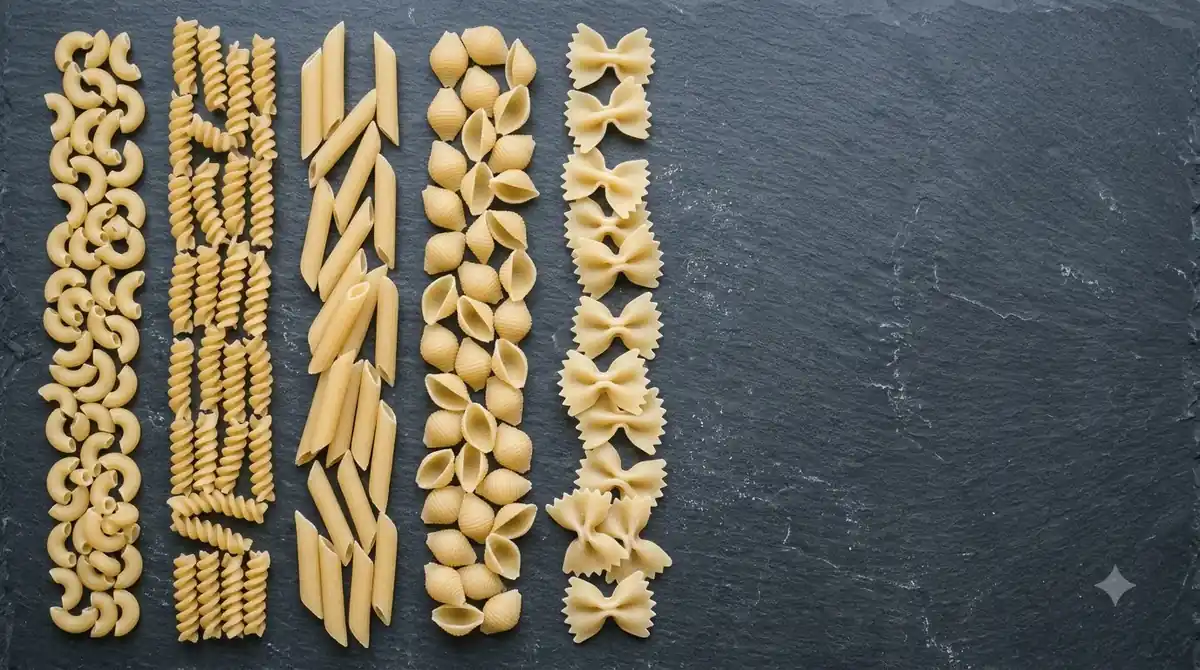
Fusilli is a short spiral pasta, and its grooves hold sauce well, which is why many cooks treat it as a shape for thick, chunky sauces.
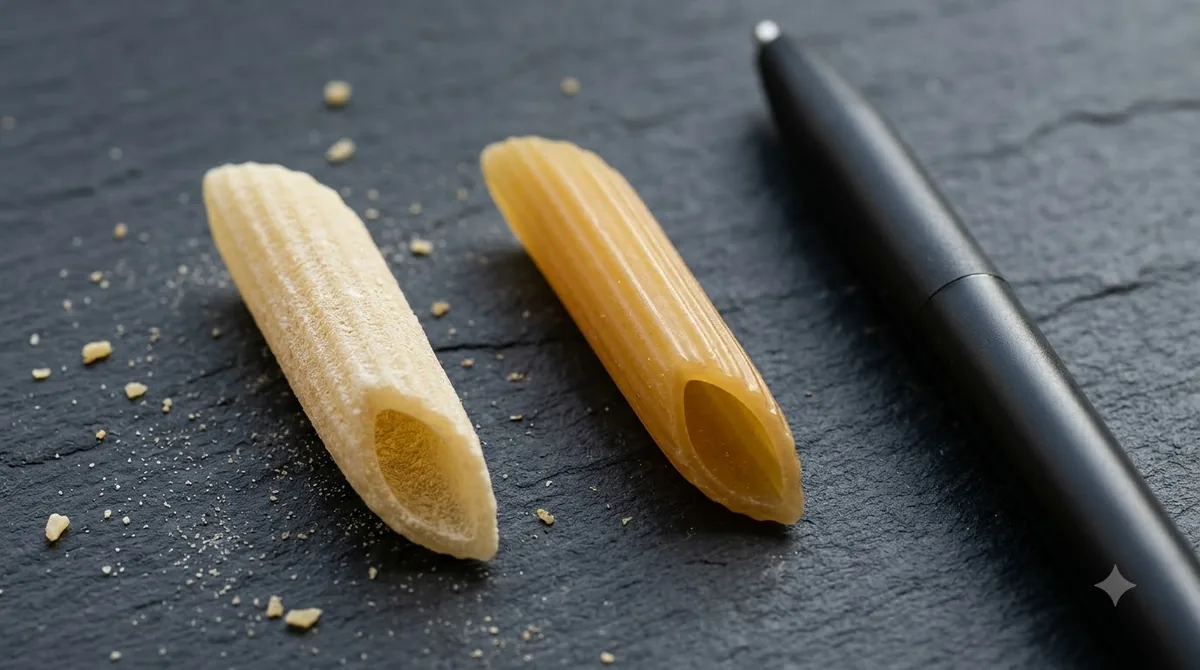
Factory fusilli is usually extruded, meaning the dough is pushed through a shaped die. The Wikipedia overview of pasta notes that penne and fusilli are extruded, while spaghetti and linguine are cut with rotating blades. At home, you can get a similar spiral by hand, using a skewer or rod to roll each piece.
What Dough Works for Homemade Fusilli?
A semolina dough with hot water is the base for this method, and it gives the firm, springy texture that holds the spiral shape. Background on the spiral shape is in our fusilli pasta guide.
The recipe used here calls for 300 grams of finely ground semolina and 150 grams of hot water. Knead the dough for about 10 minutes with a short rest in between, then cover it under an inverted bowl and let it rest at least 30 minutes on the counter. The recipe puts the total resting and shaping time at about 1 hour 30 minutes. The recipe lists no eggs, and it adds salt only to the cooking water.
How to Shape Fusilli by Hand
To shape fusilli by hand, roll the dough into a rope about a quarter inch thick, cut it into 2-inch pieces, and roll each piece around a thin skewer or rod. If the twist looks familiar, see gemelli and fusilli compared.
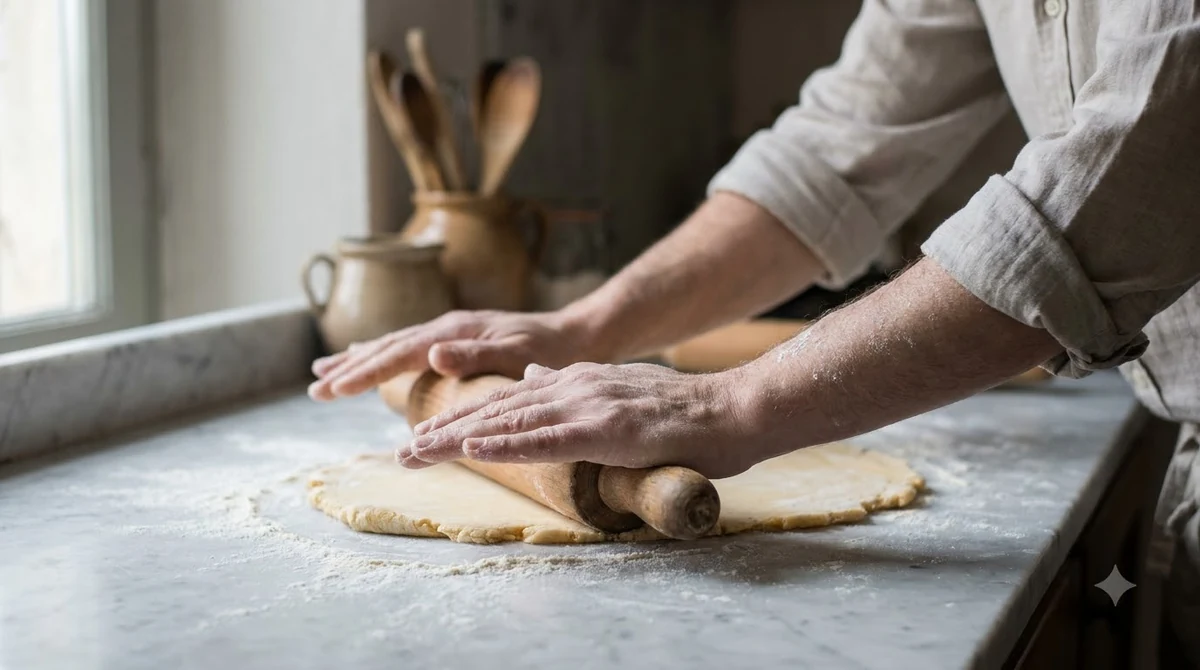
Dust your counter and hands lightly with flour so the dough does not stick. The steps below follow the spiral method from the same recipe.
- Flatten the dough into a disk about one inch thick and cut it into several strips.
- Roll a strip into a thin rope, about a quarter inch in diameter, and cut it into 2-inch lengths.
- Set the skewer or fusilli rod at a 45-degree angle at the start of each piece.
- Roll the piece away from you with gentle pressure so the dough wraps into a spiral around the rod.
- Slide the shaped piece off the rod and set it on a floured tray in a single layer.
The diameter of the rod sets the width of the spiral. A thinner skewer gives a tighter, narrower fusilli, and a thicker one gives a looser spiral. The recipe does not give a rod measurement, so use a skewer or rod that matches the shape you want and test one piece before you shape the rest.
How Do You Dry and Store Shaped Fusilli?
Shaped fusilli can sit at room temperature for a few hours, and unused dough keeps in the refrigerator for up to 3 days. A common supermarket mix-up is explained in fusilli versus rotini.
Keep the pieces separated so they do not clump. The recipe does not give a set drying time, so if you want to store them longer, check the package or manual of your dryer, or follow the storage windows above. Put the dough in an airtight bag or container when it is not in use.
Common Mistakes When You Shape Fusilli
The most common problems are sticking, loose spirals and pieces that open up in the water, and each one comes from pressure or dough moisture.
Wrapping too tightly or pressing too hard can make the dough cling to the rod, so keep the pressure light. If the dough feels dry and cracks, add a small amount of water. If it feels sticky, add a little flour and work it in before you roll.
How Long Should Homemade Fusilli Cook?
Boil homemade fusilli in well-salted water for about 3 to 5 minutes, and taste a piece before you drain it.
Fresh pasta cooks much faster than dried, so start tasting early. A piece should be tender but still have a slight bite in the center. Save a cup of the cooking water before you drain, since its starch helps a sauce cling to the spirals.
Is It Hard to Learn How to Make Fusilli at Home?
Learning how to make fusilli at home is less work than it looks. Most of the time goes to resting the dough and rolling each spiral, not to the mixing. If you are new to shaping, the first few pieces may look uneven, and that is normal.
A practical way to practice is to make one small batch with the recipe above, cook a few pieces and compare them. Once you know how to make fusilli at home with this dough, you can adjust the rod width or the length of each strip for a tighter or looser spiral.
Keep notes on the rod diameter and the number of turns, since these details decide the final shape. A simple log helps you repeat a good batch the next time you want homemade fusilli, and it shows which dough texture gives the cleanest spiral for your kitchen.
Frequently Asked Questions
What is homemade fusilli made from?
The recipe uses finely ground semolina and hot water, with no eggs. Salt is added to the cooking water.
Can you shape fusilli without a skewer?
Yes. A thin rod, a knitting needle or a metal skewer works, and the recipe also describes a simpler version where you cut a finger-thick rope into short pieces.
Why do my fusilli lose their spiral in the pot?
The spiral usually opens when the dough is too dry to hold its shape, or when it was not pressed firmly enough around the rod. Let the pieces rest a short time before you cook them.
How long should fusilli dough rest?
The recipe calls for at least 30 minutes of rest under an inverted bowl after kneading. The dough can be kept refrigerated for up to 3 days if you do not shape it right away.
Making fusilli by hand is slower than buying a box, but the dough is simple and the spiral is the main skill to learn. Start with a few pieces, check the rod width and the cooking time, and adjust the next batch. Once the shape feels natural, you can use the same dough for other short shapes and keep your sauce pairing simple.
 8 min readLearnFusilli Bucati Pasta: What Makes This Hollow Spiral DifferentUpdated Nov 6, 2026
 8 min readLearnFusilli Pasta: What It Is, How to Make It and What Sauce to UseUpdated Nov 6, 2026
 6 min readLearnHow to Make Cavatelli at Home: Ricotta Dough and Hand ShapingUpdated Nov 13, 2026
 6 min readLearnHow to Make Strozzapreti by Hand, Step by StepUpdated Nov 13, 2026
 6 min readLearnHow to Make Trofie: Hand-Rolled Dough and Shaping StepsUpdated Nov 13, 2026
 6 min readLearnHow to Make Agnolotti by Hand: Pinch-and-Fill MethodUpdated Nov 13, 2026