
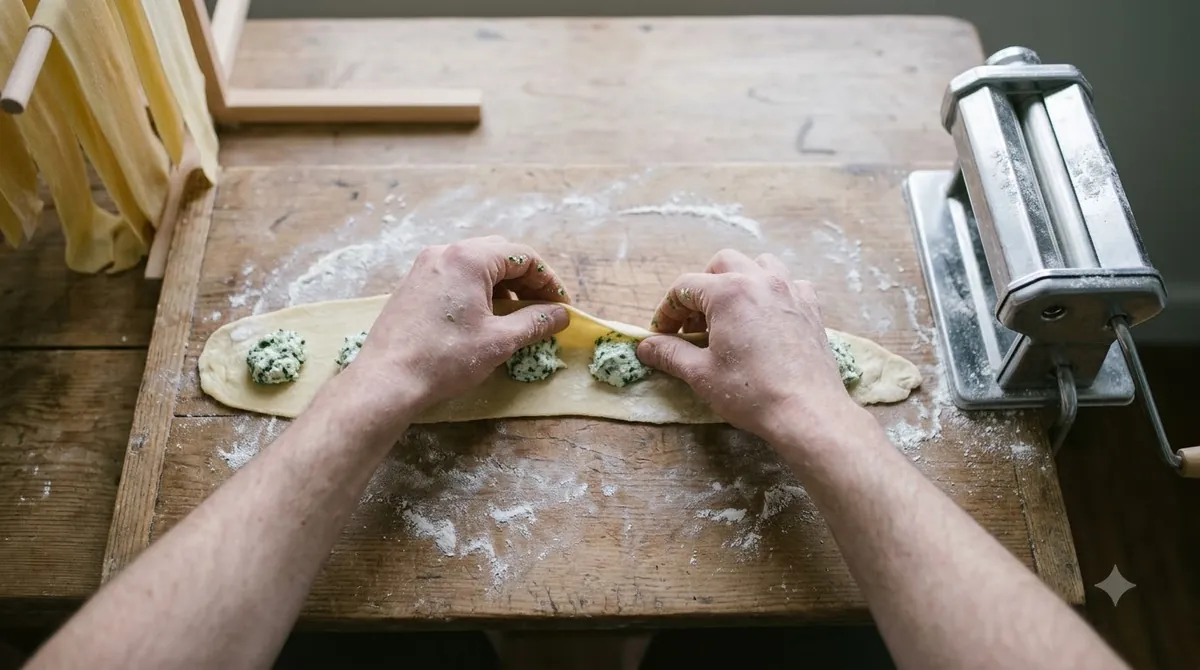

To make agnolotti by hand, roll a thin egg pasta sheet, place small mounds of filling in rows, fold the dough over and pinch between each mound so the pasta seals. The traditional shape is a square of about one to two inches, and the classic version from Piedmont is sealed with a pinch.
Learning how to make agnolotti at home is mostly about the pinch. The filling and dough are simple, and the shaping is where most of the skill is. The guide below explains the fold, the filling and the cooking so you can make a tray of homemade agnolotti with even, sealed pieces.
Where Agnolotti Comes From and What Shape It Takes
Agnolotti is a stuffed pasta from Piedmont in northwest Italy, and its traditional form is a small square with sides about one or two inches long.
The Wikipedia entry on agnolotti describes the folded construction and the Piedmont origin. The smaller version, agnolotti del plin, is a rectangle sealed by pinching between each mound of filling, and the word “plin” is the Piedmontese word for pinch.
How to Shape Agnolotti by Hand
To shape agnolotti, place the filling in small mounds along one half of the sheet, fold the dough over and pinch around each mound so no air is trapped inside. The Piedmontese background is in our agnolotti pasta guide.
Work in short lines rather than trying to fill the whole sheet at once. Pinch firmly between the mounds, then cut between the rows with a pastry wheel or knife. The Pasta Project describes agnolotti del plin as pinched at both ends, so check the ends of each piece as well as the sides.
- Roll the dough into a thin sheet and keep the rest covered while you work.
- Spoon small mounds of filling in a row along one half of the sheet, leaving space between them.
- Fold the other half over the filling and press the dough down around each mound.
- Pinch firmly between the mounds to seal, pressing out any air.
- Cut between the rows, then check the ends so each piece is closed.
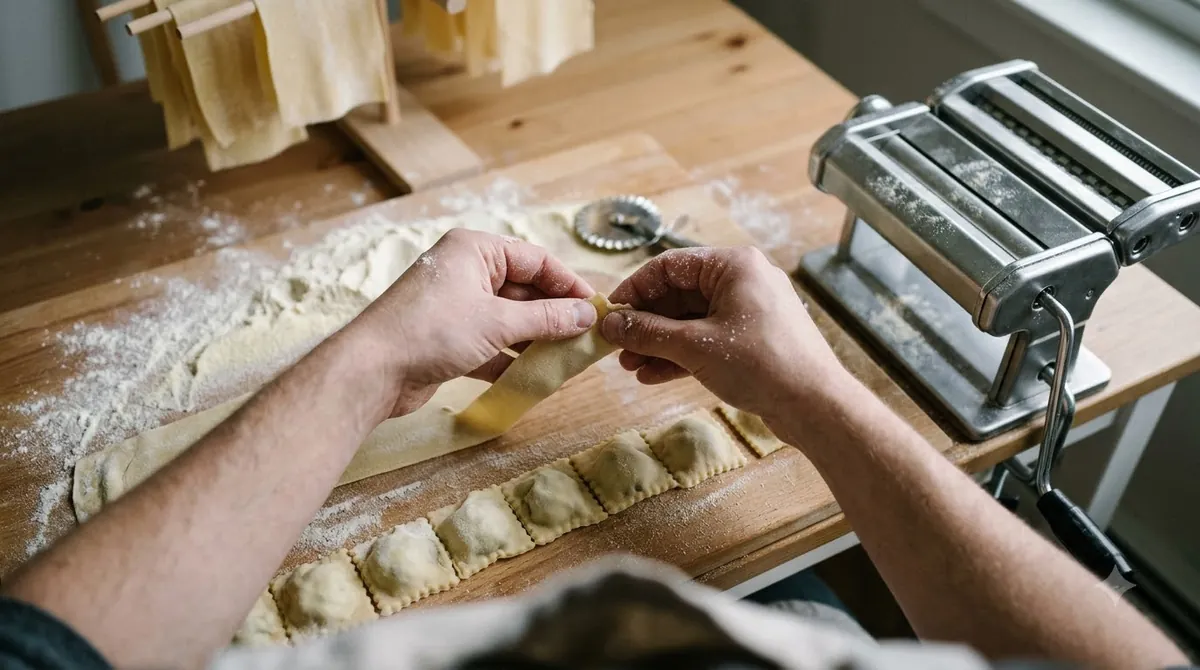
What Dough and Filling Work for Homemade Agnolotti?
An egg pasta dough works well, and a roast-meat filling is the classic choice in Piedmont. If you are weighing the two filled shapes, see agnolotti compared with ravioli. The flat alternatives are covered in ravioli shaping styles.
The America’s Test Kitchen fresh egg pasta recipe uses about 10 ounces (283 grams) of unbleached all-purpose flour and 3 large beaten eggs, and it asks for 1 to 2 minutes of kneading by hand after the food processor step. Wikipedia lists agnolotti fillings as either vegetable or meat, with roasted meat or vegetables as common choices, and robiola cheese as a popular filling in Piedmont. Check the recipe you follow for filling amounts, since the sources here do not give them.
How to Cook and Serve Agnolotti
Cook agnolotti in plenty of salted boiling water until the dough is tender, and serve them with a sauce that suits the filling. The dough works the same way as in homemade ravioli dough and filling.
Fresh stuffed pasta cooks faster than dried, so begin tasting a piece a few minutes after the water returns to the boil. Traditional sauces include a braise sauce, called al sugo di brasato, and a roast sauce, called al sugo di arrosto, both drawn from Wikipedia’s list of serving styles. Dress the pasta with a little of the cooking water so the sauce coats the folds.
Common Mistakes When You Shape Agnolotti
The most common problems are loose seals, overfilling and dough that dries before you finish the tray.
Too much filling pushes the dough apart at the seal, and air trapped inside can make the pasta burst in the water. Keep the sheet covered while you shape, and seal each piece before you cut it free.
How to Make Agnolotti Ahead of Time
Planning helps when you make agnolotti at home for a group. Prepare the filling first, let it cool, then roll the dough in batches so it does not dry out. Knowing how to make agnolotti well is partly a question of timing. Work through the dough one batch at a time, shape the pieces while the sheet is still supple, and move each finished tray to a floured board so nothing sticks while you fold the next one.
Homemade agnolotti are easiest to handle when the sheet is thin but not fragile. If the dough tears while you fold, rest it under a damp cloth for a few minutes and roll a little more slowly. Tearing usually means the sheet is too thin in one spot, so roll the next batch more evenly.
Agnolotti are also a good way to use leftover roast meat, which is the classic filling in Piedmont. When you plan how to make agnolotti with other fillings, choose one that holds together when cooked, and keep the portions small so each pinch seals cleanly.
Frequently Asked Questions
What is agnolotti pasta?
Agnolotti is a stuffed pasta from Piedmont, made from a folded square of dough with a filling that is usually meat or vegetables.
Should you pinch homemade agnolotti tightly?
Yes, the seal needs to be firm enough to close the dough around the filling. Press out any air so the pasta does not open in the pot.
Can you make the agnolotti filling ahead?
Yes. A cooked filling can be cooled and kept covered in the refrigerator before you shape the pasta, which gives you time to roll and fold the dough on the day you cook.
How long do you boil homemade agnolotti?
Fresh agnolotti cook in a few minutes once the water is boiling. Taste a piece to check that the dough is tender and the seal has held before you drain.
Shaping agnolotti by hand takes practice, but the pinch becomes quick once you have a few trays behind you. Keep the dough covered, avoid overfilling, and check every seal before the pieces go into the water. A steady hand and a clean fold will give you a neat, sealed pasta.
 8 min readLearnAgnolotti Pasta: What It Is and How to Make It at HomeUpdated Nov 6, 2026
 6 min readLearnHomemade Paccheri: Hand-Rolled and Extruder MethodsUpdated Nov 13, 2026
 8 min readLearnHow to Knead Pizza Dough by Hand: A Simple Method for Home CooksUpdated Nov 11, 2026
 6 min readLearnBest Sauce for Casarecce: Thick Sauces That Fill the CurlsUpdated Nov 13, 2026
 6 min readLearnBest Sauce for Paccheri: 4 Thick Sauces That Fill the TubeUpdated Nov 13, 2026
 6 min readLearnHow to Make Trofie: Hand-Rolled Dough and Shaping StepsUpdated Nov 13, 2026