
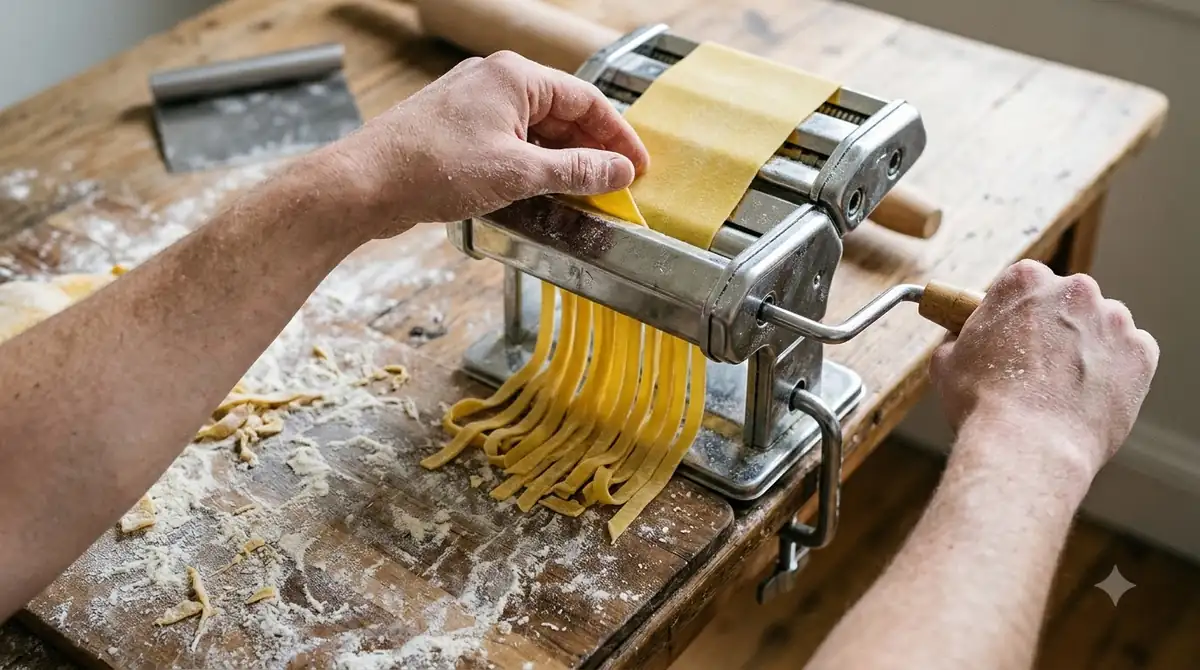

Homemade mafaldine is a ribbon pasta made from semolina dough, rolled thin and cut into wide strands. Most home cooks make an egg dough with semolina and all-purpose flour, rest it, roll it through a pasta machine, and cut it by hand. A water-only semolina dough pushed through an extruder is the other route, and it gives a firmer bite.
What Is Mafaldine and Why Make It at Home?
Mafaldine is a long, flat ribbon, usually with ruffled edges, that holds sauce well. Making it at home lets you control the texture and the thickness, and fresh mafaldine cooks in a few minutes, far less time than most dried pasta.
Two methods are common for home cooks. The egg dough method uses eggs and a mix of semolina and flour, and you roll and cut it. The extruded method uses only semolina and water, and you push the dough through a die. Both work, but they suit different kitchens and different levels of equipment.
How to Make Egg Semolina Dough for Mafaldine
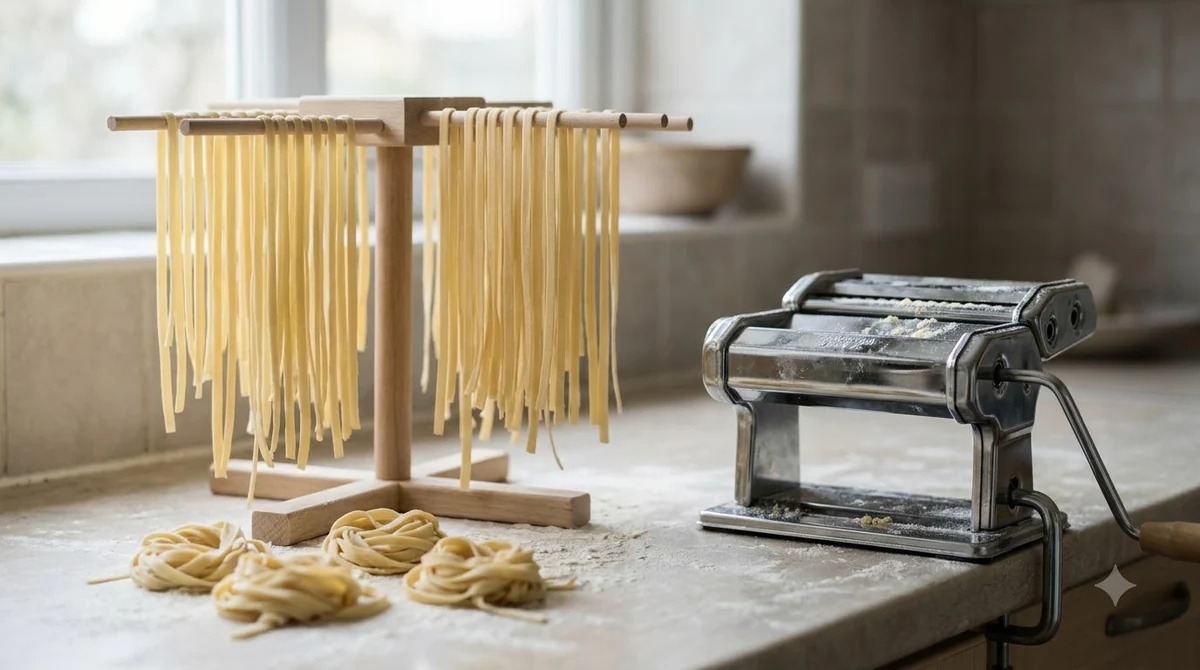
Forkinthekitchen’s semolina pasta recipe uses 1 cup (155 g) of semolina, 1 cup (125 g) of all-purpose flour, 2 eggs, 4 tablespoons of water, 2 teaspoons of extra virgin olive oil, 1 teaspoon of fine sea salt and, optionally, a little fine black pepper. The recipe uses equal volumes of semolina and all-purpose flour, so the dough is more pliable than a pure semolina dough.
Combine the dry ingredients, make a well, and add the eggs, water and oil. Work the flour in until a shaggy dough forms, then knead by hand for three to four minutes. The dough is ready when it feels tacky but not sticky and can stretch 8 to 12 inches without tearing. If it tears right away, keep kneading.
- Wrap the dough in plastic wrap and rest it for 30 to 60 minutes so the gluten relaxes.
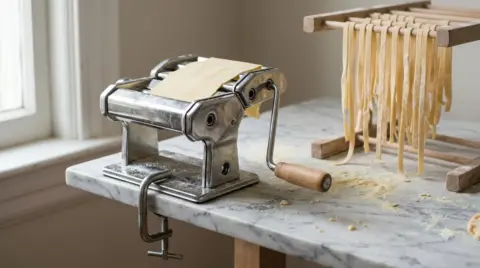
- Cut off about a quarter of the dough and flatten it into a rectangle that fits the widest setting on your machine.
- Pass it through the widest setting, fold the edges in, and repeat until the sheet is smooth.
- Roll through progressively thinner settings, stopping at the second-thinnest setting for mafaldine.
Mafaldine needs a wide cut, so use a fettuccine cutter set to the widest blade if your machine has one. Without a machine, dust the sheet with flour, fold it into loose layers and cut strips with a sharp knife, then unfold them.
How to Make Extruded Mafaldine With Semolina and Water
Missy Robbins’s mafaldine recipe, as published on Cherry Bombe, uses 500 g of semolina plus extra for dusting, and 175 g of room-temperature water. Add the water gradually, about a tablespoon at a time, and check the hydration after about three-quarters of it has gone in. The mix should be loose and crumbly, and a fistful should hold its shape briefly before it breaks apart into crumbs.
Run the machine on mix for five minutes, scrape down the sides, and let the dough rest in the machine for five minutes. Line a sheet pan with parchment and dust it well with semolina before you extrude. The first pasta will look rough and uneven, so expect to discard some of it, especially on the first run.
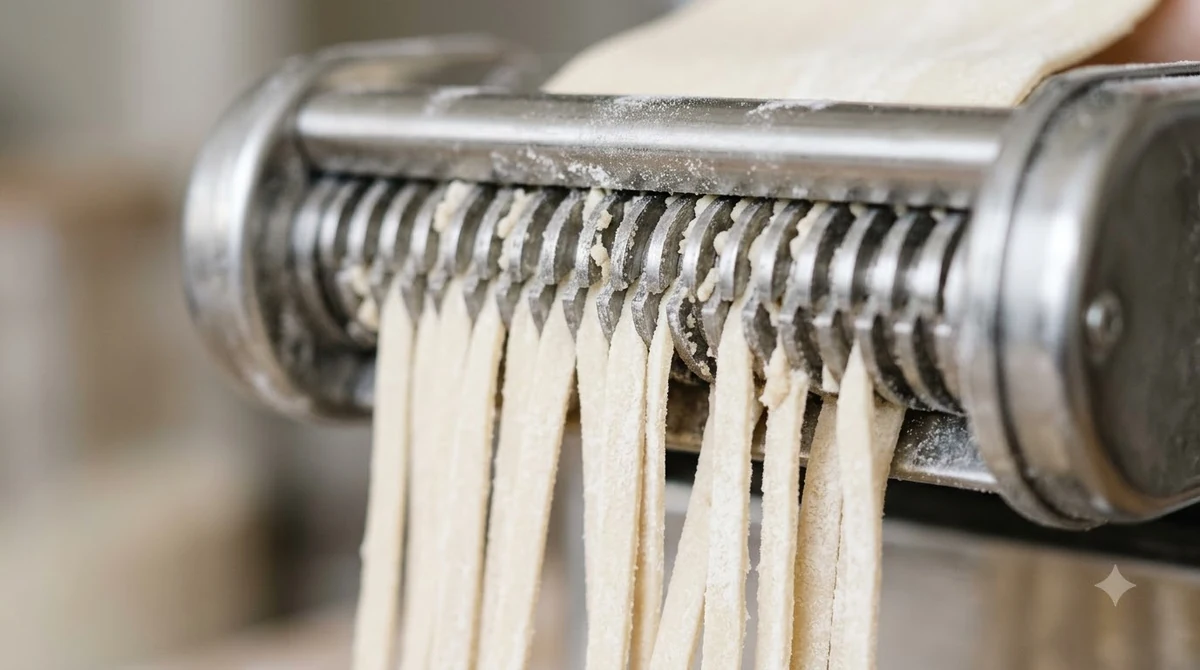
Switch the machine to extrude and cut the strands with a bench scraper as they come out. For long shapes like mafaldine, pull the strands out gently and untangle them as they emerge. When the run is finished, sprinkle the pasta with more semolina and let it dry uncovered at room temperature. To store it, cover the pan with plastic wrap and refrigerate for up to 36 hours.
Which Method Should You Choose?
The egg dough is the easier method if you only have a rolling pin or a basic pasta machine. It is more forgiving, and the eggs give a softer, more tender bite. The extruded method gives a firmer, more textured pasta, but it needs a dedicated extruder and a little practice to get a consistent strand.
Both methods need a good dusting of semolina and a clean work surface. Keep the shaped pasta from touching while it rests, or the strands will stick together.
| Method | Dough | Equipment |
|---|---|---|
| Egg semolina dough | Semolina, all-purpose flour, eggs, water and oil | Rolling pin or pasta machine with a fettuccine cutter |
| Extruded semolina | Semolina and water only | Pasta extruder with a flat or ribbon die |
Common Mistakes When Making Mafaldine at Home
Most problems with homemade mafaldine come from dough that is too dry or too wet, strands that stick together, or a sheet rolled too thick for a ribbon shape. Each one is easy to spot early if you check the dough at each step.
Adding too much water to the extruded dough is a common error. Add it slowly, because semolina absorbs water unevenly. If the mix will not bind at all, add a small extra amount of water, but do not drown the dough. A loose, crumbly mix is what you want before the machine takes over.
Skipping the rest is another mistake. Egg dough that is cut straight after kneading tends to shrink back and tear when it is rolled. Give it the full rest, and keep the cut strands dusted with semolina so they do not clump while they dry.
Rolling too thick is the last common problem. Mafaldine is a ribbon, so stop at the second-thinnest setting on the machine. A sheet that is too thick gives a heavy strand that does not twist well around the sauce.
Frequently Asked Questions
Can I make homemade mafaldine without a pasta machine?
Yes. Roll the dough as thin as you can with a rolling pin, dust it with flour, fold it into loose layers and cut strips with a sharp knife.
How long should mafaldine dough rest?
For the egg dough, rest it for 30 to 60 minutes wrapped in plastic. The rest lets the gluten relax, so the dough is easier to roll out into a thin sheet.
Can I use all-purpose flour instead of semolina?
The egg dough uses both, and the extruded method relies on semolina for structure. Replacing all the semolina with all-purpose flour changes the texture, so keep the semolina in the recipe.
How do I store fresh mafaldine?
Dust it with semolina, cover it and refrigerate it for up to 36 hours, as the extruded method recommends. For longer storage, let it dry fully and keep it in an airtight container.
Homemade mafaldine rewards a little patience. Rest the dough, keep the strands separated while they dry, and try the egg dough first if you do not own an extruder. With a few batches you will know how thick to roll it for your sauce.
 5 min readLearnHomemade Tagliatelle: Simple Egg Pasta Dough and MethodUpdated Nov 13, 2026
 6 min readLearnHomemade Gemelli: Semolina Dough, Shaping and DryingUpdated Nov 13, 2026
 6 min readLearnHomemade Casarecce: Semolina Dough and Rod Shaping GuideUpdated Nov 13, 2026
 6 min readLearnHomemade Garganelli: Egg Dough and Shaping StepsUpdated Nov 13, 2026
 6 min readLearnHomemade Capellini: Egg Dough, Cutting and Cooking GuideUpdated Nov 13, 2026
 8 min readLearnHomemade Ravioli: Easy 3-Egg Dough Recipe and TipsUpdated Nov 10, 2026