
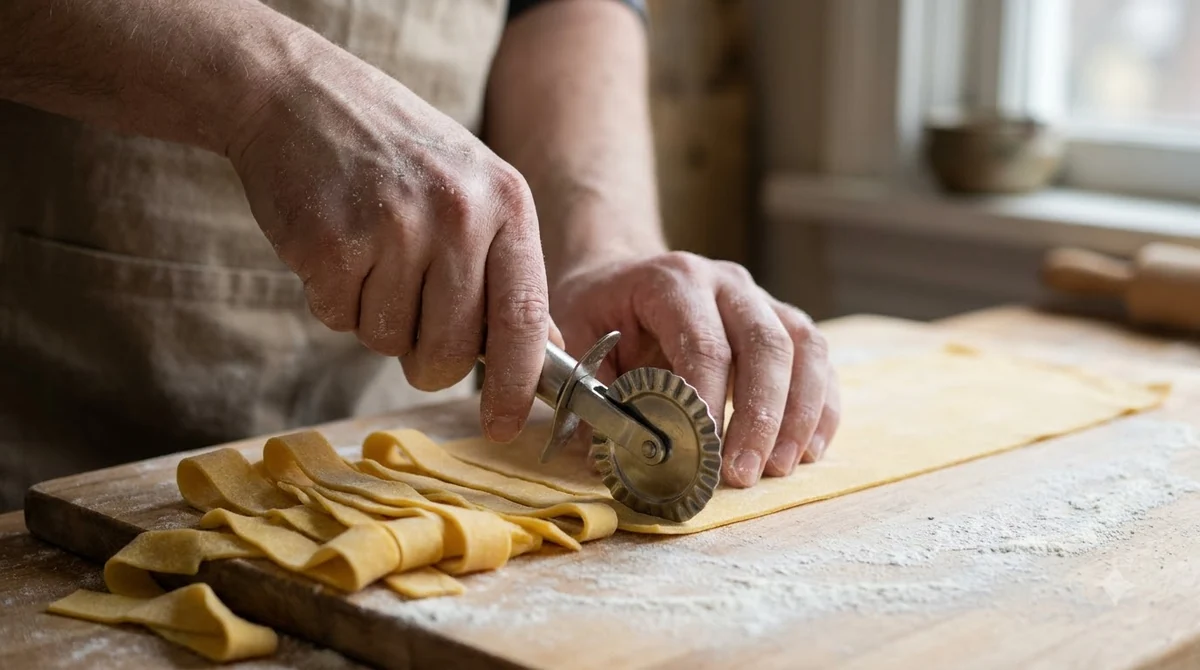

Learning how to make tagliolini means rolling an egg dough very thin and cutting it into fine ribbons, about 2 to 3 mm wide. Tagliolini is narrower than tagliatelle and closer in width to capellini, so the sheet has to be thinner and the cutting more precise. Because the strands are so fine, they cook in only a few minutes.
This guide to homemade tagliolini covers the thin-sheet method, how to cut very fine ribbons without them sticking, how to handle drying, and what to expect from cooking time. The principles are the same as for other egg pasta, but the margins for error are smaller.
What Makes Tagliolini Different From Tagliatelle?
Tagliolini is a long ribbon pasta cut from a sheet of egg dough. Its name comes from the same root as the verb “to cut,” and it is narrower than tagliatelle, which is why it sits closer to capellini on the width scale.
The Wikipedia entry on tagliolini describes the ribbon as about 2 to 3 mm wide. It is traditional in Molise and Piedmont, where the Piedmont version is called tajarin. The dough is egg-based, made with flour, semolina and salt. Because the ribbon is so fine, it suits light sauces, seafood and broth-based dishes better than heavy ragù.
How to Make Tagliolini Dough Thin Enough to Cut?
Roll the dough until it is thin enough that you can see light through it, then cut the sheet into narrow strands with a sharp knife or a pasta machine’s fine cutter. Background on the shape and its traditional pairings is in our tagliolini shape and traditional pairings.
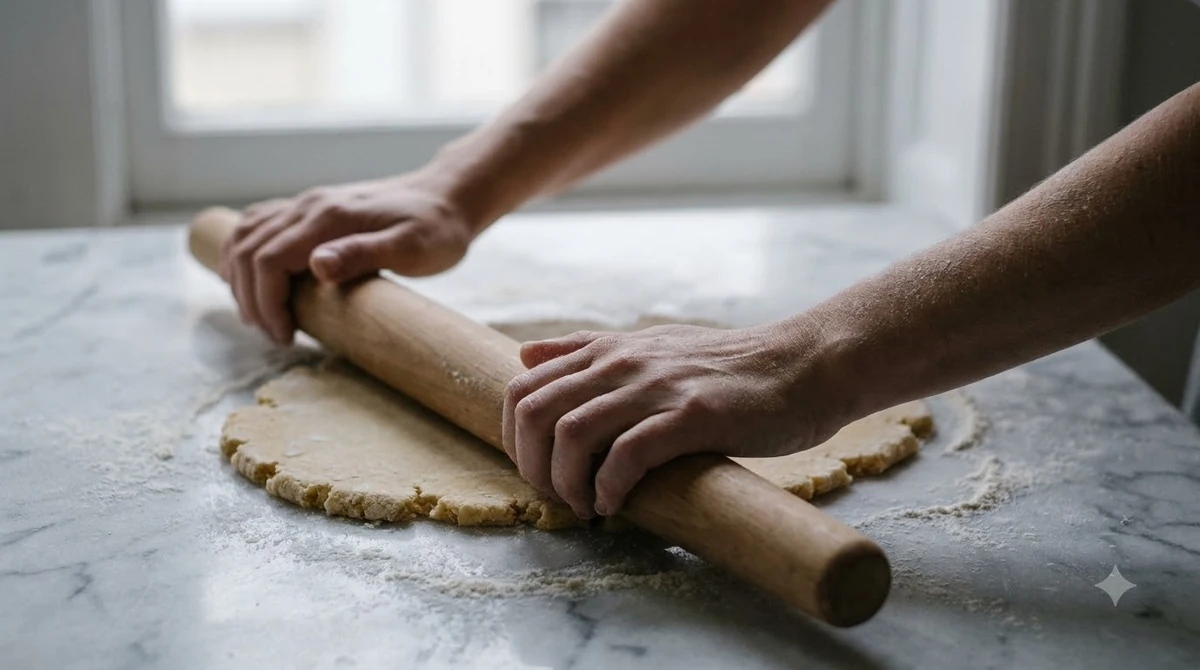
Start with a well-rested dough, cut it into portions, and keep the portions you are not rolling covered. Roll each piece gradually, folding and turning it between passes. A thin sheet that is still firm will hold its shape when you cut it. If the sheet tears, the dough is too dry or the sheet is too thin for its size, so take it back a step and roll it slightly thicker.
For a pasta machine, most cooks roll the dough down through the thinner settings, then pass it through the fine cutter. Check your machine’s manual for the exact setting numbers, because they vary between brands. Do not guess a setting from a different machine.
How Do You Cut Fine Tagliolini Without Sticking?
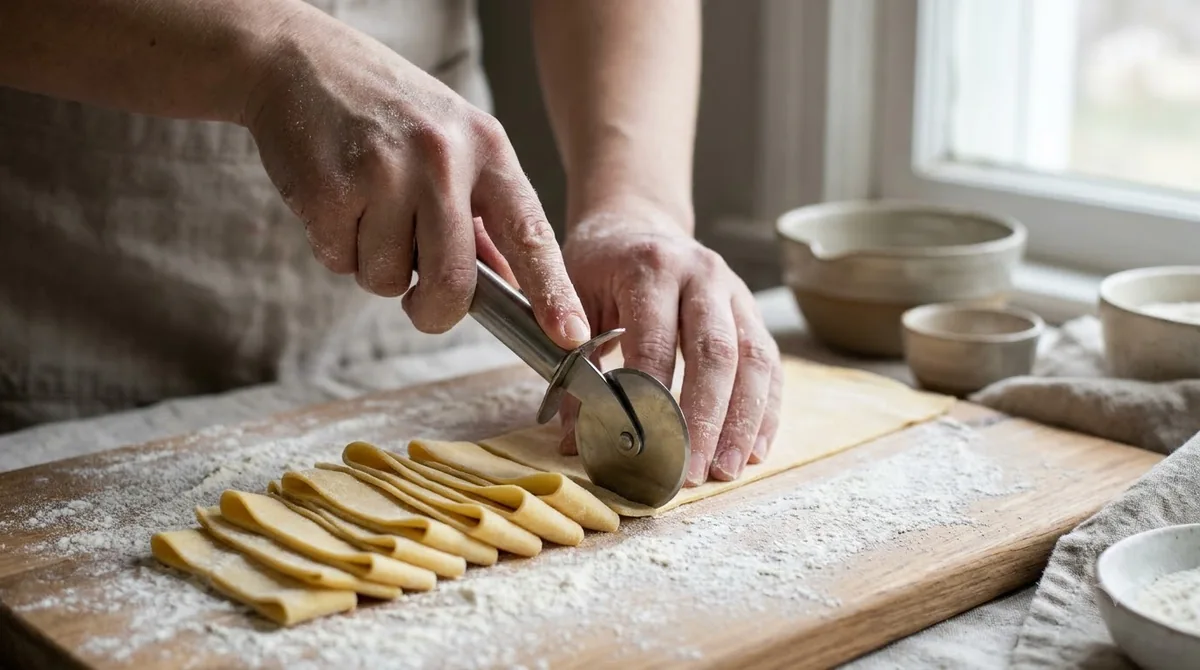
Dust the sheet with flour, fold it loosely into a flat roll, and cut across it with one smooth stroke, then open the strands at once. If you are choosing a cut, see tagliolini versus tagliatelle.
Fine strands stick together faster than wider ribbons because they have more surface area. Use a little more flour or semolina than you would for tagliatelle, shake each bundle gently, and spread the strands on a floured tray. Work quickly once the sheet is cut. Cut only as many strands as you plan to cook within a short time, since fine pasta left sitting will clump.
Can You Dry Homemade Tagliolini?
Yes, but the sources I read do not give drying times for tagliolini, so follow your recipe or the manual for your dryer and keep an eye on the strands. A slightly wider cut from similar dough is described in making tagliatelle by hand.
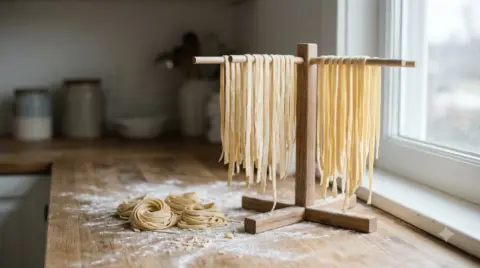
Fresh tagliolini is most often cooked the same day it is cut. If you need to store it, lay the strands loosely on a semolina-dusted tray and keep them in a cool, dry spot for a short time, or freeze them in a single layer. Thin strands that dry too long become brittle and can snap during cooking. Dried pasta from the package has its own cooking time, which is different from fresh.
How Long Should You Cook Homemade Tagliolini?
Cook fresh tagliolini for about three to five minutes in boiling salted water, testing it early because thin pasta overcooks quickly. The same rolling approach appears in rolling fettuccine without a machine.
The Pasta Project tagliolini recipe gives three to five minutes for fresh pasta, cooked al dente. Start tasting at about two minutes. The strands should be tender with a slight bite. Reserve a little cooking water before draining, since it helps the pasta grip a light sauce.
Portion size matters too. A bundle that is too large cooks unevenly, because the outer strands soften before the centre is ready. Use a large pot with plenty of water so the temperature recovers quickly after the strands go in, and lift them gently with tongs rather than stirring hard. Fine ribbons break easily, so handle them by the bundle instead of pulling single strands out of the water.
Serve tagliolini as soon as it is drained. It does not hold well on the plate, and the strands stick together as they cool. Toss the pasta in the sauce in the pan for a few seconds over low heat, add a splash of reserved cooking water, and plate immediately. This keeps the ribbons separate and lets the sauce cling evenly.
Common Mistakes When Making Tagliolini
Most problems with tagliolini come from rolling too thick, cutting too slowly, or overcooking.
- Leaving the sheet too thick, so the strands taste heavy and cook unevenly.
- Cutting slowly, which lets the strands stick along the edges.
- Piling the cut strands in one heap instead of spreading them out.
- Waiting until the strands are fully cooked before tasting, when they have already gone soft.
Frequently Asked Questions
Is tagliolini the same as tagliatelle?
No. Both are egg ribbons, but tagliolini is narrower, around 2 to 3 mm wide, and sits closer to capellini on the width scale.
What sauce goes best with tagliolini?
Light sauces suit the fine ribbon best. Butter with lemon, a simple olive oil and herb dressing, seafood, or a clear broth all work well because they coat the strands without weighing them down.
How long does fresh tagliolini take to cook?
Usually three to five minutes. Begin tasting early, since fine strands go from firm to soft quickly.
Can I make tagliolini without a pasta machine?
Yes. A long rolling pin and a sharp knife work, though it takes more care to get a thin, even sheet and clean, narrow strands.
Tagliolini rewards a careful hand. Roll thin, cut clean, keep the strands separated, and cook them briefly. A light sauce and a short cooking time let the delicate ribbon taste as it should.
 7 min readLearnTagliolini Pasta: Thin Ribbons, Sauces and How to Cook ThemUpdated Nov 10, 2026
 9 min readLearnTagliolini vs Tagliatelle: Width, Eggs and Sauces ComparedUpdated Nov 6, 2026
 6 min readLearnHow to Make Lagane: Wide Pasta Ribbons at HomeUpdated Nov 13, 2026
 6 min readLearnHow to Make Tagliatelle: Egg Ratio, Rolling and CuttingUpdated Nov 13, 2026
 6 min readLearnHow to Make Keto Pasta With Eggs and Cream CheeseUpdated Nov 13, 2026
 5 min readLearnHow to Make Tiramisu Without Eggs: Creamy No-Cook DessertUpdated Nov 13, 2026