
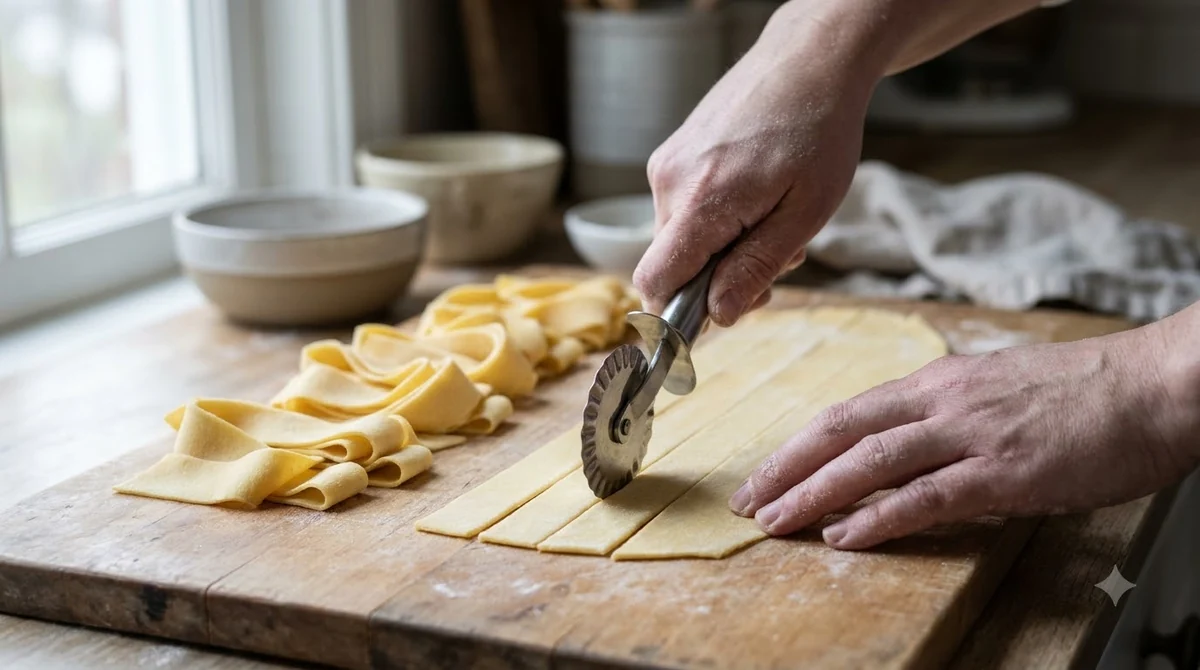

Here is how to make lagane: mix durum wheat flour with tepid water, knead for about 15 minutes, rest the dough, roll it to about 2 mm and cut it into wide ribbons. Lagane is a wide, flat pasta traditional in southern Italy, and Calabria is the region most closely tied to it. The dough needs only flour and water in the recipe we read, so it is a good first hand-cut pasta to learn.
What Is Lagane Pasta?
Lagane is a wide pasta cut into long ribbons from a rolled sheet of dough. Wikipedia describes it as a wide pasta, and the dish most often made with it is lagane e ceci, a first course from Calabria.
In the Calabrian dish, the lagane are cooked with chickpeas, garlic and olive oil and served as a first course. The Wikipedia article on lagane e ceci also ties the dish to Saint Joseph’s Day on 19 March, when families and neighbours share it.
Ingredients and Dough for Homemade Lagane
A basic lagane dough uses durum wheat flour and tepid water, and the recipe we read lists no egg. Background on the shape and its regional dishes is in our lagane pasta guide.
The Pasta Project recipe for lagane uses 300 g of durum wheat flour and 150 ml of tepid water. Sift the flour into a mound, make a well in the centre, and add the water a little at a time while you mix with a fork.
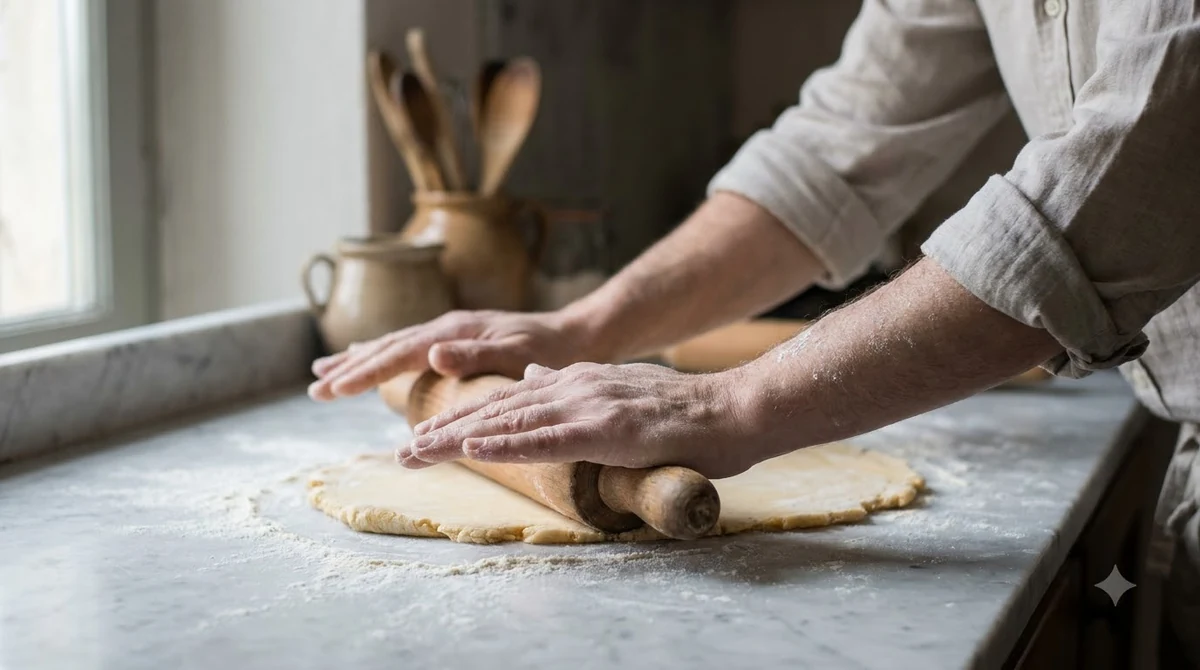
Knead the dough for about 15 minutes until it is smooth and elastic. Wrap it in cling film and let it rest for half an hour at room temperature before you roll it. Resting relaxes the gluten, which makes the sheet easier to roll thin and even.
How to Make Lagane: Roll and Cut by Hand
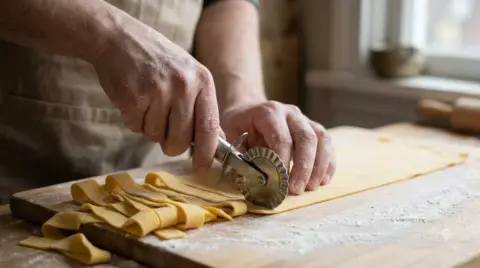
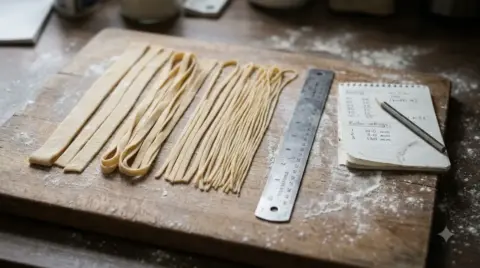
Roll the rested dough to about 2 mm thick, then roll the sheet up and slice it into strips 2 to 3 cm wide. A wider egg-dough cousin is covered in wide egg-dough pappardelle.
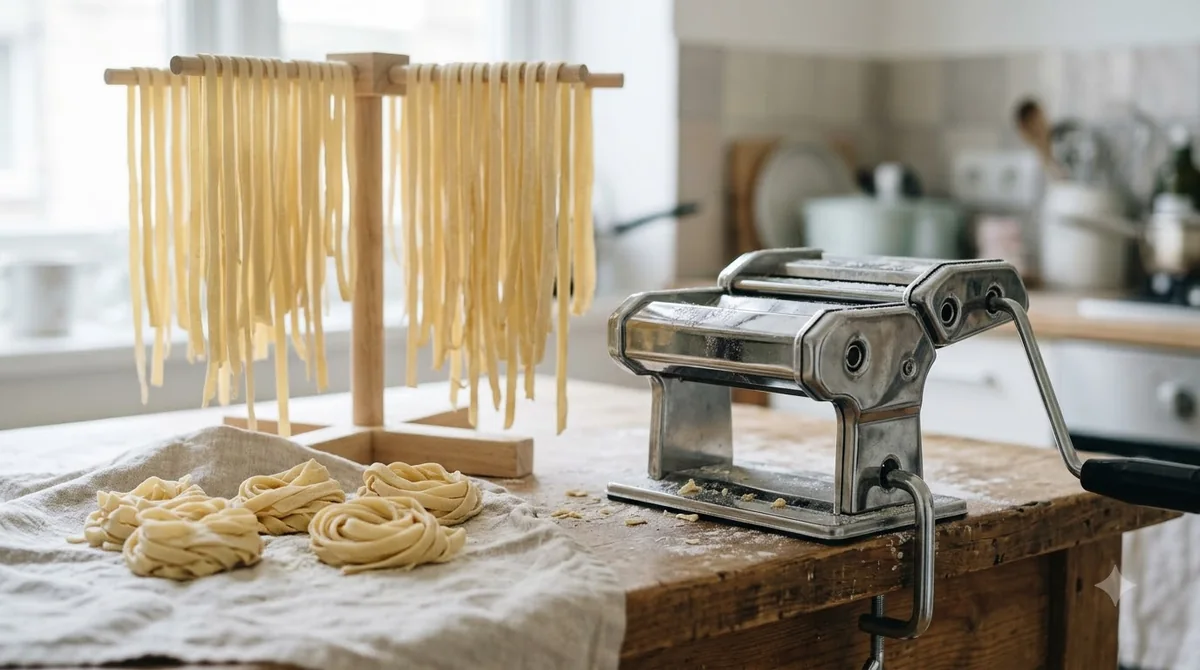
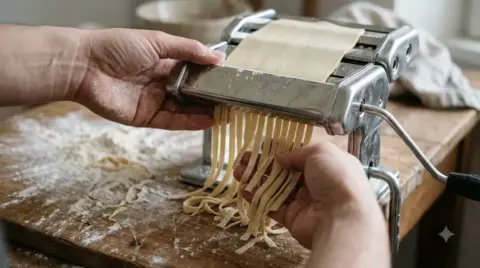
Cut off about one third of the dough and keep the rest wrapped so it does not dry out. Roll the piece into a roughly rectangular sheet of about 2 mm. The Pasta Project notes that a pasta machine can also be used to make the sheets, so the hand-rolled method is one option rather than the only one.
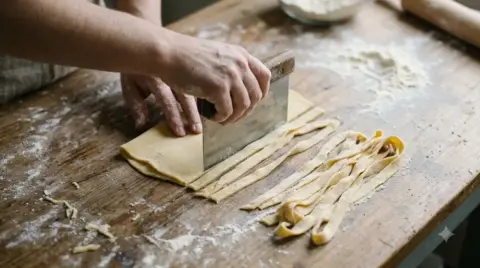
- Roll the sheet up loosely, like a log.
- Cut the roll into sections 2 to 3 cm wide.
- Unroll the pieces so each ribbon lies flat and separate.
- Rest the cut lagane for about 20 minutes before cooking.
How to Cook Lagane
Cook lagane in boiling water until tender, and taste a piece to check before you drain it. The source does not give a cooking time, so the exact time depends on how thick your ribbons are. For ribbons made with eggs, see hand-rolled tagliatelle dough.
Fresh pasta cooks much faster than dried, and the cut width changes the timing. Keep the ribbons an even width so they cook at the same rate, and pull a test piece a minute or two before you think it is ready.
The Pasta Project notes that lagane are traditionally served in soups or with legumes, especially chickpeas, across Campania, Basilicata, Calabria and Puglia. In Puglia, particularly Salento, they are sometimes fried in boiling oil until they swell and turn crunchy.
Common Mistakes When Making Lagane
Most problems come from skipping the rest, rolling unevenly, or cutting the ribbons at different widths.
Skipping the 30-minute rest makes the dough spring back when you roll it, so the sheet ends up thicker and less even. Uneven thickness also makes some ribbons cook faster than others, so check that the sheet is close to 2 mm across its whole width.
Mixed widths are the other common error. Keep every strip in the 2 to 3 cm range, and let the cut ribbons rest for about 20 minutes so they hold their shape in the pot.
Serving Lagane With Legumes
The Pasta Project names chickpeas as the most common partner for lagane, and the same legume pairing appears across Campania, Basilicata, Calabria and Puglia. Wide ribbons suit a thick, starchy broth, because the sauce clings to the flat surfaces instead of sliding off as it would on a thin pasta.
For lagane e ceci, the Wikipedia article lists lagane, chickpeas, garlic and olive oil as the core ingredients. Keep the seasoning simple so the chickpeas and the pasta stay in focus. If the dish looks dry before serving, loosen it with a little of the cooking water from the pot.
The dish is served as a first course in Calabria and carries a social meaning. Wikipedia describes it as a symbol of solidarity, shared on Saint Joseph’s Day on 19 March in a custom called u cumbitu, which is served alongside pan-fried cod and zeppole.
Fried lagane are a different treatment. In Salento, The Pasta Project says they are sometimes fried in boiling oil until swollen and crunchy, which gives a snack-style result rather than a bowl of pasta.
Working With Durum Flour
The recipe uses durum wheat flour, and the author of the Pasta Project recipe mentions semola rimacinata, a re-milled durum flour. Durum gives a firm dough that holds its shape when rolled thin and cut into wide ribbons.
Measure by weight when you can. The recipe lists 300 g of flour and 150 ml of tepid water. Flour absorbs water differently from brand to brand, so add the water gradually, as the method says, and stop when the dough holds together.
After about 15 minutes of kneading, the dough should be smooth and elastic, which is the check the recipe uses. If it tears when you stretch a piece, knead for a few minutes more before you rest it.
Frequently Asked Questions
What is lagane pasta made of?
The recipe we read uses durum wheat flour and tepid water, with no egg. Recipes differ by region, so check the ingredient list of any version you follow.
Is lagane the same as lasagne?
No. Lagane is a wide ribbon that you cut from a rolled sheet and cook in boiling water. The recipe in this guide is for that cut ribbon, not for a baked dish.
How long does lagane take to cook?
The sources we read do not give a cooking time. Taste a piece to check for a tender bite, because thickness and width change the time.
Can you make lagane without a pasta machine?
Yes. The recipe rolls the dough by hand to about 2 mm, and the Pasta Project says a pasta machine can be used as an alternative.
Fresh lagane takes patience more than skill. A rested dough, an even sheet and evenly cut ribbons do most of the work. Start with the flour and water recipe, then try the ribbons with chickpeas for the classic southern Italian first course.
 9 min readLearnLagane Pasta: Origins, Shape and a Homemade RecipeUpdated Nov 6, 2026
 6 min readLearnHow to Make Tagliolini: Thin Egg Ribbons at HomeUpdated Nov 13, 2026
 5 min readLearnMafaldine Substitute: Ribbon Pastas to Use InsteadUpdated Nov 13, 2026
 7 min readLearnPillus Pasta: A Sardinian Ribbon Pasta Served in BrothUpdated Nov 11, 2026
 7 min readLearnPizzoccheri Pasta: Buckwheat Ribbons From ValtellinaUpdated Nov 10, 2026
 7 min readLearnTagliolini Pasta: Thin Ribbons, Sauces and How to Cook ThemUpdated Nov 10, 2026