
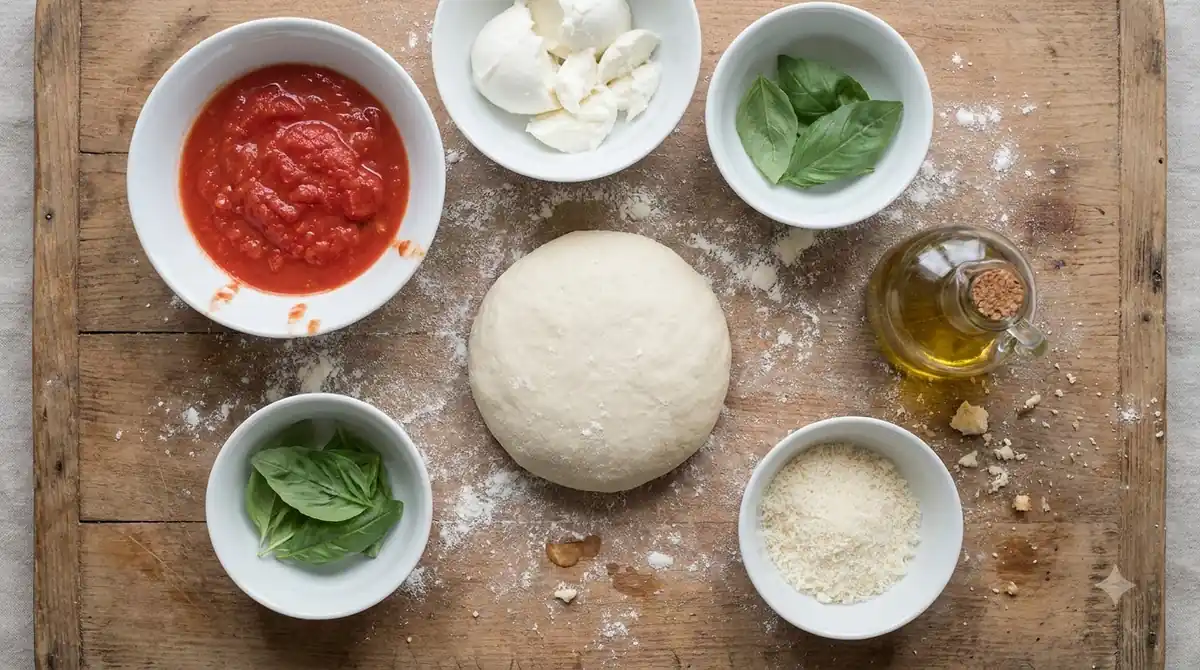

Knowing what is burrata starts with one fact: it is a fresh Italian cheese with a mozzarella shell and a soft center of cream. Burrata comes from Puglia in southern Italy, and most versions use cow’s milk.
The inside is not solid cheese. It holds stracciatella and clotted cream, which is why its texture differs from ordinary mozzarella. It is best eaten soon after it is made.
What Is Burrata Made Of?
Burrata is made from cow’s milk curds shaped into a mozzarella pouch and filled with cream and soft curd. Buffalo milk is used only occasionally, according to Wikipedia.
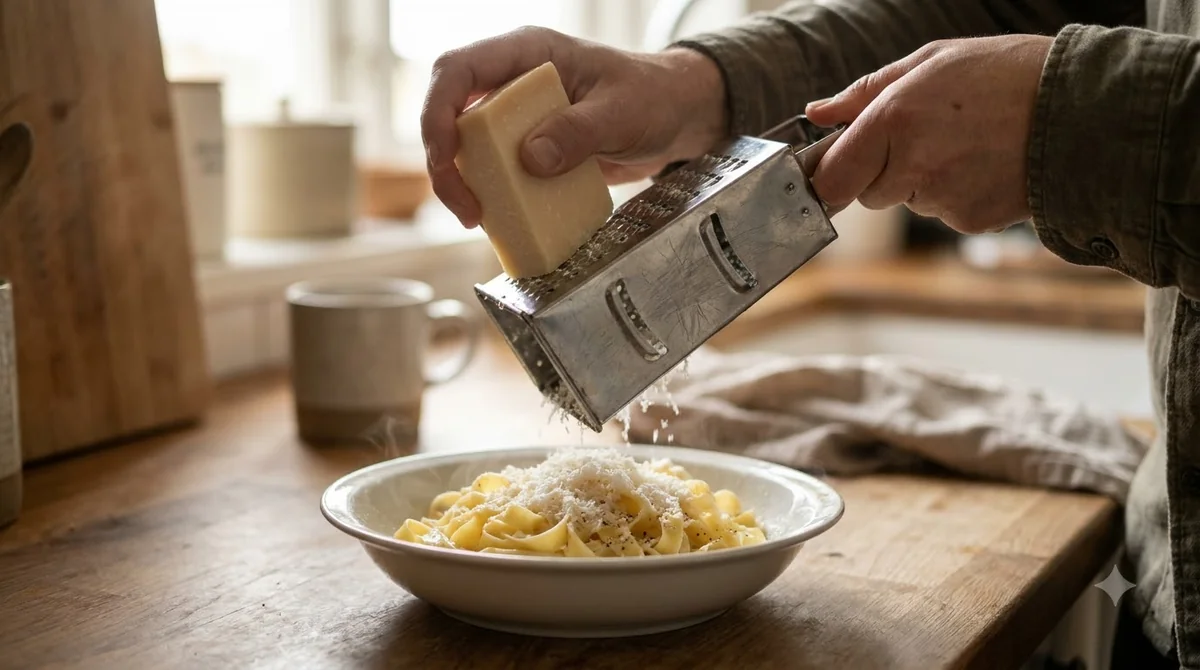
The outer layer is fresh mozzarella, which is solid cheese. According to Wisconsin Cheese’s burrata guide, the center holds soft mozzarella curd and rich cream. That filling is what separates the cheese from a plain mozzarella ball.
Most burrata is made with cow’s milk, curdled with rennet. Rennet is the coagulant that turns the milk into curd before the curd is shaped. Buffalo milk appears in some versions, but cow’s milk is the standard.
Where Does Burrata Come From?
Burrata comes from Puglia (Apulia) in southern Italy, and its best-known association is the town of Andria. The protected version, burrata di Andria, received PGI status in November 2016.
For many readers, the first question about what is burrata is where it comes from. According to Wikipedia’s burrata article, the cheese is a dairy product of the Murgia area of Puglia. The article places its best-known production in and around Andria.
The invention date is disputed. The article’s lead says the dish was born from a need to minimise food waste in the 1920s. Its history section says it may have origins dating back to about 1900 at the Bianchino brothers’ farm in Andria. It also credits Lorenzo Bianchino of the Piana Padura farm with first developing the product in 1956, based on more recent records.
Because the sources give different dates, this article does not present a single founding year as settled fact. The 1956 date rests on more recent records, while the earlier dates are described as possible origins.
The PGI rule matters for shoppers. Under the protected designation, all steps, from raw materials to finished product, must take place in the defined area of Puglia. Not every burrata label carries that protection, so check the origin on the package.
How Burrata Is Made
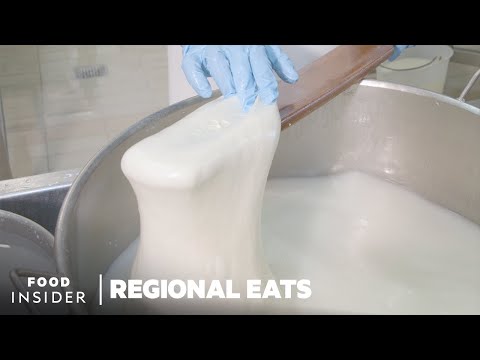
Burrata is made by stretching mozzarella curd into strings, shaping it into a pouch, and filling it with mozzarella scraps and fresh cream before closing it.
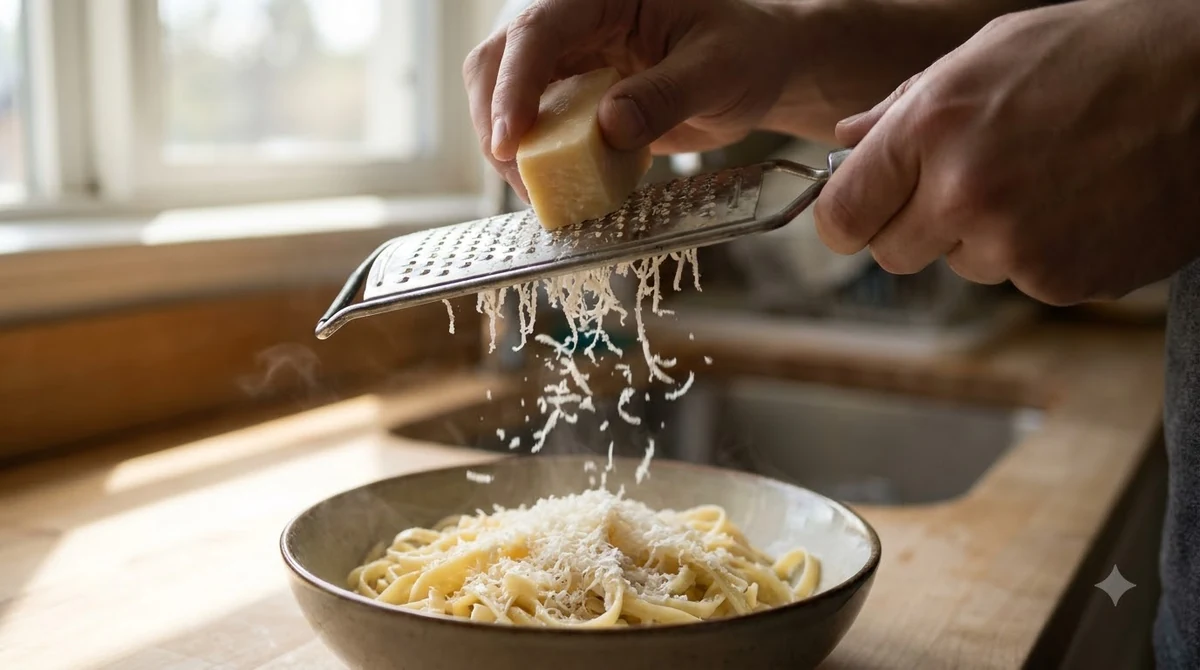
The process starts the same way as mozzarella. According to Wikipedia, the curds are made as they would be for mozzarella and then stretched into strings, a method called pasta filata. To understand what is burrata at the production level, start with that curd, since the rest of the process builds on it.
- Make mozzarella curd from cow’s milk, curdled with rennet.
- Stretch the curd into strings (pasta filata) and shape it into a pouch.
- Fill the pouch with leftover mozzarella scraps and fresh cream.
- Close the pouch so the solid cheese casing surrounds the soft filling.
Traditionally, the finished cheese is wrapped in asphodel leaves, tied with a topknot, and moistened with whey, according to the same article. These are described as traditional steps, so check the producer’s method if you want to know how a specific cheese was finished.
The filling uses leftover mozzarella scraps. That detail fits the food-waste origin the Wikipedia article gives for the cheese, since the scraps and cream go into a new product rather than being thrown away.
What Sets Burrata Apart From Mozzarella
Burrata has a solid mozzarella shell, but its inside is a soft mix of stracciatella and clotted cream rather than solid cheese.
The easiest way to see what is burrata is to compare it with a solid ball of mozzarella. The cheese keeps a mozzarella shell and adds a filling of stracciatella and clotted cream. That filling changes how the cut surface looks and feels, so it behaves differently on the plate.
- Shell: solid fresh mozzarella, as described by Wisconsin Cheese.
- Center: stracciatella and clotted cream, per Wikipedia.
- Milk: cow’s milk in most versions, with buffalo milk used occasionally.
- Keeping time: best eaten soon after it is made, and it does not keep well even when refrigerated.
If you need a cheese that holds a clean slice, a solid mozzarella is the better fit, because the soft center of burrata runs when the ball is cut. This comparison covers fresh burrata only, not aged or shelf-stable cheeses.
How to Store and Serve Burrata
Burrata is best eaten soon after it is made, and Wisconsin Cheese advises refrigerating it for up to a day.
Knowing what is burrata matters for storage, because the cheese is perishable. Wikipedia’s article is more cautious. It says burrata does not keep well, even when refrigerated, so the cheese should be used promptly after purchase. Plan to buy it close to the day you intend to eat it.
Wisconsin Cheese suggests these serving ideas, which show what is burrata at its best when it is fresh:
- Grilled bread with olive oil and salt.
- Ripe peaches or fresh figs.
- Sliced into a veggie omelet just before eating.
- A caprese salad with heirloom tomatoes and basil.
The guide does not say whether burrata should be served cold or at room temperature, so check the package or the producer for a serving temperature.
Freezing is not covered by the sources used for this article. Check the package or ask the producer before freezing, since the soft center may not return to its original texture.
Common Mistakes With Burrata
Keeping burrata for several days is the mistake the sources warn about most directly, because the cheese does not keep well even when refrigerated. Buying more than you can eat in a day or so invites the same problem.
Treating burrata as a standard mozzarella ball overlooks the soft cream center. That center changes how the cheese cuts and eats, so serve it while the filling is still fresh.
Another common error is assuming every label carries the same protection. Burrata di Andria is the protected version, and Wikipedia says its steps must all take place in Puglia. Many shoppers ask what is burrata before choosing a brand, and the origin on the label answers part of that question.
Frequently Asked Questions
What is burrata?
Burrata is a fresh Italian cheese made from mozzarella and cream, according to Wikipedia. It has a solid mozzarella shell and a soft center of stracciatella and clotted cream. It is best eaten soon after it is made.
Is burrata the same as mozzarella?
No, although the two are closely related. Burrata has a fresh mozzarella shell, and its center is a mix of stracciatella and clotted cream, according to Wikipedia. The center, not the shell, is what sets burrata apart from a standard mozzarella ball.
What milk is burrata made from?
The milk is central to what is burrata at its core. Most burrata is made from cow’s milk, which is curdled with rennet. Buffalo milk is used occasionally, according to Wikipedia. Wisconsin Cheese describes the same basic build: a fresh mozzarella shell around a center of soft curd and rich cream.
Where is burrata from?
Knowing the origin of what is burrata helps shoppers read labels. Burrata comes from Puglia in southern Italy, and Andria is its best-known association. Burrata di Andria has held PGI status since November 2016, which requires all steps to take place in Puglia.
How long does burrata last?
Shelf life is central to what is burrata as a product. It is best eaten soon after it is made. Wisconsin Cheese advises refrigerating it for up to a day, while Wikipedia says it does not keep well even when refrigerated. Check the package date for the producer’s own limit.
Can you freeze burrata?
Freezing is one more practical point about what is burrata as a fresh cheese. The sources used for this article do not address freezing, so this article gives no freezing rule. Check the package or ask the producer before freezing burrata, since the soft center may change texture.
How do you eat burrata?
Serving is where what is burrata shows its texture best. Wisconsin Cheese suggests grilled bread with olive oil and salt, ripe peaches or figs, or a caprese salad with tomatoes and basil. The guide does not state a serving temperature, so check the package.
Once you know what is burrata, buying it gets simpler. Choose a package with a clear date and plan to eat it within a day or so. Keep the serving simple with bread, fruit or tomatoes, the pairings the sources recommend, so the creamy center stays the focus.
 8 min readLearnPizza Pasta Bake Recipe: A Six-Serving Pepperoni VersionUpdated Nov 12, 2026
 8 min readLearnBurrata Pizza Recipe: Ingredients, Oven Settings and MethodUpdated Nov 11, 2026
 9 min readLearnPasta with Burrata Recipe: 2 Simple Versions ComparedUpdated Nov 11, 2026
 7 min readLearnCarbonara vs Alfredo: Ingredients, Origins and Which Sauce to ChooseUpdated Nov 10, 2026
 8 min readLearnWhat Is Calabrian Chili? Origin, Heat and How to Use ItUpdated Nov 10, 2026
 7 min readLearnSedani Pasta: Shape, Origin and How to Cook ItUpdated Nov 10, 2026