

Here is how to store fresh mozzarella: keep it in its original liquid, sealed, in a refrigerator set at 40°F (4°C) or below. Fresh mozzarella is a semi-soft, unaged cheese with high moisture, and a cheesemonger quoted by The Takeout says fresh cheeses do not get better with time in the fridge.
The sections below cover the liquid, the fridge temperature, where to place the cheese, how long it keeps, and whether freezing is worth it.
This is general food-safety guidance. If the cheese smells sour, looks slimy or shows mold, throw it out, whatever the date says.
What fresh mozzarella is and how it is packed
Before you learn how to store fresh mozzarella, it helps to know that it is a soft, unaged cheese usually sold packed in salt water (brine) or whey, and that liquid is part of how it keeps.
Fresh mozzarella is made by the pasta filata method, in which the curd is stretched and shaped. Buffalo milk versions are sold as mozzarella di bufala, and cow’s milk versions are called mozzarella fior di latte. Both are high in moisture, which is why storage matters more for them than for block cheeses. For the drier block style, see low-moisture vs fresh mozzarella for pizza, and for another fresh Italian cheese, see what burrata is.
According to Wikipedia’s mozzarella article, fresh balls are typically stored in salt water or whey. The same article notes that, because of its high moisture content, fresh mozzarella is traditionally served the day after it is made, which is why a good storage routine matters.
How to store fresh mozzarella in its original liquid
Keep fresh mozzarella submerged in its original brine or whey, in a sealed container, so the surface does not dry out.
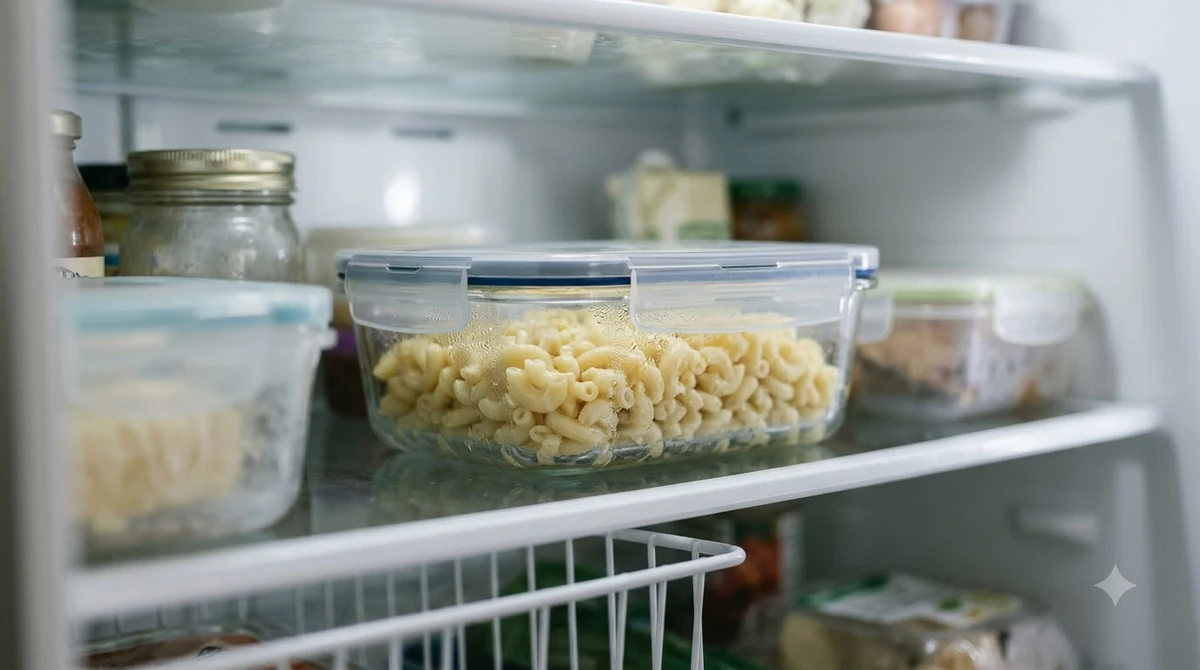
The original liquid matters because it keeps the surface moist and limits contact with air. Once you open the pack, move the cheese and enough of its liquid into a clean airtight container, and make sure the cheese stays covered at all times in the fridge.
| Option | What it does | Verdict |
|---|---|---|
| Original brine or whey, sealed | Keeps the surface moist and close to the state it was packed in | Best default |
| Homemade salt brine | A cheesemonger quoted by The Takeout says you can brine cheese yourself with about half a tablespoon of salt per cup of water | Short-term fix only |
| Plastic-wrapped, no liquid | The same cheesemonger prefers brined cheese for a creamier texture | Second choice |
Do not pour off the liquid and leave the cheese bare on a plate, because the liquid is how fresh mozzarella is packed and sold. The cheesemonger quoted by The Takeout says brine protects fresh mozzarella for a few days, instead of spoiling in a few hours, but that is its limit. If the original liquid runs low, plan to use the cheese soon rather than store it for longer.
Set the fridge to 40°F (4°C) or below
The first safety rule of how to store fresh mozzarella is temperature: the FDA advises keeping the refrigerator at or below 40°F (4°C), and the freezer at 0°F (-18°C), and an appliance thermometer is the reliable way to check.
The FDA’s storing food safely guidance says appliance thermometers are the best way of knowing these temperatures and are generally inexpensive. It also says to check the temperature regularly, at least once a week. A simple routine works well:
- Place an appliance thermometer in the front of the fridge where it is easy to read, as the FDA suggests.
- Read it at least once a week, and after any change to the thermostat.
- If it reads above 40°F (4°C), adjust the setting, then check again before you trust it.
Power cuts are a separate risk. The FDA’s general rule for refrigerated perishables is to discard food held above 40°F (4°C) for four hours or more. Fresh mozzarella is not named on that list, so after an outage, throw it out if you are unsure how long it was warm.
Where to put it in the fridge and what to keep away
For how to store fresh mozzarella on the shelf, keep it sealed on an interior shelf, away from onions, garlic and other strong-smelling foods.
Fresh mozzarella is mild and moist, so it picks up odors from nearby food more easily than hard cheese does. Keep the container closed each time you open the fridge, and store it apart from anything with a sharp smell.
- Use a shelf, not the door, because the door shelves warm up each time the door opens.
- Keep it covered, since the FDA advises storing refrigerated foods in covered containers or sealed storage bags.
- Write the date you opened the pack on the container.
- Keep it away from onions, garlic, fish and leftovers with strong smells.
If you buy more than you can use in a few days, the simplest answer to how to store fresh mozzarella you will not finish is to keep the extra in liquid in its own container so you can open only what you need.
How long fresh mozzarella keeps and when to throw it out
How to store fresh mozzarella for the longest life comes down to brine: kept in brine it can keep for up to about a week, and vacuum-sealed packs can last longer, but it does not get better with time in the fridge.
Wikipedia’s mozzarella article notes that in brine the cheese can be kept for up to a week or longer when sold in vacuum-sealed packages. The cheesemonger quoted by The Takeout adds that fresh cheeses should be bought in quantities that will be eaten quickly and entirely.
The use-by date on the pack is your first guide. Online guides quote a range of days after opening, but those figures vary widely and do not come from one official source, so treat them as rough estimates only.
Throw the cheese out if you notice any of these signs:
- A sour or sharp smell that was not there when you bought it.
- A slimy or sticky surface.
- Any visible mold.
- Cloudy liquid with an off smell.
- Anything that looks or smells suspicious, which the FDA says should be thrown out.
Can you freeze fresh mozzarella?
If the fridge is not enough, you can freeze fresh mozzarella as a last resort, but expect a softer, drier cheese, so use it in cooked dishes.
NDSU Extension’s guidance on freezing dairy products says hard or semi-hard cheeses can be frozen, with crumbly, slightly dry results, though the flavor stays as good as fresh cheese. NDSU does not list fresh mozzarella, which holds far more water, so treat this as a general warning and expect a bigger texture change. The trade-off is clear: freezing extends the time you have, but you lose the soft texture that makes fresh mozzarella worth eating raw. Our guide on how to freeze fresh mozzarella covers the full method.
If you decide to freeze it, follow these steps:
- Drain the liquid and cut the cheese into small pieces, no more than half a pound each.
- Seal each piece in foil, freezer wrap, plastic film or a freezer bag, pressing out as much air as you can.
- Label the package with the date and freeze at 0°F (-18°C).
- Thaw it in the refrigerator, not on the counter.
- Use it soon after thawing, and do not refreeze it.
Expect the thawed cheese to work best grated over pizza or melted into pasta, rather than sliced fresh onto a salad.
Common storage mistakes and how to fix them
Most problems with how to store fresh mozzarella come from a warm fridge, lost liquid and strong smells in the same container.
| Mistake | Why it hurts | Fix |
|---|---|---|
| Leaving it uncovered on a plate | The liquid is part of how fresh mozzarella is packed and kept | Return it to sealed liquid |
| Storing it in a fridge that runs warm | Warm temperatures speed spoilage | Check with a thermometer and keep at or below 40°F (4°C) |
| Keeping it in the fridge door | The FDA notes the door is warmer than the rest of the refrigerator | Use an interior shelf |
| Counting on brine to last | Brine protects fresh mozzarella for a few days, not longer | Keep the original brine or whey and use the cheese soon |
| Keeping it in an open container next to strong foods | Mild cheese picks up odors | Use a closed, airtight container on its own shelf space |
| Ignoring the use-by date and signs of spoilage | A sour smell or slime means the cheese has spoiled, and the FDA says anything that looks or smells suspicious should be thrown out | Use it by the date, and discard it when the signs show |
Good storage is simple: keep it cold, keep it covered in its liquid, and use it before it softens.
Frequently Asked Questions
Can I keep fresh mozzarella in homemade brine?
The original brine or whey is the better choice. If you lose the liquid, the cheesemonger quoted by The Takeout says you can brine the cheese yourself with about half a tablespoon of salt per cup of water, though brine only buys a few extra days, so keep the cheese covered and use it soon.
Does fresh mozzarella need to stay in the fridge?
Yes. Keep it at 40°F (4°C) or below, as the FDA advises for refrigerated food. Leaving it at room temperature for long periods speeds up spoilage.
How long does fresh mozzarella last once opened?
How to store fresh mozzarella after opening shapes the answer, and it also depends on the pack. Wikipedia’s mozzarella article says brine-stored cheese can be kept for up to about a week. Check the use-by date first, and throw the cheese out if it smells sour or looks slimy.
Is fresh mozzarella still safe after the use-by date?
Do not eat it if it shows signs of spoilage, whatever the date says. A sour smell, a slimy surface or visible mold means it should be discarded. When in doubt, throw it out.
Is fresh mozzarella stored differently from block mozzarella?
Yes. Fresh mozzarella is packed in liquid and is meant to be eaten soon, while low-moisture block mozzarella is usually sold dry and firmer, as covered in low-moisture vs fresh mozzarella. Each needs its own storage routine.
Here is the short version of how to store fresh mozzarella: keep it cold, covered and in its original liquid, and use it before the date or the first signs of spoilage. If you do not plan to eat it within a few days, freezing for cooking is a practical backup, as long as you thaw it in the refrigerator and use it soon. More kitchen explainers are in our Learn guides.
 9 min readLearnHow to Store Olive Oil So It Stays FreshUpdated Nov 11, 2026
 9 min readLearnHow to Store Parmesan Cheese So It Stays FreshUpdated Nov 11, 2026
 9 min readLearnHow to Store Dried Pasta So It Stays Fresh and Pest-FreeUpdated Nov 11, 2026
 8 min readLearnHow to Store Prosciutto So It Stays FreshUpdated Nov 11, 2026
 9 min readLearnHow to Store Fresh Basil: 4 Easy Methods That WorkUpdated Nov 10, 2026
 8 min readLearnHow to Store Fresh Pasta: Fridge, Freezer and Drying MethodsUpdated Nov 10, 2026