
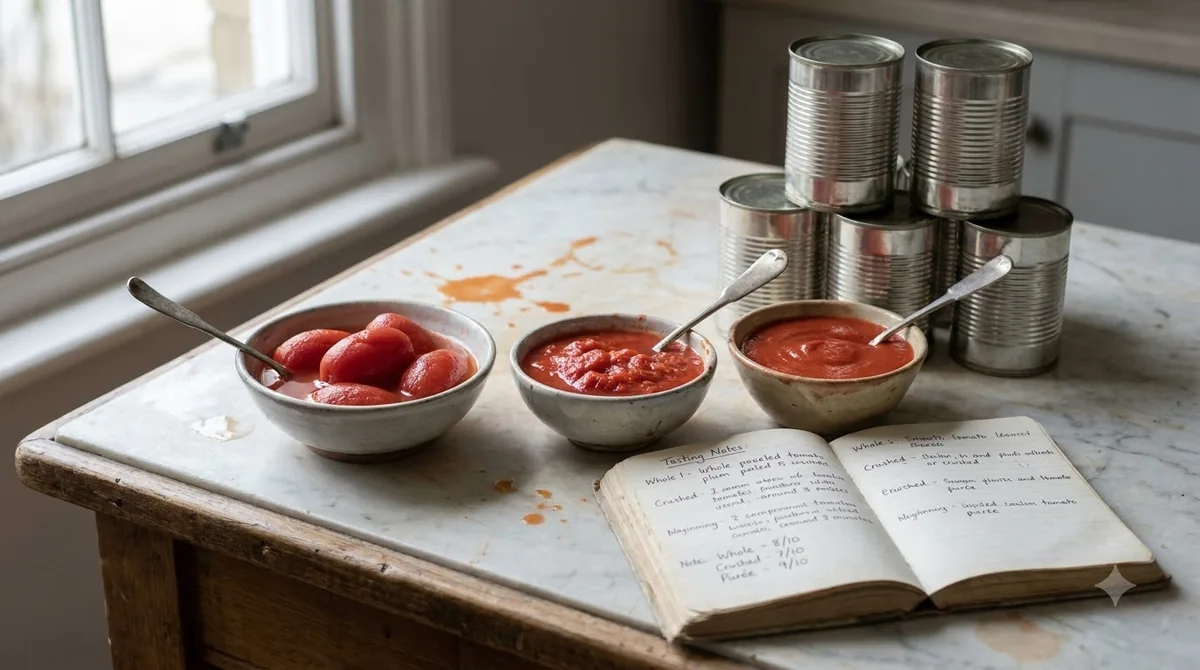

Passata is a smooth, sieved tomato purée, and that is the short answer to what is passata. It is made from ripe tomatoes with the skins and seeds removed, and it comes ready to use straight from the jar.
Passata sits between tomato paste and crushed tomatoes in texture. It is a practical base when you want a sauce with little prep and only a short simmer.
What is passata, in plain terms?
Passata is tomato purée that has been pushed through a sieve to remove skins and seeds. The word comes from the Italian verb passare, which means to pass, a reference to the straining step.
The result is smooth and pourable, with a bright, natural tomato flavour. The traditional versions are simple enough that the label tells you most of what you need to know about the jar.
Because the skins and seeds are gone, a spoonful has no chunks to chew, and that smoothness is the first thing to understand about what is passata. The product is not cooked down into a paste, so it keeps a fresher, brighter tomato taste.
In the US and Canada, tomato purée is the usual stand-in when a recipe asks for passata, and the tomato paste vs tomato puree guide shows how the two thicker products differ. Wikipedia’s tomato purée entry gives the Italian origin of the name and notes this substitution.

How is passata made?
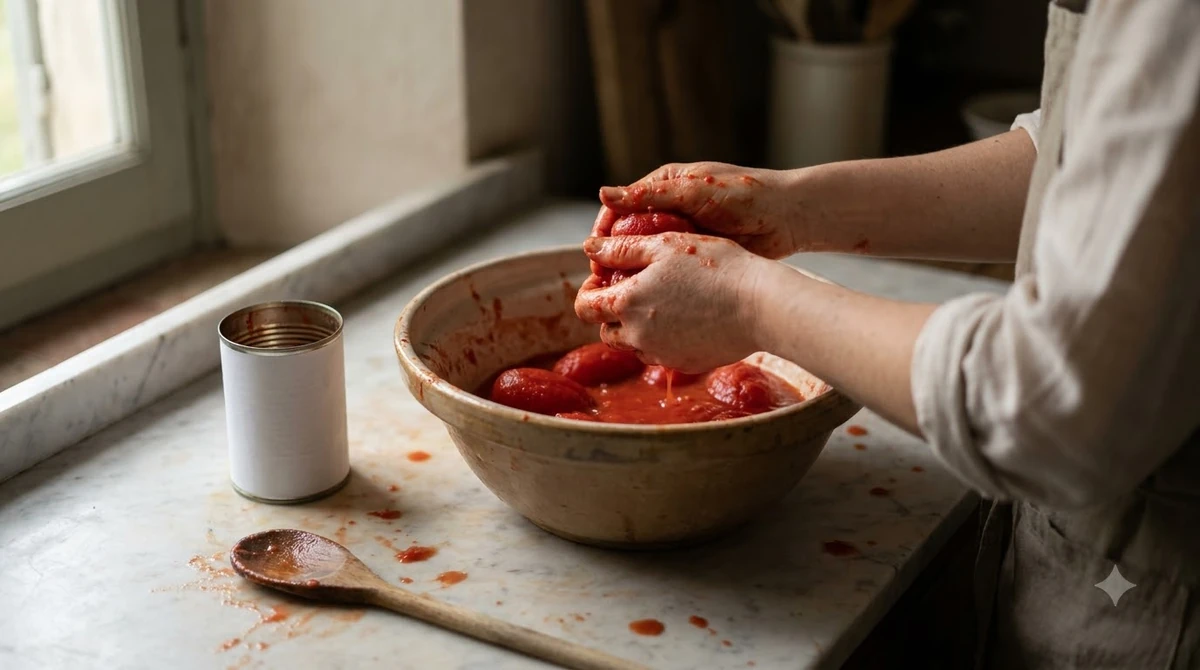
Passata is made by crushing ripe tomatoes and straining them through a sieve or food mill. The producer’s process has a few more steps before the jar is sealed. Looking at those steps is the clearest answer to what is passata in practice.
- Sort the tomatoes and discard fruit that does not meet quality standards.
- Wash the tomatoes and heat them briefly to prepare them for processing.
- Crush the tomatoes and pass them through a sieve to remove skins and seeds.
- Heat the purée and fill glass jars while it is still hot.
- Seal the jars and let them cool.
Cento describes the hot-fill step as an important part of preservation, carried out under controlled processing conditions. The Cento passata guide does not give temperatures or times, so none appear here.
Wikipedia’s tomato purée entry describes passata as uncooked. That conflicts with the producer’s account of a heat step before jarring. Both accounts describe the same smooth product, so the difference matters mainly if you are reading labels for cooking instructions.
Hot filling is part of how the jar is preserved. The producer describes it as an important part of the preservation process, carried out under controlled processing conditions to support safety and shelf stability. Seeing the process explains what is passata better than a definition alone. For a home cook, the sealed jar is the finished product, so the storage advice later in this guide applies from the day you buy it.
Passata vs tomato paste, crushed tomatoes and sauce
Passata is thinner and milder than tomato paste, and smoother and thicker than crushed tomatoes. It is a purée you season yourself, not a finished sauce. Seen side by side, what is passata becomes clear: a smooth base, not a concentrate.
| Product | Texture | Flavour and cooking |
|---|---|---|
| Passata | Smooth and pourable | Bright, natural tomato flavour; short simmer |
| Tomato paste | Much thicker | Cooked down, more concentrated |
| Crushed tomatoes | Chunks in thinner juice | Needs a long cook to thicken |
Passata and tomato paste
Passata is less intense than paste and much looser, so the two are not interchangeable gram for gram. Paste gives depth in small amounts, while passata gives body to a whole pot of sauce.
Passata and crushed tomatoes
Crushed tomatoes have visible pieces of fruit in thin juice and need a long simmer to thicken. Passata is already a thick, sauce-like consistency, so it skips much of that reduction time.
Choose crushed tomatoes when you want texture in the finished dish. Choose passata when you want a smooth, even base.
RecipeTinEats also describes tomato paste as more sour than passata. That sharper edge is one reason cooks use paste in small amounts, while passata carries a whole pot of sauce. If you are still unsure what is passata compared with the other options, the table above is the quickest check.
Passata is also not a seasoned tomato sauce. You get a plain base and add your own salt, oil and herbs, which gives you control over the final flavour.
How to use passata in cooking
Once you know what is passata, the uses follow naturally. Passata is a good base for quick pasta sauces, pizza sauce, soups and stews, because it needs no blending or straining before cooking. The producer’s guide lists these uses along with braised dishes, baked pasta and slow-cooked sauces.
- Quick pasta sauce, such as marinara sauce, when you do not have time for a long simmer.
- Pizza sauce spread thinly over the dough, as in a homemade pizza sauce recipe.
- Soups and stews where you want a clean tomato base.
- Braised and slow-cooked dishes, where it blends into the pot.
- Baked pasta dishes that need a smooth layer.
The RecipeTinEats guide says passata makes more intense tomato-flavoured sauces with a shorter simmer than the same amount of canned tomatoes. It is a useful shortcut on a weeknight, but the guide gives no conversion amounts, so follow your recipe’s quantities.
Season passata as you would any tomato base. Salt, olive oil, garlic and herbs are the usual additions, and the producer’s traditional version does not add them, so the seasoning is up to you.
A common mistake is to treat passata like paste and add a spoonful for depth. Because it is much looser and milder, a small amount adds little flavour and a lot of liquid, so the sauce can turn thin. Use the quantities in your recipe, and if you are unsure, add it in stages and taste as you go.
For pizza, a thin and even layer works well. Passata is smooth enough to spread with the back of a spoon, so you control how much sits on the base. Knowing what is passata helps you pick the right amount for each recipe.
RecipeTinEats highlights quick pasta sauces and soups as the best fit, where you cannot or do not want to simmer for a long time.
How to read a passata label
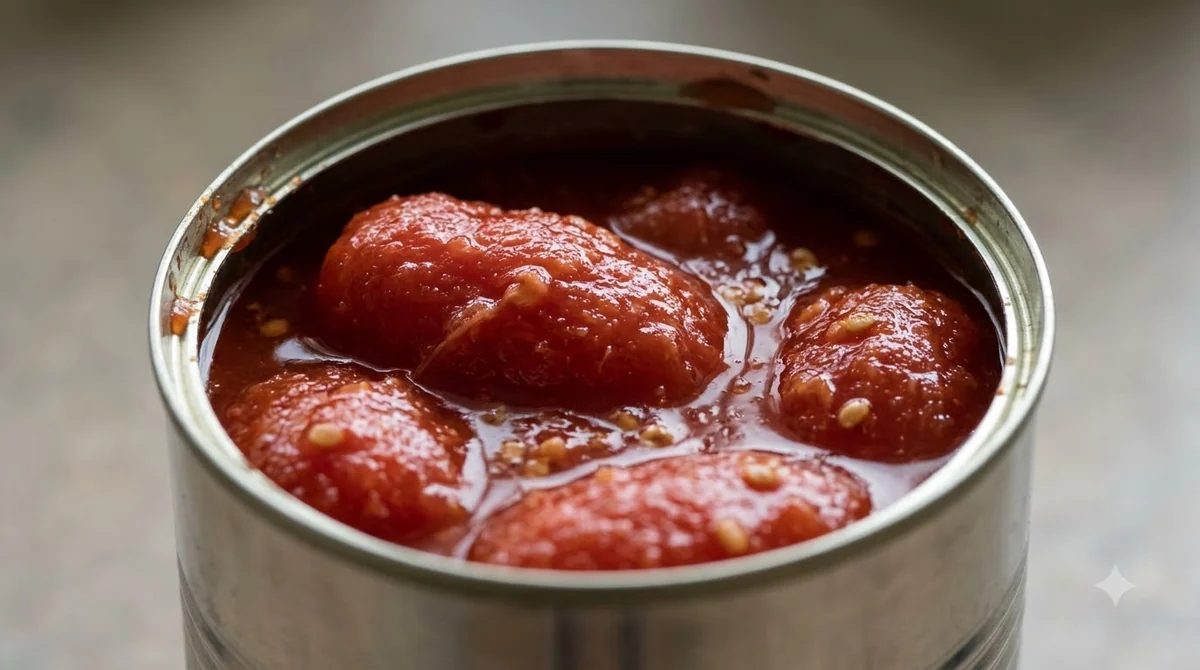
A traditional passata label lists tomatoes and, in some cases, sea salt. A label tells you what is passata in that particular jar, and that is worth checking before you cook. The producer’s traditional version has no added sugar, herbs or seasonings.
- Tomatoes, with sea salt only if the label lists it.
- No added sugar or herbs in the traditional version.
- Jar size, such as the 24 oz glass jars in the producer’s range.
- Best-by date printed on the jar.
Other brands may add more, for example in our Mutti passata review, so read the full ingredient list rather than relying on the product name. Check the best-by date before you buy and before you cook.
Passata with added salt and passata without it both use the same name, so the label is the only reliable way to tell them apart. A quick read before cooking shows whether the jar already carries salt, so you can balance the seasoning.
How to store passata
Storage does not change what is passata, but it changes how well the jar keeps. Store unopened passata in a cool, dry place away from sunlight and heat, and use it before the best-by date. Refrigerate it after opening and use it within the timeframe on the label.
- Unopened: cool, dry cupboard, away from sunlight and heat.
- Opened: refrigerate and use within the label’s timeframe.
- Leftovers: freeze in small portions for easy use.
- Thawing: move frozen portions to the refrigerator to thaw.
The sources read give no shelf-life in months, so the jar’s own date is the reliable guide. Freezing in small portions means you thaw only what a recipe needs.
Heat and sunlight are the storage risks the producer names, so keep jars away from the stove and sunny windows. Once a jar is open, write the opening date on the lid or in your kitchen notes. That habit makes it easier to follow the timeframe on the label.
Frequently Asked Questions
What is passata made from?
Passata is made from ripe tomatoes, which the producer describes as Italian tomatoes, and sometimes sea salt. The fruit is sieved to remove skins and seeds, so the finished purée is smooth and has no chunks.
Is passata the same as tomato sauce?
No. Knowing what is passata makes the difference clear: it is a sieved tomato purée made from tomatoes and, sometimes, salt, so you add your own seasonings. Read the label, since other products sold as sauce can contain more ingredients.
Can I use passata instead of tomato paste?
Not gram for gram. Knowing what is passata against paste helps here: passata is thinner and milder than tomato paste, so it adds liquid and a lighter tomato flavour. No conversion amount was verified for this article, so check the recipe before you swap.
Is passata cooked?
The sources differ on whether what is passata gets cooked. Wikipedia calls passata uncooked, while the producer Cento describes a brief heat step followed by hot filling into jars. Either way, it arrives smooth and ready to use.
How do I store opened passata?
Refrigerate it after opening and use it within the timeframe on the label. Leftovers can be frozen in small portions and thawed in the refrigerator.
Does passata contain added sugar?
Checking what is passata on the label means looking at the sugar line too. The traditional passata from Cento has no added sugar, herbs or seasonings. Other brands can differ, so check the ingredient list on the jar before you buy.
Now you know what is passata and where it fits. If your recipe needs a smooth tomato base, passata is the simplest choice. Pick tomato paste when you need concentrated flavour in small amounts, and crushed tomatoes when you want chunks in the finished dish.
 8 min readLearnWhat Is Mascarpone? A Plain Guide to Italy’s CreamUpdated Nov 10, 2026
 9 min readLearnWhat Are San Marzano Tomatoes? A Plain Guide to DOP CansUpdated Nov 10, 2026
 8 min readLearnWhat Is New Haven Style Pizza? A Plain Guide to ApizzaUpdated Nov 10, 2026
 9 min readLearnPasta e Fagioli Recipe: A Simple Italian Bean and Pasta SoupUpdated Nov 10, 2026
 9 min readLearnAglio e Olio Recipe: 4 Steps, Oil Tips and Common MistakesUpdated Nov 10, 2026
 8 min readLearnCacio e Pepe Recipe: Simple Method for a Creamy SauceUpdated Nov 10, 2026