
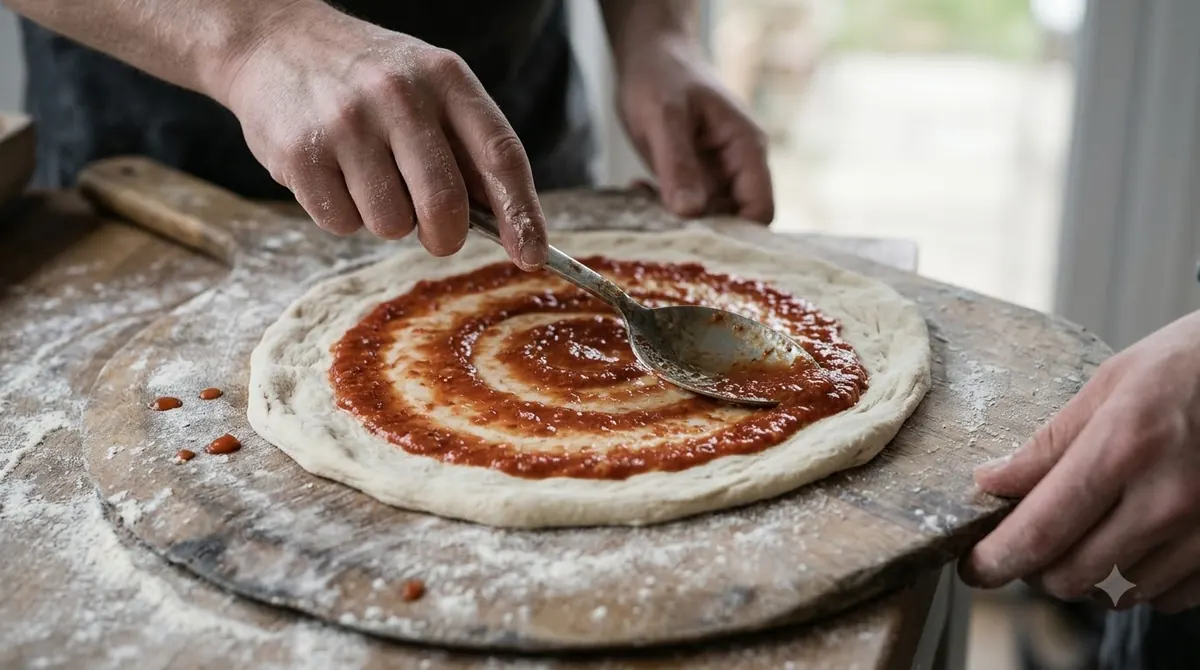

Pomodoro vs marinara comes down to texture, and simmer time sets the texture. Both sauces start from tomatoes, garlic, olive oil and basil, but pomodoro cooks longer and turns thick and smooth, while marinara stays loose with visible chunks.
Choose pomodoro for pizza or a thick coating on pasta. Choose marinara for quick pasta, dipping and seafood where the tomatoes should stay chunky.
Pomodoro vs Marinara at a Glance
Pomodoro vs marinara differs mainly in how finely the tomatoes are cut and how long the sauce simmers. The table below lists the differences that the sources reviewed for this article agree on.
| Feature | Pomodoro | Marinara |
|---|---|---|
| Texture | Smooth and thick, close to pizza sauce | Loose and runny, with larger chunks |
| Tomato cut | Minced more finely | Chopped |
| Simmer time | Longer, cooks down to thicken | Shorter, tomatoes break down less |
| Color | Deep red, close to burgundy | Bright red |
| Herbs | Few; a basic version uses basil, garlic and onion | Basil, oregano and sometimes red pepper flakes |
| Typical use | Pizza, thick pasta coating, base for other sauces | Spaghetti, dipping, seafood and meat dishes |
Both sauces are simmered slowly in olive oil with aromatics, so the practical difference is mostly how long each one cooks and how the tomatoes are cut. Treat the table as a guide to the usual versions, since home recipes vary.
Paesana sums up the gap the same way: the main difference comes down to simmering time, which affects color, texture and how the tomatoes are cut. Casual eaters may see the difference as cosmetic, but experienced cooks find distinct shades of red in different pasta dishes. Seen this way, pomodoro vs marinara is a choice of style more than a strict rule.
What Goes Into Each Sauce
Pomodoro vs marinara starts from nearly the same base of tomatoes, garlic, olive oil and salt, so the ingredient list overlaps more than the names suggest. To see the pomodoro side in practice, follow our pasta al pomodoro recipe.
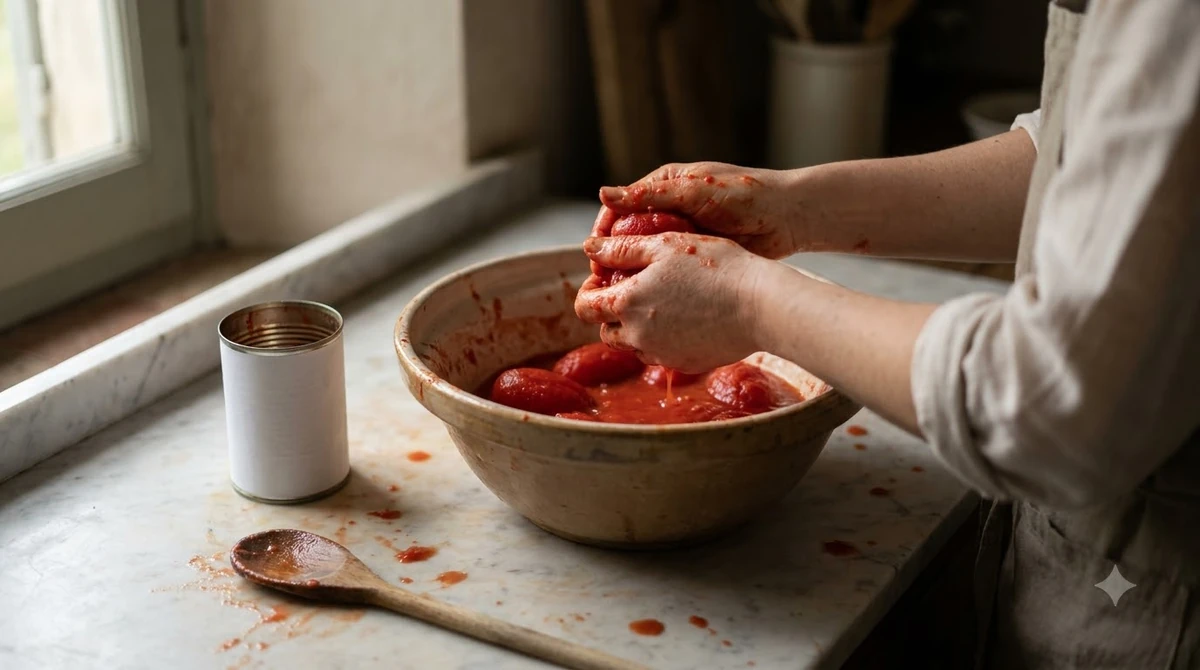
One published pomodoro recipe for eight servings uses either 5 pounds of fresh peeled tomatoes or three 28-ounce cans of San Marzano whole peeled tomatoes. It adds 2 tablespoons of olive oil, half a yellow onion, 4 garlic cloves and 12 to 15 basil leaves. Billy Parisi’s pomodoro recipe is one example, not a standard, but it shows how short the ingredient list can be.
Marinara is usually described as a tomato sauce made with tomatoes, garlic, herbs and onions. The Italian version is typically made with tomatoes, basil, olive oil, garlic and oregano, and some versions add olives, capers or salted anchovies, according to Wikipedia’s marinara entry.
The biggest ingredient difference is in the seasoning. Marinara carries more herbs, and Tasting Table notes that it often includes red pepper flakes. Pomodoro usually stays closer to a few simple ingredients.
How Simmer Time Changes the Texture
In pomodoro vs marinara, longer simmering breaks tomatoes down further, so pomodoro ends up smooth and thick while marinara keeps its chunks.
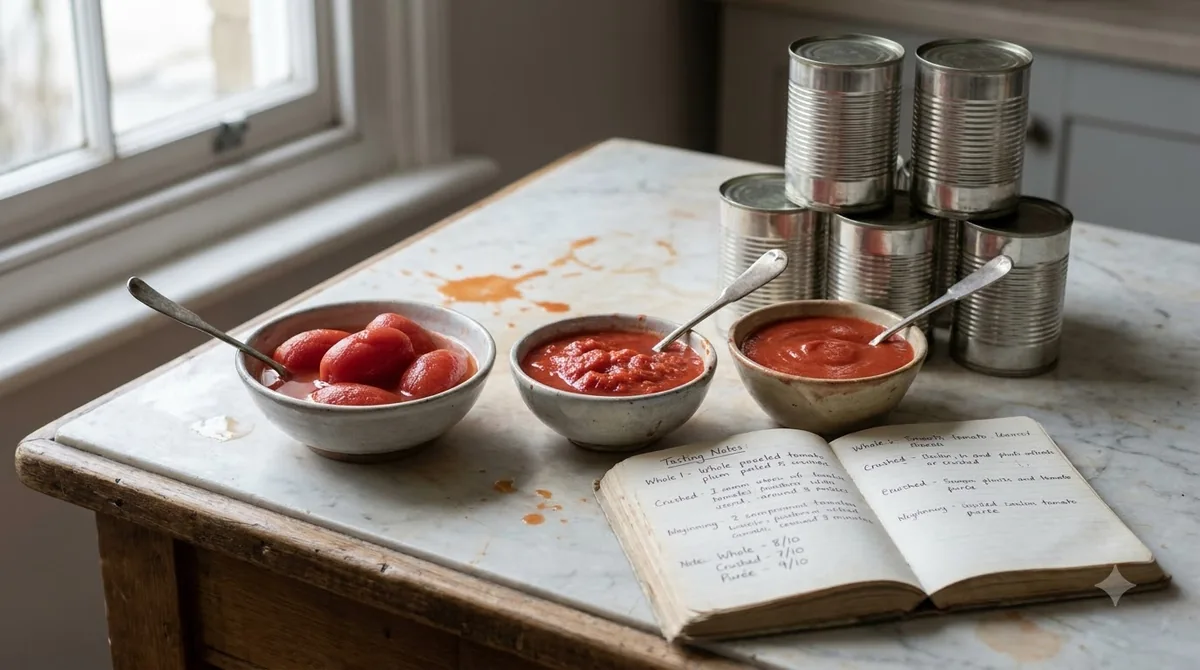
Marinara simmers for less time, so the tomatoes break down less and the sauce stays runny. Pomodoro cooks longer and reduces, which thickens it and deepens the color. Mashed describes pomodoro as smooth and thick and marinara as loose, with larger tomato chunks.
The sources reviewed give no exact minute count for marinara. The one timed recipe is pomodoro: the onion and garlic cook for about 10 minutes, then the tomatoes stew over low to medium heat for 30 minutes. Treat that as one recipe, not a rule, and adjust the time until the sauce reaches the thickness you want.
When to Use Pomodoro
For pomodoro vs marinara, choose pomodoro when you want a thick sauce that clings to pasta or stays put on a pizza base.
Pomodoro is sometimes spread on pizza because its thicker body leads to a less soggy pie, according to Tasting Table. Its smooth texture is also close to pizza sauce, which makes it an easy fit for a thin crust that needs a firm layer of tomato.
Pomodoro also works as a base for other sauces. Since it starts from a few simple ingredients, you can add extra flavor later, such as a meat sauce, without fighting a loose, chunky texture.
Pomodoro is a poor match when you want visible herbs or chunks in the bowl, because the long simmer smooths them out.
When Marinara Works Better
For pomodoro vs marinara, marinara works better when you want visible chunks, brighter herbs or a sauce for dipping and seafood.
Marinara is widely used with spaghetti and vermicelli, and also with meat or fish. Tasting Table notes that both sauces are used across the full range of pasta dishes, so pomodoro vs marinara is mostly a question of texture on the plate. Wikipedia also separates “spaghetti marinara,” a dish served in places such as Australia, New Zealand, Spain and South Africa where a tomato-based sauce is mixed with fresh seafood, from the Italian sauce itself. In Italy, a seafood pasta sauce is usually called alla pescatora, so do not expect a marinara label to mean seafood. If you want to cook the sauce from scratch, our guide to how to make marinara sauce walks through the steps.
Marinara is also frequently used for dipping, such as with fried mozzarella sticks. A looser sauce is easier to scoop than a thick one, so the texture that makes marinara a weaker pizza base makes it a better dip.
Tasting Table says there is no incorrect application for either sauce, and the choice comes down to textural preference. If you are unsure, start with the texture you want on the plate.
Marinara also takes more seasoning decisions. Tasting Table says it is more open to bold flavor additions and typically has more components than pomodoro. That makes it the better choice when you want to adjust the sauce as you cook, and a weaker choice when you want a plain base.
Common Mistakes When Choosing Between Them
In pomodoro vs marinara, the most common mistake is treating the names as fixed recipes, when cutting and simmering decide the texture.
- Assuming the name settles the texture. Recipes and jars vary, so check the description or the cooking steps before you buy or cook. Our comparison of Rao’s vs Carbone marinara shows how two jarred sauces labeled marinara can still differ.
- Cooking marinara as long as pomodoro. The sauce turns thick and loses the chunky texture it was chosen for.
- Chopping tomatoes coarsely when you want pomodoro. Pomodoro uses more finely minced tomatoes, so coarse pieces keep chunks even after a long simmer.
- Expecting pomodoro to stay meatless. Tasting Table notes that pomodoro can become a meat sauce, so read the recipe before you assume.
Where the Names Come From
The origin story in pomodoro vs marinara is clearer for marinara, whose Italian name means sailor’s style. The sources reviewed give no separate origin for pomodoro.
Wikipedia also notes that in parts of central Italy a similar sauce is called sugo finto, meaning fake sauce. That name shows how loosely the tomato sauce families overlap across regions.
In Italian, alla marinara means “sailor’s style.” Wikipedia lists a folk theory that Neapolitan cooks on ships returning from the Americas invented the sauce in the mid-16th century, and another that sailors’ wives made it when their husbands came home.
The first Italian cookbook to include tomato sauce was Lo Scalco alla Moderna by Antonio Latini, published in two volumes in 1692 and 1694. That early sauce was closer to a modern tomato salsa than to today’s marinara.
Frequently Asked Questions
Is pomodoro sauce the same as marinara?
Pomodoro vs marinara is not an exact match. Both use tomatoes, garlic and olive oil, but pomodoro simmers longer, uses finer tomato pieces and ends up smooth and thick. Marinara stays looser and chunkier, with more herbs.
Which is thicker, pomodoro or marinara?
In pomodoro vs marinara, pomodoro is thicker. Its longer simmer lets the sauce cook down, and the finely minced tomatoes give it a smooth body close to pizza sauce. Marinara is looser and runnier, with larger tomato chunks.
Can I use marinara on pizza?
For pomodoro vs marinara on pizza, you can use marinara, but it is looser, so the crust can get soggier. Tasting Table points to pomodoro as the sauce sometimes used on pizza because its thicker body gives a less soggy pie. If you do go with marinara, our marinara pizza recipe shows how the style works on a pie.
How long should pomodoro simmer?
For pomodoro vs marinara timing, one published recipe cooks the onion and garlic for about 10 minutes, then stews the tomatoes over low to medium heat for 30 minutes. Sources reviewed give no fixed time for marinara, so adjust the simmer until the sauce is as thick as you want.
Does marinara always include oregano?
Not always. Basil and oregano are the usual herbs in the Italian version, according to Wikipedia, and some versions add red pepper flakes. Olives, capers and anchovies appear in some recipes too.
Why is pomodoro a darker red?
Longer simmering deepens the color toward a dark red close to burgundy, while marinara stays a bright red.
When you compare pomodoro vs marinara, pick the sauce by texture first. Cook pomodoro longer with finely minced tomatoes when you want thickness for pizza or pasta. Keep marinara shorter with coarser tomatoes when chunks and bright herbs matter more. Then match the sauce to the dish on your plate.
 10 min readLearnTomato Paste vs Tomato Puree: Key Differences and When to Use EachUpdated Nov 10, 2026
 7 min readLearnFresh Basil vs Dried Basil: When Each Works BestUpdated Nov 10, 2026
 9 min readLearnSemolina Flour vs All Purpose Flour: Which One to Use and WhenUpdated Nov 10, 2026
 8 min readLearnTubetti Pasta: Size, Uses and Cook Time ExplainedUpdated Nov 10, 2026
 8 min readLearnPasta al Pomodoro Recipe: Simple Italian Tomato Pasta at HomeUpdated Nov 10, 2026
 8 min readLearnItalian Meatballs Recipe: Baked at 400°F and Simmered in MarinaraUpdated Nov 12, 2026