
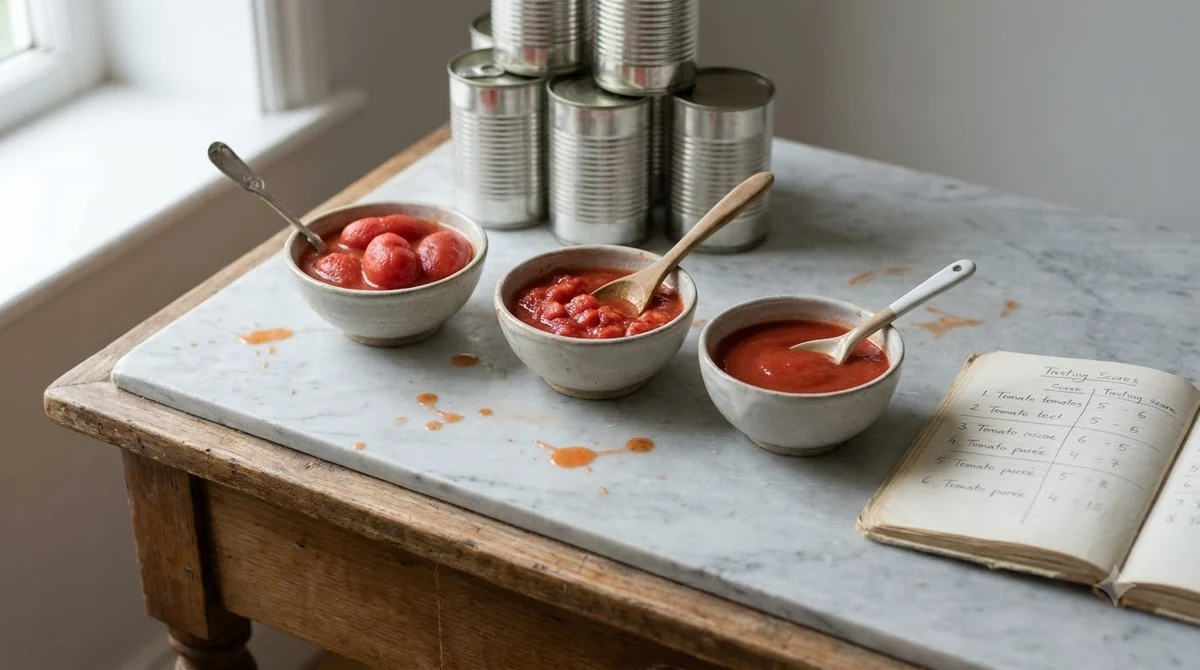

What are San Marzano tomatoes? They are a plum tomato grown in the Sarno Valley near Naples, Italy, and sold under an EU protected name. The variety is prized for canning. Only cans that meet the protected rules can carry the DOP label, so the label matters more than the name on the front.
This guide answers what are San Marzano tomatoes in plain language, explains what the DOP label guarantees and shows how to check a can before you buy. It also covers the look-alike cans that fill many shelves.
What are San Marzano tomatoes, in plain terms?
San Marzano tomatoes are a thin, pointed plum tomato that has been grown in Campania for generations and is prized for canning. Each fruit weighs about 110 grams, or 3.9 ounces, and the plant grows tall on indeterminate vines.
Many shoppers wonder what are San Marzano tomatoes compared with an ordinary plum tomato. The short answer is that the variety is a specific heirloom, not a general type of plum tomato, and the name is protected for cans that meet strict rules.
The variety is an open-pollinated heirloom, which means it breeds true from seed, so home gardeners can save seed from a good plant. It has a somewhat longer growing season than other paste tomatoes, about 85 days to maturity, which suits warmer climates.
In a shop, the term usually refers to the canned product. The fruit is grown for sauce, passata and whole peeled tins, and the name is one of the most copied in the canned tomato aisle. Shoppers who ask what are San Marzano tomatoes often find that the answer depends on the label, not the brand. That is why it helps to know what the name actually promises before you pay a premium.
Where San Marzano tomatoes come from
Most San Marzano tomatoes come from the Sarno Valley in Campania, near Mount Vesuvius, where the soil is volcanic. The town of San Marzano sul Sarno in Salerno province gives the variety its name.

One origin story says the first seed reached Campania in 1770 as a gift from the Viceroyalty of Peru to the Kingdom of Naples. Wikipedia’s San Marzano tomato entry presents this as one story, not a confirmed record, so treat it as background. For most shoppers, the origin story matters less than the label when deciding what are San Marzano tomatoes worth buying.
Smaller amounts are grown outside the valley. A tomato of the same variety grown elsewhere is not automatically a protected product, which is why the label and the packing details matter more than the variety name alone.
Knowing where the fruit grows is the first step in answering what are San Marzano tomatoes for any particular can. The second step is reading the label, because a region alone does not guarantee that a can was packed under the protected rules.
This guide does not list every protected municipality. The consortium’s official rules were not reachable while this guide was written, so check the current list of towns from the consortium before you rely on any list.
What the DOP label guarantees
DOP stands for Protected Designation of Origin. It is an EU name scheme for food, created in 1992, that ties a product to a defined area and a set of production rules.
Under that scheme, canned tomatoes grown in the Sarno Valley and packed under Italian law can be labeled pomodoro di San Marzano dell’agro sarnese-nocerino and carry the EU PDO emblem. The EU protected designation of origin scheme requires the emblem to show that the product meets the origin conditions.
What to look for on the label
- The DOP emblem printed on the can.
- The full Italian name, Pomodoro di San Marzano dell’Agro Sarnese-Nocerino.
- The consortium seal and certification number, usually on the bottom of the can.
A can that shows all three is the closest a shopper can get to a verified product. The label is the reference point for origin, not the picture on the front or the word “San Marzano” in large type.
If you are still unsure what are San Marzano tomatoes on a given can, the DOP label is the part to trust. Everything else on the front is marketing, and marketing can use the name freely.
How San Marzano tomatoes taste and cook differently
San Marzano tomatoes have thicker flesh, fewer seeds and a sweeter, less acidic taste than a Roma, which is why they suit thick tomato sauce and pizza sauce. Our pomodoro pasta recipe shows how little else a good tomato sauce needs.
| Attribute | San Marzano | Roma comparison |
|---|---|---|
| Shape | Thinner and more pointed | The reference shape most people compare against |
| Flesh and seeds | Thicker flesh, fewer seeds | Thinner flesh, more seeds |
| Taste | Stronger, sweeter, less acidic | Milder and more acidic by comparison |
| Season | About 85 days to maturity, longer season | Not covered in the sources checked |
Roma was introduced by the USDA Agricultural Research Service in 1955 and was bred from San Marzano stock. That history explains why the two are often mixed up on the shelf, even though they differ in flesh and taste. Those differences are the practical answer to what are San Marzano tomatoes in a pot of sauce, and they explain what are San Marzano tomatoes best known for.
San Marzano is also one of the only tomatoes allowed in vera pizza napoletana, true Neapolitan pizza, alongside a Vesuvius cherry tomato. Cooks who make that style of pizza at home often look for the protected can for this reason. Our homemade pizza sauce recipe shows one way to use them, and the best jarred pizza sauce guide covers ready-made options.

How to recognize a real can
A real San Marzano can carries the DOP emblem, the full Italian name and a consortium seal with a certification number. Those three marks answer what are San Marzano tomatoes on a label, and each one can be checked in seconds. The tomatoes inside should be canned whole, not diced, a point that Chowhound’s guide to real San Marzano tomatoes also makes.
- Check that the full Italian name appears on the label.
- Look for the DOP emblem and the consortium seal.
- Find the certification number on the bottom of the can.
- Choose whole tomatoes, since diced cans are not the pack form described for the protected product.
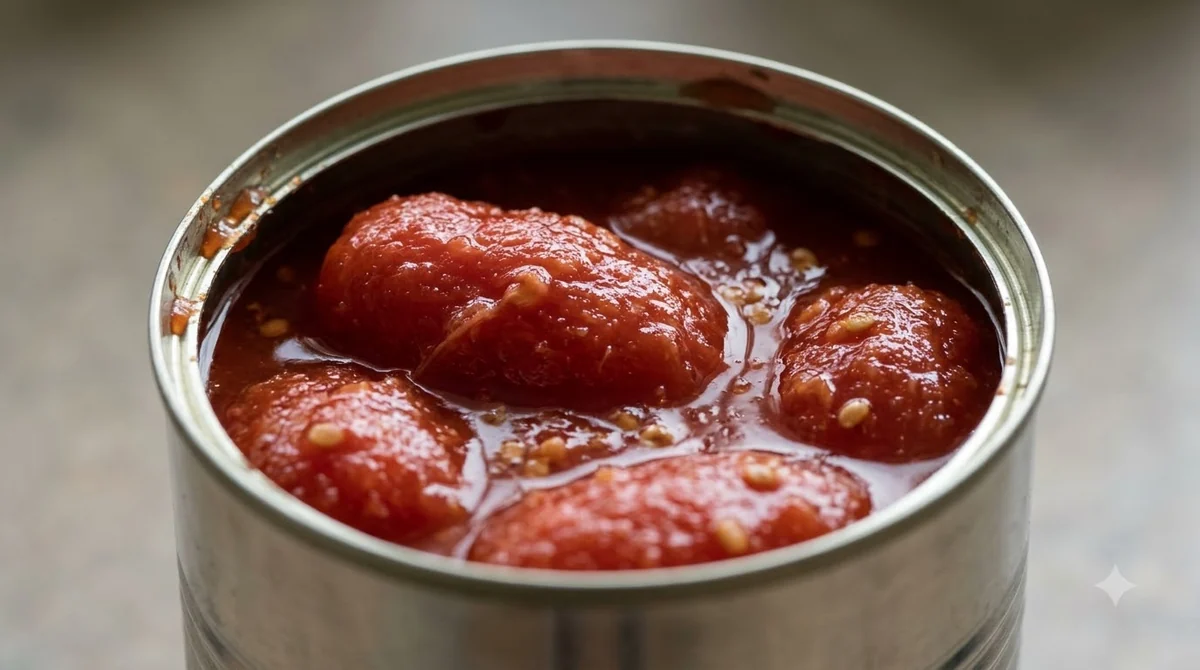
A quick check of the can tells you more about what are San Marzano tomatoes than any slogan on the front. Inside a genuine can, the fruit should look firm, with thick walls, few seed pockets and lower moisture than many other tomatoes. Those traits come from the variety and are easy to see once the can is open. To see how specific brands handle this, read our Strianese San Marzano tomatoes review and Cento San Marzano tomatoes review.
A “San Marzano style” label is not the same as DOP. In the US, there is no regulation of DOP labeling, so a false DOP label can be added after import. A tomato can also carry the San Marzano name without the protected status.
A 2011 estimate from the consortium president put the share of fake San Marzano tomatoes on the US market as high as 95 percent. The source notes that this figure may be outdated, so treat it as a warning rather than a current statistic.
Why look-alike cans and fraud exist
The name carries a premium price, so mislabeled tomatoes are a known problem in the trade. A can without a consortium number should be treated as an unverified product, whatever the front says. Checking the label is the surest way to settle what are San Marzano tomatoes on any given can. On 22 November 2010, Italian Carabinieri seized 1,470 tonnes of mislabeled canned tomatoes worth 1.2 million euros.
The seizure shows that fraud happens in the supply chain, not because shoppers make mistakes. It is also the main reason people keep asking what are San Marzano tomatoes and whether a can is genuine. Price is also not proof of origin. A higher price can reflect a premium brand, while only the label and certification details show where the tomatoes were grown.
Frequently Asked Questions
What are San Marzano tomatoes compared with Roma tomatoes?
Roma was bred from San Marzano stock and introduced by the USDA in 1955, but San Marzano fruit is thinner, more pointed, has thicker flesh and fewer seeds, and tastes sweeter and less acidic. The two look similar on the shelf, so read the label to tell them apart.
What does DOP mean on a tomato can?
DOP means Protected Designation of Origin. It is an EU scheme, created in 1992, that links a food name to a defined area and to production rules. On a San Marzano can, the DOP emblem and the full Italian name show that the tomatoes meet those rules.
Can you grow San Marzano tomatoes at home?
Yes. San Marzano is an open-pollinated heirloom, so seed saved from a good plant breeds true. It has indeterminate vines and needs a longer season than many paste tomatoes, about 85 days to maturity, which suits warm climates. Growing a plant is also a practical way to see what are San Marzano tomatoes in the garden before you buy a can.
Are San Marzano style cans authentic?
Not necessarily. The word style is not the same as DOP, and US-grown cans can use the name without the protected status. Check for the DOP emblem, the full Italian name and the consortium certification number before you assume a can is authentic.
Are San Marzano tomatoes worth the extra cost?
They can be, if you want thick flesh, fewer seeds and a sweeter taste for sauce. Price alone does not prove origin, though, so the answer to what are San Marzano tomatoes is always on the label. Only the label and the certification details show that the tomatoes came from the protected area.
How are San Marzano tomatoes best used?
They suit thick tomato sauce, passata and Neapolitan-style pizza sauce, where the thick flesh and low seed count are the traits the variety is known for.
Before you compare flavor, check the DOP emblem, the full Italian name and the consortium number on the can, then look at the pack form. A whole-tomato can with a verifiable label is the safest starting point for a sauce you plan to cook. Once you know what are San Marzano tomatoes and how to read the can, the choice on the shelf becomes much easier.
 7 min readLearnWhat Are Datterini Tomatoes? A Simple Guide for Home CooksUpdated Nov 11, 2026
 8 min readLearnTomato Pie Recipe: A Simple Savory Bake With Fresh TomatoesUpdated Nov 10, 2026
 8 min readLearnWhat Is Mascarpone? A Plain Guide to Italy’s CreamUpdated Nov 10, 2026
 9 min readLearnWhat Is Passata? A Plain Guide to Smooth Tomato PuréeUpdated Nov 10, 2026
 8 min readLearnWhat Is New Haven Style Pizza? A Plain Guide to ApizzaUpdated Nov 10, 2026
 7 min readLearnJumbo Shells Pasta: What They Are and How to Cook ThemUpdated Nov 10, 2026