
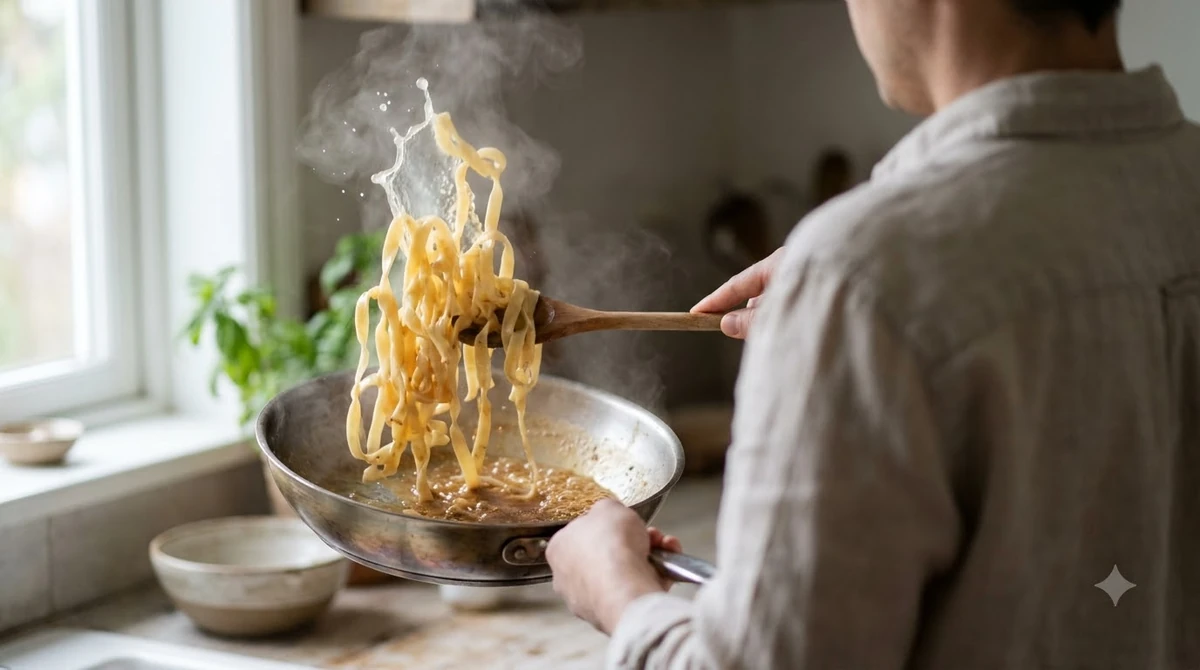

The pasta alla gricia recipe is a four-ingredient Roman pasta made with guanciale, Pecorino Romano, black pepper and pasta. It has no cream, egg, garlic or tomato, and one published method takes about 25 minutes from start to finish. The sauce comes from pasta water and finely grated cheese, not from dairy.
What Is Pasta Alla Gricia?
Pasta alla gricia is a Roman pasta from the Lazio region, made with guanciale, Pecorino Romano and black pepper. This pasta alla gricia recipe is one of the simplest classics of the city, and the sauce depends almost entirely on technique rather than on extra ingredients.
The origin of the name behind this pasta alla gricia recipe is not settled. The Wikipedia entry on pasta alla gricia lists two explanations. One links the name to the Romanesco word gricio, used for sellers of common foods in papal Rome. The other places the invention in Grisciano, near Amatrice, and the article notes that this second theory is considered more probably correct. The same entry also flags several sections as needing more citations, so treat the origin story as a well-supported theory rather than a fixed fact.
The dish is closely tied to the classic amatriciana sauce, which also comes from the Amatrice area. The article states that in Amatrice as late as the 1960s, amatriciana was prepared without tomato, the same period in which gricia was made there. That history explains why the two dishes are so often compared, even though they taste different.
Ingredients and Quantities for Four
For four servings, Recipes from Italy uses 350 g pasta, 200 g guanciale and 110 g Pecorino Romano, while The Pasta Project uses 14 oz pasta, 7 oz guanciale and 5 oz cheese. Both sets work for this pasta alla gricia recipe, and the method does not change with the amounts.
| Ingredient | Recipes from Italy | The Pasta Project |
|---|---|---|
| Pasta | 350 g (12 oz) rigatoni or mezze maniche | 14 oz spaghetti or rigatoni |
| Guanciale | 200 g (7 oz), cut into strips | 7 oz, cut into strips |
| Pecorino Romano | 110 g (1 cup), finely grated, plus more to serve | 5 oz, grated, split between the sauce and the top |
| Black pepper | Freshly ground, to taste | Freshly ground, to taste, generous |
| Prep and cook time | 10 min prep, 15 min cook, 25 min total | 10 min prep, 20 min cook, 30 min total |
Neither pasta alla gricia recipe gives a measured amount for pepper, so start with a generous amount of freshly ground pepper and adjust to taste. The Pasta Project advises being generous, and it is the pepper that gives the dish most of its character. Recipes from Italy names Pecorino Romano DOP, which is the designation to look for on the label.
Neither version of the pasta alla gricia recipe includes garlic, onion, herbs, cream or egg. The Pasta Project says garlic, onion, herbs and red chili are not part of the original recipe, so leave them out the first time you make it.
Pasta Alla Gricia Recipe: Step-by-Step Method
Crisp the guanciale gently, reserve starchy pasta water, and add the cheese only after the pan is off the heat. In any pasta alla gricia recipe, those three steps decide whether the sauce is silky or clumpy.
- Start the pasta alla gricia recipe by cutting 200 g (7 oz) guanciale into strips and render it gently in a pan so the fat melts out slowly.
- Keep frying until the guanciale turns lightly golden, then cook it for 2 to 3 more minutes, as Recipes from Italy suggests. The Pasta Project prefers it crisp, but that is a matter of taste.
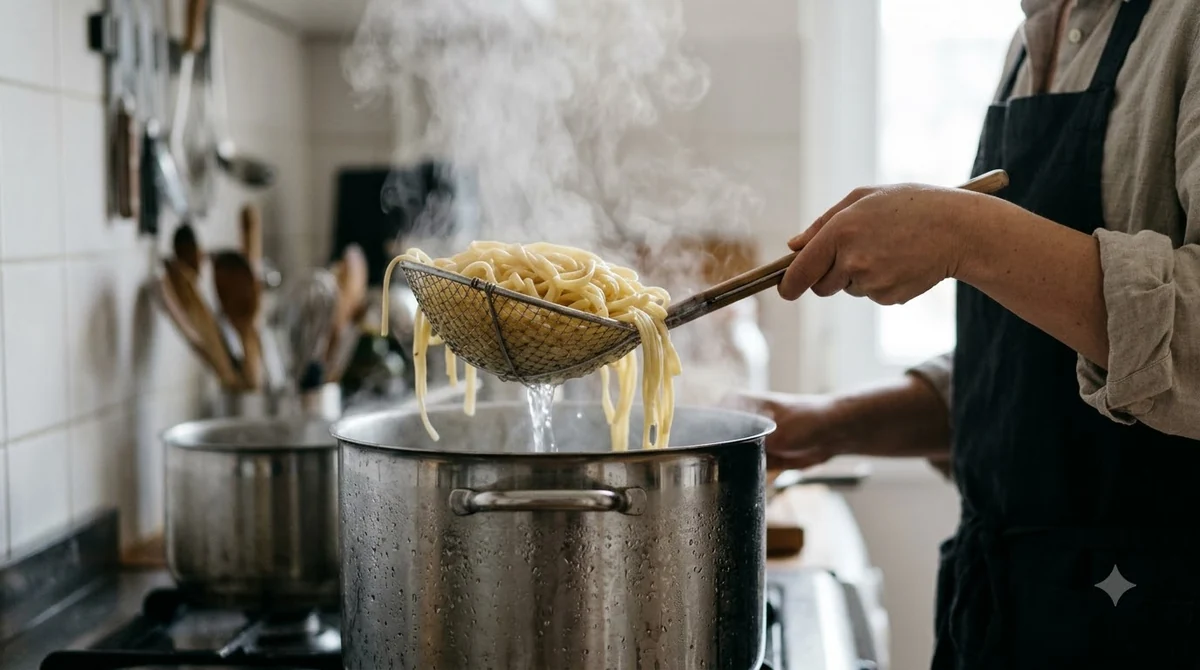
- Boil the pasta in salted water. Drain it about 2 minutes before the time on the package, according to Recipes from Italy, since it will finish in the pan.
- Before you drain, reserve about 1 cup of the cooking water. The Pasta Project adds about 1/3 cup of it to the guanciale pan to start the sauce.
- Drain the pasta into the pan, toss over low heat, and add a splash of pasta water if the mixture looks dry.
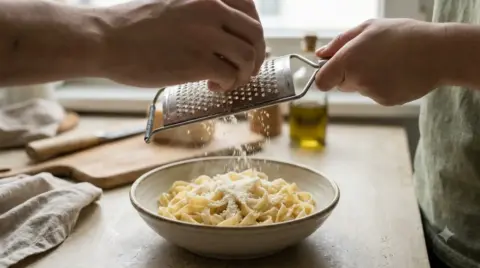
- Turn off the heat completely. Add the finely grated Pecorino Romano and a small ladle of pasta water, then stir vigorously until the sauce is smooth.
- Finish with plenty of freshly ground black pepper, and serve with extra cheese on top.
How to Get a Creamy Sauce Without Cream
The creamy texture in every pasta alla gricia recipe comes from starch in the pasta water binding with the Pecorino, not from any added dairy. Recipes from Italy describes this as an emulsion that forms smoothly when the cheese goes in off the heat.
The main risk is heat. If the pan is still on the burner when the cheese goes in, the Pecorino can seize into clumps before the water has a chance to bind with it. Taking the pan off the heat first gives the cheese time to melt into the liquid. For more on the technique, see our notes on starchy pasta water for sauce.
Use three checks as you finish the sauce:
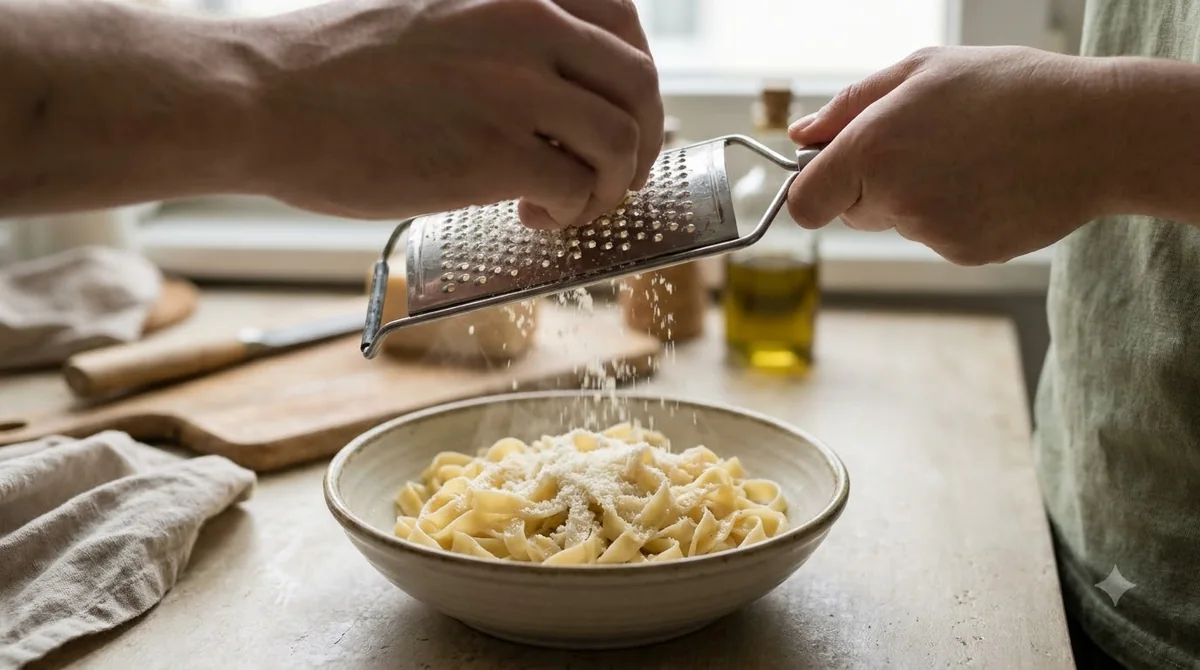
- Grate the cheese finely, because recipes call for finely grated Pecorino, and it melts faster.
- Add pasta water a little at a time. If the sauce is dry, add a splash, and if it is thin, let it sit for a moment so it thickens.
- Stir until the sauce looks smooth and velvety with no lumps before you serve.
Common Mistakes to Avoid
The most common mistakes are adding cream or garlic, putting the cheese on direct heat, and skipping the pasta water. Each one moves this pasta alla gricia recipe away from the four-ingredient version.
- Adding cream or egg. Neither is part of the dish, and both make a sauce that is heavier than the classic.
- Adding garlic, onion or herbs. The recipe from The Pasta Project states that these are not part of the original, and suggests making the classic version first.
- Adding the cheese on direct heat, which makes it clump instead of melting into the sauce.
- Skipping the pasta water. Without it, the cheese has nothing to bind with, and the sauce stays dry.
- Using pancetta or bacon and expecting the same taste. The Pasta Project says these substitutes change the authentic flavor.
- Under-seasoning with pepper. Both recipes call for pepper to taste, and The Pasta Project advises being generous.
Taste before you add salt to a pasta alla gricia recipe. The Pasta Project describes guanciale as cured with salt, so check the sauce for salt at the end.
Substitutions and Pasta Shapes
In a pasta alla gricia recipe, rigatoni appears as a traditional shape in both sources, and spaghetti is also listed in both. Pancetta can stand in for guanciale, but it gives a different result.
Among the traditional shapes for a pasta alla gricia recipe, Recipes from Italy names rigatoni and mezze maniche, and adds that spaghetti or bucatini also work. The Pasta Project lists spaghetti or rigatoni and says in its FAQ that any pasta can be used. If you are unsure, rigatoni is the safest choice, since both sources list it.
The Pasta Project describes guanciale as cured pork jowl or cheek, rubbed with salt, pepper and spices, then cured for at least three weeks. It recommends Italian guanciale. Pancetta or good-quality bacon can substitute, but the author says the authentic taste changes, and our guide to pancetta vs guanciale explains how the two cuts differ. Parmigiano Reggiano can replace Pecorino Romano in the same way, with the same caveat, and the Parmigiano Reggiano vs Pecorino Romano comparison shows what changes.
Frequently Asked Questions
Is pasta alla gricia the same as carbonara?
No. Pasta alla gricia has no egg, cream, tomato, garlic or onion, and its three main ingredients are guanciale, Pecorino Romano and black pepper. Adding egg moves this pasta alla gricia recipe away from the classic version, so keep to the four ingredients when you first make it. For the egg-based Roman classic, see our carbonara recipe.
Can I use bacon instead of guanciale?
The Pasta Project says pancetta or good-quality bacon can substitute, but that the authentic taste changes. Expect a different flavor from the classic, and use guanciale if you can find it, since the author recommends Italian guanciale.
Do I add garlic or onion?
No. According to The Pasta Project, garlic, onion, herbs and red chili are not part of the original recipe. The author suggests making the classic version first and adding variations later.
Why is my sauce clumpy?
In a pasta alla gricia recipe, the cheese most likely went in while the pan was still on the heat. Turn the pan off completely before adding the Pecorino, then stir in pasta water a little at a time until the sauce is smooth. Finely grated cheese also melts more evenly.
Can I use Parmesan instead of Pecorino Romano?
The Pasta Project says Parmigiano Reggiano can substitute, with the same caveat that the result is less authentic. Both pasta alla gricia recipes name Pecorino Romano, and Recipes from Italy calls for Pecorino Romano DOP, so use that if you want the closest match.
How much pasta do I need for four people?
Recipes from Italy uses 350 g (12 oz) and The Pasta Project uses 14 oz. Each pasta alla gricia recipe states four servings, so either amount is a reasonable starting point for a family-sized plate.
Start with the classic version of this pasta alla gricia recipe: guanciale, Pecorino Romano, plenty of black pepper, and rigatoni or spaghetti. Once you have the off-heat method down, the dish takes less than half an hour and is worth making on a weeknight. For more dishes like it, browse our Italian pasta guides.
 8 min readLearnAmatriciana Sauce Recipe: Guanciale, Pecorino and TomatoUpdated Nov 10, 2026
 8 min readLearnSausage and Peppers Pasta RecipeUpdated Nov 11, 2026
 8 min readLearnRoasted Red Pepper Sauce for Pasta: A Simple Homemade RecipeUpdated Nov 11, 2026
 10 min readLearnSausage and Peppers Pizza Recipe for Home and Pizza OvensUpdated Nov 10, 2026
 8 min readLearnPasta alla Norma Recipe: Fried Eggplant, Tomato and Ricotta SalataUpdated Nov 10, 2026
 7 min readLearnPasta alla Genovese Recipe with Trofie, Pesto and PotatoesUpdated Nov 11, 2026