
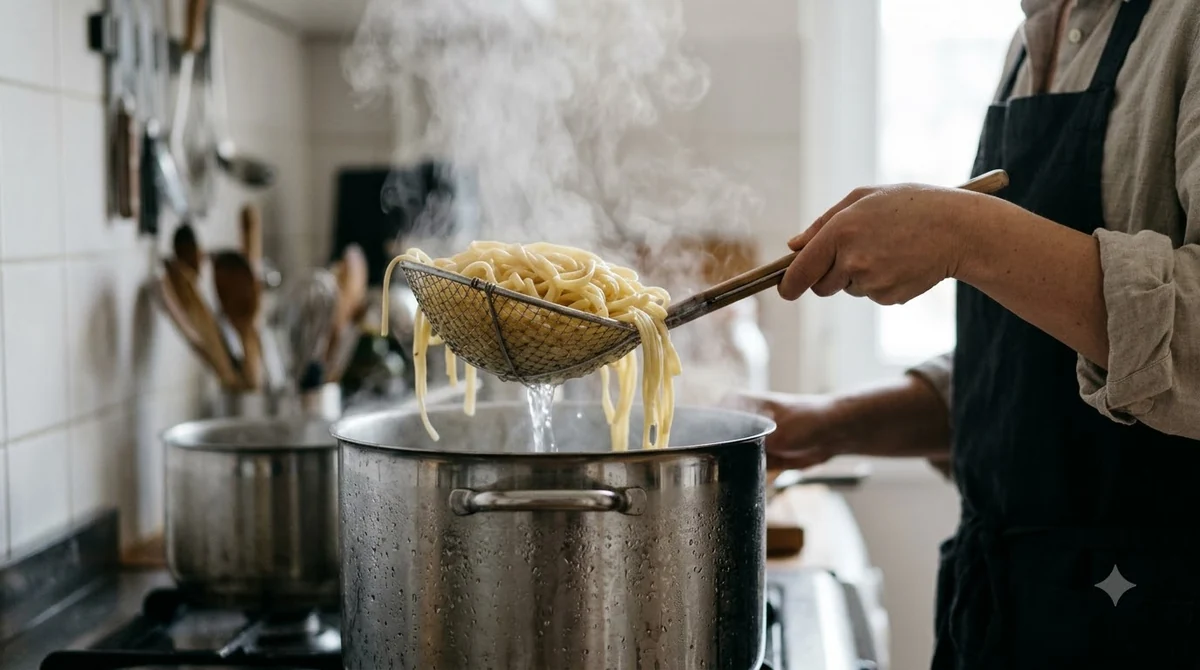

This carbonara recipe uses guanciale, pecorino romano, eggs and black pepper, with no cream. The silky sauce comes from egg yolks and grated cheese emulsified with starchy pasta water. It serves four in about 35 minutes, and the one step that decides the result is keeping the egg sauce off direct heat.
What Goes Into a Classic Carbonara
A traditional carbonara recipe has five core ingredients, and most Italian versions leave out cream.
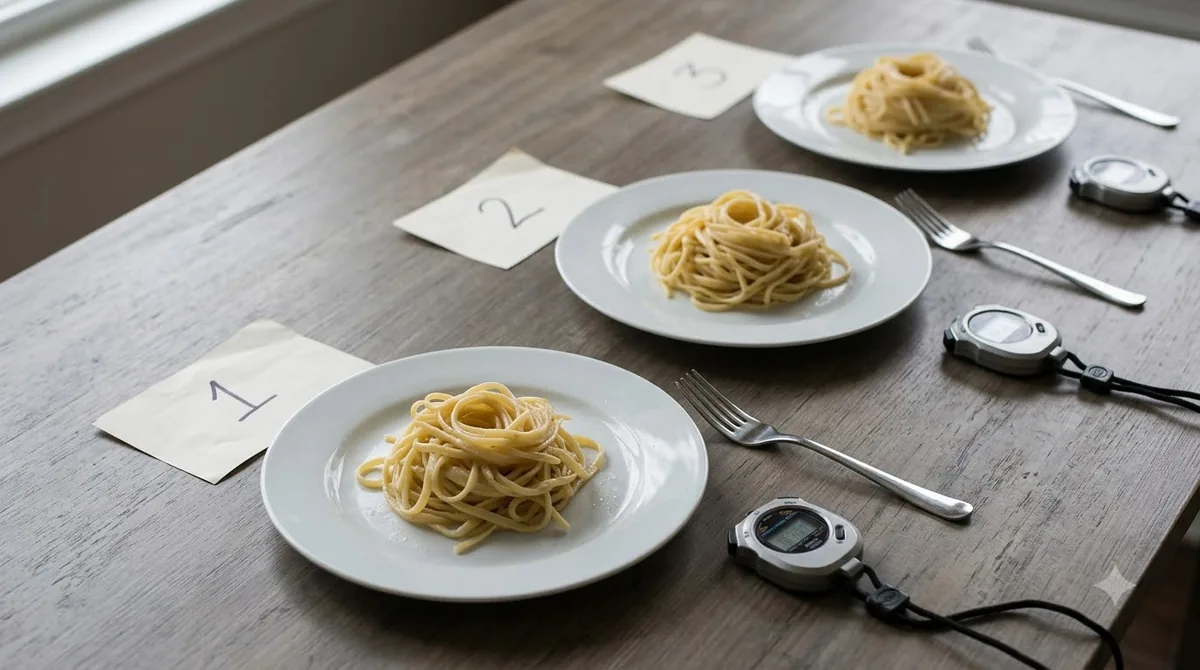
According to Wikipedia’s carbonara entry, the traditional set is pasta, guanciale, eggs, pecorino romano and black pepper. Spaghetti is the usual shape, though bucatini and rigatoni also appear in the dish. A close Roman relative with guanciale and pecorino but no eggs is pasta alla gricia with guanciale.
Any carbonara recipe that adds cream is a variant of the classic, and cream is the change most often seen outside Italy. The same source notes that cream is added because it makes the dish more stable, but the egg and cheese emulsion does not need it. Most Italian sources place the origin of the dish in Lazio, the region around Rome.
Carbonara Recipe Ingredients and Quantities for Four
Four servings of this carbonara recipe need 340 g guanciale, two whole eggs plus five to six yolks, 150 g pecorino romano and 400 g pasta.
| Ingredient | Quantity | Notes |
|---|---|---|
| Guanciale | 340 g | Rind removed, cut into thick strips |
| Whole eggs | 2 | Whisked with the yolks |
| Egg yolks | 5 to 6 | Add richness to the sauce |
| Pecorino romano | 150 g | Grated, plus extra to serve |
| Pasta | 400 g | Mezzi rigatoni or spaghetti |
| Black pepper | To taste | Plenty of freshly ground pepper |
The recipe allows 20 minutes of prep and 14 minutes of cooking. It gives no measured amount for pepper or for the salt in the pasta water, so start with a generous grind and salt the water well. A reliable carbonara recipe begins with weighing, because 340 g of guanciale and 150 g of pecorino set the balance of the sauce. Weigh the guanciale after trimming the rind (see what guanciale is if you have never bought it), so the 340 g figure matches the meat you actually cook.
How to Make Carbonara Step by Step
Render the guanciale slowly, whisk the egg and cheese mixture over gentle heat, then toss the hot pasta off the heat.
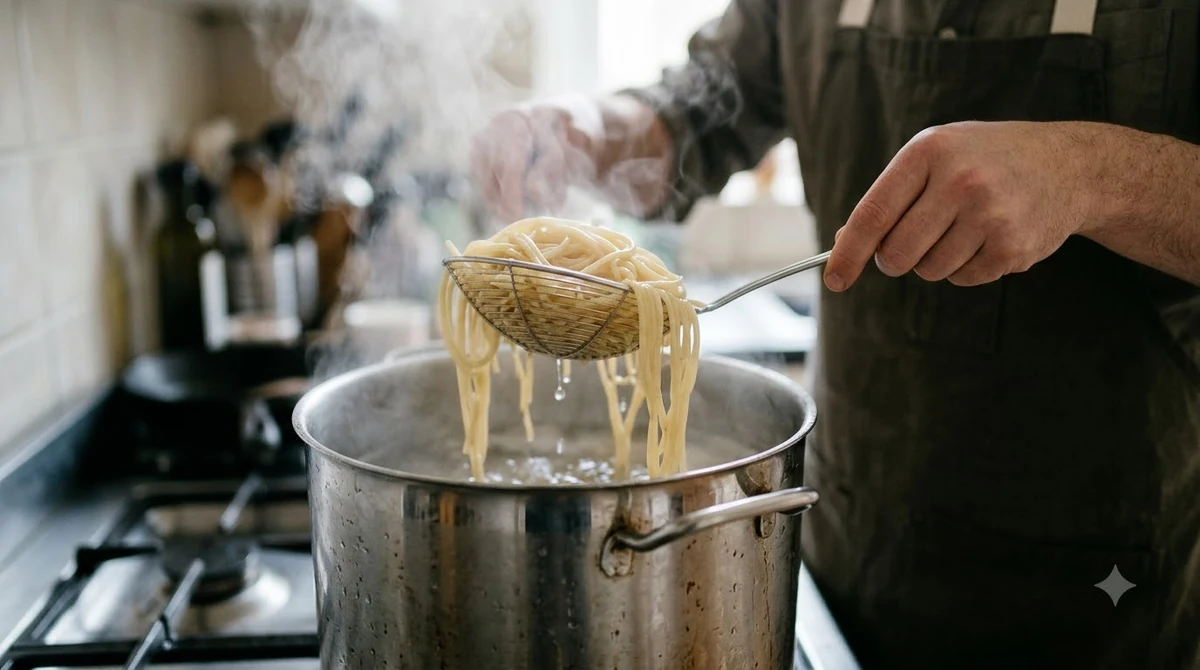
Work through this carbonara recipe in order, because the fat left in the pan is needed later for the sauce.
- Remove the rind from the guanciale, cut it into thick strips and fry over low heat for 10 to 15 minutes until crisp and golden.
- Lift the guanciale out, pour off half the fat and keep the rest in the pan. Do not rinse the pan.
- In a large heatproof bowl, whisk the eggs, yolks, grated pecorino, a good grind of black pepper and the reserved fat.
- Set the bowl over barely simmering water, making sure it does not touch the water. Whisk for 2 to 3 minutes until thick and custard-like. A thermometer reading of 64°C marks the target.
- Cook the pasta in boiling salted water until al dente, following the pack timing. Drain, keeping a mugful of the cooking water. Toss the pasta in the guanciale pan over low heat, take it off the heat, add the sabayon, then loosen with a splash of pasta water.
Stir in the crisp guanciale and finish with plenty of freshly ground black pepper. Serve in large bowls with extra pecorino on top. The BBC Good Food version of this carbonara recipe uses the same sabayon method, and it treats the 64°C reading as the sign that the egg is ready.
How to Keep the Egg Sauce Silky Instead of Scrambled
The egg sauce scrambles when the heat is too high, so the pan should be off the heat before the eggs go in.
The egg and cheese mixture is combined with the hot pasta away from direct heat, which is the step that stops the egg from curdling. Keep the water under a boil while the bowl sits over it, because a rolling boil is what scrambles the yolks. Scrambling is the most common failure in any carbonara recipe.
- Keep the bowl from touching the water in the pan below.
- Stop whisking the moment the sauce turns thick and custard-like.
- Add pasta water a splash at a time until the sauce loosens and coats the pasta.
A thermometer makes this easier, because the source’s target of 64°C gives a clear stopping point. Raw and lightly cooked egg dishes carry a Salmonella risk, so if you serve guests who are more vulnerable to foodborne illness, check current USDA egg-safety guidance before you cook.
Guanciale, Pecorino and Pasta Choices
Guanciale is the traditional cured pork, pancetta is named as a variant, and bacon is the common substitute outside Italy.
| Pork option | Status in the recipe | When to use it |
|---|---|---|
| Guanciale | Traditional choice | Whenever you can find it |
| Pancetta | Variant of guanciale | When guanciale is hard to find |
| Bacon | Common substitute outside Italy | As a last resort, render it the same way |
Pecorino romano is made exclusively from sheep’s milk, and the protected cheese is produced in Lazio, Sardinia and the province of Grosseto. It is aged for five months or more and described as hard and salty, which suits the pork and pepper in this dish; what pecorino romano is explains the cheese in more detail.
Parmigiano or grana padano are the usual variants when pecorino is hard to find. Swapping the cheese changes the flavor of this carbonara recipe, but the method stays the same. For pasta, spaghetti is the usual shape, and bucatini or rigatoni also work well with a sauce this thick.
Common Mistakes to Avoid
The most common carbonara mistakes are adding cream, cooking the egg over direct heat and throwing away the pasta water.
- Adding cream, which most Italian recipes leave out, and which hides the emulsion of yolks and cheese.
- Putting the bowl over direct heat, which can turn the yolks into scrambled egg.
- Skipping the pasta water, which is what loosens the sauce and helps it bind (see starchy pasta water for sauce).
- Salting before tasting, because pecorino romano is already salty.
Avoiding these mistakes makes a carbonara recipe far easier to repeat. Checking these four points before you start keeps the sauce smooth from the first forkful to the last.
Where the Dish Came From
Carbonara took its modern form in Rome in the middle of the 20th century, and the first Italian recipe appeared in 1954.
The names do not appear in print before the Second World War, and the origin is still described as obscure. The first attested recipe is in a 1952 Chicago cookbook by Patricia Bronte. The first Italian recipe came in La Cucina Italiana in 1954, and it included pancetta, garlic and Gruyere. Wikipedia’s account says the dish took its modern form in the middle of the 20th century, which is the safest claim to repeat.
A competing view links the dish to cacio e uova, which means cheese and eggs and is documented from 1839. The debate is still open, so treat any single origin story with caution. The origin debate does not change how you cook a carbonara recipe at home. For another Roman pepper-and-cheese sauce, try the cacio e pepe recipe.
Frequently Asked Questions
Is cream used in carbonara?
No, most Italian recipes use no cream. The sauce comes from egg yolks and grated pecorino emulsified with starchy pasta water. Cream is often added outside Italy because it makes the dish more stable, but it is not needed for a silky result.
Can I use bacon instead of guanciale?
Yes, bacon is a common substitute outside Italy. Guanciale is the traditional choice, and pancetta is named as a variant of it. Render the cured pork slowly so the fat melts and the meat turns crisp before you start the sauce.
Can I use parmesan instead of pecorino?
Yes, parmigiano or grana padano are the usual variants. Pecorino romano is the traditional choice in a carbonara recipe. It is made from sheep’s milk and aged for five months or more, so it has a hard texture and a salty flavor.
Why did my eggs scramble?
The egg mixture was probably too hot. Keep the bowl off direct heat, keep the water below a boil, and add pasta water a splash at a time to loosen the sauce. A thermometer helps, with 64°C as the target in the source recipe.
Which pasta shape works best?
Spaghetti is the usual shape, and mezzi rigatoni also works for this carbonara recipe. Bucatini and rigatoni are other options. Cook the pasta to the package timing for al dente and reserve a mugful of cooking water before you drain it.
How long does this carbonara recipe take?
The source recipe lists 20 minutes of prep and 14 minutes of cooking, so about 35 minutes in total for four servings. Allow extra time for the guanciale, because it needs 10 to 15 minutes over low heat to turn crisp.
This carbonara recipe is simple once the guanciale is rendered and the sauce is off the heat. Taste the sauce before you add more salt, because pecorino romano already brings plenty. Keep the heat low at every stage and serve right away. If the sauce is too thick, add a little more pasta water rather than more heat.
 10 min readLearnEggplant Parmesan Recipe: Simple Steps and Mistakes to AvoidUpdated Nov 10, 2026
 7 min readLearnCarbonara vs Alfredo: Ingredients, Origins and Which Sauce to ChooseUpdated Nov 10, 2026
 9 min readLearnPesto Genovese Recipe: 5 Simple Steps and IngredientsUpdated Nov 10, 2026
 8 min readLearnTortellini Soup Recipe: Ingredients, Steps and Leftover TipsUpdated Nov 11, 2026
 7 min readLearnItalian Pasta Salad Recipe: Ingredients, Steps and StorageUpdated Nov 11, 2026
 9 min readLearnCauliflower Pizza Crust Recipe: Ingredients, Steps and Baking TipsUpdated Nov 12, 2026