
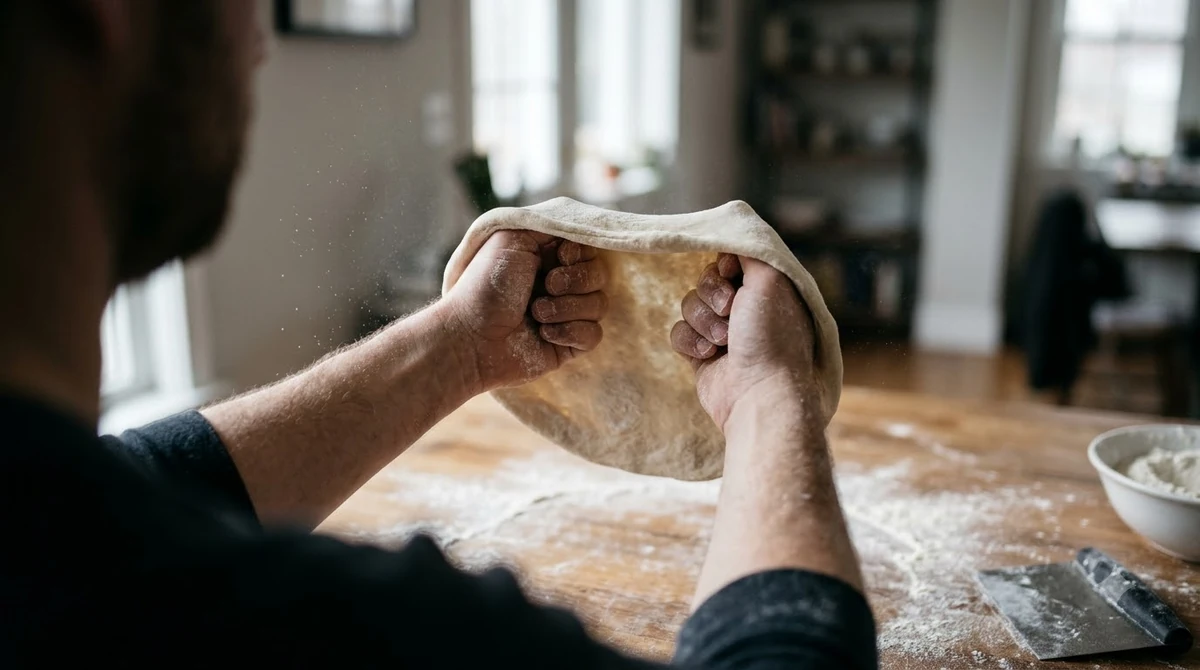

Sourdough discard pizza dough is a yeasted pizza dough that uses the unfed starter you would otherwise throw away. The discard adds a fermented flavor, while a small amount of yeast does most of the lifting. The reference recipe below uses 227 grams of discard and 300 grams of flour.
This dough suits you if you want flavor from starter you already keep. If you need a dough that rises fast with no starter at all, a plain yeasted dough is the simpler choice.
What Is Sourdough Discard Pizza Dough?
Sourdough discard pizza dough is a yeasted dough that uses the portion of starter removed during feeding, mainly for flavor rather than lift.
Sourdough discard is the part of the starter you remove before you feed the rest, so the culture does not grow too large. King Arthur Baking notes that discard mainly adds flavor and “doesn’t do much in the leavening department.” The rise in bread comes from the starter’s live microorganisms, which is why Clemson Extension’s discard guide describes the bubbles and rise as the starter’s work.
Because discard gives flavor more than lift, most discard pizza recipes add a little instant or active dry yeast. A starter that has been fed regularly gives a milder, faster-rising crust, according to King Arthur’s recipe notes. If your starter has few bubbles or rises slowly, feed it more often before you use the discard.
If you are choosing a pre-ferment instead, compare biga vs poolish. Think of sourdough discard pizza dough as a standard yeasted dough with a starter-based flavor. The dough is still built from flour, water, salt and yeast, so the basic steps match any simple pizza dough. What changes is the tang and depth that the discard brings to the crust. For a version built on an active starter, see our sourdough pizza dough recipe.
Sourdough Discard Pizza Dough Ingredients and Ratios
The reference recipe uses 227 grams of discard, 141 to 170 grams of lukewarm water, 300 grams of flour, 1 teaspoon of salt and 1/2 teaspoon of yeast.
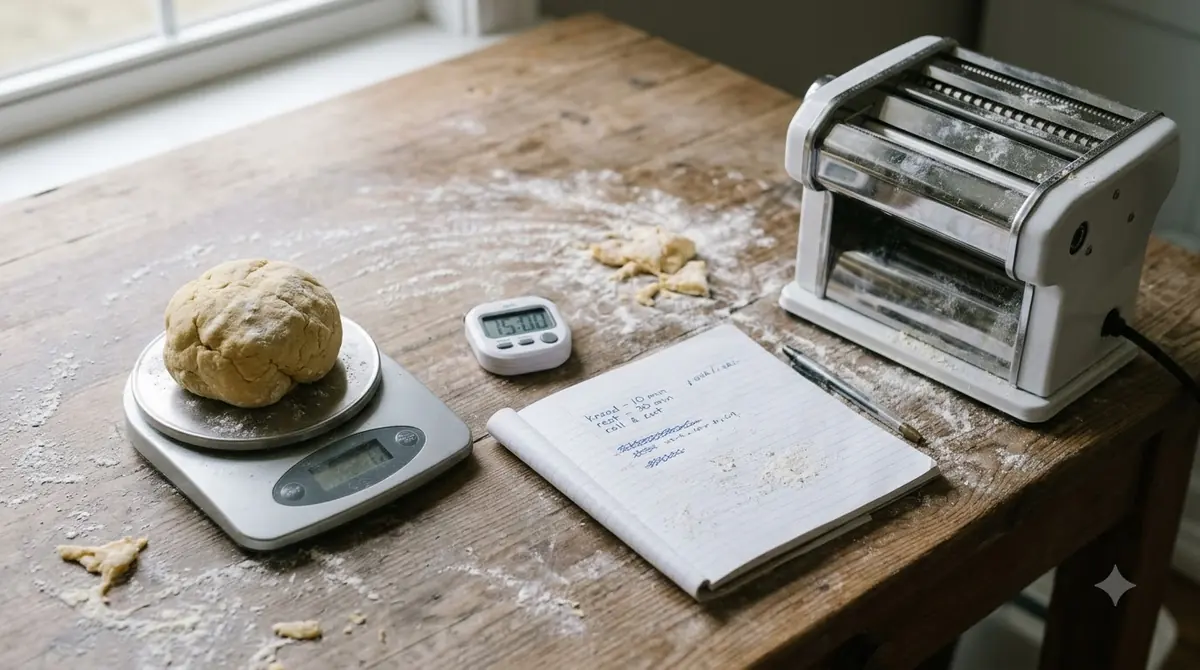
King Arthur Baking’s sourdough discard pizza crust recipe yields two 12-inch thin-crust pizzas or one 14-inch thick-crust pizza. Stir any liquid on top of the refrigerated starter back in before you measure it, since that liquid changes how the dough tastes and rises.
| Ingredient | Amount | Notes |
|---|---|---|
| Sourdough discard | 227 g (1 cup unfed starter) | Stir liquid back in before measuring |
| Lukewarm water | 141 g to 170 g | Add gradually, not all at once |
| All-purpose flour | 300 g (2 1/2 cups) | King Arthur Unbleached All-Purpose in the reference recipe |
| Table salt | 1 teaspoon | No gram weight given |
| Instant or active dry yeast | 1/2 teaspoon | Gives a more predictable rise |
| Pizza dough flavor | 4 teaspoons, optional | No gram weight given |
One blog recipe lists a cup of discard as 240 grams and uses 330 grams of flour, so the flour amount shifts with your discard’s hydration. Check the dough by feel before you add all the flour, rather than trusting one fixed number.
Use the table as your starting point for sourdough discard pizza dough, then adjust in small steps. Weighing the ingredients on a kitchen scale is more accurate than measuring by cup, because a cup of discard can weigh differently depending on how it was packed. Keep a note of the amounts that worked for your starter, so your next batch of sourdough discard pizza dough is easier to repeat.
Step-by-Step Method for Sourdough Discard Pizza Dough
Mix the discard, water and yeast first, add the flour gradually, then knead until the dough is smooth and elastic.
- Stir the discard into the lukewarm water until no large lumps remain.
- Add about half the flour along with the yeast, then stir well.
- Stir in the salt, then add the remaining flour a little at a time until you have a shaggy ball.
- Knead on a floured counter for 8 to 10 minutes, or use a stand mixer with a dough hook.
- Place the dough in a lightly oiled bowl, cover it loosely, and let it rise until almost doubled in bulk.
- Divide the dough, shape each piece into a 12-inch round, and let it rest before adding toppings.
Stop adding flour when the dough feels slightly tacky but not wet. Very old discard can leave sourdough discard pizza dough thin, so add flour in small amounts rather than all at once.
A well-kneaded sourdough discard pizza dough feels smooth and springs back when you press it lightly. That is the cue to stop kneading and let the dough rise. Our guide on how to knead pizza dough by hand covers the technique.

Rise, Heat and Baking Times
The first rise takes 2 to 4 hours in the King Arthur recipe, and you preheat the oven to 450°F toward the end of that rise.
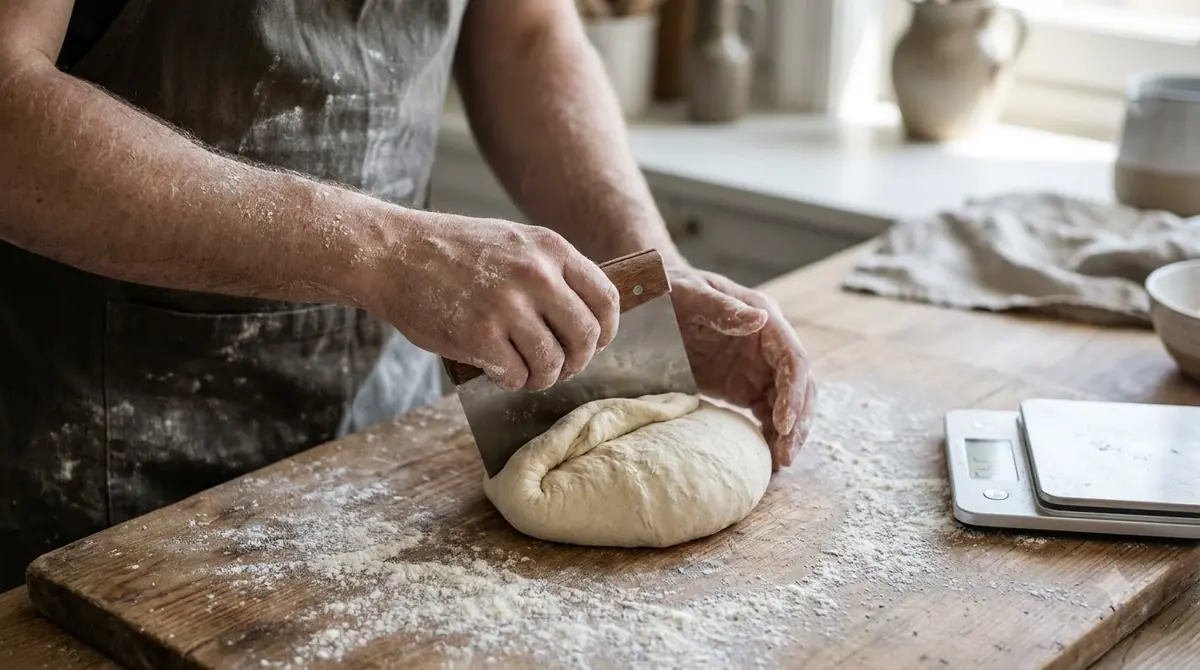
The rise depends on the starter. King Arthur says the first rise takes between 2 and 4 hours depending on starter vitality, and a warm spot or doubled yeast speeds it up. A less-used starter with more liquid on top rises more slowly, which suits a dough you make in the morning.
For a thin crust, bake the dough 5 minutes before you add cheese, then bake 5 to 7 minutes more until the cheese melts. Thick crusts need about 10 minutes before toppings. One blog recipe uses 500°F instead, so follow your oven’s manual and watch the crust rather than the clock.
Plan the timing around the rise. A morning batch of sourdough discard pizza dough can be ready for dinner, while one blog recipe suggests an overnight fridge rise for a tangier result. Bring the dough back to room temperature before you shape it.
Common Problems and Fixes
Most problems come from the strength of the discard or the amount of flour, and a small change usually fixes the dough. King Arthur Baking’s discard explainer is a useful reference for how discard behaves in baking.
| Problem | Likely cause | Fix |
|---|---|---|
| Dough is runny or sticky | Discard is watery or old | Add flour in small increments until slightly tacky |
| Dough rises slowly | Cool room or a weak starter | Move the dough to a warm spot, or double the yeast as King Arthur suggests |
| Crust tastes too sour | Less-used starter with more liquid on top | Use discard from a regularly fed starter for a milder crust |
| Discard is weak or sluggish | Few bubbles in the starter | Feed the starter more often before you use it |
A yeastless version appears in one blog recipe, which swaps the yeast for 1/4 cup of active, bubbly starter and adds extra flour. King Arthur’s reference recipe does not offer that swap, so treat it as a separate method rather than the standard one.
Most fixes for sourdough discard pizza dough come down to controlling water, flour and time rather than adding new ingredients. If the dough turns sticky, see pizza dough too sticky for more fixes. Change one variable at a time so you can see which adjustment helped.
Storage and Freezing the Dough
King Arthur says leftover dough keeps up to 5 days in the refrigerator when it is wrapped well.
One blog recipe gives a shorter window of 3 days in an airtight container, plus freezing for up to 3 months. The two sources disagree, so use the shorter figure if you are unsure and wrap the dough tightly.
- Refrigerate: wrap the dough well and keep it up to 5 days (King Arthur) or 3 days airtight (one blog).
- Freeze: lightly oil the dough, wrap it well, and freeze for up to 3 months (one blog).
- Thaw: move it to the fridge overnight, then bring it to room temperature before shaping.
Keeping sourdough discard pizza dough in good shape takes little planning. Label the container with the date so you know how long it has been in the fridge. For general fridge and freezer guidance, see how long pizza dough lasts in the fridge and can you freeze pizza dough.
Frequently Asked Questions
Can you make sourdough discard pizza dough without yeast?
Yes, but only with a different method. One blog recipe swaps the yeast for 1/4 cup of active, bubbly starter and adds extra flour. King Arthur’s reference recipe includes yeast, so start with that before you try a yeastless version.
Does sourdough discard pizza dough taste sour?
It has a mild fermented tang. One blog recipe notes that a slower rise in the fridge gives a tangier flavor. King Arthur says a less-used starter tastes more sour, while a regularly fed starter gives a milder crust.
How long can the dough rise before baking?
King Arthur’s recipe sets a first rise of 2 to 4 hours, until the dough is almost doubled in bulk. An overnight fridge rise is an option in one blog recipe, and you bring the dough to room temperature before shaping.
Should the discard be cold or at room temperature?
Stir any liquid on top back in, then measure the discard as the recipe directs. The King Arthur recipe mixes the discard with lukewarm water and does not give a separate temperature for the discard itself.
Can you use whole wheat flour instead?
The reference recipe uses all-purpose flour, and the sources checked here do not test whole wheat in this dough. If you substitute it, look for a recipe written for whole wheat, since the water amount will likely change.
What flour works best for sourdough discard pizza dough?
King Arthur’s reference recipe uses its Unbleached All-Purpose Flour at 300 grams, and one blog recipe lists all-purpose or pizza flour at 330 grams. Use the weight in the recipe as your guide, then adjust the water by feel rather than swapping flours at random.
Start with the reference ratios for sourdough discard pizza dough, then adjust the water and flour by feel, because discard changes in strength from day to day. A warm spot for the rise, a hot oven and a light hand with flour give the best crust.
 9 min readLearnSourdough Pizza Dough Recipe: Step-by-Step for Home OvensUpdated Nov 6, 2026
 9 min readLearnNew York Style Pizza Recipe: Dough Ratios, Rise Times and Oven SettingsUpdated Nov 10, 2026
 8 min readLearnCalzone Recipe: Dough, Filling and Bake Times for Home and Pizza OvensUpdated Nov 10, 2026
 8 min readLearnStromboli Recipe: Dough, Fillings and Bake Times for Home OvensUpdated Nov 10, 2026
 8 min readLearnMortadella and Pistachio Pizza Recipe for Home OvensUpdated Nov 11, 2026
 7 min readLearnPizza Alla Norma Recipe: Eggplant, Ricotta Salata and Oven SettingsUpdated Nov 11, 2026