
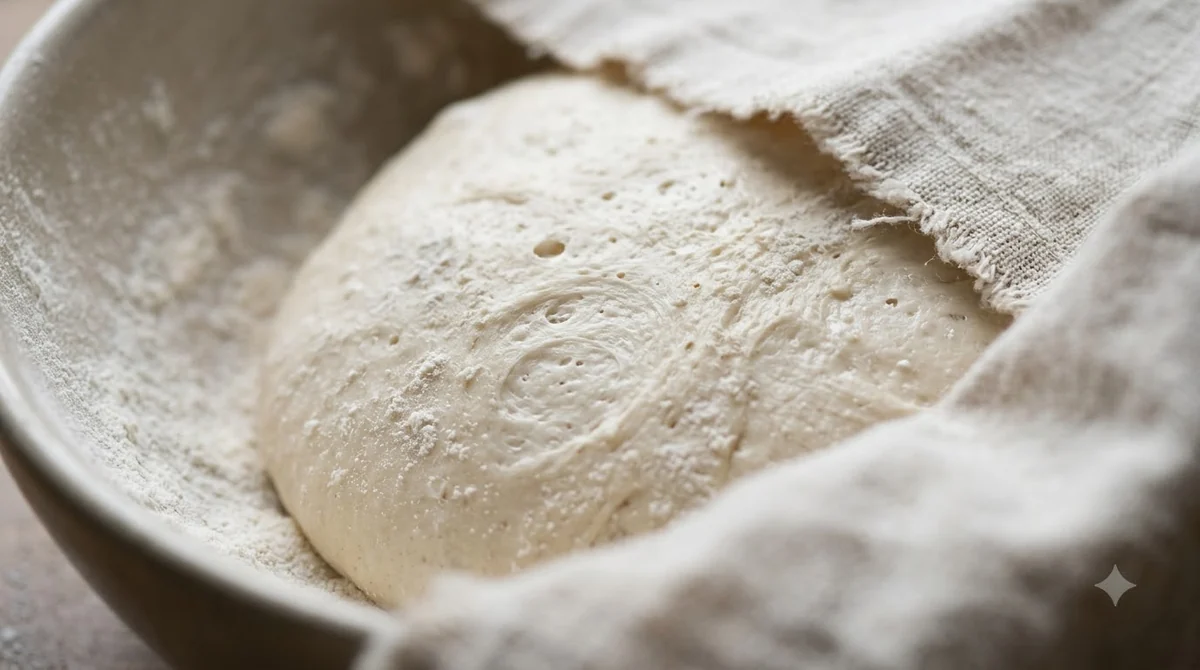

Biga vs poolish comes down to hydration: a biga is a stiff pre-ferment with about 45 percent water, while a poolish is a loose one with equal weights of flour and water. Poolish is the quicker of the two because its high water content ferments faster. Biga is slower and firmer, so it suits a longer timeline. Choose by your schedule first, then by the crust you want.
What a Biga and a Poolish Are
A biga is a stiff pre-ferment, and a poolish is a loose one at 100 percent hydration, so the two behave differently from the first mix.
A poolish is a portion of dough fermented for hours before it is mixed into the rest. It is made with commercial yeast, flour and water, unlike a sourdough starter, which relies on wild yeast. Tasting Table describes poolish as generally having 100 percent hydration, meaning equal parts water and flour, and dates its origin to Poland in 1840.
A biga is much stiffer. The Gozney biga recipe uses 1 kg of flour, 450 g of water and 10 g of yeast, which is about 45 percent hydration. All of the flour goes into the biga, and the final dough adds only the remaining water, salt and malt.
Knowing what sets each pre-ferment apart is the first step in any biga vs poolish decision, because the water content drives everything that follows, from how fast the dough rises to how it handles at the bench. For full recipes, see our biga pizza dough and poolish pizza dough guides.

Biga vs Poolish Ratios and Ingredients
The two pre-ferments differ most in water: the biga holds about 45 percent, while the poolish holds 100 percent, according to the recipes below.
| Detail | Biga (Gozney recipe) | Poolish (Caputo recipe) |
|---|---|---|
| Flour | 1 kg (100% of total flour) | 600 g Caputo 00 flour |
| Water | 450 g (45%) | 600 g cold tap water (100%) |
| Yeast | 10 g (1%) | 1 g instant yeast |
| Fermentation | 16 to 18 hours at 16 to 18 °C | 12 to 16 hours in a cool, dry area |
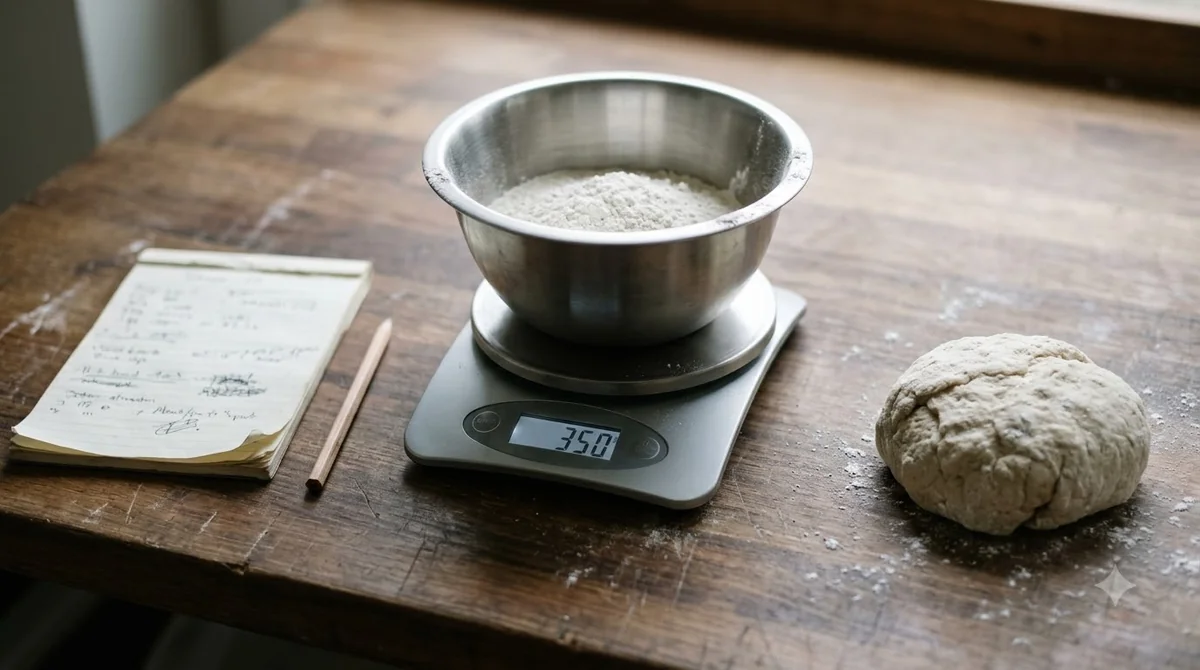
When you compare biga vs poolish ratios, look at the ratios rather than the raw grams, because the two batch sizes differ. The Caputo poolish is a true 1:1 mix of flour and water, while the Gozney biga keeps water at 45 percent of the flour weight. Yeast amounts scale with batch size, so use the yeast figure from the same recipe you follow. For a biga vs poolish comparison at home, the ratios are the fastest place to start, because they tell you how stiff or loose each pre-ferment will be before you spend any time fermenting it.
How Long Each Pre-Ferment Takes to Ferment
A biga ferments for 16 to 18 hours at 16 to 18 °C in the Gozney recipe, while a poolish ferments for 12 to 16 hours in a cool, dry area in the Caputo recipe.
The Gozney recipe covers the biga with cling film that has a small hole, so the dough can breathe while it ferments in a cool spot. The biga’s cool temperature and long rest are what give it its slower pace, and the recipe gives you a clear window to plan around.
The Caputo poolish ferments for 12 to 16 hours, but its recipe gives no specific temperature, only a cool, dry area. Tasting Table gives a broader range for most recipes, 8 to 16 hours at room temperature, and notes that the exact time depends on the yeast and the room temperature.
Because temperature changes the clock, treat the hour ranges as a guide. A warmer kitchen speeds up both pre-ferments, so check the dough itself as well as the timer.
When you line the two up side by side, timing is the most practical difference in any biga vs poolish decision. A poolish suits a same-day plan with a 12 to 16 hour ferment, while a biga’s 16 to 18 hours means it is usually started the evening before you plan to bake.
For either biga vs poolish option, plan backward from your bake time, then start the pre-ferment early enough to cover the full window, with a margin for a cooler or warmer kitchen. The pizza dough fermentation guide has more on timing.
Flavor and Texture: What Each Pre-Ferment Adds
Poolish adds a mildly sweet tang and acidity that helps strengthen the dough, while the sources read here do not compare the flavor of a biga directly.
Tasting Table says poolish gives a mildly sweet tang rather than the overpowering sourness that a sourdough starter can have. It also says the acidity helps strengthen the dough, which gives a chewy, stretchy result. That makes poolish a practical option if you want a mild tang without wild yeast.
Claims that one pre-ferment is always tangier or chewier than the other are not confirmed by the recipes read for this article. The clearer difference is timing: the biga is stiffer and ferments more slowly, while the wetter poolish ferments faster.
Readers weighing biga vs poolish for flavor should know that the sources read here describe the tang of the poolish in detail, but do not give a matching flavor profile for the biga, so the flavor side of the comparison is less settled than the timing side.
Mixing the Final Dough
The final dough adds fresh flour, water and salt to the pre-ferment, and each recipe sets its own total hydration and temperature. This is where a biga vs poolish difference shows up most clearly in the numbers, since the final hydration depends on how much water was already in the pre-ferment. For more ranges, see the pizza dough hydration chart.
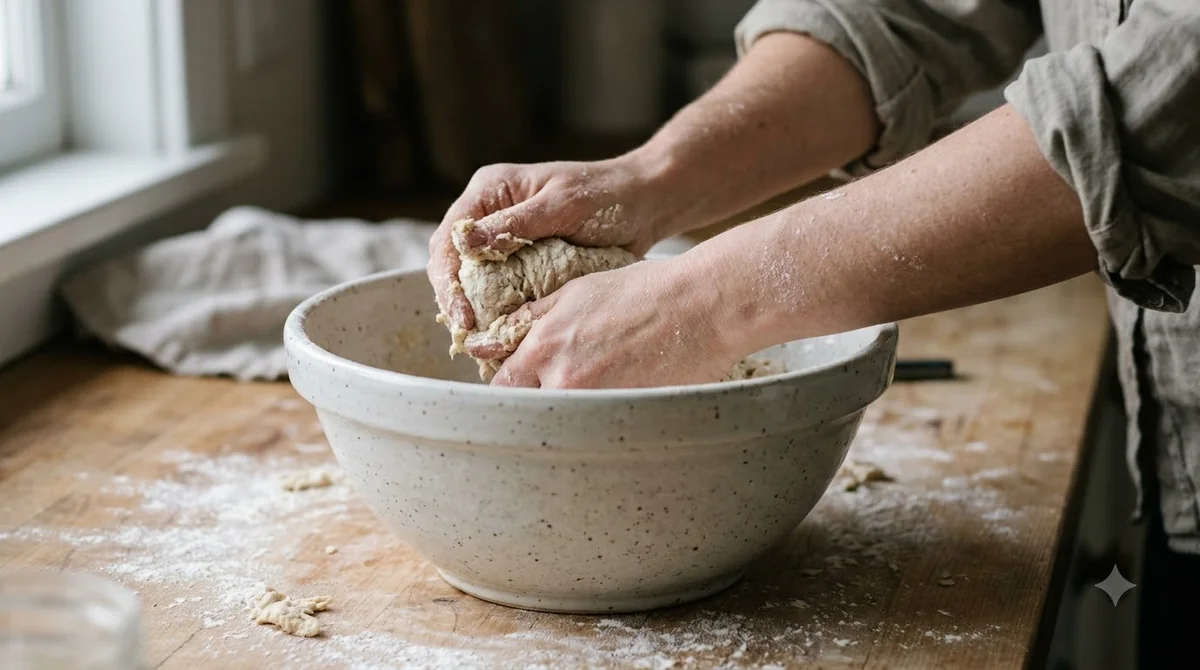
In the Gozney recipe, the finished dough reaches 66 percent total hydration: the 45 percent water in the biga plus 210 g of added water. The final dough is brought to 23 to 24 °C, and the recipe adds 10 g of malt and 25 g of salt.
In a biga vs poolish pair built from these two recipes, the Caputo poolish is mixed with 400 g of 00 flour, 50 g of cold water, 1 g of instant yeast, 25 g of salt, 20 g of olive oil and 20 g of honey. Those quantities belong to that recipe, so use them only with the poolish from the same source.
For storage, the Gozney recipe says to leave balled dough at room temperature for 1 hour, then refrigerate it until needed. The page does not state a maximum storage time, so check your own recipe before holding dough longer. For longer fridge timelines, see cold ferment pizza dough.
Biga vs Poolish: Which Should You Choose?
Choose a poolish when you want a shorter, more flexible timeline, and a biga when you can hold a long, cool ferment.
Use these four checks to settle any biga vs poolish question before you start mixing, and write down the numbers from your chosen recipe so you can repeat the bake.
- Pick a poolish if you want to bake within a day, since its recipes ferment for 12 to 16 hours.
- Pick a biga if you can keep the dough at about 16 to 18 °C for 16 to 18 hours.
- Stick with one recipe’s ratios, because the batch sizes and yeast amounts differ between sources.
- Adjust the timing for your room temperature, since both pre-ferments speed up in a warm kitchen.
Common Mistakes With Biga and Poolish
The most common errors are mixing recipes and ignoring the room temperature the recipe assumes.
Mixing numbers from two recipes throws off the water and yeast balance, so the final dough ends up at a hydration you did not plan. Each recipe’s ratios work together, and swapping one pre-ferment’s numbers into another recipe can change the result. This is the most frequent reason a biga vs poolish experiment disappoints, because the dough is no longer the one the recipe was written for.
Leaving a pre-ferment uncovered is another mistake. The Gozney recipe covers its biga with cling film, with a small hole for air, so the surface does not dry out during the long ferment.
Frequently Asked Questions
Is poolish the same as sourdough?
No. Tasting Table says a poolish is made with commercial yeast, while a sourdough starter uses wild yeast. The two give different flavors and different timelines.
Biga vs poolish: which ferments faster?
In a biga vs poolish timing comparison, the poolish does. Its 100 percent hydration makes it wetter than a biga, and Tasting Table notes that the wetter pre-ferment ferments faster.
How long can each pre-ferment ferment?
The Gozney biga uses 16 to 18 hours at 16 to 18 °C, and the Caputo poolish uses 12 to 16 hours in a cool, dry area. Check the dough as well as the clock, because temperature changes the timing.
Can you combine a biga and a poolish in one dough?
The recipes read for this article each use one pre-ferment and do not test a combination. Follow a recipe that names both pre-ferments before you combine them.
How should balled dough be stored?
Gozney recommends leaving the balled dough at room temperature for 1 hour, then refrigerating it until needed. The page gives no maximum storage time.
Do you need a kitchen scale?
A scale is the practical choice, because both recipes are written in grams and weighing keeps the hydration consistent from batch to batch. Any biga vs poolish test is only fair if the flour and water are weighed the same way each time.
Whatever you decide on biga vs poolish, choose the pre-ferment that fits your timeline, then follow one recipe from start to finish so the ratios stay consistent. Check the dough by feel and appearance, and adjust the timing when your kitchen runs warm or cool.
 8 min readLearnPoolish Pizza Dough: How to Make It for Better FlavorUpdated Nov 10, 2026
 8 min readLearnCold Ferment Pizza Dough: How It Works and How to Do It at HomeUpdated Nov 6, 2026
 8 min readLearnOvernight Pizza Dough Recipe: A Cold-Ferment GuideUpdated Nov 10, 2026
 8 min readLearnBiga Pizza Dough: Ratios, Timing and Steps for Chewier CrustUpdated Nov 6, 2026
 9 min readLearnShould You Salt Pasta Water? Yes, Here Is How MuchUpdated Nov 10, 2026
 7 min readLearnHow to Make Ciabatta Bread at Home with a BigaUpdated Nov 13, 2026